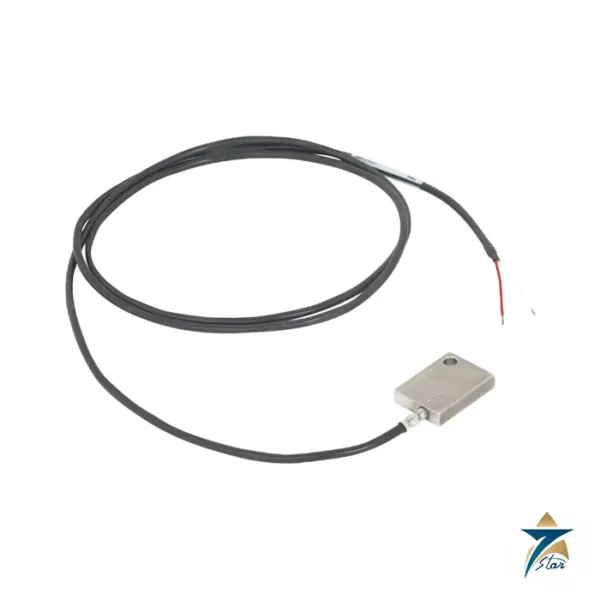
WIKA TF44 strap-on temperature sensor with connection lead
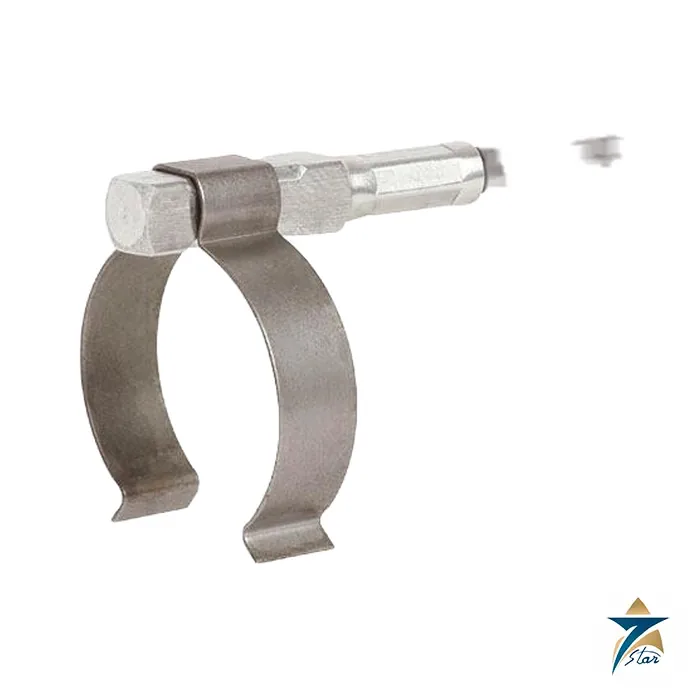
The WIKA TF44 measures the temperature of a pipe from the outside, so the pipeline stays closed and the medium is not touched. A small contoured aluminium sleeve holds the sensing element against the pipe wall and a quick-mounting bracket or hose clip keeps it there. WIKA gives a measuring range of -50 … +200 °C [-58 … +392 °F]. Because the sensor never contacts the fluid, pressure and aggressive media do not affect its service life. Seven Star LLC supplies the TF44 in Oman and the GCC as an independent supplier in Muscat; this page explains element choice, brackets and the accuracy limits of indirect measurement.
How the TF44 works and what to expect
The probe sleeve has a special profile that gives excellent heat transfer from the pipe, and a thermal compound is usually not needed. The datasheet is candid about the physics: a strap-on sensor reads the pipe surface, so a high-accuracy determination of the medium temperature is not possible. Accuracy depends on the pipe material, wall thickness, flow and, above all, insulation. WIKA recommends insulating the measuring point well, especially where there is a large difference between the medium and the surroundings.
TF44 technical specifications
| Parameter |
Specification |
| Manufacturer / part number |
WIKA / TF44 (data sheet TE 67.14) |
| Type |
Strap-on thermometer with connection lead |
| Measuring range |
-50 … +200 °C [-58 … +392 °F] |
| Standard elements |
Pt1000 and Pt100 class B (DIN EN 60751); NTC 10 kΩ, 5 kΩ (B 25/85 = 3,976); NTC 2.7 kΩ (3,977); KTY on request |
| Preferred version |
Pt1000 in 2-wire to hold down cost and lead influence |
| Probe sleeve |
Contoured aluminium, 6 x 6 mm square section with groove for pipe mounting |
| Connection lead |
PVC or silicone, 0.22 mm² (24 AWG) |
| Lead resistance effect |
Pt100 about 0.42 °C/m; Pt1000 about 0.04 °C/m |
| Fastening |
Quick-mounting bracket (galvanised steel) or worm-drive hose clip |
| Thermal compound |
Silicone paste available as accessory; usually not required |
Quick-mounting brackets and hose clips
| Accessory |
Size range |
Note |
| Quick-mounting bracket, galvanised steel |
Pipe diameters 12 … 15, 19 … 22, 25 … 28, 32 … 35 and 39 … 42 mm |
Mounts without tools |
| Worm-drive hose clip, galvanised steel |
Clamping ranges 16 … 27, 25 … 40, 40 … 60, 60 … 80 and 80 … 100 mm |
For larger pipes |
| Silicone thermal compound paste |
Tube |
Improves contact if desired |
Cable and temperature limits
The connection lead sets the practical limit as with other WIKA probes: the datasheet lists the permissible medium temperature range separately for the lead insulation (PVC or silicone) and for each mounting accessory, so check the table against your pipe temperature before choosing. For hotter pipes up to +200 °C use the silicone-insulated version, insulate the pipe, and keep the cable entry and the controller side inside their own limits.
Response time and measurement quality
A strap-on thermometer responds more slowly than an immersed probe because the heat must pass through the pipe wall, and the element is also influenced by ambient air. Good insulation over the probe shortens the response and lowers the error. For temperature control in heating and cooling circuits, where the reading only needs to be repeatable, this is generally acceptable. For custody or performance testing, use an immersed sensor in a thermowell instead.
Installation checklist
- Clean the pipe surface and remove paint or scale at the contact point
- Fit the bracket tight against the pipe so the sleeve groove seats fully
- Insulate over the sensor and a short length of cable
- Route the lead away from hot pipes and secure it to prevent pulling on the sleeve
- Verify the reading against a reference at stable flow after commissioning
Applications in Oman and the GCC
WIKA lists combined heat and power plants, solar thermal systems, HVAC and refrigeration, and machine building. In the Gulf, strap-on sensors are widely used on chilled-water supply and return pipes in district cooling and building services, on hot-water and solar loops, and on retrofit points where a plant cannot be shut down to install a thermowell. Insulating the sensor is critical in hot ambient conditions, as air temperature near an uninsulated pipe can distort the reading.
TF44 selection checklist
- Element and resistance expected by the controller
- Pipe diameter and the bracket or hose clip to match
- Lead insulation, length and stripped or connectorised end
- Medium temperature range and ambient conditions
- Insulation arrangement over the sensor
Practical points when specifying the TF44
For a strap-on probe the key variables are the pipe diameter, the pipe material and the insulation, none of which appear on the nameplate of the sensor. Write down the outer diameter so that the right quick-mounting bracket or hose clip is included in the order; the datasheet lists brackets for pipes from 12 to 42 mm and hose clips for 16 to 100 mm. Decide on the cable insulation next: PVC for ordinary indoor cooling and heating circuits and silicone where the pipe is hot. A 2-wire Pt1000 is the standard configuration because it keeps the cost of the measuring point low and limits the lead influence to about 0.04 °C per metre.
The thermometer is only as good as its thermal contact. Clean the pipe, press the sleeve fully onto the wall, and insulate. If a reading differs from an immersed reference by a few degrees, the first things to check are loose fastening, missing insulation and a pipe that is cooler than the medium because of low flow.
Information to send with an RFQ
Send the pipe outer diameter and material, temperature range, element type, cable length and quantity, with brackets or clips included in the order if needed.
Documents and quotation
The WIKA data sheet TE 67.14 for the TF44 is attached on this page. Send us the specification and quantity for a quotation from Muscat as an independent supplier.
Other Models in the Wika Tf4x Range
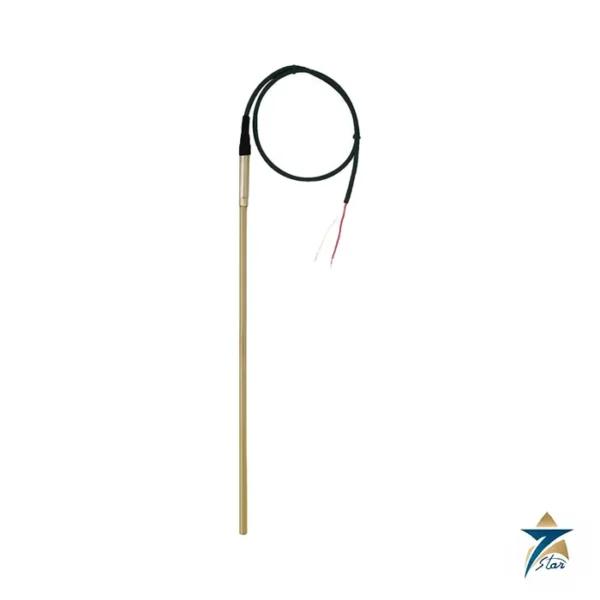
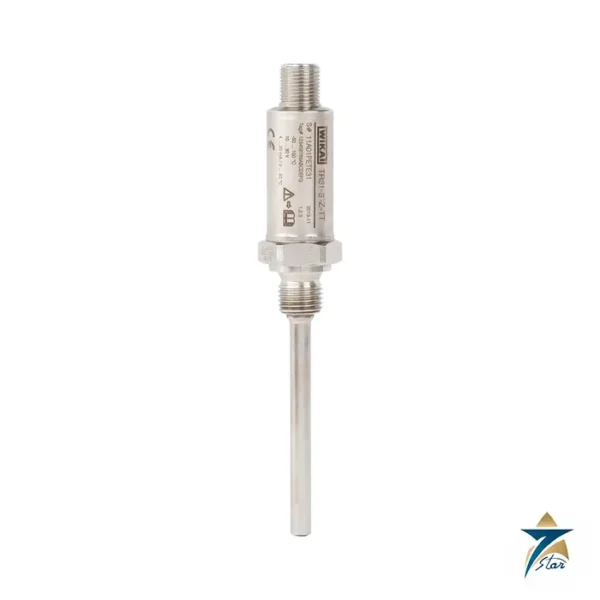
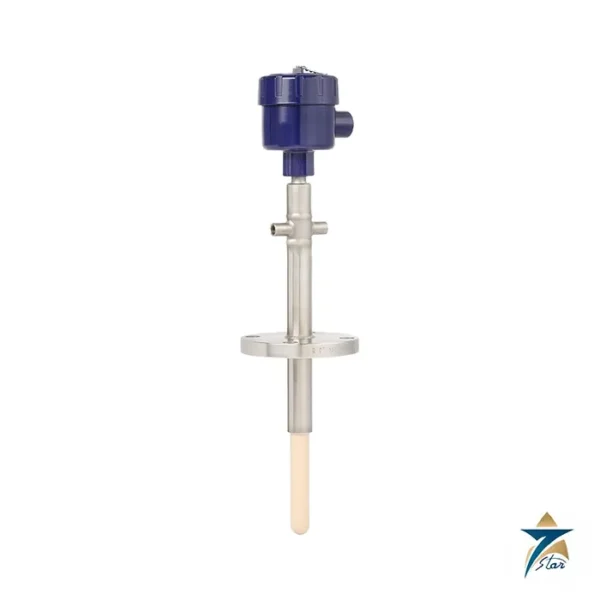
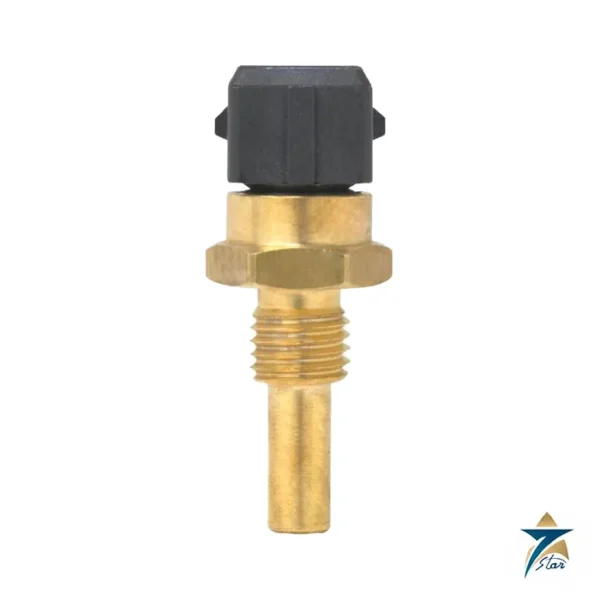
Seven Star LLC supplies models from the Wika Tf4x range in Oman and the GCC. Compare the related models below and request a quote for the one that matches your application.



















Reviews
There are no reviews yet.