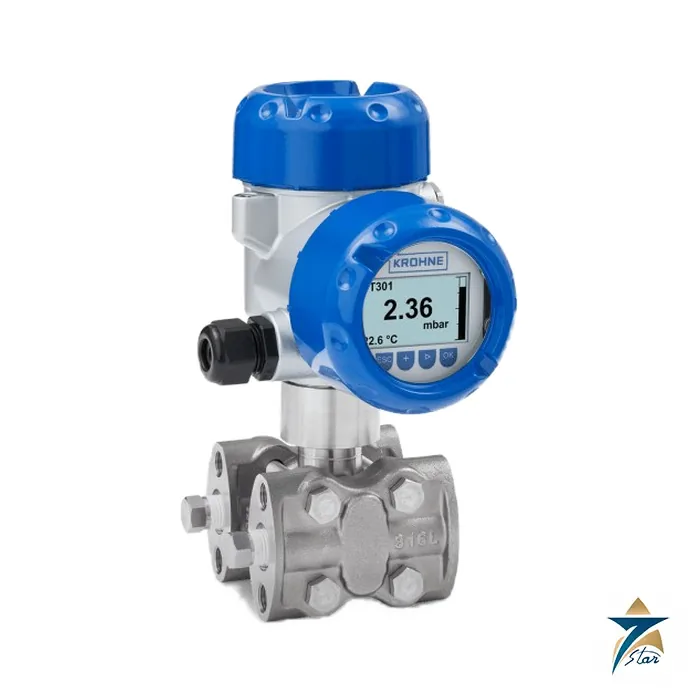
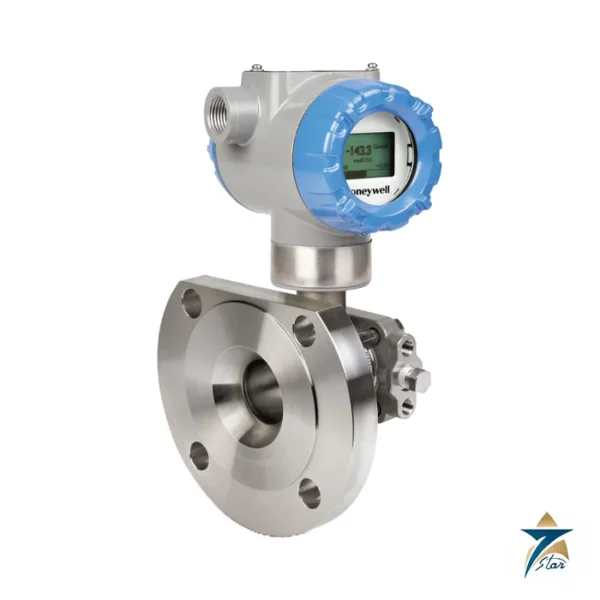
OPTIBAR DP 7060 differential pressure transmitter with integrated static pressure measurement
The KROHNE OPTIBAR DP 7060 is a piezoresistive differential pressure transmitter that measures differential pressure, static line pressure and cell temperature at once. That triple measurement is used internally: every unit is linearised in three dimensions during calibration, covering differential pressure, ambient temperature and static pressure together, so the signal stays stable when line pressure or temperature moves. The result is a transmitter used for flow across orifice plates or Pitot tubes, hydrostatic level in open and pressurised vessels, filter and pump monitoring, and density or interface measurement.
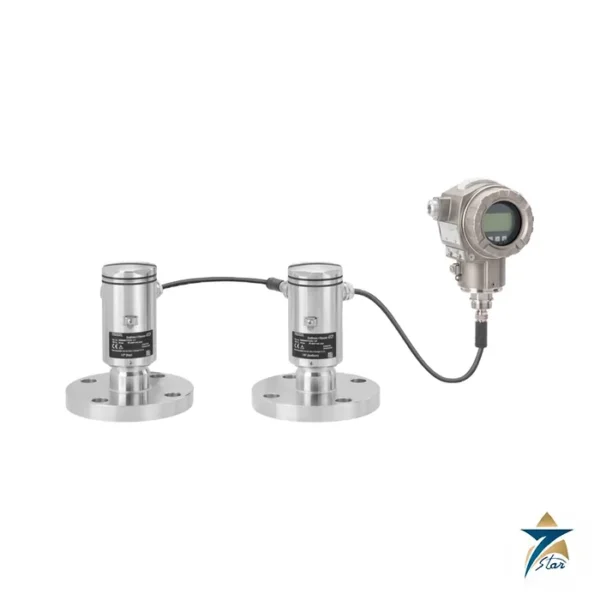
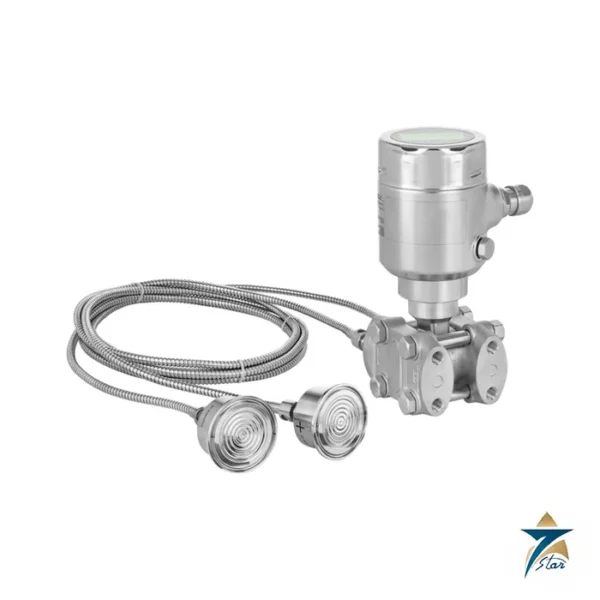
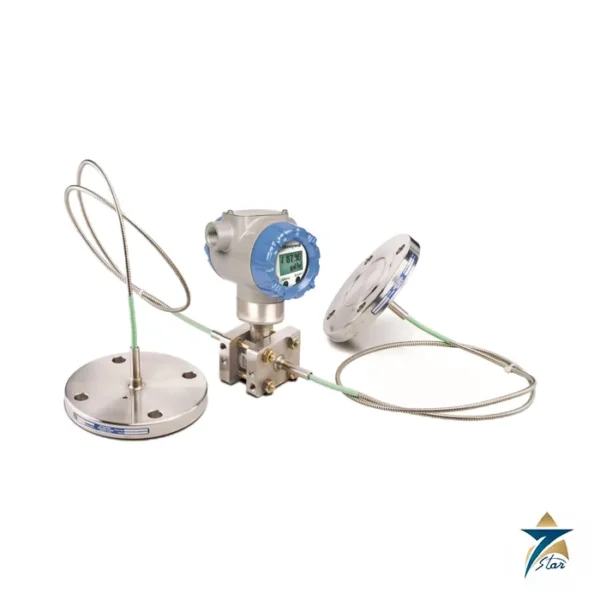
It belongs to the modular OPTIBAR process series, where the sensor, process flanges, electronics and housing are selected separately. Ranges run from 10 mbar to 16 bar, with turn-down of up to 100:1 on most ranges, and step response is below 125 ms. Fitted with diaphragm seals, the DP 7060 handles level, interface and density tasks on hot, viscous or aggressive media where impulse lines would block or freeze.
Technical specifications of the OPTIBAR DP 7060
| Parameter |
Specification |
| Manufacturer / part number |
KROHNE / OPTIBAR DP 7060 (C) |
| Measuring principle |
Piezoresistive differential pressure cell with absolute pressure and temperature sensors |
| Nominal ranges |
10 mbar, 30 mbar, 100 mbar, 500 mbar, 3 bar, 16 bar |
| Turn-down |
Up to 100:1 (20:1 for 10 mbar, 30:1 for 30 mbar); higher on request |
| Maximum system pressure (MWP) |
40 bar for 10 and 30 mbar; 160 bar or 400 bar for 100 mbar to 16 bar |
| Reference accuracy |
Down to 0.065% of set span for suitable ranges and turn-down, per datasheet tables |
| Long-term stability |
Better than 0.1 x TD over 5 years |
| Step response |
Below 125 ms |
| Process temperature |
-40 to +105 °C depending on measuring cell seal (FKM from -20 °C) |
| Wetted materials |
316L, Hastelloy C-276 or Superduplex flanges; diaphragm 316L, Hastelloy C-276 or gold-coated 316L; NACE MR0175 / MR0103 options |
| Output and supply |
4-20 mA HART 7; Foundation Fieldbus and Profibus PA; 11 to 35 V DC (non-Ex) |
| Housing |
Plastic, aluminium or stainless steel; IP66/IP67, NEMA 4X; IP69K on electro-polished stainless |
| Safety and approvals |
Ex ia, Ex d, Ex t and SIL 2/3 listed on the product page; confirm for the exact configuration |
Accuracy, temperature and static-pressure effects vary by range; ask us to match a span to the tables when a tight total performance figure is needed.
How the OPTIBAR DP 7060 senses differential pressure
The high and low pressure sides act on separate metallic diaphragms. The pressure is transferred through the fill fluid, silicone oil or halocarbon oil, to the silicon sensor, where the pressure difference deflects a diaphragm and changes the resistance of four piezoresistive elements in a bridge. The same cell has an absolute pressure sensor on the low side and a temperature sensor, and the converter uses those values to correct the differential reading. An overload system limits pressure at the sensor when the measuring limit is exceeded, giving overload protection up to the maximum system pressure.
The converter offers a display and adjustment module with four buttons, an optional Bluetooth link to the OPTICHECK Pressure Mobile app, and DTM support in PACTware, AMS and PDM. The integrated static-pressure value can be used as a secondary process signal, which saves an additional transmitter on many flow lines.
Where the OPTIBAR DP 7060 fits and related KROHNE pressure devices
For differential flow, combine it with KROHNE primary elements such as orifice plates and averaging Pitot tubes from the OPTIBAR family, and, when summing flow with pressure and temperature, with a flow computer. For hydrostatic level on closed tanks, it measures the difference between the bottom and top connection, or reads a diaphragm seal on each side. Our site also lists the OPTIBAR PM 5060 for gauge and absolute pressure, and the OPTIBAR PSM 2010 for hygienic switching. For ceramic-cell duties, OPTIBAR PC 5060 is the sibling. Use the DP 7060 when the application demands a differential cell with high static-pressure capability.
Selection and ordering checklist for the OPTIBAR DP 7060
- Application: flow, level, filter or pump differential, density or interface.
- Differential span and range, with maximum static pressure (40, 160 or 400 bar class).
- Process medium, temperature, and compatibility with flange, diaphragm and seal materials.
- Process connection type, flange or screwed, and any NACE or oxygen requirement.
- Fill fluid, particularly for oxygen or low-temperature service.
- Diaphragm seals for hot, viscous or crystallising media.
- Housing, display, signal protocol and hazardous-area approval, with SIL need if any.
Installation, commissioning and maintenance
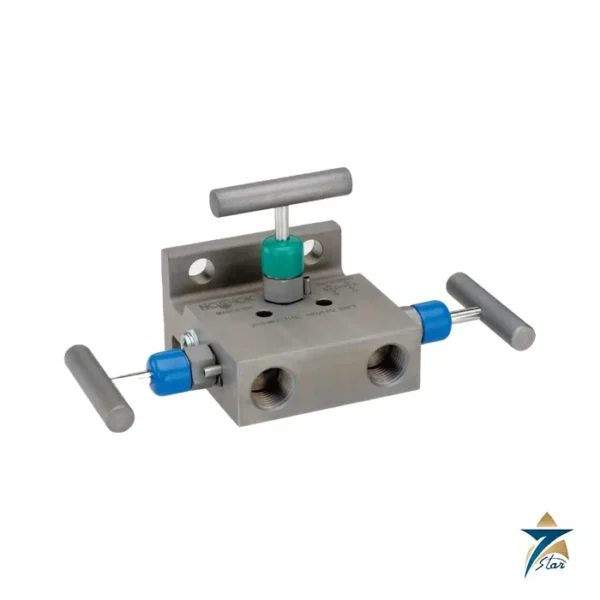
Install the transmitter vertically where possible; the datasheet quotes a mounting-position effect of up to 0.35 mbar per 10 degrees of tilt around the transverse axis, which can be zeroed out. Use a valve manifold with equalising and block valves so the cell can be zeroed under pressure and isolated for service. For gas flow mount the transmitter above the line so condensate drains back, and for liquid or steam mount below with a condensate pot or in line with the correct impulse-line slope. Keep impulse lines short, equal in length and protected against freezing, heat and blockage.
Commissioning is performed with the display, the Bluetooth app or a DTM: set range and damping, apply zero at equalised pressure, and check the static pressure indication. Zero-point offset can be adjusted under operating pressure. Routine maintenance consists of periodic zero checks and inspection of impulse lines and vent screws; the datasheet gives a five-year long-term stability figure for planning verification intervals.
Typical applications in Oman and the GCC
In the Gulf the DP 7060 serves flow metering on utility steam and process gas lines, filter differential on seawater intake and cooling circuits, level in pressurised separators and boiler feed tanks, and pump protection in water and wastewater plants. Power stations use it for fan and air-heater draft and for flow across orifice plates, while petrochemical and gas processing plants use diaphragm seal versions on sticky or hot services. Heat and sun call for shaded mounting or sunshades, and dust and humidity favour IP66/67 or stainless housings with sealed cable glands.
Range overview
| Nominal range |
Smallest span |
Turn-down |
MWP |
| 10 mbar |
0.5 mbar |
20:1 |
40 bar |
| 30 mbar |
1 mbar |
30:1 |
40 bar |
| 100 mbar |
1 mbar |
100:1 |
160 or 400 bar |
| 500 mbar |
5 mbar |
100:1 |
160 or 400 bar |
| 3 bar |
30 mbar |
100:1 |
160 or 400 bar |
| 16 bar |
160 mbar |
100:1 |
160 or 400 bar |
Information to send with an RFQ for the OPTIBAR DP 7060
- Application and the differential span, with maximum static pressure and temperature.
- Medium and whether diaphragm seals or a manifold are needed.
- Process connection and material for flange, diaphragm and seal.
- Housing, display, protocol and hazardous-area approval.
- Quantity and required documents.
Documents and quotation
A KROHNE technical datasheet for the OPTIBAR DP 7060 C is attached on this page. Send the details above and we will confirm availability and prepare a quotation for the OPTIBAR DP 7060 in Oman and the GCC. Seven Star LLC is an independent supplier in Muscat.
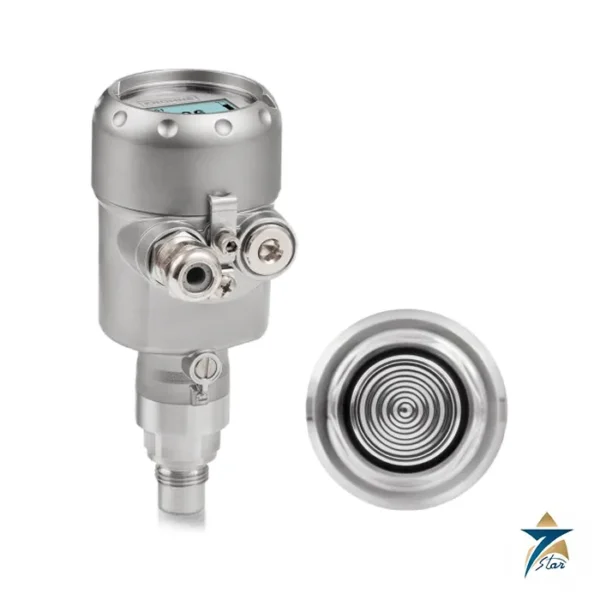
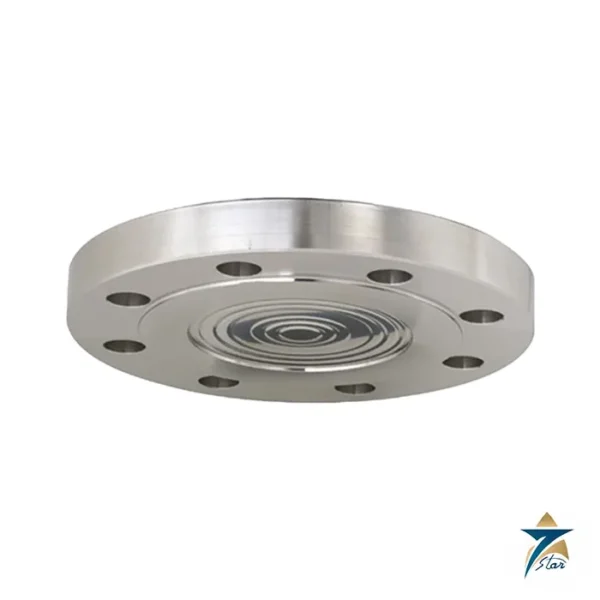
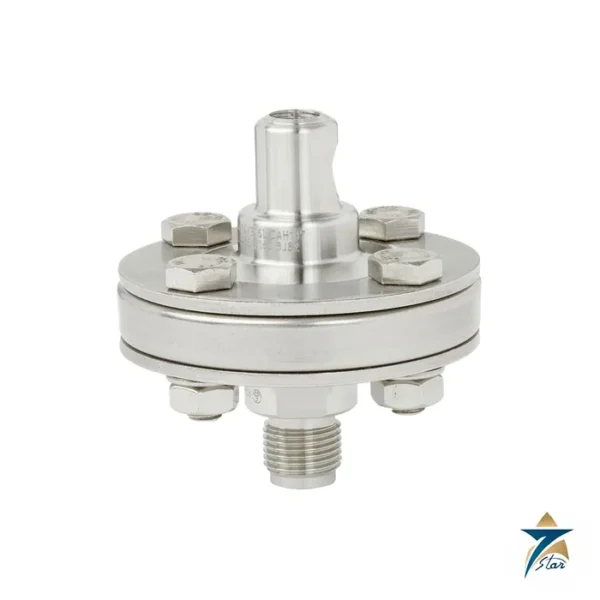
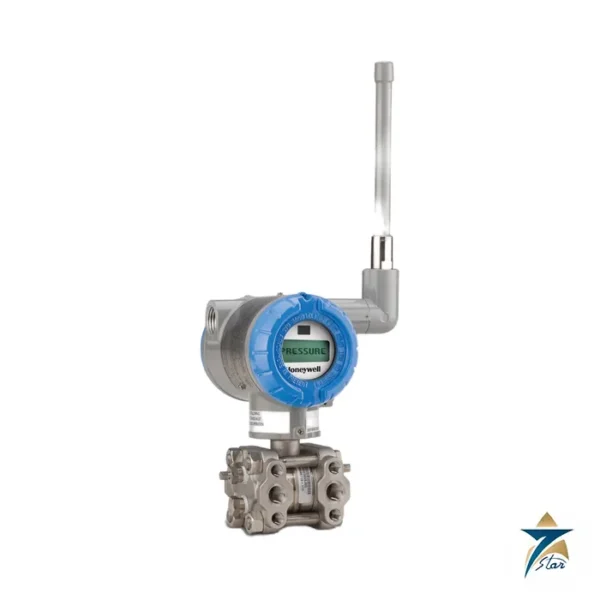
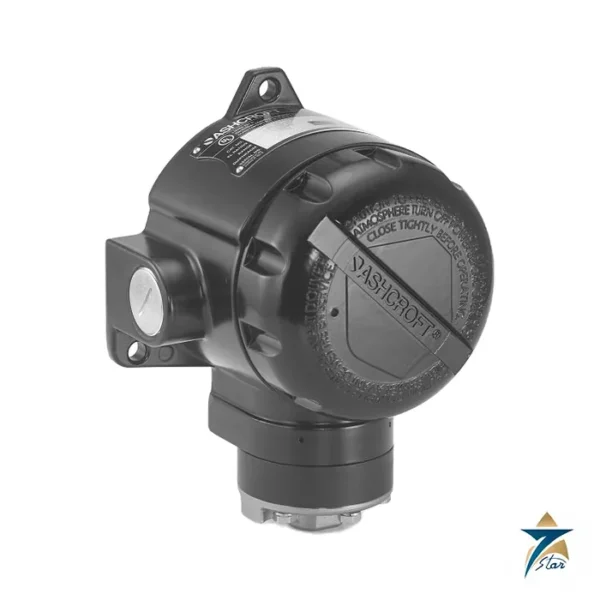
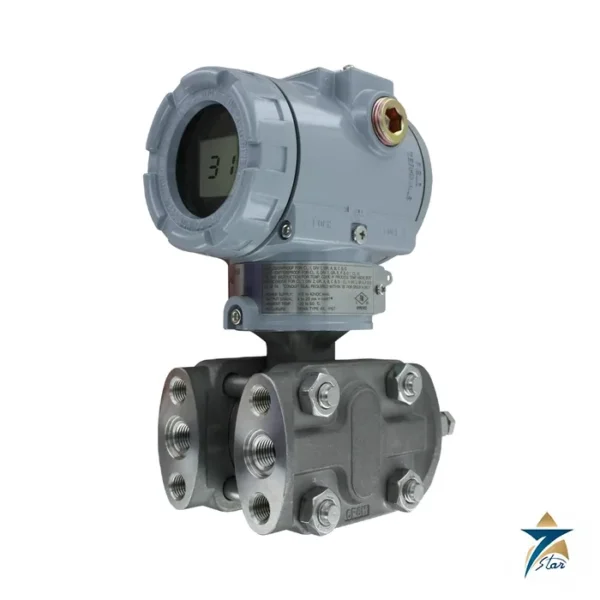
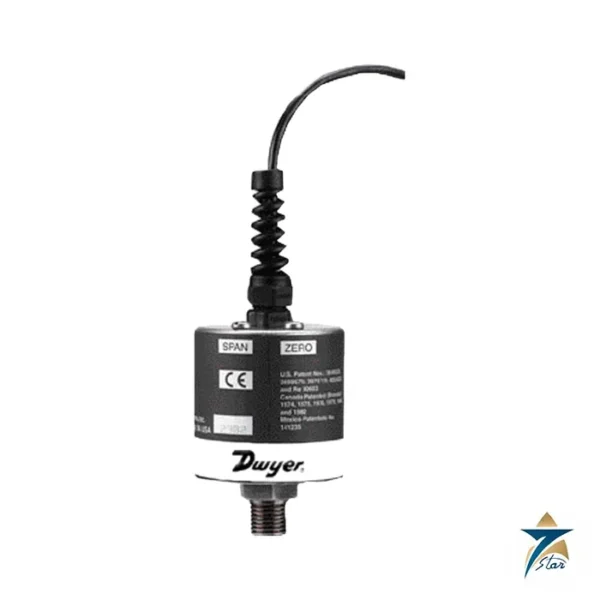
Other Models in the Krohne Optibar Range
Seven Star LLC supplies models from the Krohne Optibar range in Oman and the GCC. Compare the related models below and request a quote for the one that matches your application.


















Reviews
There are no reviews yet.