FTI56 Solicap M rope capacitance level switch for tall silos
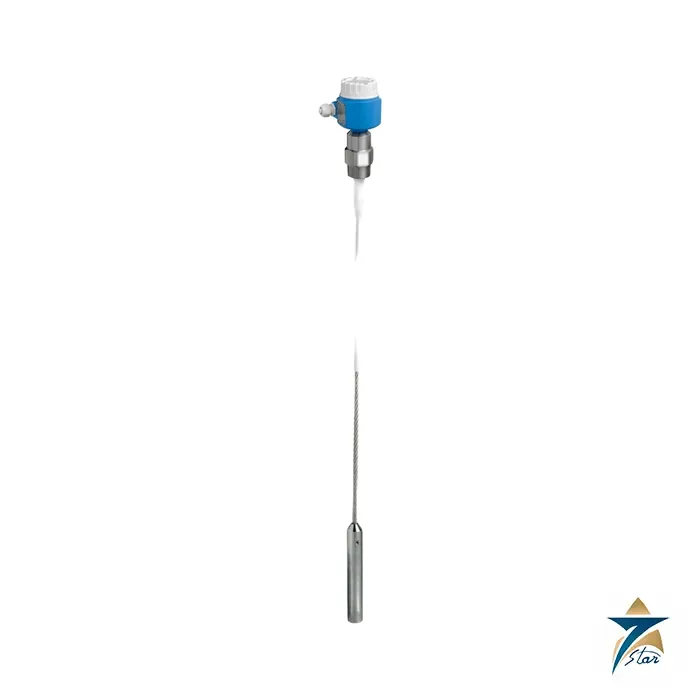
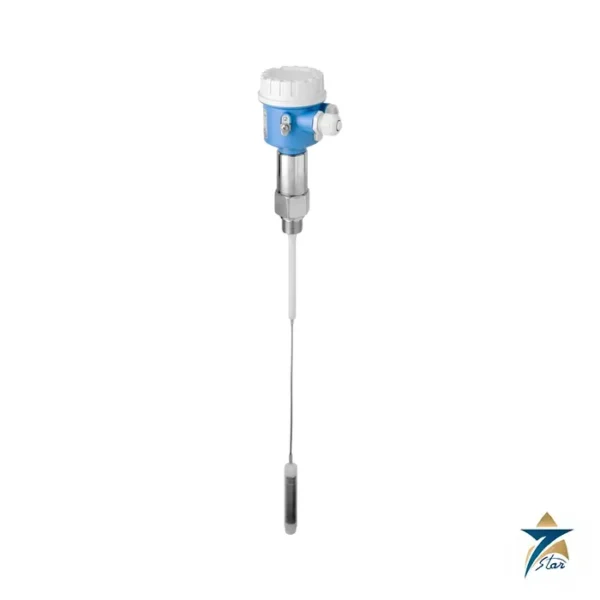
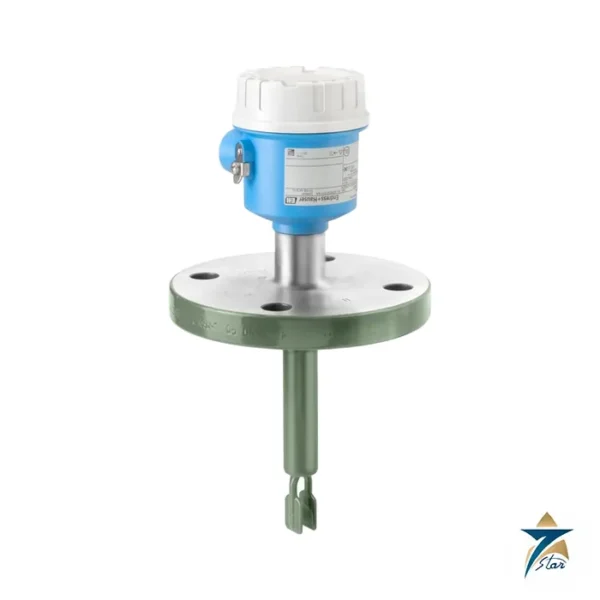
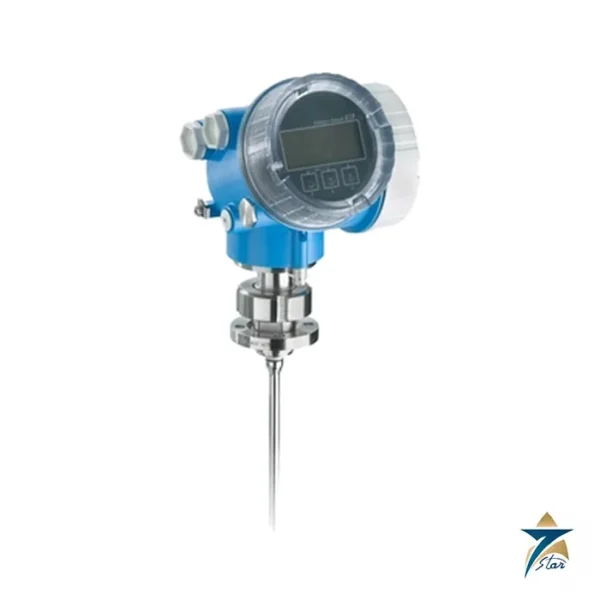
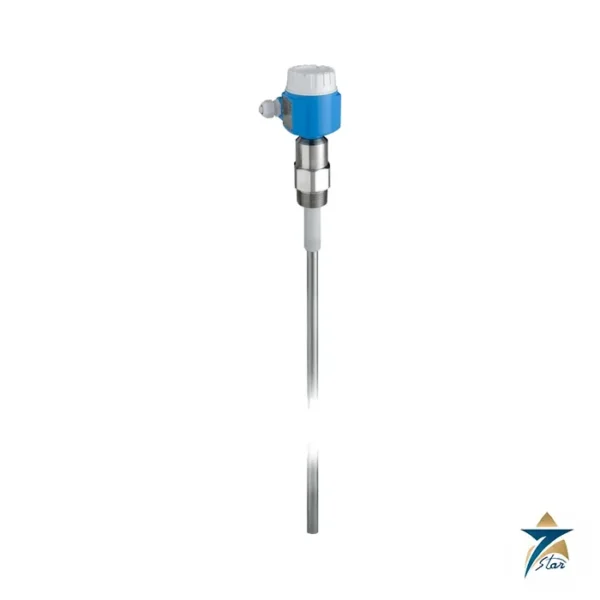
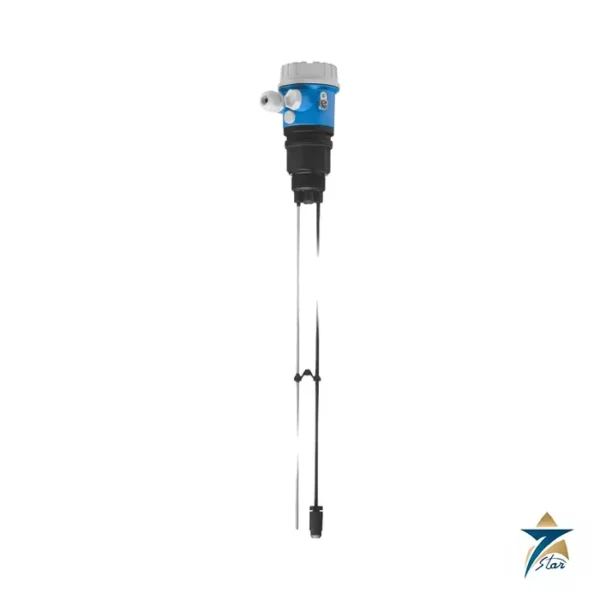
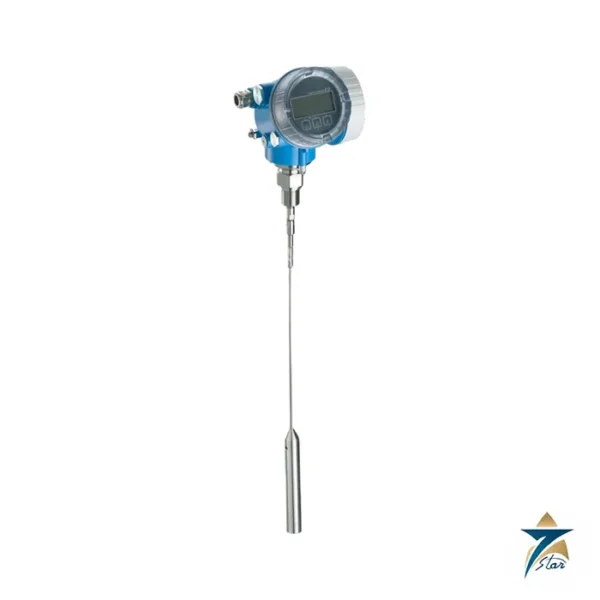
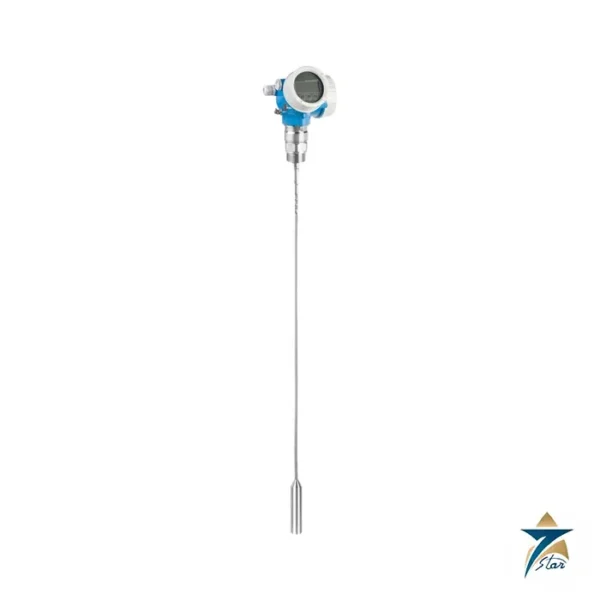
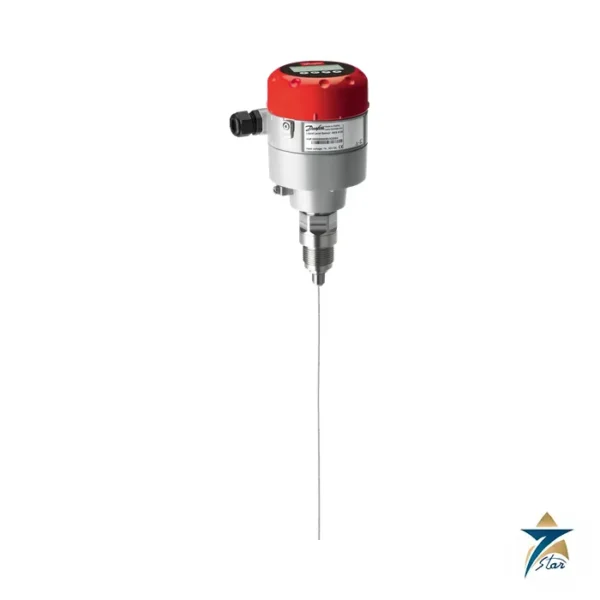
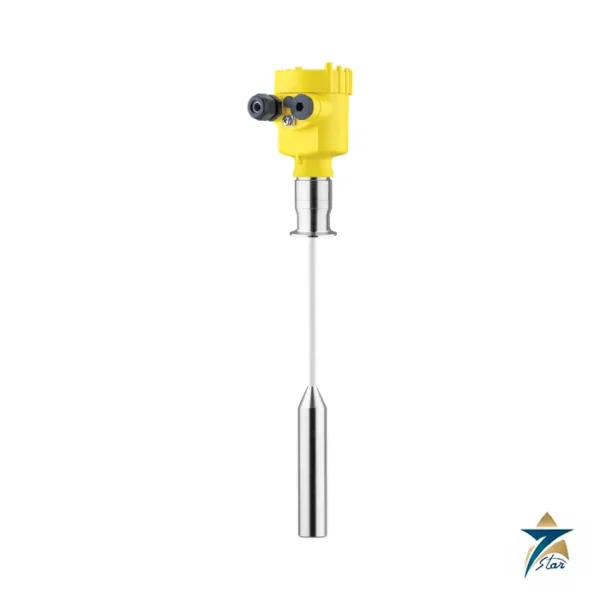
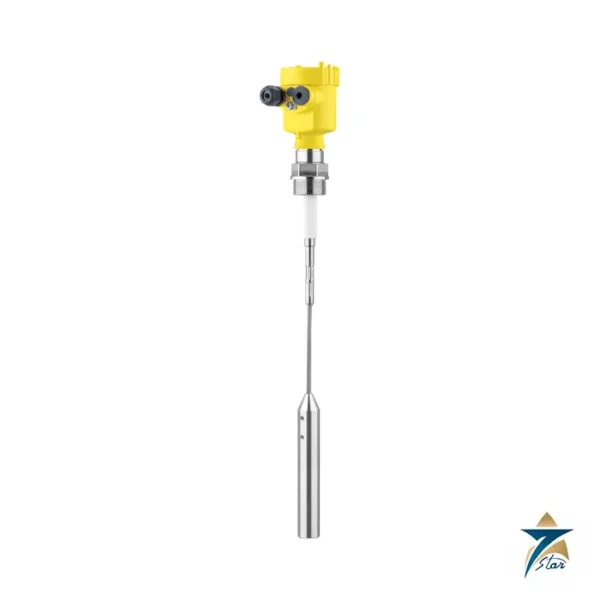
The Endress+Hauser FTI56 is the rope-probe version of the Solicap M point level switch for bulk solids. A stainless steel rope of up to about 20 m hangs from the roof or side wall of a silo and ends in a tensioning weight, and the switch operates when the stored material covers the rope. It is the right shape when a rod would be too short, too heavy or impossible to install through a nozzle. Seven Star LLC supplies the FTI56 in Oman and the GCC as an independent supplier in Muscat.
Because a rope is flexible, the FTI56 carries its own set of rules about tension, anchoring and attachment that differ from the rigid FTI55. This page highlights those points and the data that must be fixed before an order.
FTI56 technical specifications
| Parameter |
Specification |
| Manufacturer / part number |
Endress+Hauser / FTI56 (Solicap M point level switch, rope probe, bulk solids) |
| Measuring principle |
Capacitive point level detection in bulk solids with εr of 2.5 or more |
| Process temperature |
Partially insulated (PTFE rope coating): up to +180 °C; fully insulated (PA): up to +120 °C; minimum –50 °C |
| Process pressure |
–1 to 25 bar (–14.5 to 362.5 psi), with flange and temperature derating |
| Rope length |
Total length 500 to 20,000 mm; with inactive length 700 to 20,000 mm |
| Rope diameter |
6 mm (8 mm with insulation) or 12 mm (14 mm with insulation) |
| Tensioning weight |
30 mm × 150 mm for the 6 mm rope, 40 mm × 250 mm for the 12 mm rope |
| Tensile load capacity |
30 kN for the 6 mm rope, 60 kN for the 12 mm rope (partially insulated version, at 20 °C) |
| Inactive length |
200 to 2,000 mm, 43 mm diameter, for nozzle mounting and condensate |
| Ambient temperature (housing) |
–50 to +70 °C; –40 °C minimum for polyester F16 |
| Rope weight |
0.18 kg/m for 6 mm rope, 0.55 kg/m for 12 mm rope; housing about 4 kg |
| Rope and fixtures |
316 rope (1.4401), PTFE coating or PA over galvanised steel, 316L or steel process connection and weight |
| Separate housing |
Temperature at the separate housing must not exceed 70 °C |
How the FTI56 responds to material height
The rope and the silo wall form a capacitor, and a material with a relative dielectric constant of at least 2.5 raises its capacitance as the rope is covered. The electronic insert detects the calibrated capacitance and switches. Because of the length, the datasheet includes a curve showing how rope length needs to relate to the material: conductive materials such as coal give a large change over a short length, high-DK materials such as rock salt are in the middle, and low-DK materials such as dried grain need the longest rope to reach the 5 pF minimum change. The FTI56 is therefore chosen on the lowest dielectric constant you expect, not the typical one.
An inactive length near the nozzle prevents condensate or product residue from triggering a false switch, and partially insulated ropes are used only with non-conductive solids when two-point control is required for a screw conveyor or feeder.
Rope handling: tension, anchoring and shortening
- The tensioning weight is always uninsulated.
- The end of the rope can be anchored if it would otherwise touch the silo wall; the bracing can be conductive or insulating.
- Do not overload the rope: the tensile capacity depends on diameter, and the load from sinking or collapsing material in a tall silo can be much greater than the rope’s own weight.
- The rope can be shortened on site once the weight is removed, but the switch point must then be recalibrated.
- Mount probes at least 500 mm apart and clear of the filling point and outlet funnel.
Electronic inserts for the FTI56
The same family of inserts used on the FTI55 and the Liquicap M switches is available for the FTI56: FEI51 (two-wire AC), FEI52 (DC PNP), FEI53 (3-wire signal to a Nivotester FTC325), FEI54 (relay, 19–253 V AC or 19–55 V DC), FEI55 (8/16 mA, SIL2 hardware and SIL3 software), FEI57S (PFM) and FEI58 (NAMUR). Switching delay is adjustable from 0.3 to 10 s on the direct-switching inserts and the output state is correct within 3 s of power-up.
Selecting the FTI56: checklist
- Silo height and the distance from the roof or side nozzle to the switch height.
- Lowest dielectric constant and whether the material is conductive.
- Temperature at the probe: 180 °C with PTFE coating, 120 °C with PA.
- Rope diameter, set by tensile load; larger silos or heavy abrasive material favour 12 mm.
- Need for an inactive length (nozzle) and for anchoring at the lower end.
- Output, supply and hazardous-area class, with approvals depending on the ordered version.
- Roof loading and the possibility of material sliding against the rope.
Installation and service notes for the FTI56
Insulate the outer silo wall near the nozzle to avoid condensation and to keep the housing within its permitted temperature. Keep the rope out of the loading curtain and in a position where it is not struck by falling product. After installation, the switch point is calibrated by a push-button at the housing. Inspect the rope for wear and the coating for abrasion at planned shutdowns, and keep a spare electronic insert and tensioning hardware. Surge arresters and a protective cover are listed accessories.
Where the FTI56 is used in Oman and the GCC
Tall storage silos for cement, fly ash, lime, grain and aggregate are common at industrial sites in Oman and across the Gulf. The FTI56 is the practical choice when a high-level alarm or a low-level cut-off is needed in a silo with a roof nozzle and many metres of free height. Dust, heat and humidity call for sealed cable entries, and coastal installations may prefer a stainless housing.
FTI56 against the other Solicap probes
| Model |
Distinguishing feature |
| FTI55 |
Rigid 18 mm rod up to 4 m, up to 300 Nm lateral load |
| FTI56 |
Flexible rope up to 20 m, 180 °C partially insulated, 120 °C fully insulated |
| FTI77 |
Sword or 6 mm rope on ceramic mount, up to 400 °C |
Information to send with an RFQ for the FTI56
- Material, grain size and lowest dielectric constant
- Silo height, diameter, wall material and nozzle position
- Switch height and required rope length
- Process temperature and pressure
- Rope diameter, insulation and any inactive length
- Output, supply voltage and hazardous-area class
- Quantity and delivery site
Documents and quotation
A datasheet for the FTI56 is attached on this page. It is the Technical Information for the Solicap M FTI56, with rope dimension tables and temperature diagrams.
Send the part number FTI56 and your silo data for a quotation, and we will confirm availability and lead time for Oman and the GCC.



















Reviews
There are no reviews yet.