Endress+Hauser FMP57 guided-wave radar for bulk solids silos
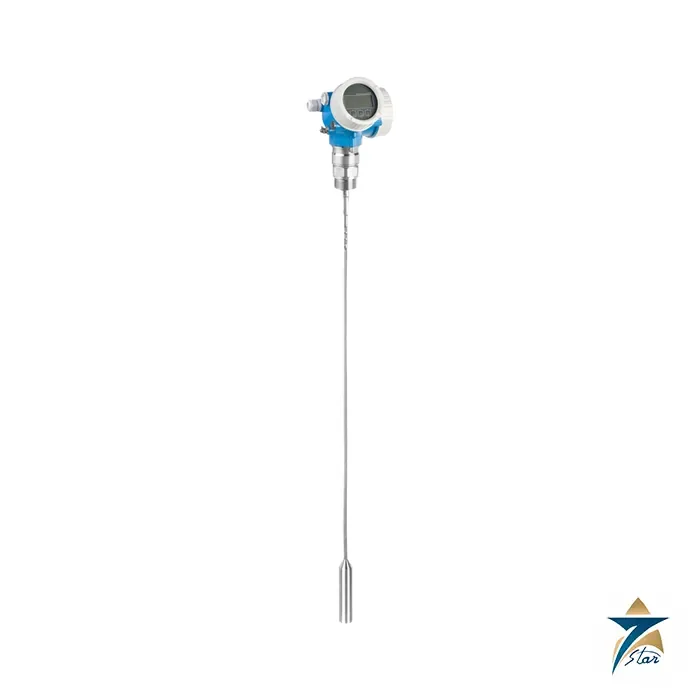
The Endress+Hauser FMP57 is a Levelflex guided-wave radar transmitter built for continuous level measurement in bulk solids. A rod or rope probe runs down into the vessel, and the instrument reports the distance to the product surface through a 4-20 mA HART loop, PROFIBUS PA or FOUNDATION Fieldbus. The FMP57 is the heavy-duty member of the solids pair: the lighter FMP56 is limited to a 12 m rope with 12 kN tensile loading, while the FMP57 takes a rod up to 4 m or a rope up to 45 m and withstands up to 30 kN of pulling force from the product.
Seven Star LLC, an independent supplier in Muscat, supplies the FMP57 in Oman and the GCC for cement, grain, minerals, plastics granulate and power-plant fuel or ash handling. The sections below explain how the FMP57 works, what the probe options mean for your silo, and which data we need to quote the right version.
FMP57 technical specifications
| Parameter |
Specification |
| Manufacturer / part number |
Endress+Hauser / FMP57 (Levelflex) |
| Measuring principle |
Guided-wave radar, time of flight (TDR), pulses at 100 MHz to 1.5 GHz |
| Application |
Continuous level in bulk solids (silos, bunkers, hoppers) |
| Probe types |
Rod 16 mm (316L); rope 4 mm, 1/6 in, 6 mm, 1/4 in or 8 mm in 316 or PA-coated steel |
| Maximum measuring range |
Rod 4 m (13 ft); rope 45 m (148 ft), depending on media group |
| Maximum tensile load |
30 kN on the FMP57 probe |
| Accuracy |
±2 mm up to 15 m measuring distance; ±10 mm above 15 m |
| Non-repeatability / resolution |
≤ 1 mm; digital resolution 1 mm, analog 1 µA |
| Process temperature |
FKM seal –30 to +150 °C; EPDM seal –40 to +120 °C; FFKM seal –5 to +185 °C (PA-coated rope max. 100 °C) |
| Process pressure |
–1 to +16 bar (–14.5 to 232 psi), reduced by the chosen connection |
| Ambient temperature |
–40 to +80 °C at the device (display –20 to +70 °C) |
| Outputs |
4-20 mA HART (optional switch output), PROFIBUS PA, FOUNDATION Fieldbus; Bluetooth for SmartBlue app |
| Supply (2-wire HART) |
11.5 to 35 V at the terminals for non-hazardous use; 13.5 to 30 V for Ex d |
| Housings and protection |
GT18 stainless steel, GT19 plastic, GT20 aluminum; IP66/NEMA 4X and IP68/NEMA 6P with housing closed |
| Functional safety |
SIL 2, SIL 3 with homogeneous redundancy, assessed by an independent test house |
| Process connections |
Threads G¾ / NPT¾ and G1½ / NPT1½, or flanges (DIN/EN, ASME, JIS) |
How the FMP57 measures level
The FMP57 sends very short high-frequency pulses down the probe. Wherever the dielectric constant changes, a part of the pulse is reflected, and the surface of the bulk solid is one such point. The electronics measure the time between the launched pulse and the reflected echo and calculate distance from the speed of light. Level is then empty distance minus measured distance. A linearization table of up to 32 points lets you convert level to volume or mass, and tables for cylindrical vessels are preprogrammed.
The strength of the echo depends on relative permittivity (εr). Coal dust, salt and metal powder reflect well, while plastic powder and dry white lime reflect weakly. That is why the datasheet divides products into six media groups and gives a different maximum range for each one. For example, a bare rope in a group 6 product (εr above 7) can reach 45 m, whereas a plastic powder (group 1, εr 1.4 to 1.6) is limited to roughly 20 to 25 m. Multi-echo tracking and interference echo suppression (mapping) help the FMP57 ignore struts, welds and the filling stream.
Choosing the FMP57 rod or rope probe
For solids, rope probes are the normal choice. A rod is only advised for short ranges up to about 2 m in bulk solids, especially in angled installations or with light, free-flowing material, although the FMP57 rod is rated to 4 m. In tall silos the lateral pressure of the product on the rope can be very large, so a plastic-jacketed rope is required. PA-coated ropes are recommended for milled products such as cereals, wheat and flour. Typical measuring ranges for the FMP57 are:
| Media group (εr) |
Example product |
Rod |
Bare rope |
PA-coated rope |
| 2 (1.6 to 1.9) |
Plastic granulate, sugar |
4 m |
25 to 30 m |
12.5 to 15 m |
| 3 (1.9 to 2.5) |
Portland cement; flour |
4 m |
30 to 45 m |
15 to 25 m (flour) |
| 4 (2.5 to 4.0) |
Grain, sand |
4 m |
45 m (sand) |
25 to 35 m |
| 6 (above 7) |
Coal dust, carbon black |
4 m |
45 m |
36 to 45 m |
Moist products that build up on the probe can shorten the practical range, and for loose, aerated material the datasheet says to use the next lower group.
Where the FMP57 fits and related Levelflex parts
The FMP57 is part of the Levelflex guided-radar family. Within the solids line it sits above the FMP56, and for liquids Endress+Hauser uses other Levelflex models; if your medium is a liquid, ask us and we will confirm the correct member of the range. For non-contact measurement in solids silos a free-space radar such as the Micropilot FMR66B is the alternative with no probe inside the product and therefore no tensile load on the instrument. Accessories available from the maker include a remote display FHX50, a weather protection cover, surge arrester modules OVP10 and OVP20, and the version with a remote sensor on a 3 m cable for confined spaces.
FMP57 selection and ordering checklist
- Product name, bulk density, particle size and dielectric constant, or at least the media group.
- Silo height, probe length needed, and whether the probe end is free or fixed at the bottom.
- Expected tensile load: cone discharge, silo diameter and product weight.
- Process temperature at the connection to choose FKM, EPDM or FFKM seal, and silo pressure.
- Rod or rope, bare or PA-coated, and the rope diameter.
- Process connection (thread or flange standard, size and rating).
- Output (HART, PROFIBUS PA or FOUNDATION Fieldbus), switch output, Bluetooth, display.
- Hazardous-area classification and housing material; SIL requirement; marine approval if needed.
- Any need for a linearity protocol (3-point or 5-point) or material certificate EN 10204-3.1.
FMP57 installation, commissioning and care
Keep the probe at least 50 mm from smooth metal walls and 500 mm from concrete walls, and at least 300 mm from internal fittings that might move into contact with it. A free rope should never come closer than 300 mm to internals, even when the product shifts. Do not mount the probe in the filling curtain, and avoid the center of a metal silo, because it produces more interference echoes; if that cannot be avoided, run the mapping function after commissioning. Leave 150 mm between the end of a rope and the vessel bottom, and 10 mm for a rod.
The factory blocking distance is 200 mm for probes up to 8 m, and 0.025 times probe length above that. It can be reduced to 100 mm for media with εr above 7. The transmitter is preadjusted to the ordered probe length, and commissioning is menu-guided in six steps, locally or through the SmartBlue app. In operation, inspect the rope regularly for wear and kinking, check buildup, and use the Heartbeat Diagnostics and Verification options if proof testing is part of your SIL plan.
FMP57 applications in Oman and the GCC
In the Gulf, the FMP57 is used in cement plants measuring clinker, raw meal and cement silos, in grain terminals and flour mills, in sand and aggregate handling, and in power stations for coal, limestone and fly ash. Heat, fine dust and cold-night condensation are everyday conditions, so the sealed IP66/IP68 housings and the high-temperature FFKM option are relevant. The rope probe is not affected by dust in the air above the product, which is a common weakness of non-contact level devices in dusty silos. Petrochemical sites use the FMP57 for plastic pellet silos where the hazardous-area approvals matter.
Information for an FMP57 RFQ
- Application, material and its dielectric constant or media group.
- Probe length, type, coating, and process connection.
- Temperature, pressure, and tensile load expected.
- Output signal, power supply, and display requirement.
- Hazardous-area certificate and SIL requirement.
- Quantity, delivery site and required documents.
Documents and quotation
The technical information datasheet for the Levelflex FMP56 and FMP57 is attached on this page. It holds the full range tables, dimensions, wiring, certificates and ordering structure.
Send us the application details above and Seven Star LLC will prepare a quotation for the FMP57 version that matches your silo and approvals.
Other Models in the Eh Levelflex Solids Range
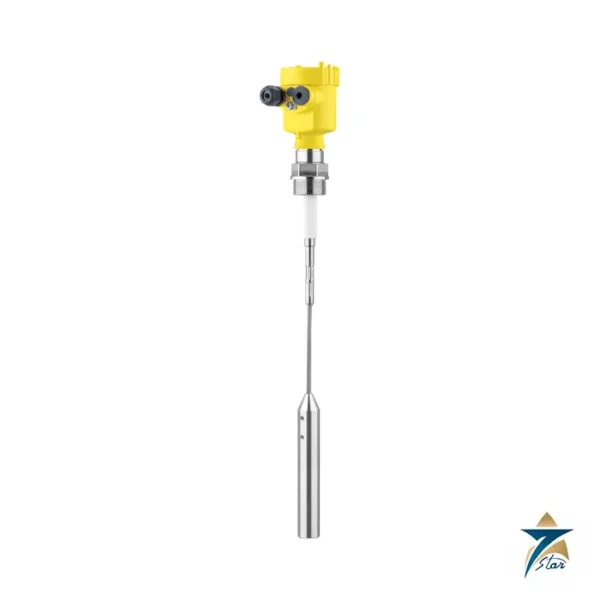
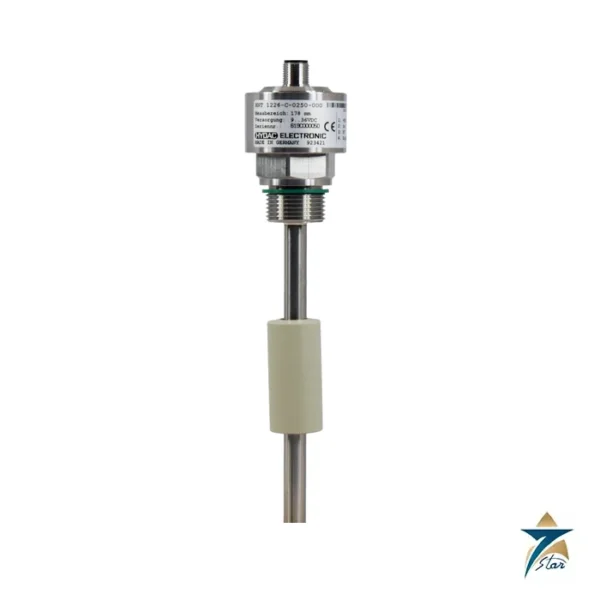
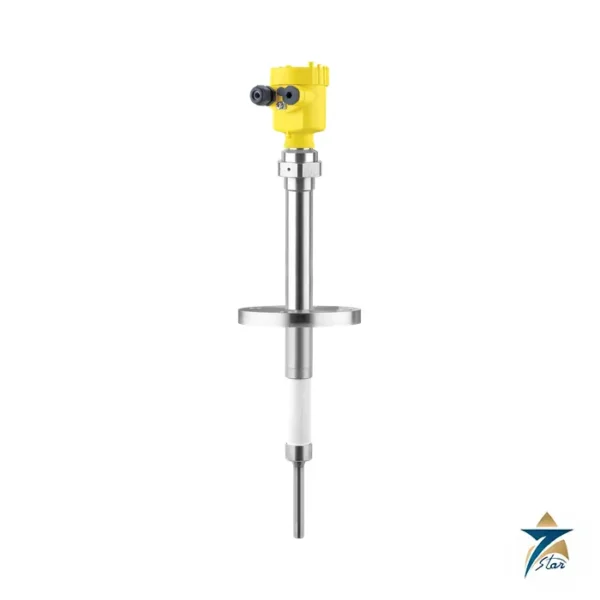
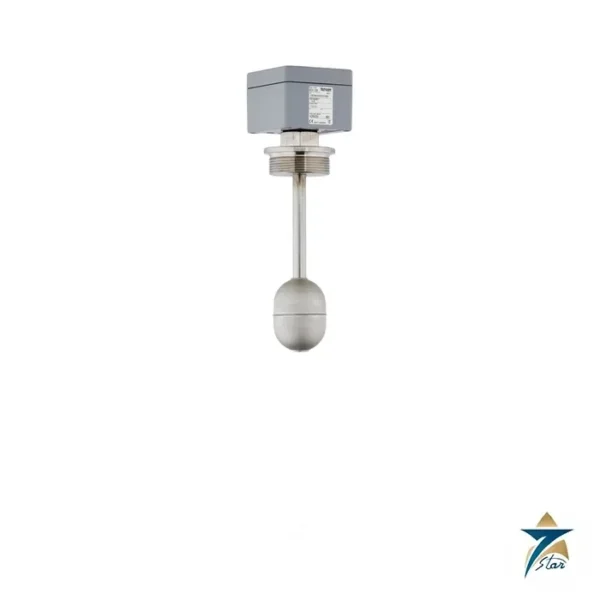
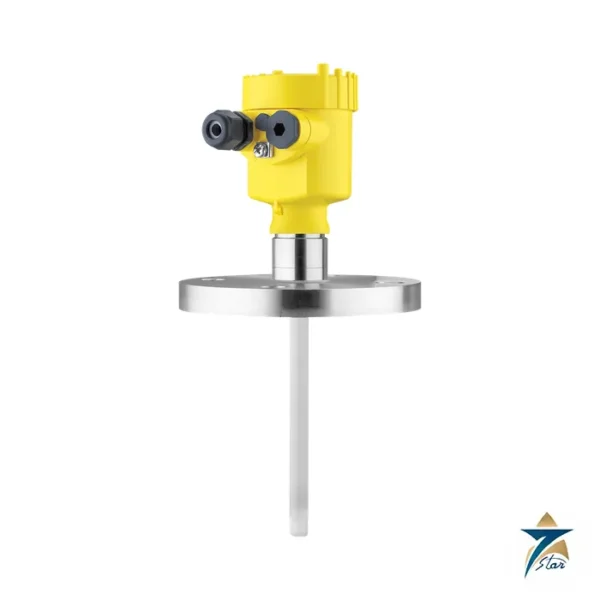
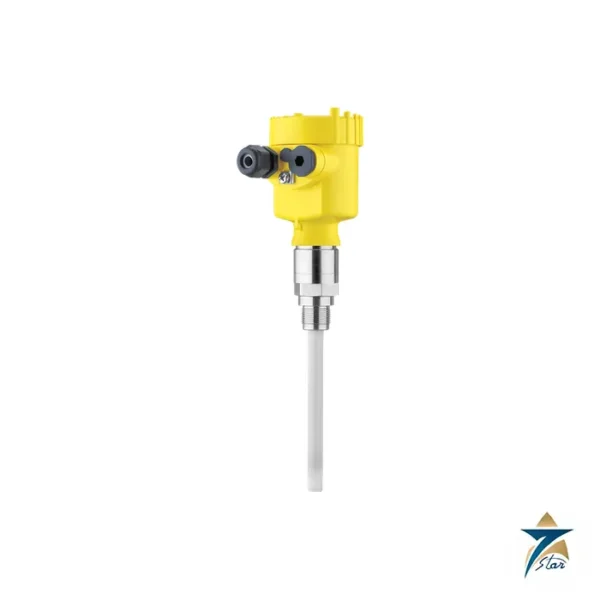
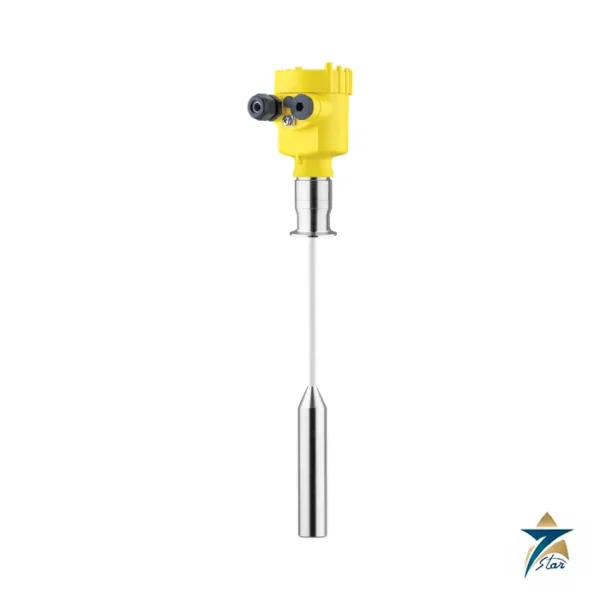
Seven Star LLC supplies models from the Eh Levelflex Solids range in Oman and the GCC. Compare the related models below and request a quote for the one that matches your application.























Reviews
There are no reviews yet.