Promag E 100 economical electromagnetic flowmeter for process and utility lines
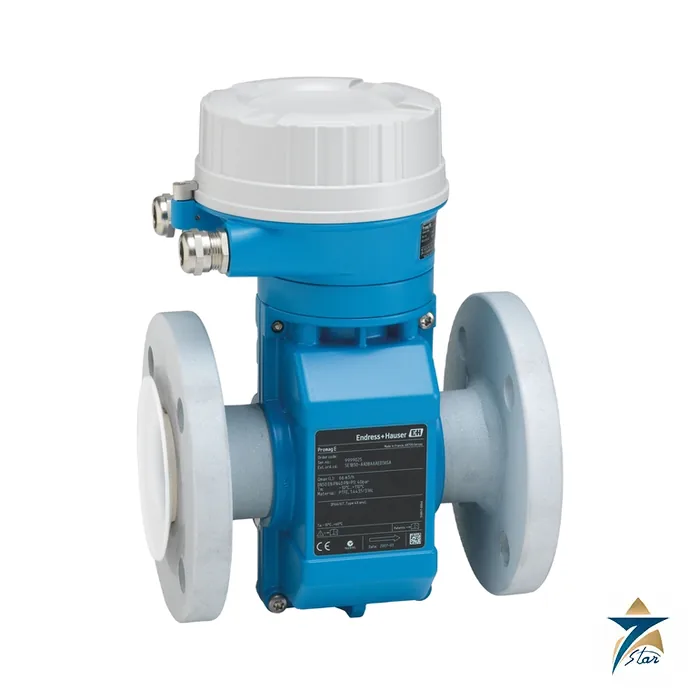
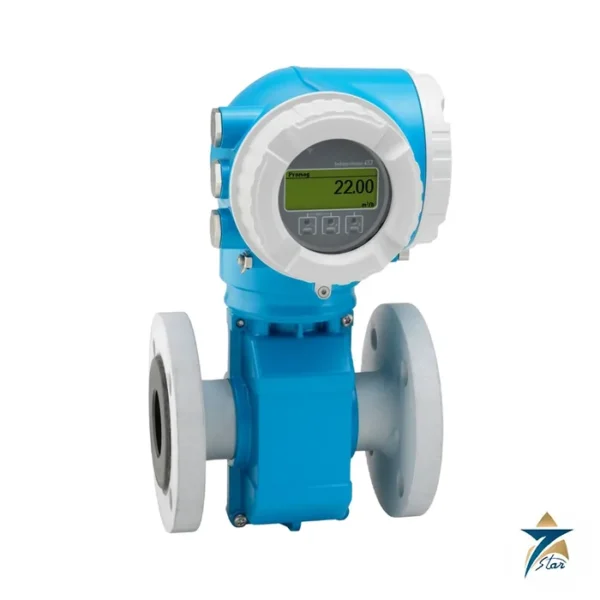
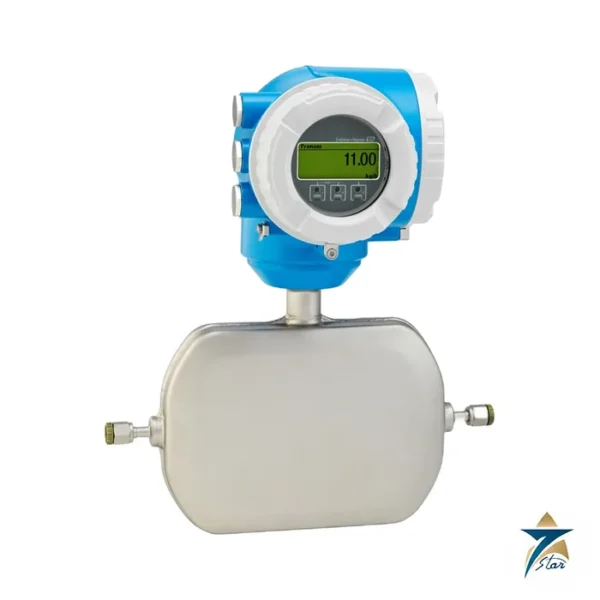
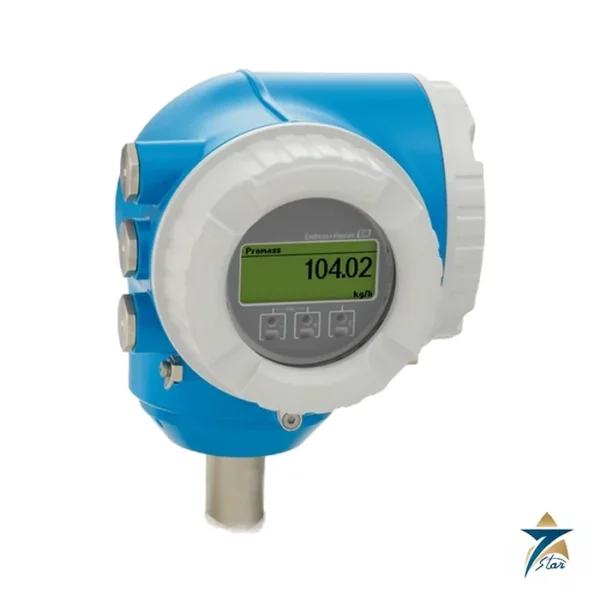
The Endress+Hauser Promag E 100 is the cost-effective member of the Proline Promag electromagnetic flowmeter range. It pairs a PTFE-lined flanged sensor, from DN 15 up to DN 600, with the ultra-compact Proline 100 transmitter, and it is positioned for basic applications in the chemical and process industries: conductive liquids, water and effluent, and utility lines where a simple, maintenance-free meter is needed. Seven Star LLC supplies Endress+Hauser flow instruments in Oman and the GCC as an independent supplier in Muscat; this page sets out the Promag E 100 so that a quotation can be prepared against complete information.
Promag E 100 is a product name. The order code fixes the nominal diameter, flange standard and pressure class, electrode material, transmitter output, display, approvals and options, so two Promag E 100 units can look alike and still differ in important ways.
Promag E 100 technical specifications
| Parameter |
Specification |
| Manufacturer / part number |
Endress+Hauser / Proline Promag E 100 (electromagnetic flowmeter, product root 5E1B) |
| Measuring principle |
Electromagnetic, bidirectional |
| Nominal diameter |
DN 15 to 600 (1/2 to 24 in) |
| Measuring range |
4 dm³/min to 9,600 m³/h (1 to 44,000 gal/min) |
| Max. measurement error |
Standard ±0.5 % of reading ± 1 mm/s (0.04 in/s); option ±0.2 % of reading ± 2 mm/s (0.08 in/s) |
| Medium temperature |
–10 to +110 °C (+14 to +230 °F) |
| Ambient temperature |
–10 to +60 °C (+14 to +140 °F) |
| Process pressure |
PN 40, Class 150, 20K depending on connection and size |
| Liner |
PTFE |
| Electrodes |
1.4435 (316L); Alloy C22, 2.4602 (UNS N06022); tantalum |
| Measured variables |
Volume flow, conductivity, mass flow |
| Minimum conductivity |
5 µS/cm for liquids in general |
| Sensor housing |
DN 15 to 300: AlSi10Mg, coated; DN 350 to 600: carbon steel with protective varnish |
| Transmitter housing |
AlSi10Mg, coated; IP67, Type 4X enclosure |
| Display and operation |
Four-line backlit display available (no local operation); configuration through web browser and operating tools |
| Outputs |
4–20 mA HART (active); pulse/frequency/switch output (passive) |
| Digital communication |
HART, PROFIBUS DP, Modbus RS485, EtherNet/IP, PROFINET |
| Power supply |
DC 20 to 30 V |
| Approvals and certificates |
CE; hazardous-area approvals listed on the product page: ATEX, IECEx, cCSAus, INMETRO, EAC; PED; 3.1 material certificates |
How the Promag E 100 measures and what it gives you
Magnetic coils create a field across the measuring tube, and the conductive liquid flowing through it generates a voltage at the electrodes in proportion to its velocity. The transmitter converts that voltage to volume flow and, because the principle is bidirectional, can measure forward and reverse flow. The measurement is largely independent of pressure, density, temperature and viscosity, and there is no restriction in the pipe, so the pressure loss comes only from the pipe itself. With no moving parts the meter is maintenance-free in normal service.
Besides volume flow, the Promag E 100 calculates mass flow and reports conductivity. Conductivity can be used as an additional process indicator, for example to see a change in the liquid arriving at a skid. The embedded Heartbeat Technology verifies the instrument in place, and the manufacturer states that it meets the traceability requirements of ISO 9001:2015 section 7.1.5.2 a, confirmed by a TUV SUD attestation. Calibration is done on facilities accredited to ISO/IEC 17025.
Sensor sizes, flanges and materials of the Promag E 100
The sensor housing changes with size. Up to DN 300 it is coated aluminum, and from DN 350 to DN 600 it is carbon steel with a protective varnish. Flanges follow EN 1092-1 (Form A to DN 300, Form B from DN 350), ASME B16.5, JIS B2220, AS 2129 Table E or AS 4087 PN 16, and carbon steel flange materials are listed. The measuring tube is stainless steel and the PTFE liner gives broad chemical resistance within the temperature limit of 110 °C. Electrodes in 316L suit most water and neutral duty; Alloy C22 and tantalum are offered for more aggressive media.
Where Promag E 100 fits among Promag models
The Promag E 100 is the economical choice for process duty. For hygienic lines, Promag H 100 and Promag H 500 use a PFA liner and stainless steel sensor and reach +150 °C. For drinking water networks without a mains supply, Promag W 800 is battery-powered. Promag E 100 sits between them for general industrial service: wider size range than the H models (to DN 600), a lower temperature limit (+110 °C) and a more robust industrial housing. In the same Proline family, the Promag P and Promag W series cover higher-demand and water-specific tasks.
Selecting and ordering the Promag E 100
- Nominal diameter and flow range, including minimum flow. Check the velocity against the 0.01 to 10 m/s span of the electromagnetic principle.
- Flange standard, pressure class and facing, and whether the line is steel, plastic or lined.
- Liquid compatibility with PTFE and with the electrode material, including cleaning chemicals.
- Output interface: HART with pulse/frequency/switch output, or PROFIBUS DP, Modbus RS485, EtherNet/IP or PROFINET.
- Display: with or without the four-line backlit display; setup is via web browser or operating tool either way.
- Hazardous area: confirm which Ex approval is needed for the order code; the product page lists approvals for the Zone 2 type of duty.
- Accuracy option: ±0.5 % standard or the ±0.2 % option, and any need for 3.1 certificates or PED.
Installation, commissioning and maintenance of the Promag E 100
Install the sensor with the flow arrow in the flow direction in a completely filled pipe. The technical information advises placing it upstream of valves, tees and elbows if possible and keeping straight runs of about 5 x DN before and 2 x DN after the sensor to keep accuracy within specification. Use grounding rings or bonding according to the pipe material and linings. Keep protective covers in place until the meter is fitted, store it dry, and shield the transmitter from direct sun in hot regions. The ultra-compact transmitter is tied to the sensor, so on hot lines near the +110 °C limit confirm the combined ambient and process conditions before choosing the compact build.
Commissioning is done through the integrated web server or with FieldCare or DeviceCare. Periodic Heartbeat Verification gives a documented check without removing the meter from the line.
Typical applications in Oman and the GCC
The Promag E 100 suits chemical dosing and transfer lines, cooling-water and chilled-water circuits, effluent and process water at wastewater plants, and utility lines on industrial estates in Sohar, Duqm and Salalah. It is also a natural choice for skid builders and equipment manufacturers that need a compact, standard meter in many units. Ambient temperature is the main point to check in Oman: the sensor is rated to +60 °C, so shaded mounting should be planned on outdoor lines.
Promag E 100 variant overview
| Item |
Range or option |
| DN 15 to 300 |
Coated aluminum sensor housing |
| DN 350 to 600 |
Carbon steel with protective varnish |
| Electrodes |
316L, Alloy C22, tantalum |
| Accuracy |
Standard or ±0.2 % option |
| Output |
HART + pulse/frequency/switch, PROFIBUS DP, Modbus RS485, EtherNet/IP, PROFINET |
Information to send with an RFQ for the Promag E 100
- Nominal diameter, flange standard and pressure class.
- Liquid, temperature, conductivity, and minimum and maximum flow.
- Output or fieldbus, supply voltage and display requirement.
- Hazardous area zone, certificates (3.1, PED) and any special documentation.
- The nameplate order code of an existing meter, if this is a replacement.
Documents and quotation
For the Promag E 100, send us the part number or the order code and we will confirm which documents are available, including the current technical information and operating instructions from the manufacturer.
Seven Star LLC quotes against the order code or against your duty data, and confirms the configuration, lead time and certificates for delivery to Oman and the GCC.
Other Models in the Eh Promag Electromagnetic Range
Seven Star LLC supplies models from the Eh Promag Electromagnetic range in Oman and the GCC. Compare the related models below and request a quote for the one that matches your application.





















Reviews
There are no reviews yet.