Flowserve DVSH API 610 BB1 axially split double-suction pump
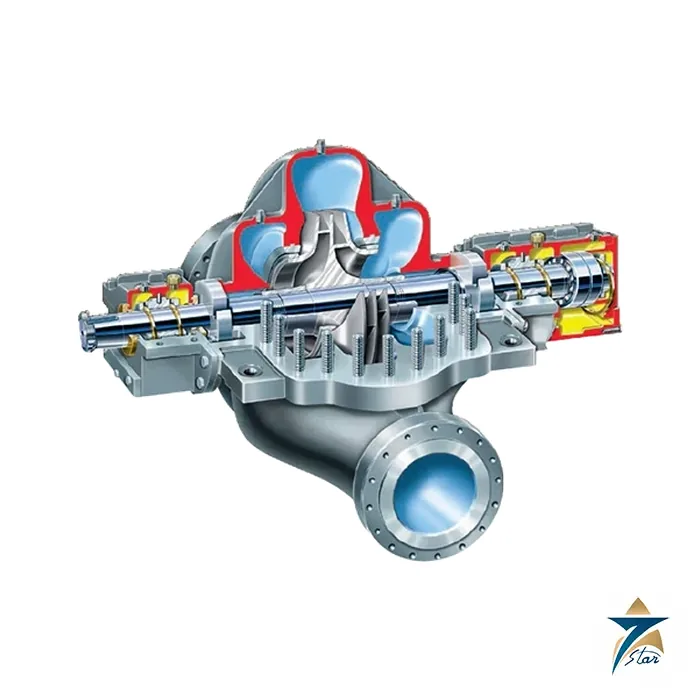
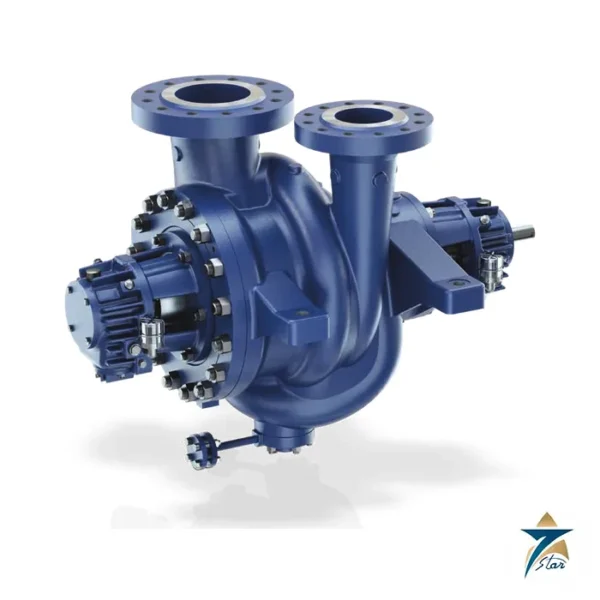
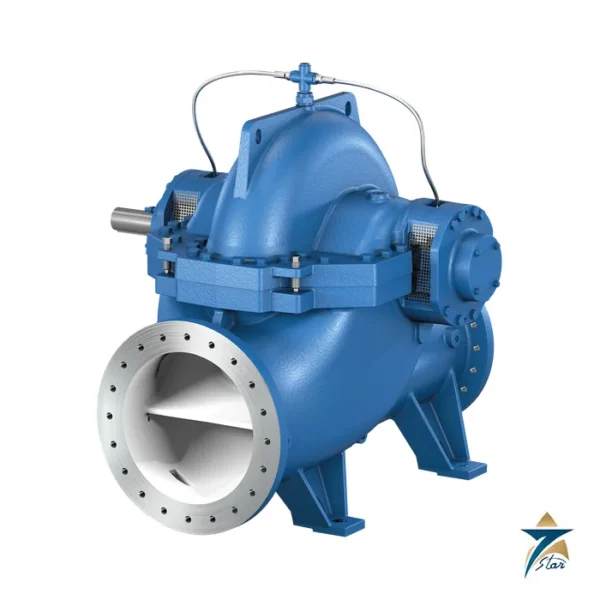
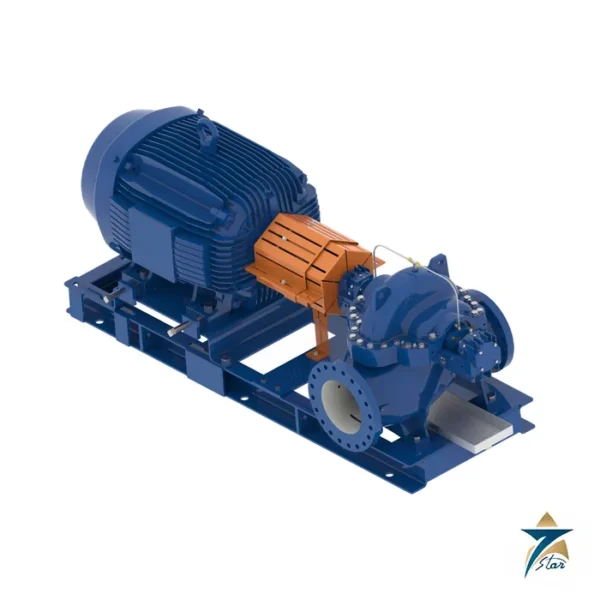
The Flowserve DVSH is a single-stage, double-suction pump with an axially split casing, designed to ISO 13709 / API 610 as a BB1 between-bearings machine. It is aimed at long-running, heavy-duty services such as crude and product pipelines, large cooling and circulating water systems, and high-volume transfer in refineries, power plants and desalination works. Seven Star LLC, an independent supplier in Muscat, quotes DVSH pumps for projects and spares in Oman and the GCC.
Reading the name is straightforward. DVS refers to the double-suction, single-stage family, and the final letter identifies the casing split. DVSH is the standard axially split configuration, DVSR is the radially split variant, and DVSH-RO is the version configured for reverse osmosis desalination. Because the DVSH is a range rather than a single catalogue item, each pump is selected from a hydraulic curve to match a specific flow, head and fluid. This page describes the range so that you can prepare the data we need to quote it.
DVSH technical specifications
| Parameter |
Specification |
| Manufacturer / part number |
Flowserve / DVSH series |
| Pump type |
Single-stage, double-suction, axially split, between bearings |
| Design standard |
ISO 13709 / API 610 (BB1); Hydraulic Institute |
| Flow |
Up to 12,000 m³/h (52,835 gpm) |
| Head |
Up to 565 m (1,854 ft) |
| Pressure |
Up to 150 bar (2,175 psi) |
| Temperature |
Up to 200 °C (400 °F) |
| Speed |
Up to 6,000 rpm |
| Size range |
150 mm (6 in) to 750 mm (30 in) |
| Casing |
Double-volute, axially split, lower-half cast nozzles |
| Impeller |
Double-suction |
| Seal chambers |
API 682 seal chambers |
| Configurations |
DVSH (axially split), DVSR (radially split), DVSH-RO (reverse osmosis) |
All values are range limits taken from the published product data. They are not guarantees for any one pump; the proposal curve and data sheet for your duty control the final numbers.
How the DVSH hydraulic design works
The DVSH casing is a double volute, meaning two cutwaters sit 180 degrees apart. This arrangement evens out the pressure around the impeller, which reduces the radial load on the shaft and bearings across the whole operating range, from rated flow down to minimum flow. Lower radial load is what lets a long, stiff shaft run smoothly at the high end of the speed range and keeps seal and bearing life predictable.
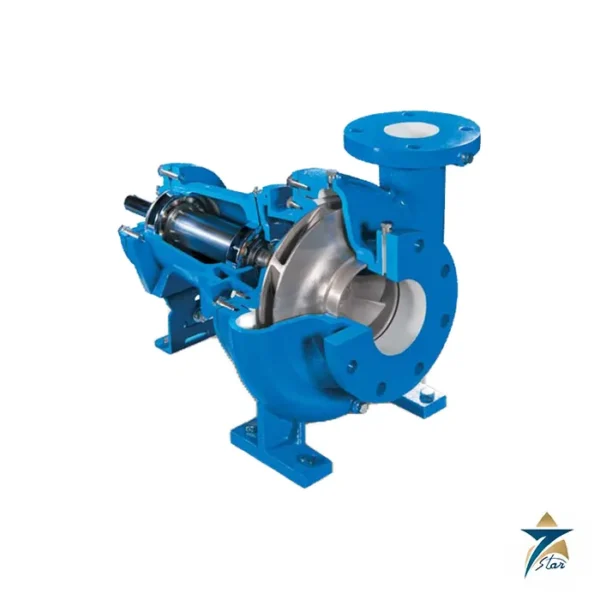
The double-suction impeller draws liquid from both sides, so the axial forces largely cancel and the suction passage area is generous. That generous inlet is how the design achieves low NPSH required, an important advantage when the pump draws from a tank or sump with limited submergence. Renewable wear rings control internal leakage between suction and discharge, and a stiff shaft limits deflection at the seal faces and rings. Together these features support efficiency that is maintained over the service interval when the rings are replaced on schedule.
The casing is split along the shaft centerline, and the casing is supported close to that centerline. Near-centerline mounting limits the vertical growth of the casing as temperature rises, which helps preserve alignment between pump and driver in hot service.
Where the DVSH fits: related pumps and configurations
Within the Flowserve range, the DVSH sits among the axially split API single-case pumps. The radially split DVSR configuration is the related option when the casing layout must be radially split, while desalination plants with high-pressure RO feed duties look at DVSH-RO. For very high pressures and multistage duty, barrel designs such as the HDO and HSO family cover a different part of the map, with discharge pressures far above those of a single-stage axially split pump.
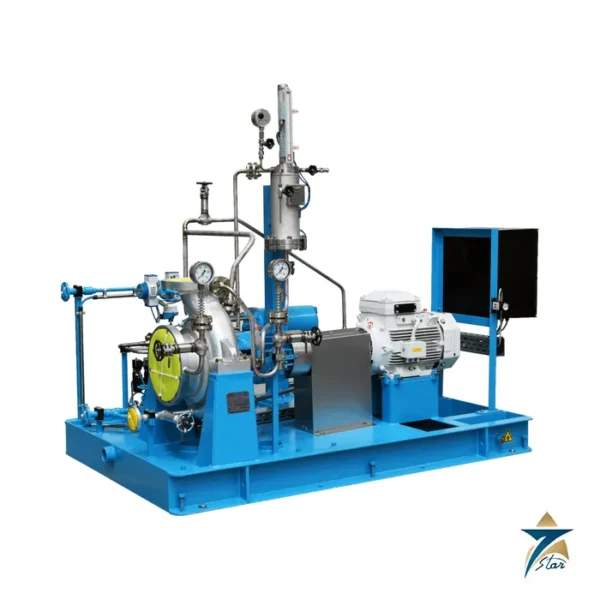
The DVSH is normally driven through a flexible coupling by an electric motor, steam turbine or gas turbine, and the published speed limit of 6,000 rpm leaves room for turbine drives as well as motors. The API 682 seal chambers accept single, dual and cartridge mechanical seals and the usual flush and barrier plans, so the seal choice can follow the fluid rather than the other way around.
DVSH selection and ordering checklist
A reliable quotation for a DVSH starts with a clear duty definition. Use this list to gather the information before you contact us:
- Fluid name, density, viscosity, vapour pressure, solids content and corrosiveness.
- Normal, rated and minimum flow, and the differential head required at each point.
- Suction pressure and available NPSH, including worst-case levels.
- Pumping temperature and the maximum design pressure of the casing.
- Driver type, power and speed, and whether a variable speed drive is used.
- Material class required (for example the API 610 material class for the fluid) and any special alloys.
- Seal arrangement, the flush plan, and whether a cartridge seal is specified.
- Nozzle size, rating and orientation, plus baseplate and coupling requirements.
- Applicable project specifications, inspection and testing level, and documentation scope.
If you already hold a DVSH on site, send the nameplate details: that data lets us match spare parts, wear rings and bearings to the actual pump.
DVSH installation, commissioning and maintenance
A between-bearings pump of this size depends on a rigid, well-grouted baseplate and careful alignment. Align the pump and driver hot where the process temperature is high, check pipe strain at the nozzles before and after bolting the flanges, and confirm that suction piping includes a straight run ahead of the pump to give the impeller an even inflow. Vent the casing fully before the first start and run the unit through the minimum flow protection test as defined by the project.
The axially split casing makes inspection simple. After lifting the upper casing, the rotor, wear rings, bearings and seals are all reachable, and the lower-half nozzles mean the suction and discharge piping stay connected. Typical maintenance spares for planned outages include wear rings, mechanical seals, bearings, couplings, gaskets and an assembled rotor for critical units. Condition monitoring of vibration and bearing temperature gives early notice of misalignment, cavitation or seal distress.
Typical DVSH applications in Oman and the GCC
The published industry list for the DVSH spans power (conventional steam, combined cycle, concentrated solar, biomass and geothermal), chemicals, mining, water management, desalination, and oil and gas from upstream to downstream. In the Gulf these map onto crude transfer and export pumping, cooling water circulation for power and process plants, seawater intake and brine handling, and large boiler and process feed duties.
Heat and humidity matter for the auxiliary systems around the pump: bearing housing cooling, lubrication, and seal flush lines should be sized for Gulf ambient and seawater temperatures. Dust and salt-laden air call for good protection of couplings and guards, and for suitable coatings on baseplates and external fasteners. Our team can help you prepare the data needed to specify these items alongside the pump.
DVSH family and configuration summary
| Configuration |
Design |
Typical use |
| DVSH |
Axially split, single-stage, double-suction |
Standard configuration, API 610 BB1 |
| DVSR |
Radially split configuration |
Where the casing design must follow a radially split layout |
| DVSH-RO |
Configured for reverse osmosis desalination |
RO desalination process pumping |
Pick the configuration first, then size the hydraulics. If you are unsure which applies, send the duty data and we will return a clear description of what we can supply.
Information to send with a DVSH RFQ
To speed up a DVSH quotation, send the items from the checklist above, the tag number or project reference, the delivery site, and the preferred delivery schedule. If the request is a replacement, add the existing nameplate, the original order reference if known, and photographs of the pump and baseplate. Mention if you need a witnessed performance test or specific material certificates, as these affect scope and lead time.
Documents and quotation
Flowserve publishes a brochure for the DVSH range. We have no file attached to this page, so please send us the DVSH configuration and your duty data and we will confirm which documents are available for your project.
Seven Star LLC is an independent supplier in Muscat serving Oman and the GCC. Send your DVSH requirement with the information above and we will respond with a quotation.






















Reviews
There are no reviews yet.