A maintenance-free hydrogen monitor for battery rooms and control buildings
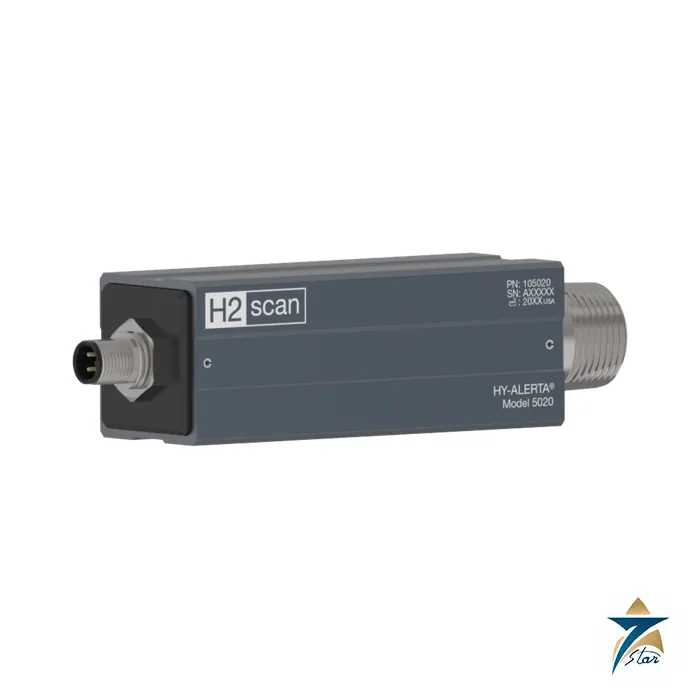
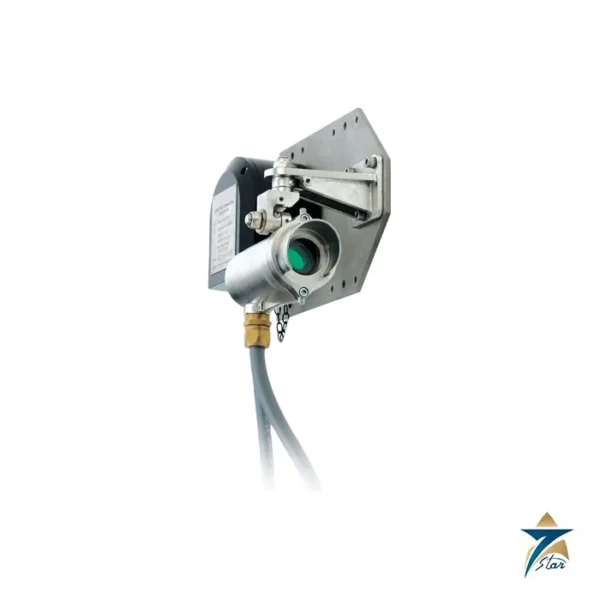
HY-ALERTA 5020 is a solid-state fixed area hydrogen safety monitor from H2scan with self-calibration, so manual calibration and maintenance events are removed. Sensors detect hydrogen only, which the datasheet says eliminates false positives, and communication options include Modbus, dry contacts and 4-20 mA analog output.
The datasheet frames the unit around battery safety codes: hydrogen must be kept below 25% of the lower flammability level, or 1% of room volume, for all battery types including lead acid, nickel-cadmium and lithium. The 5020 supports exhaust fan activation through relays, Modbus annunciation, and continuous reporting over Modbus, with sensors that may be linked for easy installation.
Technical specifications
| Parameter |
Specification |
| Hydrogen range |
0% to 5% H2 (lower detection limit 0.4% H2) |
| Response time |
Below 60 seconds |
| Accuracy (absolute error) |
0.3% H2 |
| Repeatability (absolute error) |
0.3% H2 |
| Operating temperature |
-10 to 60°C (14 to 140°F) |
| Voltage input |
8.1 to 52.8 VDC |
| Power consumption |
10 W |
| Communication options |
Modbus; dry contact; 4-20 mA analog modules |
| Mounting options |
General purpose mount with pre-drilled plate; enclosure bulkhead style mount |
| Standards listed |
IEC/EN 61010-1, IEC 61326-1 and IEC 60529, together with the IEC 60068-2 environmental and IEC 61000-4 immunity test series named on the datasheet |
5020 compared with other H2scan area monitors
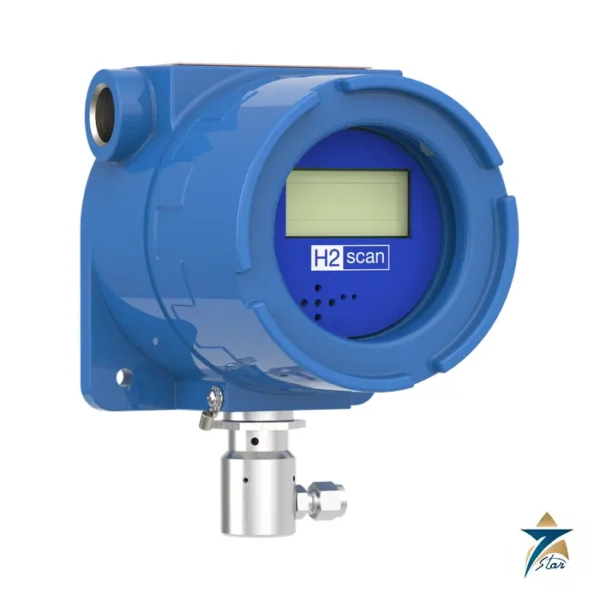
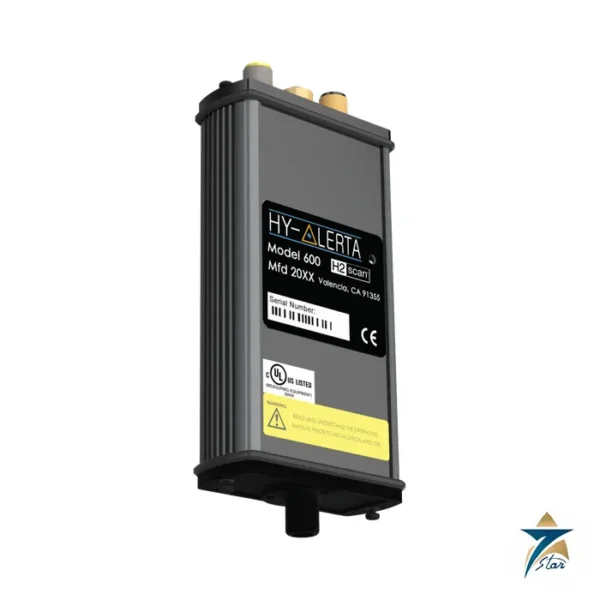
The 5020 is the self-calibrating option for ordinary locations, while the older HY-ALERTA 600B needs calibration every 90 days. Its supply window of 8.1 to 52.8 VDC is far wider than the 10 to 26 VDC of the 600B, so it can be fed from 12 V, 24 V or 48 V battery systems found in substations and telecom shelters. The 5020 datasheet prints no hazardous-area certification; for classified areas consider the 2620 or the intrinsically safe 5320.
H2scan also publishes a separate HY-ALERTA 5021 datasheet aimed at battery room installations such as data center UPS, utility substations and energy storage; ask us if that variant is the one you need.
Applications and installation notes
H2scan lists battery rooms, control rooms and analyzer buildings, laboratories, hydrogen refueling, fuel cell and electrolyzer leak monitoring, hydrogen-cooled generation and turbines, hydrogen storage and piping, and furnaces. For Omani substations and data centers with lead acid or lithium UPS batteries, the 5020 provides the Modbus link to a building management system and relay outputs to trigger exhaust fans.
Use the ceiling plate for open rooms and the bulkhead mount when installing in an enclosure wall. Browse the fire and gas detectors category for related detectors.
Code context and alarm integration
The manufacturer states that codes and standards require hydrogen to be kept below 25% of the lower flammability level, equal to 1% of room volume, in battery areas. With a lower detection limit of 0.4% and accuracy of 0.3% H2, the 5020 can resolve a level below that 1% limit, so alarms can be set under the limit with some margin.
Typical alarm integration uses Modbus to the building management system, relays to start exhaust fans and, where needed, a 4-20 mA module for legacy PLC inputs. Sensors may be linked together, so one communication path can serve several points in a large battery hall.
Operating temperature of -10 to 60°C covers air-conditioned battery rooms and many sheltered outdoor cabinets, but check enclosure temperatures in summer for unconditioned shelters in the Gulf.
Hydrogen-specific sensing also means that cleaning solvents and other combustible vapours in a battery room should not trigger the alarm, which reduces unnecessary fan runs and nuisance trips according to the manufacturer.
For documentation, record the 0 to 5% H2 span, the 0.4% lower detection limit, the 0.3% H2 absolute accuracy and repeatability and the response time below 60 seconds in the instrument index, since these are the figures an inspector will ask for when comparing the monitor with the 1% room-volume limit.
Document control: the datasheet used here is H2scan document 90000261 with a 12.25 mark, and it states that specifications are subject to change without notice. Ask for the current revision and for the HY-ALERTA 5000 series manual before commissioning, and confirm the communication module you need.
Planning a battery room installation
Because hydrogen rises quickly and its lower flammability limit is about 4% by volume, the 1% room volume limit quoted for battery rooms is reached first near the ceiling. General engineering note (not from the datasheet): mount the monitors high on the walls or ceiling above the battery racks, avoid positions directly in the airflow from supply grilles, and use more than one monitor in long rooms or rooms with beams that form separate ceiling pockets. Link the relay outputs to the exhaust fans and to the charger interlock, and send the Modbus data to the building management system or SCADA so that trends are recorded.
The wide 8.1 to 52.8 VDC input lets the monitor run from the battery system or UPS DC bus found in many substations and telecom shelters. Self-calibration removes routine gas calibration visits, but a periodic functional check of the alarms and fan start remains part of good practice, and the operating range of -10 to 60°C suits most conditioned battery rooms in the Gulf.
Frequently asked questions
What gas does the HY-ALERTA 5020 detect? Hydrogen only, from a lower detection limit of 0.4% up to 5% H2.
Does it need manual calibration? No. The datasheet describes a self-calibration feature that eliminates manual calibration events.
What supply voltage can it use? 8.1 to 52.8 VDC at 10 W.
How can it connect to a control system? Through Modbus, dry contacts or 4-20 mA analog modules.
How is it mounted? With a general purpose plate mount for ceilings or structures, or an enclosure bulkhead style mount.
Documents and quotation
The H2scan HY-ALERTA 5020 datasheet is attached. Seven Star LLC is an independent supplier in Muscat; send battery type, room volume and communication needs to request a quotation.














Reviews
There are no reviews yet.