Hydrogen early warning for standby power and energy storage rooms
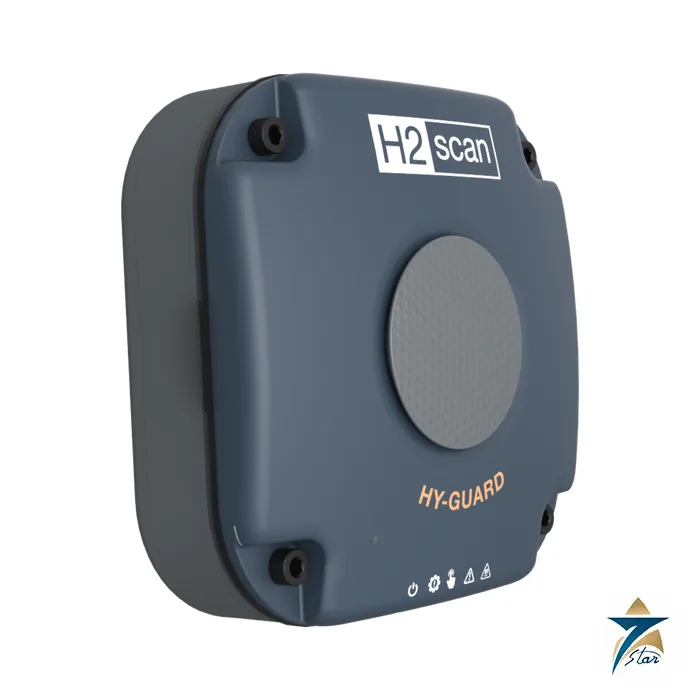
HY-GUARD is an H2scan hydrogen area monitor designed for standby power and energy storage battery applications. It monitors hydrogen continuously with self-calibrating solid-state sensing and automatically triggers ventilation, shutdown or alarm systems before an abnormal condition becomes an outage.
The datasheet describes configurable relay outputs to drive ventilation or shutdown equipment, vibrant LEDs and an audible signal at the point of risk, and integration through Modbus RTU/RS-485, dry contact and 4-20 mA with PLCs, SCADA and building systems, aggregated through the HY-SIGHT display. A service life of 10+ years is stated, with no calibration gases, no bump testing and no cross sensitivity to other gases.
Technical specifications
| Parameter |
Specification |
| H2 range |
0.4-5% |
| Accuracy |
0.3% H2 absolute error (concentrations above 2% have an accuracy of 1%) |
| Response time |
30 seconds, from air to 5% H2 for first alarm |
| Operational temperature |
-25 to 50°C (-13 to 122°F) |
| Rated temperature |
15 to 40°C (59 to 104°F) |
| Storage temperature |
-40 to 70°C (-40 to 158°F) |
| Humidity |
0 to 95% RH non-condensing |
| Connections |
Relay 1, Relay 2, fault, RS-485, 4-20 mA, AC and DC |
| Voltage |
AC: 110-240 VAC; DC: 15-60 VDC |
| Power |
10 W maximum |
| Communication |
Analog 4-20 mA nominal; RS-485 Modbus two-wire |
| Dimensions |
5.1 x 5.1 x 2.1 in (about 130 x 130 x 53 mm, converted) |
| Buzzer |
Audible output for local indication |
| Certifications |
IEC 61010, CE, FCC Part 15, REACH, RoHS; UL 2075 certification pending (not yet granted per datasheet) |
| Mounting |
Punch out, junction box, wall mount, surface mount or DIN rail (the last three need an adapter plate accessory) |
Prolonged exposure to hydrogen above 5% may damage the sensor, according to the datasheet footnote.
Applications and installation notes
The target applications named by H2scan include battery rooms, energy storage systems, electrolyzers, fueling stations and other hydrogen applications. In the region this typically means lead acid UPS battery rooms in substations, telecom shelters, data centers and the emerging stationary storage and electrolyzer pilots.
A placement tool is mentioned on the datasheet for choosing the monitor locations. Hydrogen is lighter than air, so high placement in the room is common engineering practice. Wire Relay 1 and Relay 2 to ventilation and alarm logic, and use the fault output for loss-of-sensor supervision. Related detectors are listed under fire and gas detectors.
HY-GUARD versus HY-GUARD RS and HY-ALERTA
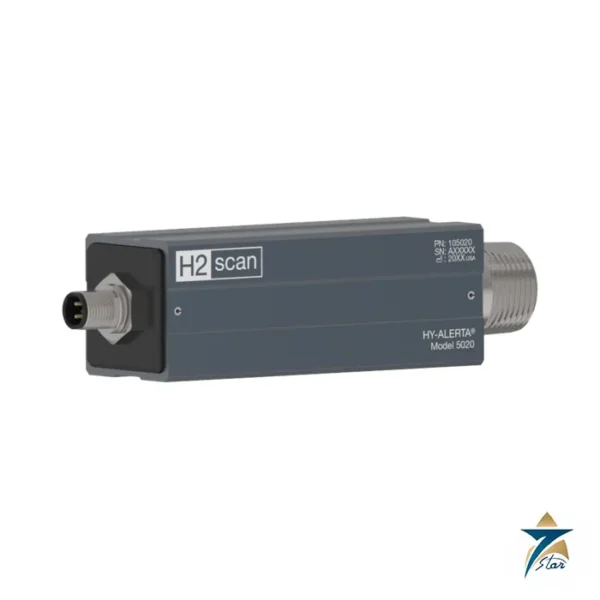
HY-GUARD has a 30 second first-alarm response, while the HY-GUARD RS in the Li-ion system datasheet quotes 10 seconds. Both share the 0.4 to 5% range, relay set and AC or DC supply. The HY-ALERTA 5020 offers a wider 8.1 to 52.8 VDC supply but no AC input and a response below 60 seconds, and it does not include the local LEDs and buzzer listed here.
Installation options and system design with HY-SIGHT
The datasheet shows five installation styles: punch out, junction box, wall mount, surface mount and DIN rail, where the last three require a universal adapter plate accessory. That flexibility matters when retrofitting existing battery cabinets, because the 5.1 by 5.1 by 2.1 inch body can follow whatever cabinet layout is in place.
The monitor can run from AC (110 to 240 VAC) or DC (15 to 60 VDC), so the same unit can be powered from the room supply or from the battery or DC bus that it is protecting. Using the DC bus keeps the alarm alive in a mains outage, but this is a design decision for the system engineer and not a datasheet statement.
To aggregate several monitors the datasheet points to HY-SIGHT, which carries Modbus RTU connectivity to PLCs and SCADA and shows facility-wide status. For a stand-alone room, the two relays and the fault relay are enough to start a fan, raise an alarm and supervise the sensor.
Document control: the datasheet used here is H2scan document 90000305. H2scan also publishes a manual, a quick start guide and a placement tool for the HY-GUARD, and we recommend requesting them for the layout drawings, the relay wiring and the choice of mounting adapter plate before ordering for a project.
Placement and set-up in battery rooms
Hydrogen is much lighter than air and has a lower flammability limit of about 4% by volume, so it gathers first under the ceiling above the battery racks. General engineering note (not from the datasheet): mount HY-GUARD units high, above the batteries and away from supply air grilles, and add units where beams or ducts split the ceiling into separate pockets. Use relay 1 for exhaust fan start, relay 2 for charger shutdown or a building alarm, and the fault relay for a maintenance alert, and send Modbus data to the building management system so that every alarm is logged.
The rated temperature of 15 to 40°C fits a conditioned battery or UPS room. In Oman and the GCC, where outdoor and unconditioned rooms can exceed the 50°C operating limit in summer, the room cooling should be part of the safety design, not only the battery design. The wide AC and DC supply ranges allow the monitor to run from the UPS output or the DC bus of a telecom shelter or substation.
Frequently asked questions
What is the HY-GUARD designed for? Hydrogen detection in battery rooms, energy storage systems, electrolyzers and fueling stations.
What is its detection range and response? 0.4 to 5% hydrogen; 30 seconds to trigger the first alarm from air to 5% H2.
Which supply options exist? AC 110 to 240 VAC or DC 15 to 60 VDC, with 10 W maximum.
Which outputs does it provide? Two relays plus a fault relay, RS-485 Modbus RTU, 4-20 mA and an audible buzzer.
Is UL 2075 certification granted? No. The datasheet states that UL 2075 certification is pending.
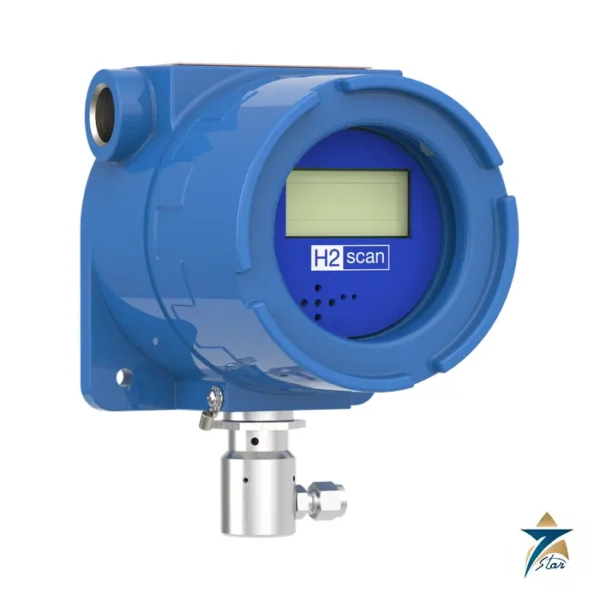
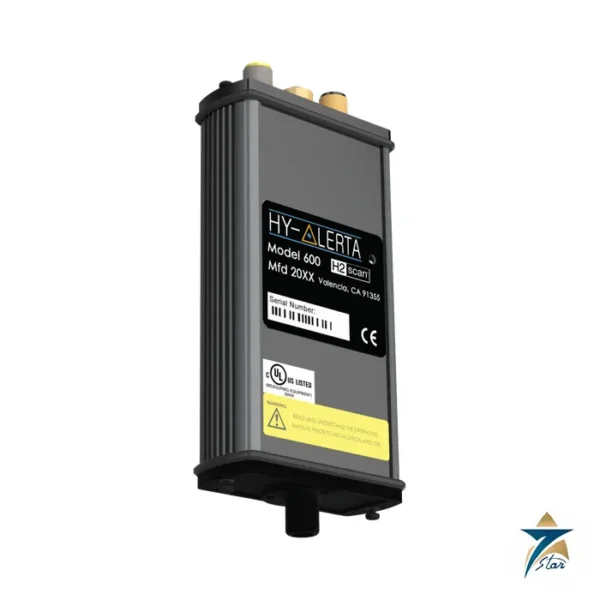
Related H2scan products: H2scan HY-ALERTA 5020 Self-Calibrating Hydrogen Monitor, H2scan HY-ALERTA 600B Fixed Area Hydrogen Monitor and H2scan HY-ALERTA 2620 Explosion Proof Hydrogen Monitor.
Documents and quotation
The H2scan HY-GUARD datasheet is attached. Seven Star LLC is an independent supplier in Muscat; send the room size, battery chemistry and required outputs to request a quotation.











Reviews
There are no reviews yet.