Brand:

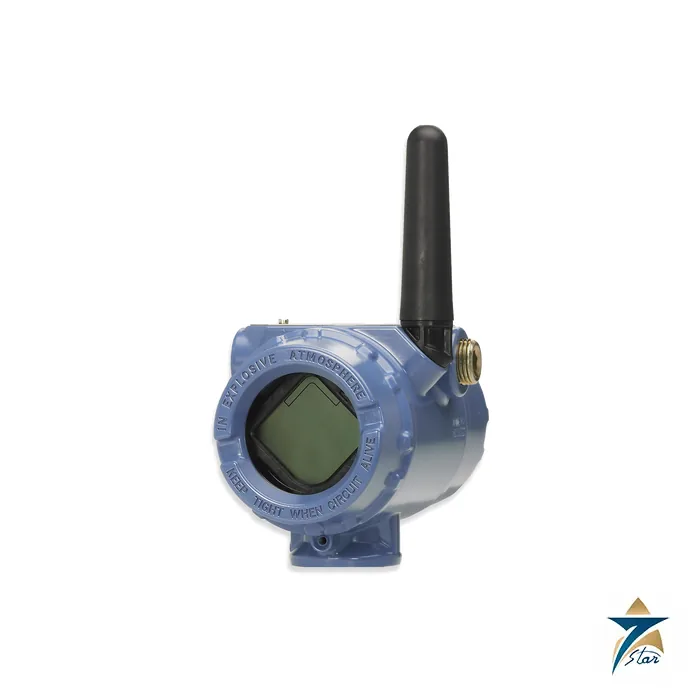
Rosemount 702 Wireless Discrete Transmitter

Description

Overview

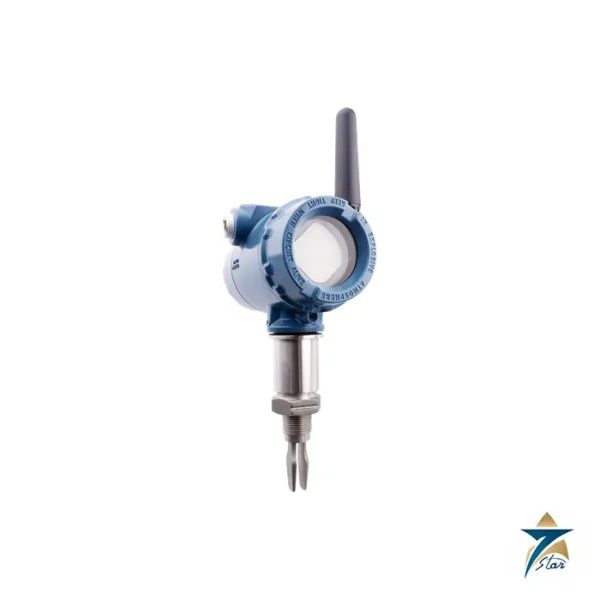
The Rosemount 702 Wireless Discrete Transmitter is an installation-ready device that brings switch and on-off signals into a WirelessHART network without running new cable. It offers dual-channel discrete input, configurable discrete input or output, and a dedicated plunger arrival option, with logic for limit contact and opposing contact applications. Momentary inputs are captured continuously between wireless updates, so short events are not missed, and the self-organizing network delivers more than 99 percent data reliability according to the Emerson data sheet.

Seven Star LLC supplies the Rosemount 702 to oil and gas operators, utilities and process plants in Oman and across the GCC. Remote wellheads, tank farms and long pipeline corridors in the region often have discrete points that were never wired back to the control room, and our Muscat engineering team helps customers select the right Rosemount 702 configuration, antenna and certification from the official Rosemount 702 datasheet.

Operating Principle

The transmitter monitors dry contacts wired to its screw terminals. A contact is read as open above 100 kilo-ohms and closed below 5 kilo-ohms. At each wireless update, the device reports the current discrete state and an accumulating count of close-open cycles, so a valve that strokes or a pump that starts between updates is still recorded. The update rate is user selectable from 1 second to 60 minutes, and a latching time from 1 second to 10 minutes can be set so that brief events are held long enough to be reported to the host.

Communication uses IEC 62591 WirelessHART on IEEE 802.15.4 radios in the 2.4 GHz ISM band, sliced into 15 channels with time-synchronized channel hopping. Each Rosemount 702 also acts as a router for its neighbors, and the self-healing mesh manages multiple communication paths, so if an obstruction blocks one path the data continues through another. Encryption, authentication, verification, anti-jamming and key management protect the data, which is received only by the wireless gateway.

Engineering Design of the Rosemount 702

The device uses a dual compartment housing in low-copper aluminum or stainless steel, rated NEMA 4X and IP66/67, with a 1/2-14 NPT conduit entry. It can be attached directly to a switch, or mounted remotely using the universal L bracket for a two inch pipe. Antenna options include an integrated external antenna, an extended range antenna, a remote antenna and a high-gain remote antenna for difficult radio paths, and an optional LCD shows the discrete state and diagnostic information at each update.

Power comes from an Emerson SmartPower module containing lithium-thionyl chloride cells in a PBT enclosure. The intrinsically safe module is field replaceable with keyed connections that prevent incorrect installation, and gives a rated life of ten years at a one-minute update rate. The aluminum Rosemount 702 weighs about 2.0 kg without display, and the stainless steel version about 3.6 kg. Intrinsic safety and Zone 2 approvals cover ATEX, IECEx, USA, Canada and several other regions.

Key Features

The following Rosemount 702 capabilities are drawn from the Emerson product data sheet.

  • Provides dual channel discrete input, configurable discrete input or output, and plunger arrival measurement options.
  • Detects momentary discrete inputs of 10 ms or longer and keeps a cycle count up to 999,999.
  • Drives discrete outputs rated 26 Vdc and 100 mA with typical on resistance of 1 ohm on option 42.
  • Offers user-selectable update rates from 1 second to 60 minutes and latching times from 1 second to 10 minutes.
  • Runs up to ten years on a field replaceable intrinsically safe power module at a one-minute update rate.
  • Integrates through gateways using OPC, Modbus TCP/IP, Modbus RTU and EtherNet/IP, with native DeltaV and Ovation integration.
  • Operates from –40 to 85 °C without display and is unaffected by high pipeline vibration per IEC 60770-1.
  • Supports universal safety shower and eyewash kits with UL or CSA switches for uninsulated and insulated pipe.

Industrial Applications

In Oman the Rosemount 702 is a practical way to add monitoring to assets spread across large areas. Typical points include open and closed limit switches on manual and on-off valves, run status of pumps and fans, alarms from pressure, temperature and level switches, safety shower and eyewash activation, gate and hatch positions, and plunger arrival on gas wells. Because installation needs no signal cable, the transmitter suits brownfield upgrades in Sohar and Salalah, remote facilities in the interior, and temporary monitoring during turnarounds. Paired with a vibrating fork switch, it can also report a wireless high level alarm from a remote tank.

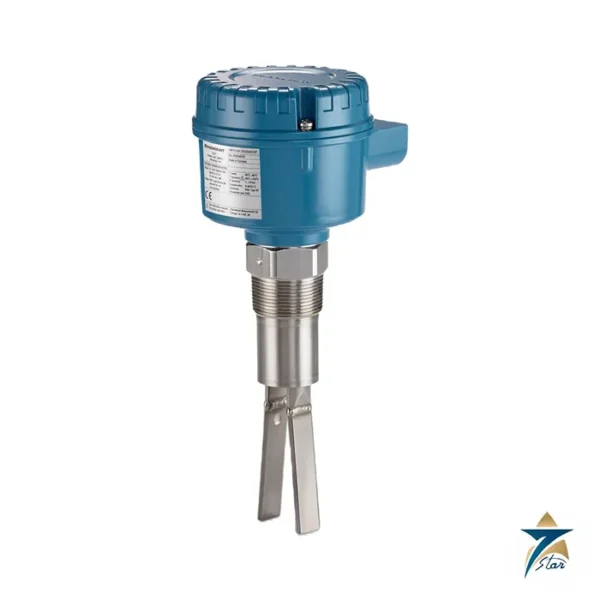
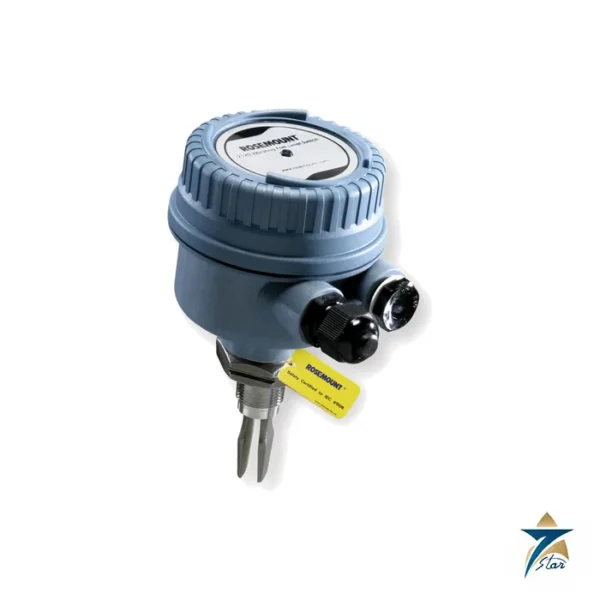
Seven Star LLC supports wireless instrumentation projects across Oman and the GCC with network planning input, configuration and delivery. The Rosemount 702 shares the same network as the Rosemount 648 wireless temperature transmitter, can carry the contact from a Rosemount 2140 vibrating fork level detector, and is configured in the field with the Emerson 475 Field Communicator.

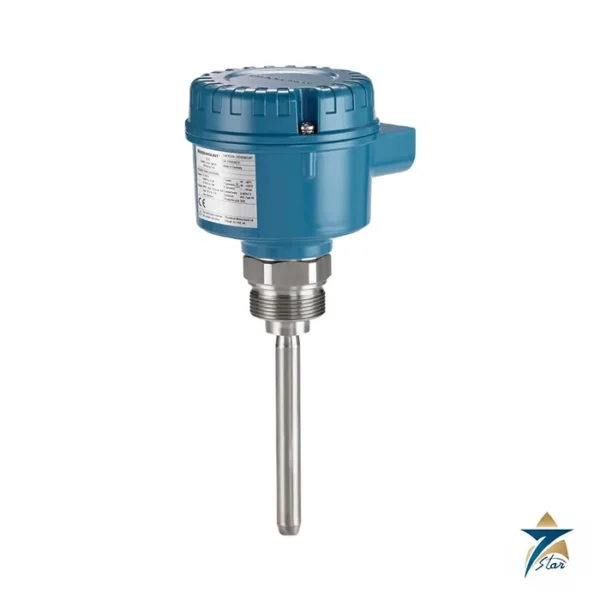
It also pairs with the Rosemount 2120 vibrating fork level switch.

Technical Specifications

Published Rosemount 702 specifications from data sheet 00813-0100-4702 are listed below.

Parameter Specification
Model Rosemount 702 Wireless Discrete Transmitter (702DX)
Measurement options 32: dual discrete input with momentary detection and counts; 42: dual input or output, configurable; 52: plunger arrival detection
Discrete input Single or dual SPST dry contacts or single SPDT dry contact
Switching threshold Open >100 kΩ; closed <5 kΩ
Discrete output (option 42) 26 Vdc, 100 mA maximum; on resistance typically 1 Ω
Wireless protocol IEC 62591 WirelessHART, 2.4 GHz
Update rate 1 second to 60 minutes, user selectable
Power module life 10 years at one-minute update rate (reference conditions)
Housing Dual compartment, low-copper aluminum or stainless steel
Enclosure rating NEMA 4X and IP66/67
Conduit entry 1/2-14 NPT
Operating temperature –40 to 85 °C; –20 to 80 °C with LCD
Humidity 0 to 100 percent relative humidity
Weight 2.0 kg aluminum; 3.6 kg stainless steel (without LCD)
EMC EN 61326 and NAMUR NE-21

How to Order

Our instrumentation division will confirm the model code against the Rosemount 702 datasheet, confirm availability and lead time, provide the data sheet for download and give engineering support from Muscat for wireless discrete monitoring projects in Oman and the GCC.

Datasheets & Documents
  • PDF Datasheet Emerson Rosemount 702 Wireless Discrete Transmitter Product Data Sheet 00813-0100-4702, Rev LD, December 2025 Download
Reviews (0)

Reviews

There are no reviews yet.

How would you rate this product?

It takes about 10 seconds — just tap a star. Your email is never published.

About brand

Rosemount is Emerson's brand for pressure, temperature, level and flow measurement, best known for the 3051 pressure transmitter. Frank Werner, Robert Keppel and Vernon Heath founded it in Minnesota in 1956 as Rosemount Engineering Company, first making temperature sensors for aerospace. It moved into the process industries, took the name Rosemount Inc. in 1966, and has been part of Emerson since 1976.
Seven Star LLC is an independent supplier in Muscat. We list Rosemount transmitters, level instruments, flowmeters and analytical sensors, and supply them and their spares to oil and gas, power, water and process plants in Oman and the GCC by model code.
Rosemount company profile

Established1956, Minnesota, USA, as Rosemount Engineering Company
FoundersFrank D. Werner, Robert E. Keppel and Vernon H. Heath
OwnershipAcquired by Emerson in 1976; now an Emerson brand
Product familiesPressure, DP flow and level transmitters, temperature sensors and transmitters, radar and guided wave radar level, vibrating fork switches, tank gauging, magnetic, vortex and ultrasonic flowmeters, liquid analysis sensors and wireless instruments

Milestones

1956: Robert Keppel, Vernon Heath and Frank Werner incorporate Rosemount Engineering Company in Minnesota; early work is aerospace sensors.
1969: The Rosemount 1151 analog pressure transmitter is introduced.
1976: Emerson acquires Rosemount.
1989: The Rosemount 3051 pressure transmitter, built on digital technology, is launched.
2001: The 3051S generation follows.

Rosemount products we list

FamilyModelsTypical use

Pressure transmitters3051, 3051C coplanar, 3051T in-line, 3051S, 3051S series, 3051SMV multivariable, 2051, 2088, 1199 diaphragm sealsPressure, differential pressure and remote seal measurement
DP flow and DP level3051CF flowmeter, 3051L, 3051SALFlow through primary elements, and level in pressurised vessels
Temperature644, 248, 3144P, 848T, 648 wireless, 214C RTD sensor, 2240S multi-inputProcess temperature, high-density multipoint and tank temperature
Radar and level5408, 5400, 5300 GWR, 3300 GWR, 3308A wireless, 5900S, 5900C tank gaugesLevel in tanks, separators and custody transfer tank gauging
Level switches2120, 2140, 2160 wireless, 702 discrete transmitterHigh and low level alarms, overfill protection and pump protection
Flowmeters8700 magnetic, 8800D vortex, SeniorSonic 3414, 3415/3416, 3417, JuniorSonic 3411/3412, 3814 liquidWater, steam and gas flow, and fiscal gas and liquid metering
Liquid analysis396P TUpH, 396PVP, 499ACL chlorine sensorpH, ORP and free chlorine in water and process streams

Many Rosemount transmitters share one platform, so the model code tells you what you have. On a 3051, the letter after the number sets the type: C for coplanar (differential or gauge), T for in-line, L for liquid level and CF for a complete flowmeter. The next characters set the measurement type, the range code, the output (4-20 mA HART, FOUNDATION Fieldbus or WirelessHART) and the wetted materials. A transmitter with the wrong range code may work, but with poor accuracy at the point that matters.
Where Rosemount instruments are used
In Oman and the GCC, Rosemount instruments are used across upstream oil and gas, gas plants and LNG, refineries, tank farms and terminals, power and desalination stations, and water networks. Ultrasonic gas meters and tank gauges are used for fiscal and custody transfer measurement.
Ordering Rosemount instruments: what we need
Send the full model code from the nameplate (for example 3051CD2A22A1AM5B4) and the tag if it is a replacement. For a new instrument, send the measuring range, process connection, wetted materials, output protocol and hazardous area approval.
Facts checked against Emerson's Rosemount history and published company histories, October 2026.
Browse Rosemount products by category: Pressure Instrumentation, Temperature Instrumentation, Level Transmitter, Liquid Analysis Sensors, Flowmeters.

FAQ

Questions about the Rosemount 702 Wireless Discrete Transmitter

Answers from our engineering team on installation, compatibility and integration.

01What signals can the Rosemount 702 read or drive?
The measurement option 32 accepts single or dual SPST dry contacts or a single SPDT contact, detects momentary inputs of 10 ms or longer and keeps a close-open cycle count from 0 to 999,999. Option 42 makes each of the two channels configurable as a discrete input or a discrete output rated 26 Vdc and 100 mA. Option 52 is dedicated to plunger arrival detection with the ETC Cyclops sensor.
02How long does the Rosemount 702 power module last?
The data sheet gives a power module life of 10 years at a one-minute update rate under reference conditions of 21 C with routing for three additional network devices. Continuous exposure to the temperature limits of -40 C or 85 C can reduce that life by up to 20 percent, and the keyed module is field replaceable.
03Does the Rosemount 702 need a gateway?
Yes. The transmitter joins an IEC 62591 WirelessHART mesh network managed by a wireless gateway, which connects to the host through OPC, Modbus TCP/IP, Modbus RTU or EtherNet/IP and integrates natively with DeltaV and Ovation. The self-organizing mesh routes around obstructions to deliver more than 99 percent data reliability.
04Where is the Rosemount 702 typically used?
Common uses include valve limit switch monitoring, safety shower and eyewash activation alarms using the universal kits, pump and motor run status, high and low level switch signals, pressure and temperature switch alarms, and plunger arrival detection on gas wells. It is a quick way to add discrete points where cabling would be costly.
05Can Seven Star LLC supply the Rosemount 702 in Oman?
Yes. Seven Star LLC supplies the Rosemount 702 and related wireless accessories to customers in Oman and the GCC. Tell us the measurement option, housing, certification, antenna and display options and our Muscat team will prepare a quotation with current lead time information.