

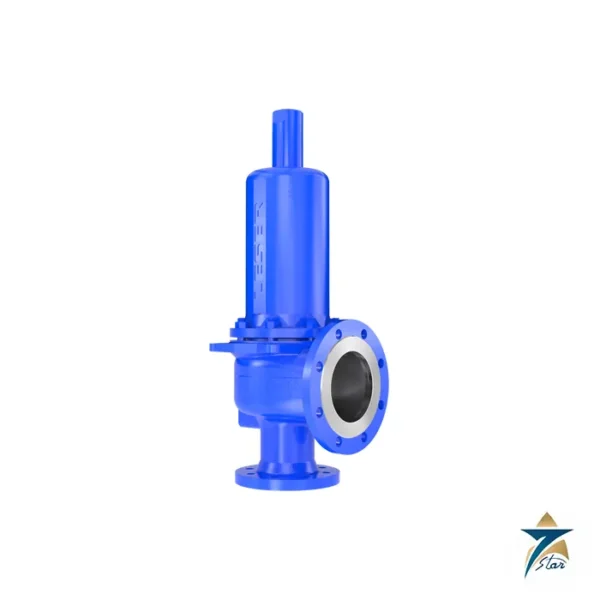
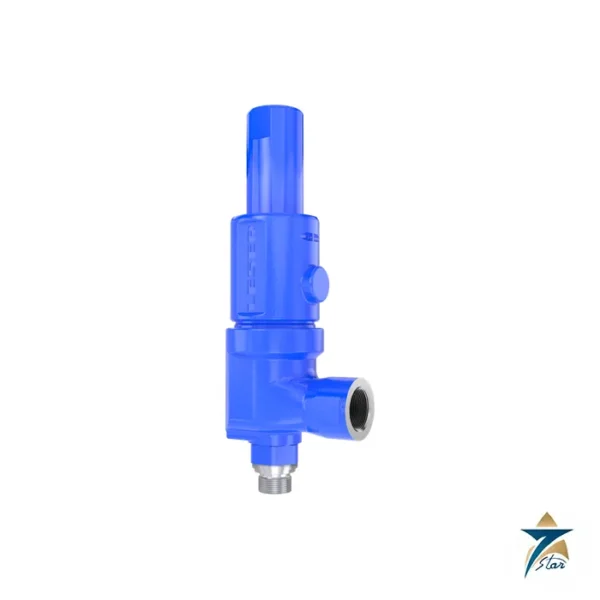
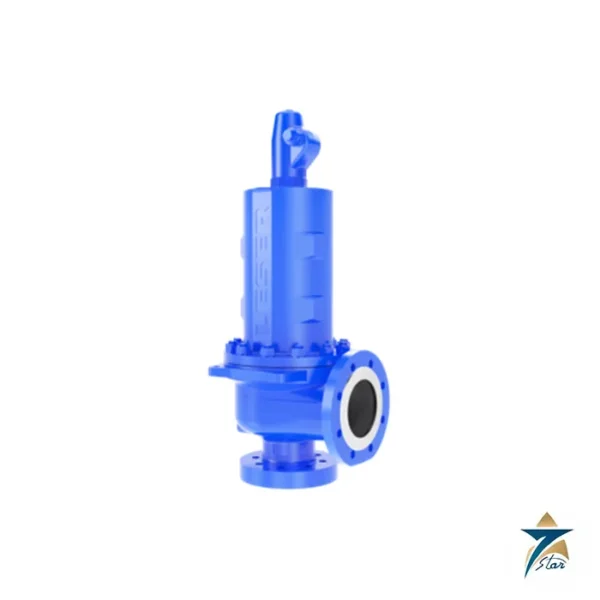
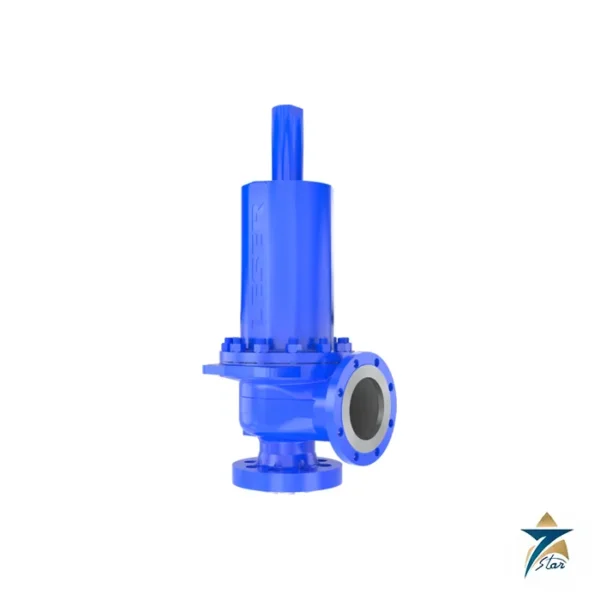
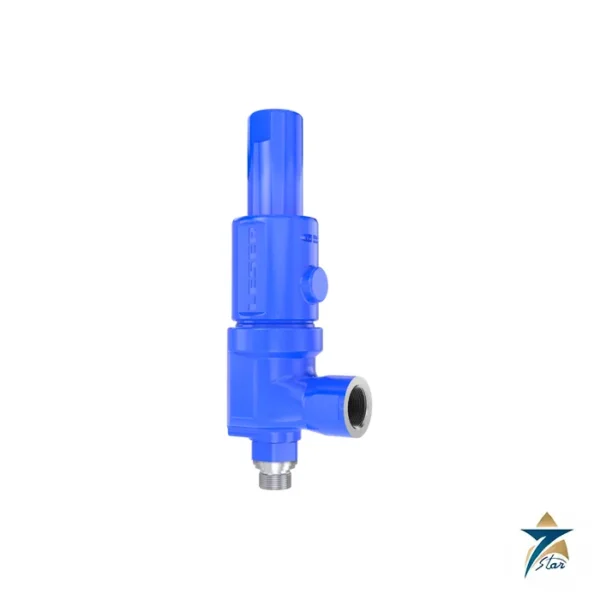
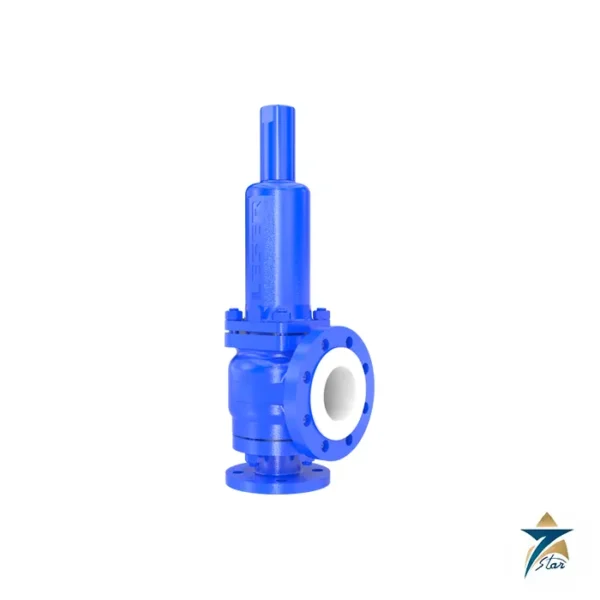
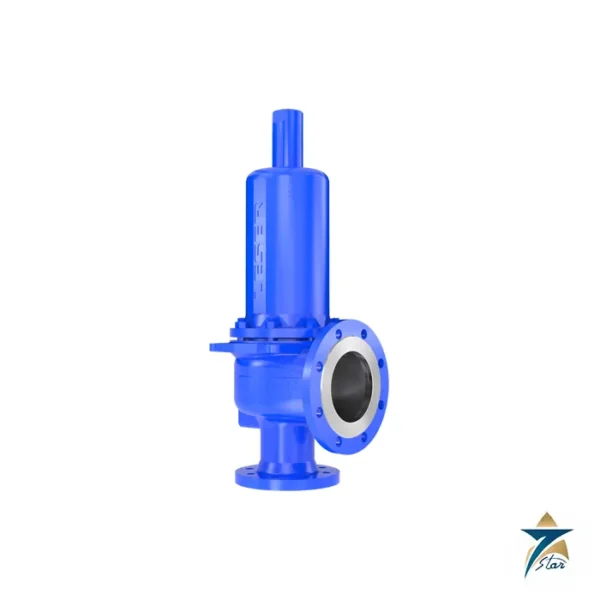
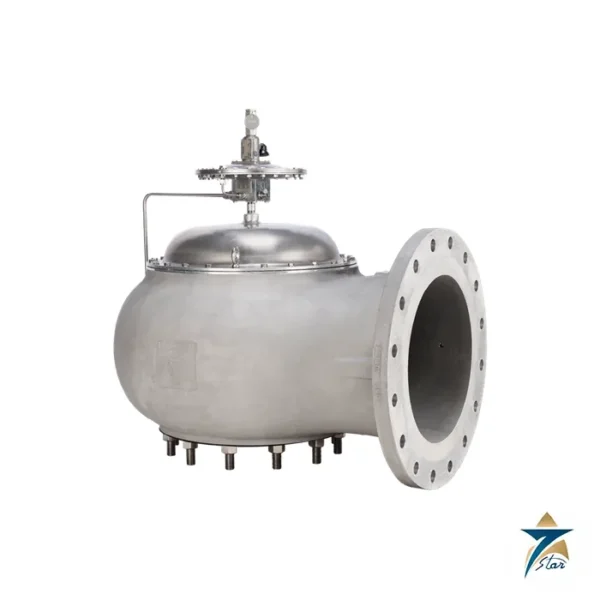
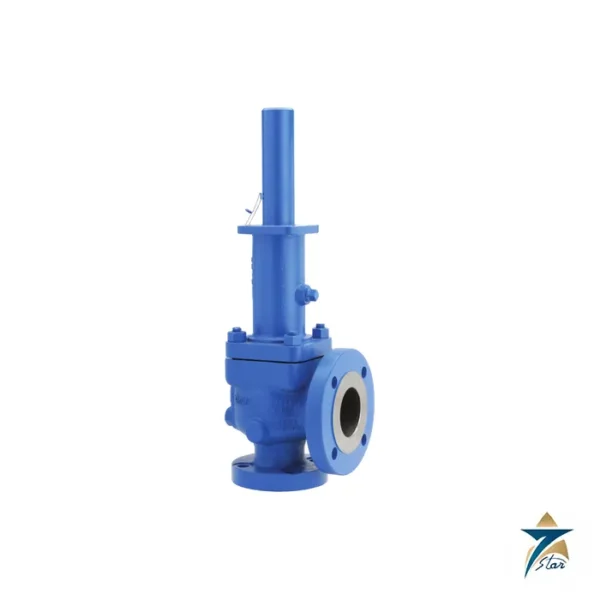
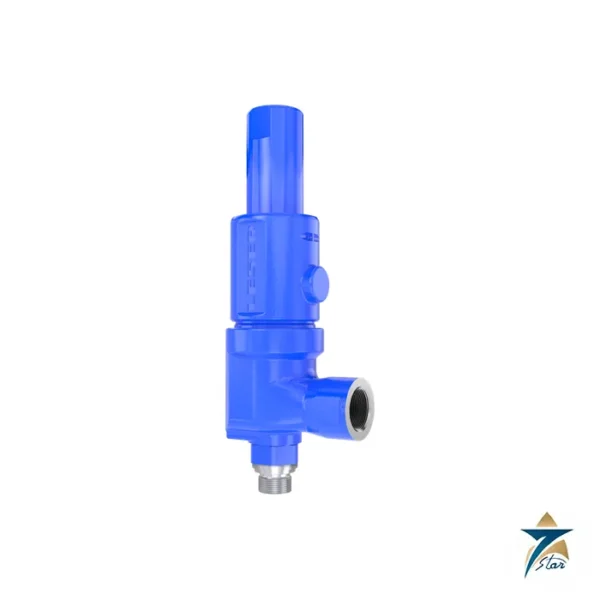
The Kunkle Valve Bailey 616D safety relief valve is a spring-operated high capacity valve designed for low-pressure air applications. It is specially engineered to provide overpressure protection for positive displacement air blowers and associated tanks or pressure vessels.
The valve is commonly used on blowers and on bulk transfer road and rail transport vehicles, protecting the equipment and the system against overpressure conditions that could cause damage or unsafe operation.
The 616D uses a spring-loaded disc held against the seat by spring force, opening automatically when the system pressure exceeds the set point to relieve the excess air. The high capacity design allows the valve to pass the full blower output at the required relief conditions.
The spring-operated design provides dependable, repeatable set pressure performance without the need for external power or pilot systems, and the robust construction suits the vibration and duty cycles of blower and transport equipment.
| Specification | Value |
|---|---|
| Manufacturer | Kunkle Valve (Emerson) |
| Model | Bailey 616D |
| Type | Spring-operated safety relief valve |
| Application | Low-pressure air |
| Capacity | High capacity design |
| Service | Blowers, tanks, transport vessels |
| Operation | Automatic, spring-loaded disc |
| Power | None required |
Overpressure protection is a safety essential, and the Kunkle Bailey 616D safety relief valve provides it for low-pressure air systems, which is why Seven Star LLC supplies the Bailey 616D safety relief valve for blower and vessel protection.
The Bailey 616D safety relief valve protects the process vessel from the overpressure condition with the spring loaded disc. The valve is installed on the vessel nozzle and the set pressure is adjusted with the compression screw under the cap. The flat seat design with the soft insert provides the tight shutoff, and the valve is certified according to the ASME code for the steam and the air service.
The 616D valve is installed with the inlet and the outlet piping of the vessel and the discharge is routed to the safe location. The valve is tested at the set pressure with the nitrogen or the steam and the seat leakage is checked after the pop test. The cap and the seal protect the adjustment from the unauthorized change. The valve is supplied with the ASME certification for the code inspection of the plant.
The 616D valve is used for the steam and the air service of the plant and the body material is selected for the temperature of the application. The lifting device is available for the larger sizes and the valve is tested at the manufacturer for the set pressure and the seat tightness. The installation and the maintenance follow the ASME practice for the relief valve of the plant.
Seven Star LLC supplies the Kunkle Bailey 616D safety relief valve for air system projects across the Gulf, with verified specifications and technical support. Our team assists with size selection and set pressure requirements for blower and vessel protection.
We support water, industrial, and transport customers with reliable B2B supply of safety valves throughout the GCC.
The spring-operated design provides automatic, repeatable protection without dependence on external power or pilot supply, and the high capacity ensures the full blower output can be relieved at the set pressure. The robust construction withstands the vibration of blower installations.
Because the valve protects both the blower and its associated vessels, it is a critical element of the low-pressure air system, and correct sizing against blower capacity is essential for effective protection.
Selecting the right Bailey 616D safety relief valve starts with the blower, not the pipe. The valve must pass the full delivered air flow of the positive displacement blower at the set pressure plus the permitted overpressure, so the blower nameplate flow, the maximum discharge pressure and the design pressure of the downstream tank or vessel are the three figures we ask for first. The set pressure should sit below the lowest design pressure in the protected system and far enough above the normal operating pressure to avoid simmering during routine duty.
When replacing an installed valve, read the stamped set pressure and size from the nameplate or tag and match them exactly. A valve with a different set point or smaller capacity changes the protection of the whole system and should not be substituted without an engineering review.
Mount the valve vertically with the inlet as close as practical to the protected point, keeping the inlet line short and at least the full bore of the valve inlet so that pressure loss does not cause chatter. Avoid isolation valves between the blower and the relief valve unless site procedures lock them open. The discharge should vent to a safe area away from personnel, and on road and rail bulk tankers it should be directed so that released air and product dust do not reach the operator position.
Before first start-up, confirm the set pressure on the tag against the system data sheet and check that the cap and seal are intact. During commissioning, raise the blower pressure gradually and note the pressure at which the valve lifts and reseats, recording the values in the equipment file.
Blower service is dusty and vibrating, so inspect the valve at every blower overhaul. Typical findings and actions are:
In the region, the 616D protects aeration blowers at municipal wastewater plants, pneumatic conveying blowers at cement and bulk handling terminals, and blower-equipped bulk tankers moving cement, flour and plastic pellets between Sohar, Duqm and the wider GCC. High ambient temperatures and fine dust make regular inspection of the seat and spring area particularly important.
Seven Star LLC supplies the Bailey 616D safety relief valve and related Kunkle relief valves to plant operators and fleet maintenance teams. Send us the nameplate data or your blower details and our engineers will confirm the model, connection and set pressure before the order is placed.
For the Bailey 616D safety relief valve, Kunkle 616D relief valve or any related control and instrumentation requirement, contact the Seven Star LLC team. Submit a formal inquiry through our RFQ page with your valve size, actuation and process data, and our specialists will respond with a detailed commercial proposal and the Kunkle product documentation.
Emerson is a global technology and engineering leader providing innovative automation, control, and measurement solutions that help industries operate more efficiently, safely, and sustainably. With over 130 years of experience, Emerson’s products and technologies serve critical sectors such as oil & gas, chemical processing, power generation, and manufacturing.
The company’s portfolio includes PLCs, transmitters, valves, flow meters, and industrial control systems that deliver precision, reliability, and energy efficiency. Emerson’s continuous investment in digital transformation and IIoT solutions has positioned it at the forefront of smart industrial operations worldwide.
Seven Star LLC supplies genuine Emerson products to clients across the Middle East, offering trusted equipment and expert support to ensure optimized performance and seamless integration for complex industrial applications.
Click to view complete Emerson information.Emerson Electric Co. was incorporated in Missouri in 1890 and is headquartered in St. Louis, Missouri. For the fiscal year ended 30 September 2025 the company reported net sales of USD 18,016 million and approximately 71,000 employees, with 30 percent of sales in Asia, the Middle East and Africa. The business is arranged in two groups, Intelligent Devices and Software and Control.
Emerson reports six segments. Final Control covers control valves, isolation valves, actuators and regulators under brands including Fisher, Bettis, Crosby, Keystone and Anderson Greenwood. Measurement & Analytical supplies instrumentation for pressure, temperature, level and flow under the Rosemount and Micro Motion brands. Discrete Automation includes ASCO, Aventics and PACSystems, and Control Systems & Software includes the DeltaV and Ovation control platforms.
Choose the option that best fits your needs to get the fastest response from our team.
Automatically fill the RFQ form with this product's details for a faster process.
Manually enter multiple part numbers, specific brands, or custom requirements.








Reviews
There are no reviews yet.