Overview
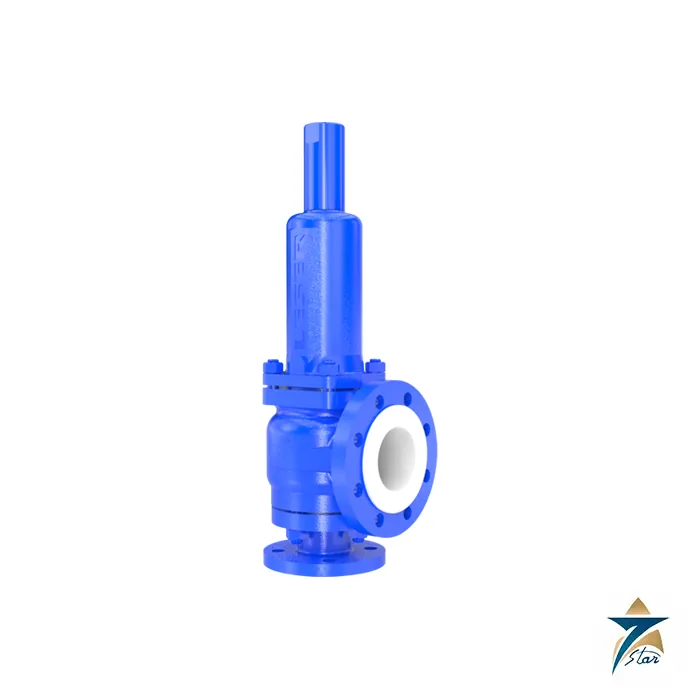
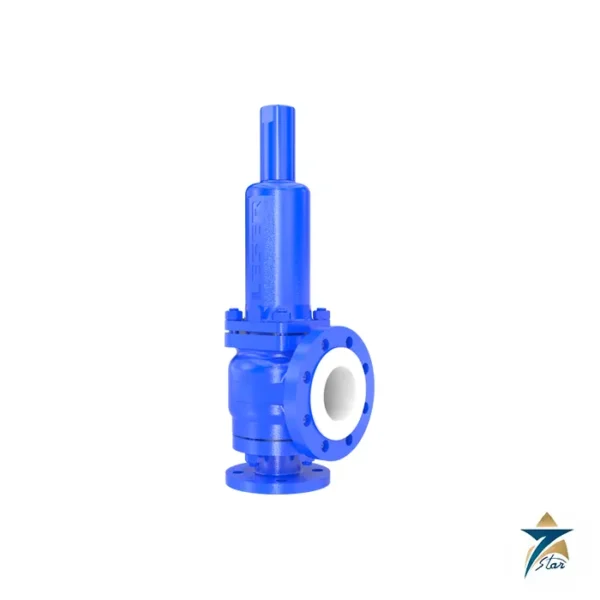
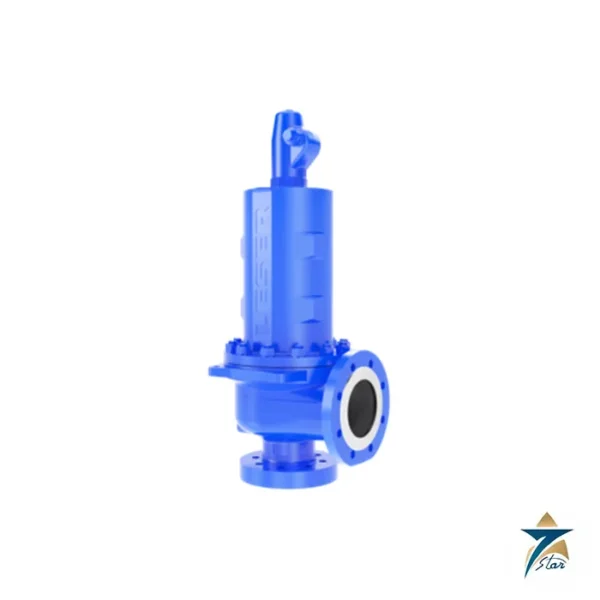
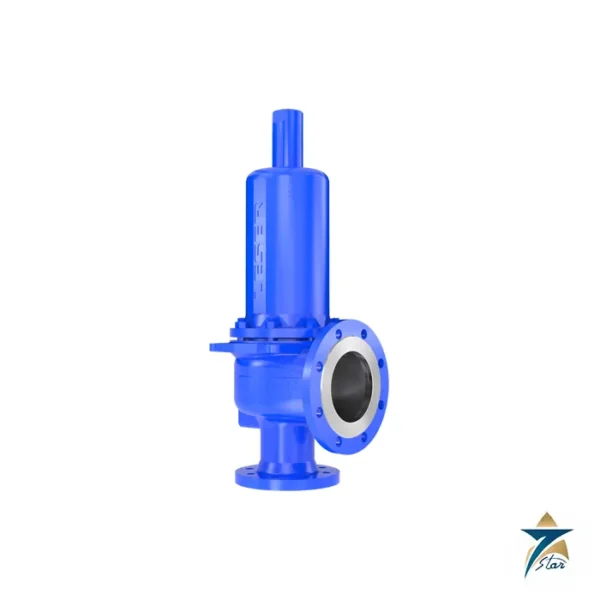
The LESER Critical Service series is a dedicated family of spring-loaded safety relief valves engineered specifically for highly corrosive, toxic, and explosive process media where a standard metallic safety valve cannot be trusted to survive the service life of the plant. Built around a shared platform of full PTFE-lined wetted parts, the series unifies Type 447 and Type 447B under one design philosophy: total chemical isolation of the valve body and trim from the process fluid, so the underlying carbon or stainless steel casting never contacts the corrosive medium directly. This makes the LESER Critical Service family the go-to LESER line for chemical processing, acid handling, and any application where chloride, sulfuric, or other aggressive chemistries would rapidly degrade a conventional valve.
With engineering support in Muscat, Seven Star LLC supplies the complete Critical Service range on request with manufacturer documentation and technical support for specification and sizing. Facility engineers across the region can source LESER hardware through Seven Star LLC with a formal quotation and the manufacturer datasheet.
Operating Principle
Every valve in the Critical Service series is a direct spring-loaded safety valve: process pressure acts on the underside of a disc held closed by a calibrated spring, and when pressure exceeds the set point the disc lifts, venting the medium until pressure falls back to a safe level and the spring reseats the disc. What differentiates this family from LESER’s general-purpose lines is not the actuation principle but the wetted-parts strategy layered on top of it – the entire inlet and outlet flow path, including the nozzle and disc holder area, is fully lined in PTFE (or, on Type 447B, a conductive PTFE compound) so that the corrosive fluid only ever contacts a chemically inert barrier rather than the steel body.
The practical consequence of this construction is a dramatic extension of service life in media that would otherwise pit, crack, or stress-corrode a bare-metal trim within months. Because the PTFE lining is continuous through the flow path rather than a coating applied after machining, there are no exposed metal edges at the seat or disc interface for the process fluid to attack, and the conductive PTFE variant on Type 447B additionally dissipates static charge buildup, making it suitable for flammable or explosive atmosphere duty where spark risk must be eliminated.
Engineering Design of the LESER Critical Service Series
Both members of the family share a common angle-pattern body architecture with flanged inlet and outlet connections sized from DN 25 up to DN 100 (NPS 1 to NPS 4), rated to a maximum set pressure of 16 bar (232 psig). The spring housing sits above the disc assembly in the standard LESER modular format, allowing set-pressure adjustment and cap sealing in the field without disturbing the wetted PTFE-lined section, which keeps recertification and re-testing straightforward for plants operating under strict chemical-service maintenance regimes.
The distinction between the two types is purely in the lining compound: Type 447 uses standard full PTFE lining for general corrosive-service isolation, while Type 447B uses an electrically conductive PTFE lining engineered for use in potentially explosive atmospheres where electrostatic discharge from an insulating liner would itself present an ignition hazard. Selection between the two is dictated entirely by the hazard classification of the installation area and the process medium’s conductivity, not by pressure or size requirements, which are identical across both variants.
Key Features
The Critical Service series delivers a consistent set of protective and operational advantages across both types:
- Full PTFE lining through the entire inlet and outlet flow path isolates the steel body from corrosive process media.
- Type 447B’s conductive PTFE lining dissipates static charge for safe use in classified explosive atmospheres.
- DN 25–DN 100 (NPS 1–NPS 4) size range covers the majority of chemical dosing, transfer, and reactor relief duties.
- Set pressure range of 0.1–16 bar (1.45–232 psig) suits low- and medium-pressure corrosive-service systems.
- Modular spring housing allows field set-pressure adjustment without disturbing the PTFE-lined wetted section.
- Flanged connections compatible with standard DIN and ASME piping schedules for straightforward retrofit.
- Shared body platform across both types simplifies spares holding and maintenance training for plant technicians.
- Design suited to sulfuric acid, hydrochloric acid, chlorine derivatives, and other highly aggressive chemistries.
Industrial Applications
The LESER Critical Service series is specified wherever a plant handles chemically aggressive fluids that would compromise a standard metallic safety valve: acid storage and transfer systems, chlor-alkali plants, fertilizer production, refinery alkylation units, and specialty chemical batch reactors. In the Sultanate of Oman and across the wider GCC, this includes the petrochemical and fertilizer complexes at the Sohar and Salalah economic zones, where sulfuric acid regeneration units, chemical dosing skids, and corrosive-service pipeline relief points depend on PTFE-lined protection to avoid unplanned shutdowns from trim failure.
Backed by manufacturer datasheet documentation, Seven Star LLC distributes the Critical Service range to process plants, EPC contractors, and maintenance, repair and overhaul (MRO) providers throughout Oman and the GCC, backing every supply with manufacturer datasheet documentation and technical sizing support. Facility engineers specifying Critical Service corrosive-service relief protection for new chemical process units or replacing degraded valves on existing acid lines can rely on this trusted supply channel for both Type 447 and Type 447B without compromising on traceability.
Technical Specifications
The table below compares the two current Critical Service models so specifiers can select the correct type for their hazard classification and process conditions.
| Type |
Size Range |
Pressure Range |
Key Feature |
| Type 447 |
DN 25–DN 100 | NPS 1–NPS 4 |
0.1–16 bar | 1.45–232 psig |
Full PTFE lining for highly corrosive media |
| Type 447B |
DN 25–DN 100 | NPS 1–NPS 4 |
0.1–16 bar | 1.45–232 psig |
Conductive PTFE lining for explosive-atmosphere service |
Request a Quote for LESER Critical Service
Seven Star LLC invites process engineers, EPC contractors, and plant maintenance teams across Oman and the GCC to submit a formal RFQ for the LESER Critical Service series (Critical Service Type 447 or Type 447B). Standard sizes are supplied on request with lead time confirmed at quotation, and a technical datasheet download can be provided on request alongside sizing support from our instrumentation and valve engineering division. Working closely with plant engineers in the region, Seven Star LLC supplies manufacturer hardware with the available certification documents and technical support for every Critical Service valve supplied.
Also available: LESER Modulate Action Series Safety Valves

























Reviews
There are no reviews yet.