Overview
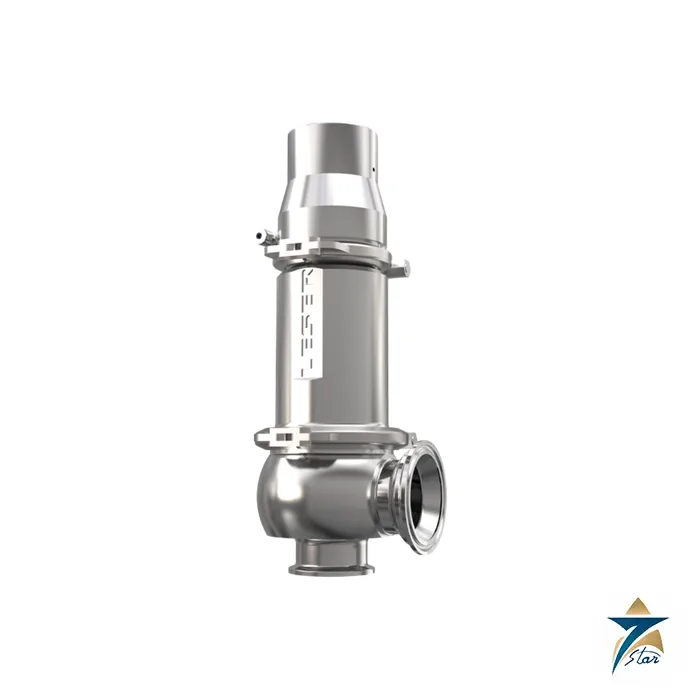
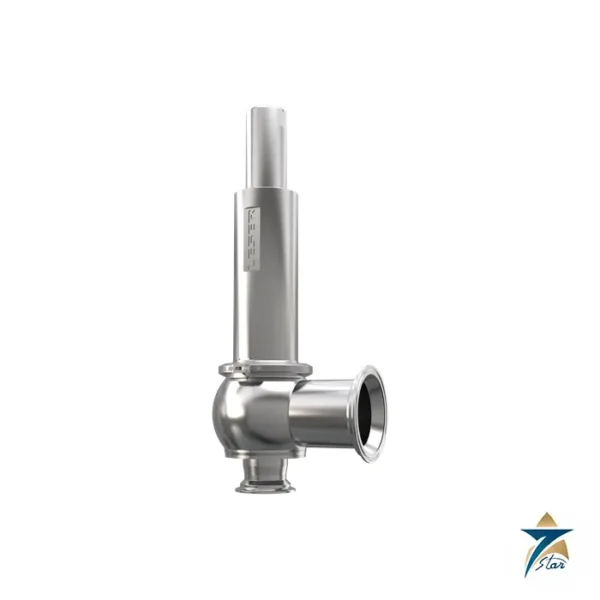
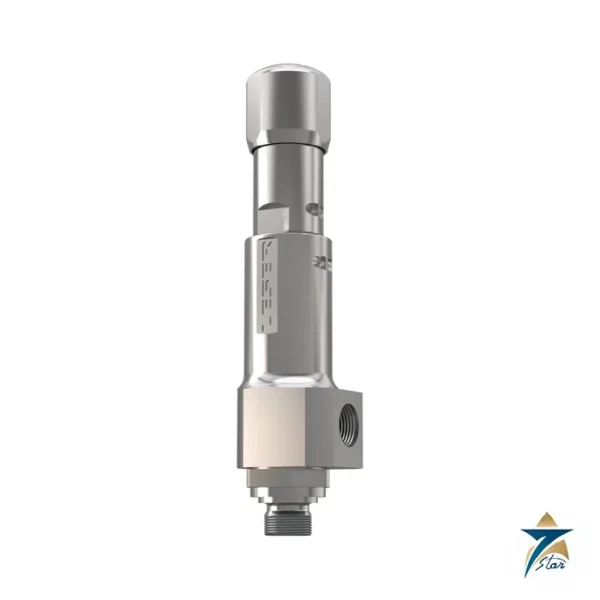
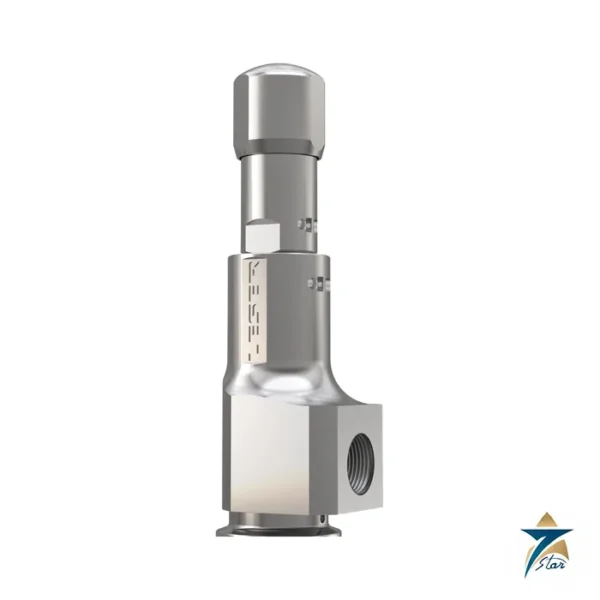
LESER Type 483 is a spring-loaded safety valve purpose-built for the hygienic process industries, covering nominal sizes DN 25–40 (NPS 1–1½) and set pressures up to 16 bar / 232 psig. Where a conventional API-style safety valve relies on threaded bonnets, packed spindles, and crevice-prone seat geometry, the Type 483 is engineered around a single governing requirement: nothing in the wetted path may trap product, harbour bacteria, or resist cleaning-in-place. LESER calls this “crevice free” construction, and it is the defining feature of the Clean Service family — smooth internal contours, minimal dead space around the seat and disc, and an elastomer bellows/diaphragm arrangement in place of the packed-gland designs used on general industrial valves.
With engineering support in Muscat, Seven Star LLC supplies the Type 483 on request to dairies, breweries, beverage bottlers, and pharmaceutical manufacturers across Oman and the wider GCC. Facility engineers specifying overpressure protection for a sanitary process skid do not have to accept a generic industrial relief valve retrofitted with a tri-clamp adapter; the Type 483 is designed from the outset for hygienic service, and Seven Star LLC supplies it on request with application support and lead time confirmed at quotation.
Operating Principle
Like every LESER spring-loaded safety valve, the LESER Type 483 holds its disc against the seat with a calibrated compression spring set to a defined opening pressure. When system pressure at the inlet reaches the valve’s set point, the net force on the disc overcomes the spring load, the disc lifts off the seat, and process fluid discharges through the outlet connection until pressure falls back to the reseating point, at which the spring returns the disc to full seat contact. This is the same fundamental physics behind every direct-acting spring-loaded relief valve; what differs on the Type 483 is everything surrounding that seat-and-disc interface.
Because the LESER Type 483 is protecting a hygienic process rather than a hydrocarbon or steam line, the spring housing above the disc is isolated from the product side by a flexible elastomer diaphragm or bellows rather than a conventional sliding-stem gland. This eliminates the microscopic gap around a packed spindle where product could otherwise stagnate, dry out, or support bacterial growth between CIP/SIP cycles. The practical consequence is a valve that opens and recloses with the same predictable spring-force behaviour as any LESER safety valve, but that a food or pharmaceutical quality team can validate as fully cleanable and free of product-contact crevices — a requirement no generic industrial safety valve can satisfy without modification.
Engineering Design of the LESER Type 483
The LESER Type 483 body and internals are manufactured in stainless steel to match the sanitary piping it protects, with a compact angle or in-line body pattern and hygienic clamp or DIN 11851-style thread connections sized for DN 25–40 / NPS 1–1½ process lines. Surface finishes are specified to sanitary polish standards so the wetted bore matches the Ra roughness of the surrounding process piping, avoiding the surface irregularities that would otherwise become a cleaning validation failure point. The seat itself is a precision-lapped metal-to-metal design, supplemented by the elastomer isolation described above, so the valve combines a robust mechanical seat with a genuinely crevice-free product-contact envelope.
Installation follows standard sanitary practice: the LESER Type 483 is mounted directly on the vessel or pipeline nozzle it protects, in the same orientation and clearance envelope as other clamp-connection hygienic fittings on the skid, with no special foundation or support structure required at this size range. The spring housing is sealed and factory set to the specified opening pressure, and the cap is tamper-evident so that plant quality assurance can confirm the set point has not been field-adjusted between calibration intervals. Because the Type 483 shares LESER’s standard spring and adjustment mechanism across the Clean Service range, maintenance technicians already familiar with LESER safety valves on the utility or CIP side of the plant require no additional training to service it.
Key Features
The LESER Type 483 safety valve is built around eight features that matter directly to hygienic process operators:
- Crevice-free wetted geometry with an elastomer diaphragm/bellows isolating the spring mechanism from the product side, eliminating the stagnation-prone gaps found on conventional packed-stem safety valves.
- DN 25–40 / NPS 1–1½ size range covers the majority of small-to-medium hygienic process lines found in dairy, brewing, beverage, and pharmaceutical skid packages.
- Set pressure capability up to 16 bar / 232 psig, matching typical CIP, pasteurization, and hygienic process pressures without oversizing the valve.
- Sanitary-polish stainless steel wetted parts compatible with standard clean-in-place (CIP) and steam-in-place (SIP) cycles.
- Hygienic clamp or threaded sanitary connections sized to match standard tri-clamp and DIN 11851 process fittings, avoiding adapter fittings that would themselves introduce crevices.
- FDA-compliant elastomer materials selected for food, beverage, and pharmaceutical contact suitability.
- Tamper-evident factory-set spring cap, giving quality assurance teams a visual confirmation that the set pressure has not been altered outside calibrated intervals.
- Shared LESER spring and maintenance architecture across the Clean Service line, so plants already running LESER Type 488 or other Clean Service valves service the 483 with the same procedures and spare-parts logistics.
Industrial Applications
The LESER Type 483 is specified wherever a hygienic process vessel, pasteurizer, homogenizer, or CIP supply line needs certified overpressure protection without introducing a non-sanitary component into an otherwise fully cleanable system. Dairy processing plants across Oman use it on pasteurization and UHT lines; beverage bottlers in Muscat and the wider GCC specify it on carbonation and syrup-room skids; and pharmaceutical manufacturers rely on it for WFI (water-for-injection) and clean utility systems where a single non-compliant fitting can compromise an entire batch’s validation record. The LESER Type 483’s DN 25–40 size range makes it the natural choice for the smaller branch lines and utility skids that sit alongside larger process vessels on these lines.
Backed by manufacturer datasheet documentation, Seven Star LLC distributes the Type 483 to food, beverage, and pharmaceutical manufacturers throughout the Sultanate of Oman and the GCC, including facilities in the Sohar and Salalah free zones where new food-processing and light-industrial investment continues to expand.Seven Star LLC supplies this item on request with the manufacturer documentation, and availability and lead time are confirmed at quotation.
Technical Specifications
Key technical parameters for the LESER Type 483 Clean Service safety valve are summarized below, with the LESER Type 483 model designation listed first:
| Parameter |
Specification |
| Model |
LESER Type 483 |
| Product Line |
Clean Service |
| Nominal Size Range |
DN 25–40 / NPS 1–1½ |
| Maximum Set Pressure |
16 bar / 232 psig |
| Design Type |
Spring-loaded, crevice-free hygienic construction |
| Wetted Material |
Stainless steel, sanitary polish finish |
| Sealing Element |
FDA-compliant elastomer diaphragm/bellows |
| Connections |
Hygienic clamp / DIN 11851 sanitary threaded |
| Capacity Class |
Small-to-medium capacity, suited to hygienic branch and utility lines |
| Typical Applications |
Food, beverage, and pharmaceutical process and CIP systems |
Request a Quote for LESER Type 483
Working closely with plant engineers in the region, Seven Star LLC supplies on request and provides application engineering support for hygienic process operators, with lead time confirmed at quotation. Contact Seven Star LLC’s instrumentation and process safety division to request a formal quotation, confirm sizing and set-pressure selection for your specific process, or discuss volume pricing for multi-valve skid packages.
Also available: LESER High Pressure Series – Type 455/456 and 457/458 Safety Valves


























Reviews
There are no reviews yet.