Brand:

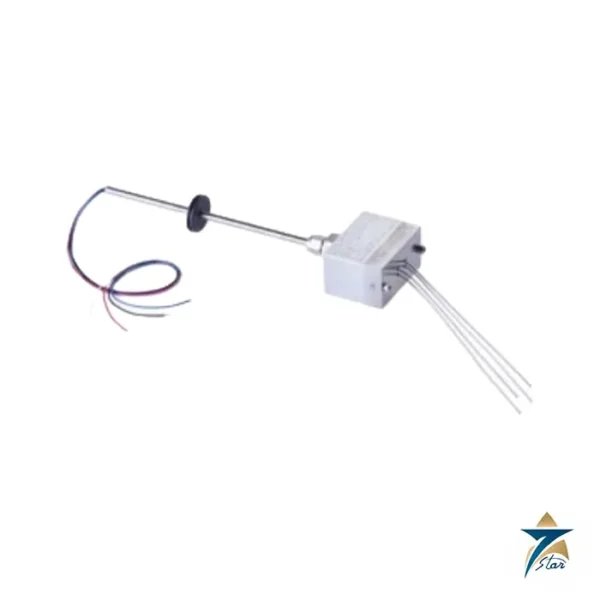
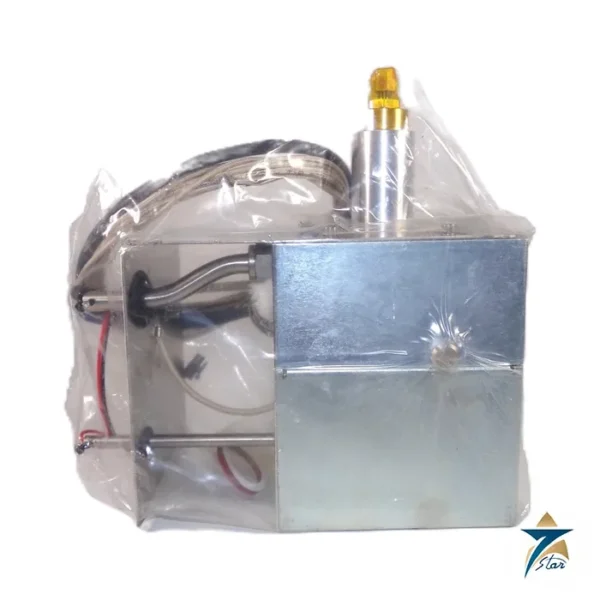
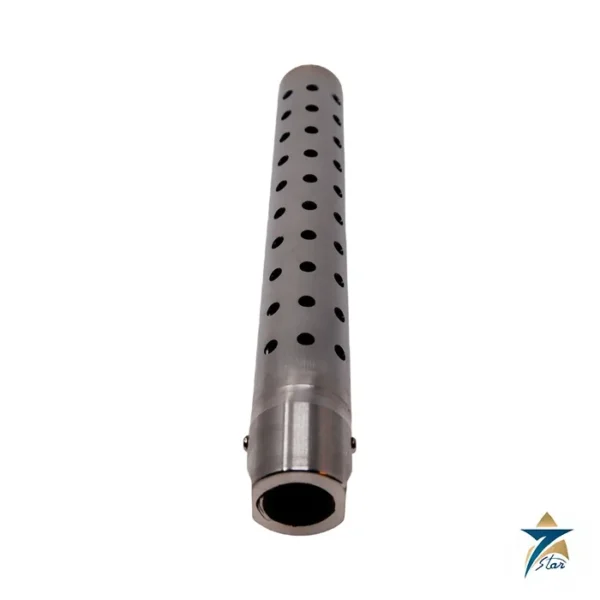
Siemens Maxum II PMT Photomultiplier Module 1270005-001

Description

Overview: Converting Light into Sulfur Concentration Data

The Siemens Maxum II PMT Module (photomultiplier module), part number 1270005-001, houses the photomultiplier tube that converts the characteristic light emission generated inside the Flame Photometric Detector (FPD) into the electrical signal used for sulfur compound quantification on the Siemens Maxum Edition II process gas chromatograph. Mounted in the electronics enclosure (EC), the PMT module connects to the FPD combustion chamber via a fiber optic cable, keeping the light-sensitive photomultiplier physically isolated from the detector’s flame and combustion environment.

As an independent specialized supplier of Siemens Maxum Edition II analyzer spare parts, Seven Star LLC sources and supplies the PMT module 1270005-001 to refineries, gas plants, and petrochemical complexes across Oman and the wider GCC.Seven Star LLC supplies this item on request with the manufacturer documentation, and availability and lead time are confirmed at quotation.

Working Principle: Photomultiplier Signal Conversion

Inside the FPD combustion chamber, sample sulfur compounds are combusted in a hydrogen-rich flame, producing light emission at wavelengths characteristic of excited sulfur species; a filter passes only these characteristic wavelengths, which travel via fiber optic cable to the PMT module in the electronics enclosure. Within the photomultiplier tube, incoming photons strike a photocathode, releasing photoelectrons that are then accelerated and multiplied through a series of dynode stages, producing a substantially amplified electron current at the anode that is proportional to the intensity of the original light signal – and therefore to the concentration of sulfur compounds in the sample.

Because photomultiplier tubes are extremely sensitive to light, Siemens documentation specifically warns that the multiplier must not be exposed to prolonged or excessive light, even while the analyzer is powered down, and that the light entry point must never be subjected to conditions that could damage the sensitive photocathode surface. This sensitivity is precisely what gives the PMT its ability to detect the faint light signals produced by trace sulfur combustion, but it also means the module must be handled carefully during any FPD or PMT servicing.

Engineering Design of the PMT Module

The 1270005-001 module packages the photomultiplier tube together with its high-voltage supply and signal-conditioning circuitry into a self-contained unit designed for mounting in the Maxum Edition II’s electronics enclosure, with a fiber optic connection point matching the light pipe interface shared across the FPD and FPD II detector generations. This shared interface is significant for maintenance planning, since Siemens documentation notes that the existing light pipe and PMT module are kept and reused when upgrading an FPD to the FPD II configuration.

Because the PMT’s response directly determines the analyzer’s sulfur detection sensitivity and linearity, correct module selection and installation are essential to maintaining the calibrated performance of the FPD detection channel, and replacement should always use the genuine Siemens-specified part rather than a generic photomultiplier substitute.

Key Features

The PMT Photomultiplier Module 1270005-001 provides the sensitive light-to-signal conversion the FPD depends on. Key characteristics include:

  • Self-contained photomultiplier tube module with integrated high-voltage supply and signal conditioning.
  • Fiber optic interface shared across FPD and FPD II detector generations for upgrade compatibility.
  • High sensitivity to the faint characteristic light emission from sulfur combustion in the FPD flame.
  • Mounted in the electronics enclosure, physically isolated from the detector’s flame and combustion zone.
  • Genuine Siemens Maxum II part number for correct sensitivity and calibration compatibility.

Industrial Applications

The PMT module is essential wherever a Maxum Edition II analyzer is configured with a Flame Photometric Detector for sulfur-selective analysis, including natural gas sulfur specification testing, refinery sulfur recovery unit monitoring, and petrochemical process streams where trace sulfur content affects product quality or catalyst protection. It is replaced when PMT sensitivity or signal stability issues are diagnosed, or as part of a detector upgrade from FPD to FPD II.

Seven Star LLC supports refinery instrumentation teams, gas processing operators, and petrochemical maintenance departments across Oman, Muscat, Sohar, and the broader GCC region with sourcing of Maxum Edition II PMT modules and related FPD detection hardware, helping analyzer houses maintain reliable, sensitive sulfur monitoring.

Technical Specifications

The table below summarizes the core specifications of the Siemens Maxum II PMT Photomultiplier Module as supplied by Seven Star LLC.

Parameter Specification
Model / Part Number PMT Photomultiplier Module, P/N 1270005-001
Function Converts FPD flame light emission into an electrical signal
Mounting Location Electronics Enclosure (EC)
Interface Fiber optic connection, shared across FPD / FPD II
Target Platform Siemens Maxum Edition II Process Gas Chromatograph
Handling Note Sensitive to light; avoid prolonged exposure even when powered down
Hardware Condition New, genuine Siemens part number

Role of the FPD in Sulfur-Selective Analysis

The Flame Photometric Detector that this PMT module supports is a sulfur- and phosphorus-selective detection technique widely used alongside the Maxum Edition II’s thermal conductivity, flame ionization, and pulse discharge detector options. In an FPD, sample compounds are combusted in a hydrogen-rich flame, and excited sulfur species emit characteristic chemiluminescent light as they relax back to lower energy states; because this emission wavelength is distinct from the flame’s normal background, an optical filter can isolate it before the light reaches the PMT described above. This selectivity is what allows an FPD-equipped Maxum II to quantify trace sulfur compounds — such as mercaptans, H2S, and other odorants — even in a sample stream dominated by hydrocarbons that would otherwise overwhelm a non-selective detector.

This capability is used across natural gas custody transfer and odorization monitoring, refinery sulfur-recovery and FCC feed analysis, and petrochemical streams where trace sulfur must be controlled to protect downstream catalysts or meet product-quality sulfur specifications, all applications common to Oman’s gas processing and refining sector.

Request a Quote for Siemens Maxum II PMT Photomultiplier Module 1270005-001

Seven Star LLC is a dedicated supplier of Siemens Maxum Edition II process gas chromatograph spare parts and FPD detection hardware throughout Oman and the GCC. To request a formal B2B quotation, verify current availability and lead time, or confirm compatibility of the PMT Photomultiplier Module 1270005-001 with your specific Maxum II FPD configuration, contact our instrumentation sourcing team today.

Related Products

Datasheets & Documents
  • PDF Instruction Manual Siemens Maxum II PMT Photomultiplier Module 1270005-001 Manual Download
Reviews (0)

Reviews

There are no reviews yet.

How would you rate this product?

It takes about 10 seconds — just tap a star. Your email is never published.

About brand

Siemens is the German technology group whose industrial products include SIMATIC controllers and HMIs, SINAMICS drives, SIRIUS and SENTRON switching and protection devices, SIPROTEC protection relays, SITRANS process instruments, SCALANCE networks and process analysers. It was founded in Berlin on 12 October 1847 by Werner von Siemens and the precision mechanic Johann Georg Halske as Telegraphen-Bauanstalt von Siemens & Halske, to build Siemens's newly designed pointer telegraph. Siemens AG is headquartered in Munich and listed on the Frankfurt Stock Exchange; its energy business was spun off as Siemens Energy in 2020.

Siemens company profile

Founded 12 October 1847, Berlin, Germany, as Telegraphen-Bauanstalt von Siemens & Halske, with 10 employees
Founders Werner von Siemens (1816–1892) and Johann Georg Halske (1814–1890)
First product The pointer telegraph designed by Werner von Siemens
Headquarters Munich, Germany (Siemens AG)
Ownership Public company listed in Frankfurt; Siemens Energy (2020) and Siemens Healthineers are separately listed companies
Businesses acquired that appear in our range Moore Products (bought in 2000; APACS and QUADLOG control systems), Applied Automation (Maxum process gas chromatographs); small industrial gas turbines such as the SGT-300 came with Alstom's industrial turbine business in 2003
Product families SIMATIC S7 PLCs, ET 200 distributed I/O and HMI panels, TIA Portal software, SINAMICS drives, SIMOTICS motors, SIRIUS and SENTRON low voltage devices, SIVACON switchboards, SIPROTEC relays, SITRANS instruments, SCALANCE network components, building technology valves and sensors

Milestones

  • 1847: Siemens & Halske starts work in Berlin with 10 employees.
  • 1848: The company wins the contract for Europe's first long-distance telegraph line, Berlin to Frankfurt am Main.
  • 1856: 330 employees, two-thirds of them working on telegraph networks in Russia.
  • 1866: Werner von Siemens describes the dynamo-electric principle, the basis of the electric generator.
  • 1958 onwards: The SIMATIC name is used for Siemens industrial automation; S7 PLCs follow in the 1990s and S7-1500 in 2012.
  • 2020: Siemens Energy is spun off and listed separately.

Choosing Siemens automation products

A Siemens order number (MLFB) identifies the exact product: 6ES7 is SIMATIC automation, 6AV is HMI, 6GK is industrial communication, 6SL is SINAMICS drives, 3R is SIRIUS control and 5SY is SENTRON miniature circuit breakers. For PLCs, S7-1200 is the compact controller for small machines, S7-1500 is the current mid-to-high range controller, and S7-300 and S7-400 are older platforms still running in many plants; S7-300 is being phased out, so spares and migration to S7-1500 are common requests. When replacing a CPU or module, the full order number including the version digits matters, because firmware and hardware versions affect compatibility with the existing project.

Where Siemens products are used

In Oman and the GCC, Siemens automation runs in oil and gas, power and desalination plants, water networks, cement and process industries. Maxum gas chromatographs analyse gas composition in gas plants and refineries, SIPROTEC relays protect substations, SGT-300 turbines drive generators and compressors, and Siemens building valves are used in HVAC systems.

Siemens products we list

Family Examples
SIMATIC controllers and I/O S7-1500, CPU 1515-2 PN, S7-1200, CPU 1214C, S7-300, S7-400H CPU 412-5H, ET 200SP, IM 153-2
HMI and networking KTP700 Basic, TP700 Comfort, TP1200 Comfort, SCALANCE XC208, SCALANCE WAM766, PROFIBUS OLM
Drives, motors and power distribution SINAMICS G120C, SINAMICS G120X, 1LA7 motor, SIVACON S8, SIPROTEC 7SJ85, 5SY4510-7 MCB
Process instruments SITRANS P320, MAG 5100W, SITRANS TH320, SITRANS TS500, SITRANS TR200
Maxum II analyser spares FID 302A detector, FPD II assembly, filament detector, Model 50 valve, SYSCON kit, air bath heater
APACS and QUADLOG spares QLCCM24AAN, QLSAMBAN, QLSDM024DCCBN, 39SAMCAN, 16137-151 M-BUS cable
Building technology VPI46 PICV, VPF44, QFM1660 sensor

Ordering Siemens products: what we need

Send the full order number from the label (for example 6ES7214-1AG40-0XB0) and, for PLC and HMI parts, the hardware and firmware version (FS and V numbers). For Maxum II and APACS spares, send the Siemens part number such as 2021651-002. For drives, add the motor power and supply voltage.

Frequently requested Siemens models: Siemens IM 155-6 PN ST ET 200SP Interface Module 6ES7155-6AU02-0BN0, Siemens SGT-300 Industrial Gas Turbine.

Facts checked against Siemens's published history timeline, October 2026.

FAQ

Questions about the Siemens Maxum II PMT Photomultiplier Module

Answers from our engineering team on installation, compatibility and integration.

01What does the PMT module do on the Maxum II?
It houses the photomultiplier tube that converts the characteristic light emission from the FPD combustion flame into an electrical signal used for sulfur compound quantification.
02How is the PMT connected to the FPD?
The PMT module is mounted in the electronics enclosure and connects to the FPD combustion chamber via a fiber optic cable, keeping the light-sensitive tube isolated from the flame and combustion environment.
03Is this PMT module reused when upgrading to FPD II?
Yes, Siemens documentation notes that the existing light pipe and PMT module are kept and reused when upgrading an FPD to the FPD II configuration.
04What handling precaution applies to this module?
The photomultiplier is sensitive to light and must not be exposed to prolonged or excessive light, even while the analyzer is powered down, to avoid damaging the photocathode surface.
05Does Seven Star LLC supply this part across the GCC?
Yes, Seven Star LLC sources and supplies the Siemens Maxum II PMT Photomultiplier Module 1270005-001 to refinery, gas processing, and petrochemical customers across Oman and the wider GCC region.