
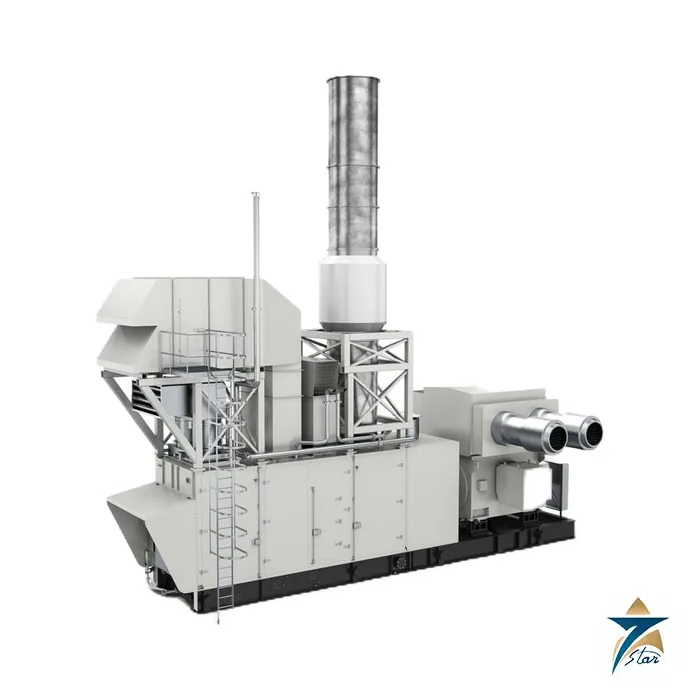
The Siemens SGT-300 is an industrial gas turbine from Siemens Energy, built for power generation, combined heat and power (cogeneration), and mechanical drive duty in demanding oil, gas, and industrial applications. Offered in a single-shaft configuration delivering 8.0 MW of electrical power output, and a twin-shaft mechanical drive configuration rated at 8.4 MW or 9.1 MW, the SGT-300 is engineered for compact packaging and on-site maintainability, with a proven fleet exceeding 200 units sold and over 10 million equivalent operating hours logged at a class-leading 99.5% reliability rate.
Seven Star LLC supports oil and gas operators, refineries, and industrial power plants across Oman and the GCC specifying or maintaining Siemens Energy gas turbine equipment, including the SGT-300, as part of our genuine instrumentation and rotating equipment supply chain. Our team can help coordinate spare parts, control system components, and instrumentation packages associated with SGT-300 installations, and can put your project in direct contact with Siemens Energy for turbine packages, long-term service programs, and field engineering support.
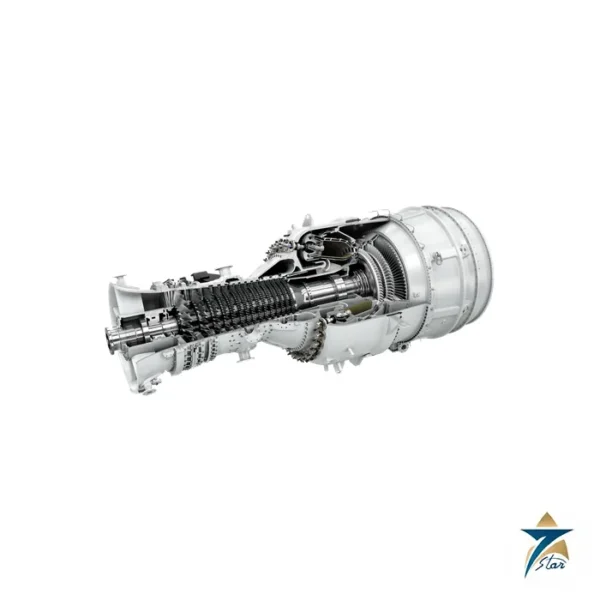
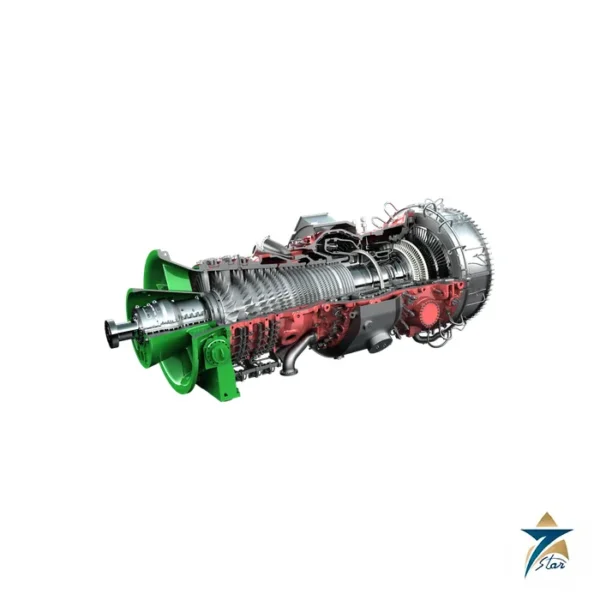
The SGT-300 operates on the Brayton cycle: ambient air is drawn through a 10-stage axial compressor with a pressure ratio of roughly 14.4:1 (single-shaft) or 13.9-14.6:1 (twin-shaft), compressed air is mixed with fuel and combusted in a can-annular arrangement of six reverse-flow tubular combustion chambers, and the resulting hot gas expands through the turbine section to drive the compressor and, on the single-shaft version, an integral generator directly. The twin-shaft version separates a 2-stage gas generator turbine from a 2-stage power turbine, allowing variable output speed for mechanical drive applications such as compressor or pump drive duty.
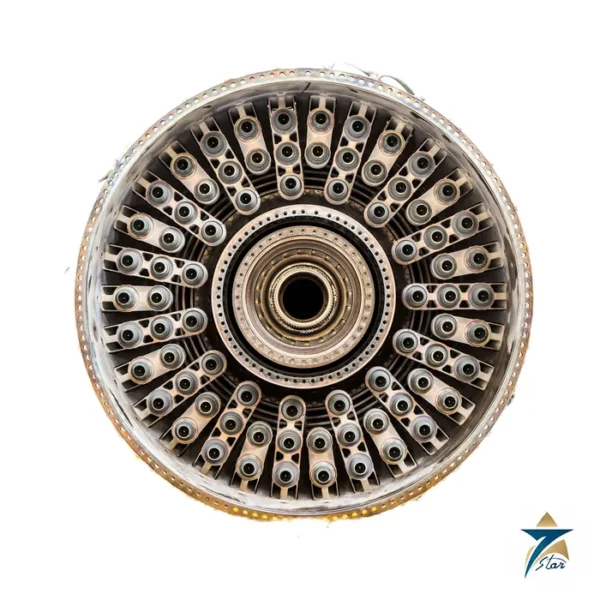
Each of the six combustor cans uses its own high-energy igniter and a Dry Low Emissions (DLE) burner system with both pilot and main fuel staging, allowing the control system to manage a lean air-fuel premix across the load range for low NOx and CO emissions while maintaining flame stability. Automatic fuel changeover between primary and secondary fuel sources is possible at any load point, and the DLE burners are qualified to burn up to 30 vol% hydrogen blended with natural gas, giving the SGT-300 a route toward lower-carbon operation without a full combustor redesign.
The single-shaft SGT-300 uses a single twin-bearing rotor within a heavy-duty, horizontally split compressor casing, engineered to permit rapid core engine exchange on-site – a design choice that significantly cuts maintenance-related downtime compared with turbines requiring full off-site overhaul. The compressor’s first-stage rotor blades can be removed axially for quick on-site inspection and replacement, and multiple borescope ports allow internal visual inspection without disassembling the machine, letting maintenance teams schedule interventions based on actual condition rather than fixed calendar overhauls alone.
The complete SGT-300 package – gas turbine, gearbox where applicable, driven equipment interface, and factory-tested fluid modules (auto drains, gas fuel, lube oil, and optional liquid fuel modules) – is mounted on a single underbase for straightforward transport and installation. The power generation package weighs approximately 58,349 kg and measures 11.9 m long, while the more compact mechanical drive package weighs around 30,400 kg, reflecting the different footprint and equipment loadout between the two configurations.
Published performance data for the Siemens SGT-300 at ISO conditions gives a simple-cycle heat rate of approximately 11,594 kJ/kWh for the power generation variant, improving to roughly 10,204 kJ/kWh on the 8 MW mechanical drive machine and 10,003 kJ/kWh on the 9 MW rating, the gain reflecting a twin-shaft arrangement that delivers shaft power directly rather than through a generator. Exhaust mass flow is 30.2 kg/s for the power generation configuration and 29.5 or 30.4 kg/s on the 8.4 and 9.1 MW mechanical drive ratings, which together with an exhaust temperature in the 490 to 534 °C band is what makes the machine a strong candidate for heat recovery steam generation and for absorption chiller duty in district cooling schemes. Shaft speed is 14,045 rpm on the single-shaft power generation engine, while the mechanical drive variants are quoted at 5,750, 11,500 and 12,075 rpm across the different ratings and shafts.
Packaging differs substantially between the two duties: the mechanical drive package is quoted at roughly 6.9 m in length against about 11.9 m for the power generation package, a difference that matters where the Siemens SGT-300 is being retrofitted into an existing compressor house or shipped to a congested offshore location. Large side doors in the acoustic enclosure allow equipment exchange without dismantling the housing, complementing the horizontally split casing and the on-site core engine exchange concept. Standard fuel capability covers natural gas, liquid fuel, and dual-fuel operation, with other fuels available on request, and the engine is applied across simple-cycle and combined-cycle generation, cogeneration, district heating schemes, and both onshore and offshore oil and gas service.
The Siemens SGT-300 is deployed in simple-cycle and combined-cycle power generation, industrial cogeneration with high heat demand, and mechanical drive service for crude oil transport pumps, water injection pumps, and gas compression in pipeline and gas processing applications. It is a common choice for onshore oil field power generation, refinery applications, and offshore platform or FPSO power in the oil and gas sector where compact packaging and on-site maintainability are critical.
Seven Star LLC, as part of the genuine instrumentation and industrial equipment ecosystem serving Oman and the wider GCC, supports refinery, gas processing, and cogeneration operators in Muscat, Sohar, Duqm, and Salalah running Siemens Energy gas turbines, coordinating instrumentation, control system, and spare parts requirements alongside Siemens Energy’s own service organization.
| Model | Siemens SGT-300 (Siemens Energy) |
|---|---|
| Configuration | Single-shaft (power generation) or twin-shaft (mechanical drive) |
| Power Output | 8.0 MW (single-shaft); 8.4 / 9.1 MW (twin-shaft) |
| Gross Efficiency | 31.0% (single-shaft); 35.3-35.9% (twin-shaft) |
| Pressure Ratio | 13.9-14.6 : 1 |
| Exhaust Temperature | 490-534 °C |
| Combustion System | Dry Low Emissions (DLE), 6 reverse-flow tubular combustors |
| NOx Emissions | ≤10-15 ppmvd (15% O₂ dry, gas fuel) |
| Fuel Flexibility | Natural gas, liquid fuel, dual-fuel, up to 30% H₂ blend |
| Manufacturer | Siemens Energy |
| Heat Rate | 11,594 kJ/kWh (single-shaft); 10,204 / 10,003 kJ/kWh (twin-shaft 8.4 / 9.1 MW) |
| Turbine Speed | 14,045 rpm (single-shaft); 5,750 – 11,500 – 12,075 rpm (twin-shaft) |
| Exhaust Mass Flow | 30.2 kg/s (single-shaft); 29.5 / 30.4 kg/s (twin-shaft 8.4 / 9.1 MW) |
| Frequency | 50/60 Hz (power generation) |
| CO Emissions | < 10 ppmvd (gas fuel, corrected to 15% O2 dry) |
| Wobbe Range | Approx. 17.5 to 50 MJ/m³ (single-shaft) |
| Steam-Raising Capability | More than 18 tonnes per hour (cogeneration) |
| Package Dimensions (L x W x H) | 11.9 × 2.7 × 4.0 m (power generation); 6.9 × 2.9 × 3.5 m (mechanical drive) |
Also available: Ansaldo Energia GT26 Heavy-Duty Gas Turbine
Siemens Energy publishes three ratings for the SGT-300. The single-shaft machine for power generation delivers 8.0 MW(e) at 50 or 60 Hz with a gross efficiency of 31.0 %, a heat rate of 11,594 kJ/kWh, a turbine speed of 14,045 rpm and a pressure ratio of 14.4:1. Its exhaust flow of 30.2 kg/s at 534 °C is the basis for the stated steam-raising capability of more than 18 tonnes per hour in cogeneration service, where overall plant efficiencies of 80 % or higher are quoted.
The twin-shaft machine for mechanical drive is offered as an 8 MW version (8.4 MW, 35.3 % efficiency, 10,204 kJ/kWh, pressure ratio 13.9:1, 29.5 kg/s exhaust flow at 490 °C) and a 9 MW version (9.1 MW, 35.9 %, 10,003 kJ/kWh, 14.6:1, 30.4 kg/s at 504 °C). Both list turbine speeds of 5,750, 11,500 and 12,075 rpm. Stated NOx on gas fuel with DLE is 10 ppmvd or below for the 8 MW version and 15 ppmvd or below for the 9 MW version, corrected to 15 % O2.
The power generation package, including the AC generator, is listed at approximately 11.9 m long, 2.7 m wide and 4.0 m high. The mechanical drive package, excluding the driven equipment, is 6.9 m long, 2.9 m wide and 3.5 m high. These dimensions exclude the inlet filter housing and exhaust stack. On fuel, the single-shaft SGT-300 covers a Wobbe range from approximately 50 MJ/m³ down to 17.5 MJ/m³, and with DLE burners can burn up to 30 vol% hydrogen; emission compliance down to 50 % load or lower is stated as possible.
Yes. The single-shaft version drives a generator directly. The twin-shaft version has a separate power turbine for mechanical drive of compressors or pumps.
Its DLE burners are qualified to burn up to 30 vol% hydrogen blended with natural gas.
Over 200 units have been sold, with more than 10 million equivalent operating hours at a 99.5% reliability rate.
A 10-stage axial compressor with a pressure ratio of roughly 14:1.
We coordinate spare parts, control system components and instrumentation packages for SGT-300 installations. Contact us for price and lead time.
Contact Seven Star LLC to discuss instrumentation, spares, and project support for a Siemens SGT-300 gas turbine installation in Oman and the GCC.
Seven Star LLC stays engaged with Siemens SGT-300 operators in Oman throughout the turbine lifecycle, from commissioning support to ongoing instrumentation and spares sourcing.
Choose the option that best fits your needs to get the fastest response from our team.
Automatically fill the RFQ form with this product's details for a faster process.
Manually enter multiple part numbers, specific brands, or custom requirements.










Reviews
There are no reviews yet.