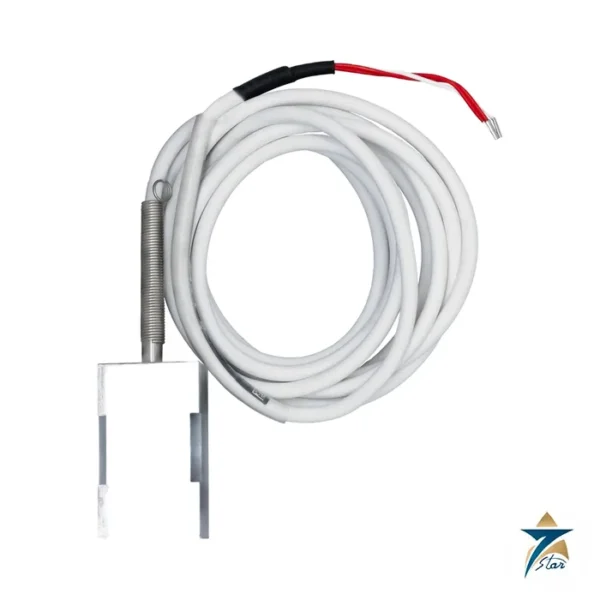
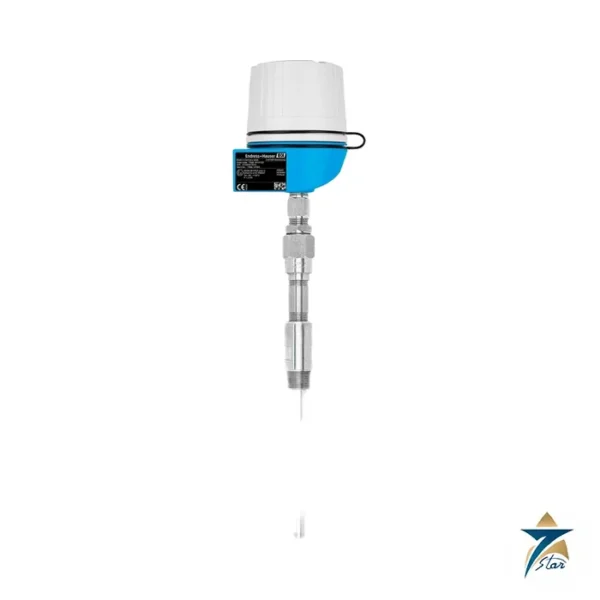
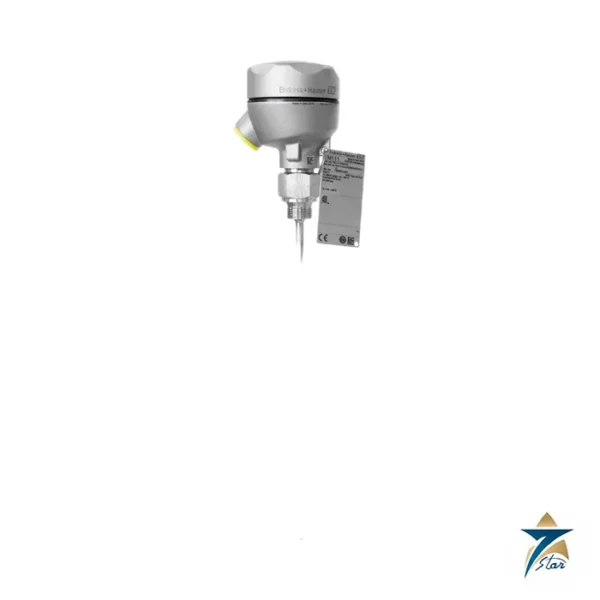
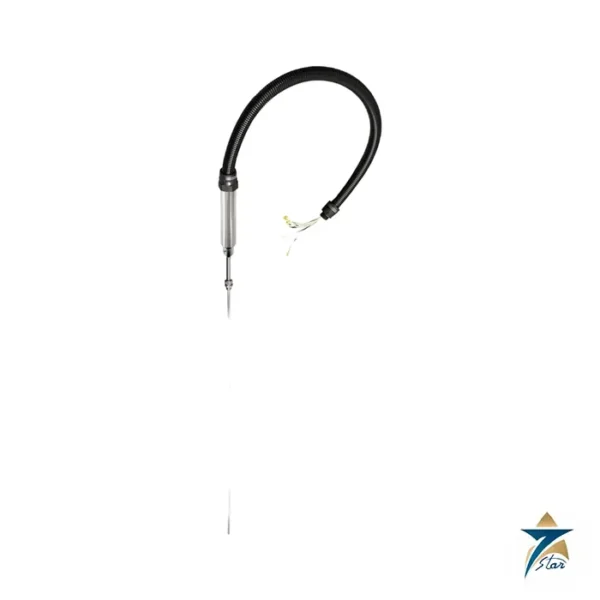
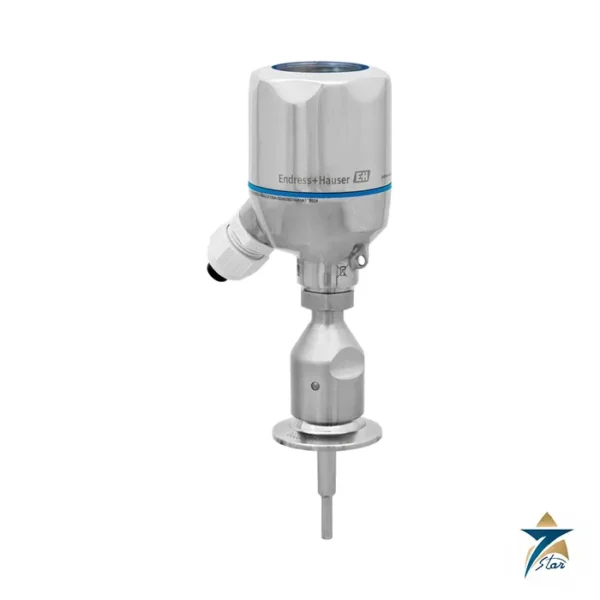
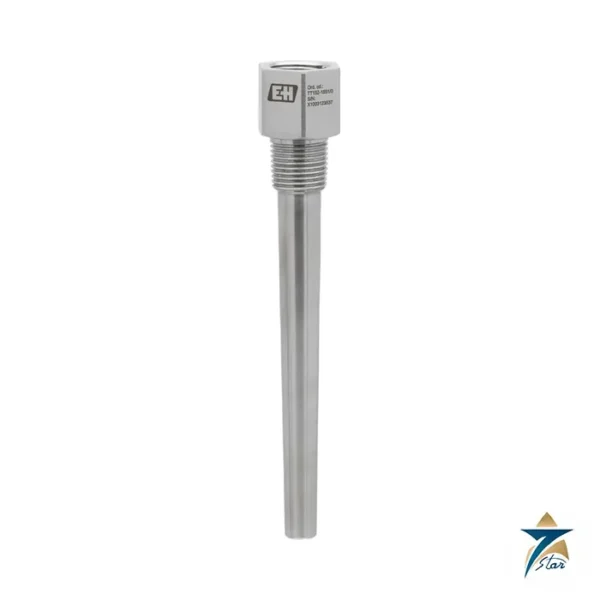
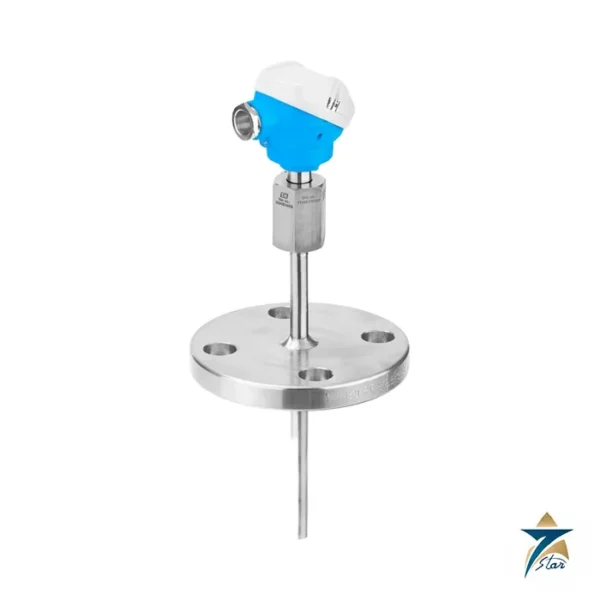
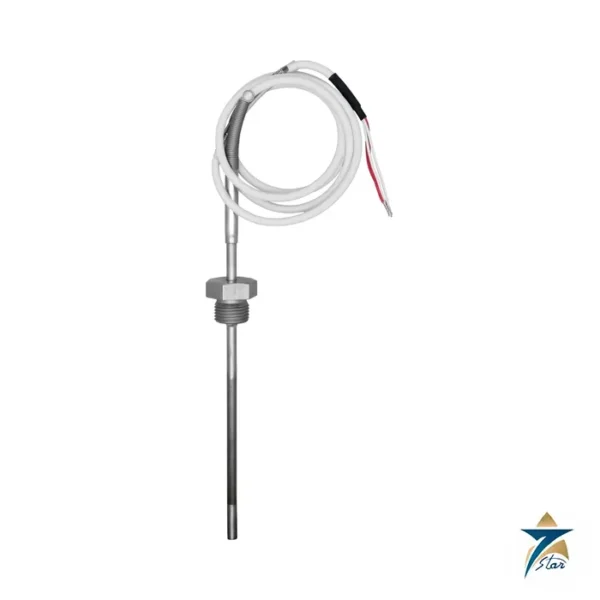
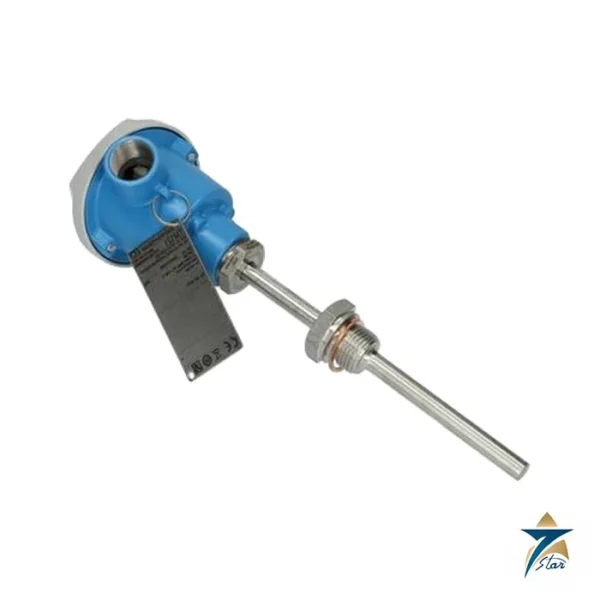
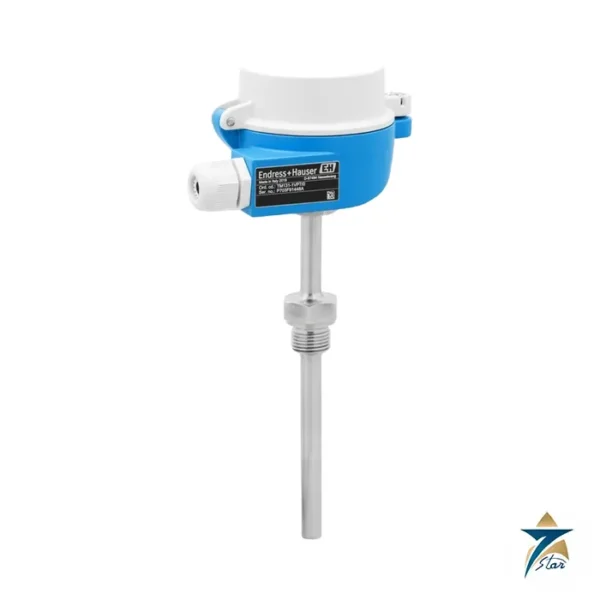
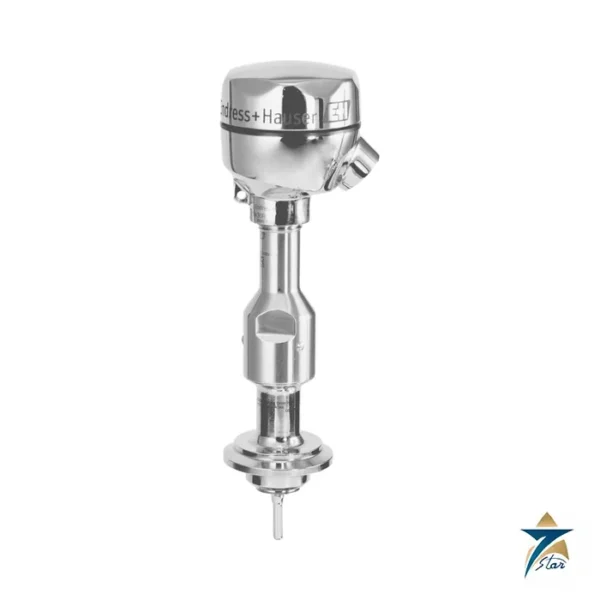
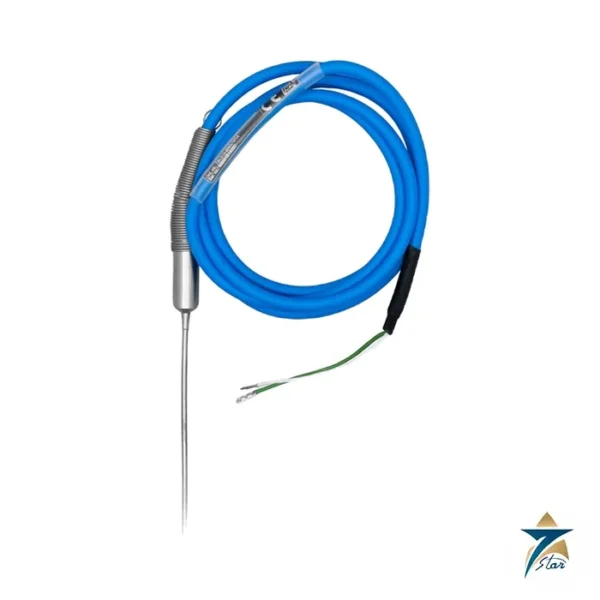
Endress+Hauser TST434B iTHERM ModuLine Ambient Thermometer

Description

Endress+Hauser TST434B ambient temperature thermometer

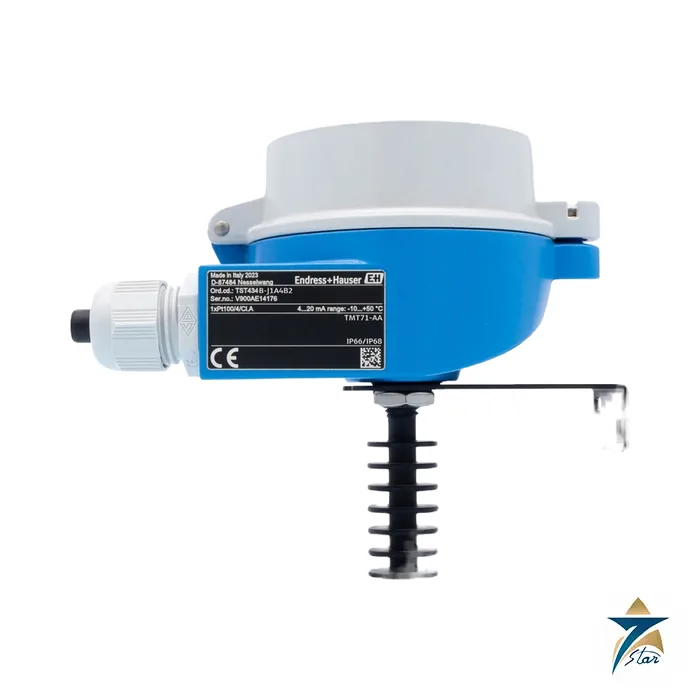
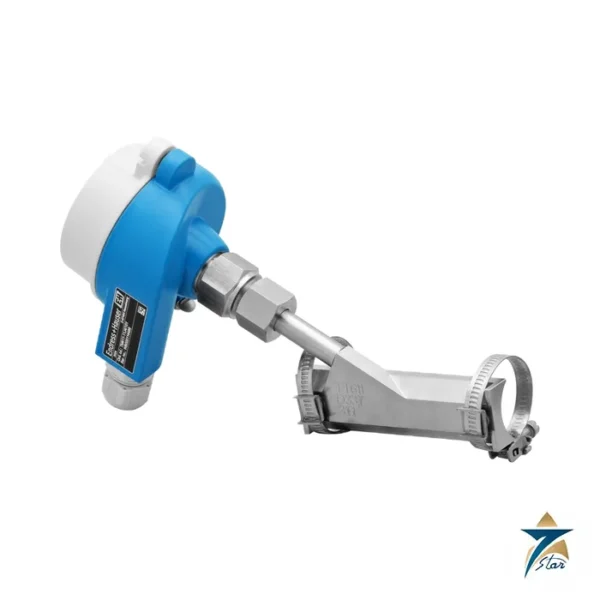
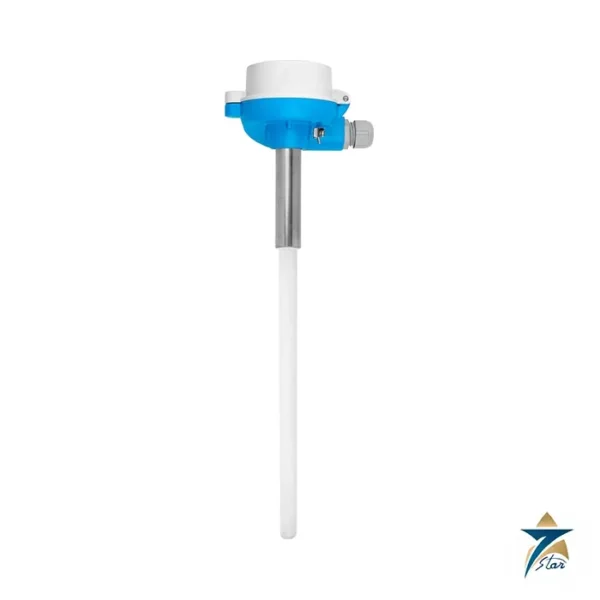
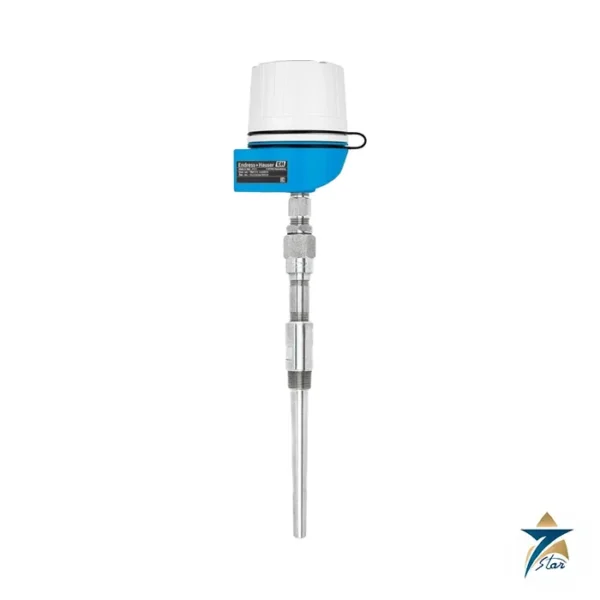
Endress+Hauser TST434B is a wall-mounted RTD thermometer that belongs to the iTHERM ModuLine family but is made for air, not for fluid in a pipe. Technical Information TI01140T specifies it for indoor or outdoor ambient temperature measurement, with a maximum range of -50 to +150 degrees C according to IEC 60751 and a degree of protection of IP66/68 (NEMA Type 4x) on the terminal-head version. A robust head to DIN EN 50446 or a plastic housing protects the electronics from weather and sun, and a head transmitter can be added for 4 to 20 mA, HART, PROFIBUS PA, FOUNDATION Fieldbus, IO-Link or PROFINET over Ethernet-APL/SPE. Seven Star LLC is an independent supplier serving Oman and the GCC and is not affiliated with the manufacturer.

Housing choices for TST434B

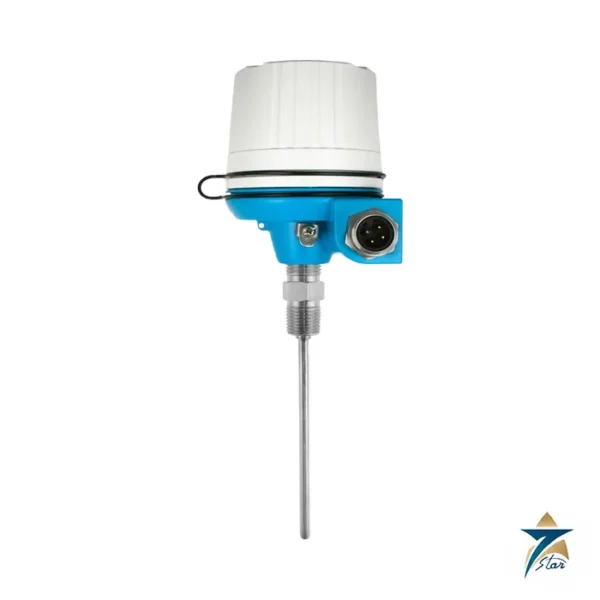
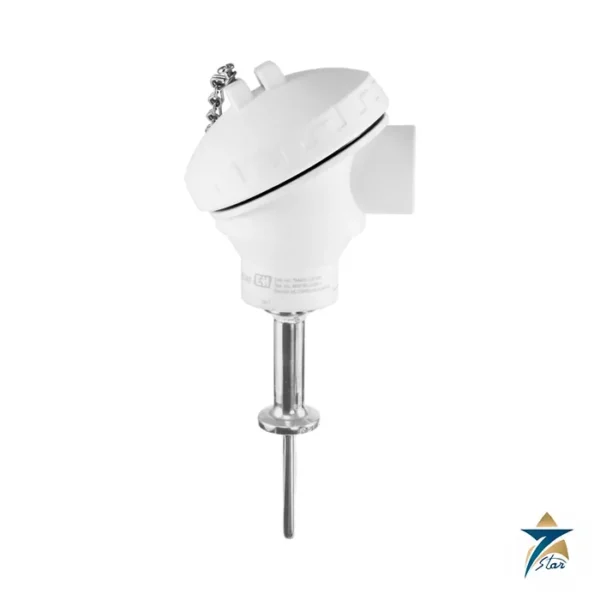
Two housings are offered. The TA30A aluminium terminal head, with blue RAL 5012 body and grey RAL 7035 cover, has an internal and an external ground terminal and cable entries G1/2, NPT 1/2 or M20x1.5. It allows -50 to +150 degrees C without a cable gland, or -50 to +100 degrees C with one, and IP66/68. The TA30 PCB plastic housing, grey RAL 7035 polycarbonate with an M16 cable entry, is limited to -40 to +100 degrees C and IP65. With a head transmitter mounted, the ambient limit for either head is -40 to +85 degrees C.

Application Outdoor and indoor ambient air temperature
Measuring range -50 to +150 degrees C max., IEC 60751
Sensor tube Anodised aluminium
Terminal head TA30A, aluminium with polyester powder coating
Plastic housing TA30 PCB, polycarbonate, M16 entry
Protection, head IP66/68 (NEMA 4x)
Protection, plastic IP65
Ambient, head with transmitter -40 to +85 degrees C
Vibration 4 g, 2 to 150 Hz, IEC 60068-2-6
Static process pressure 1 bar (14.5 psi) at 20 degrees C
Insulation resistance At least 100 megohm
Dimensions About 146.6 mm overall with head; 132 mm with plastic housing
Weight 200 to 500 g depending on configuration
Mounting Wall, no orientation restrictions

How TST434B differs from other ModuLine models

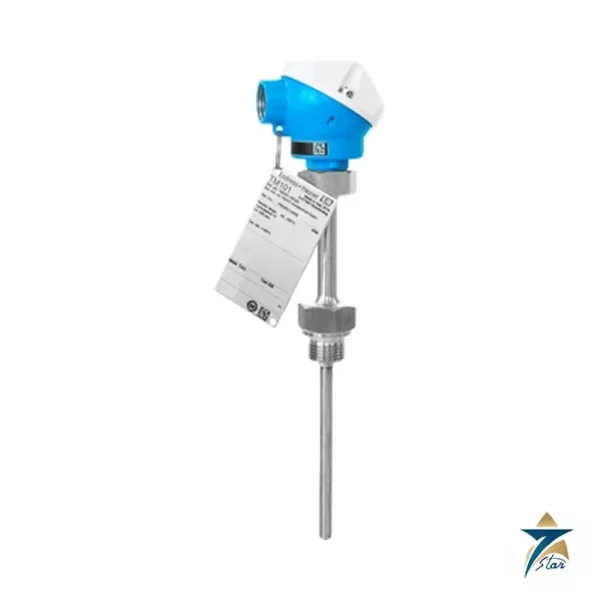
Where the TM101 and its relatives dip a sensor into a process medium through a thread or thermowell, the TST434B has an aluminium sensor tube designed for air and a modest static pressure of 1 bar. It will not take process pressure and is not meant to replace a thermowelled instrument. The wall-mount bracket, the plastic-housing alternative and the rating down to -50 degrees C are what set it apart in the family.

Where to install TST434B in Gulf conditions

Use cases include outdoor weather stations at remote pump stations, ambient compensation for gas metering skids, compressor-house and switchroom monitoring, cold-store and warehouse sensors, and ambient input for flow computers. In Oman, mount it in shade or behind a radiation shield, away from walls that reach high surface temperatures, because direct sun biases the reading far more than the sensor class does.

Electrical connection and transmitter combinations

The datasheet wiring drawings show RTD inputs for head transmitters: TMT7x or TMT31 with a single input, and TMT8x with two sensor inputs, four- and three-wire on input 1 and three-wire on input 2. A RIA15 loop-powered indicator and RN22 or RN42 active barriers can complete a 4 to 20 mA loop from a 24 to 230 V AC/DC supply.

Sizing and mounting geometry of TST434B

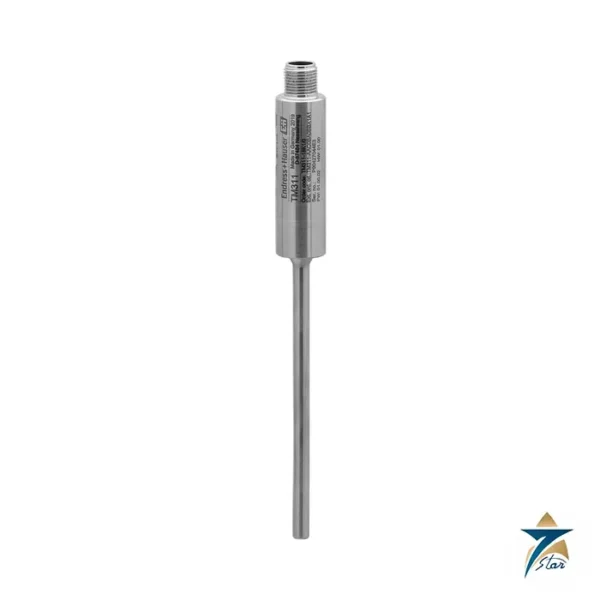
The dimension drawing shows a compact body: the terminal-head version has an overall height of about 146.6 mm, the plastic-housing version about 132 mm. Weight lies between 200 and 500 g according to configuration. Because the sensor tube is anodised aluminium, it reacts to air temperature faster than a stainless tube of the same size, which helps when the unit is used to follow day and night swings, but it also means the tube should not be mounted where condensing moisture or aggressive chemicals can attack the surface. The datasheet gives the vibration resistance as 4 g from 2 to 150 Hz, enough for a wall of an enclosed plant building but not for a compressor frame.

Choosing the right ambient sensor

If the aim is only a local reading, a direct Pt100 on the flying leads of a terminal block is the cheapest arrangement. If the signal must travel hundreds of metres to a control room, the head transmitter is the better choice, because a 4 to 20 mA signal or a digital fieldbus value is far less sensitive to cable resistance than a raw RTD. When the same ambient value is needed on a safety or metering system, specify a dual-input transmitter so that two elements can be compared and a sensor failure is reported.

Mounting and maintenance of TST434B

Orientation has no restriction. Fix the unit to a flat wall, seal the cable entry and keep covers tight. Typical faults are water ingress through a loose gland, a wrong cable diameter for the entry thread, or a head transmitter that was configured for the wrong sensor type; all three are cheap to check during commissioning. Keep the head cover and its O-ring clean before closing it, since the IP66/68 rating depends on that seal. Record the configured range and sensor type in the loop sheet so that a replacement can be set up identically. Maintenance is limited to cleaning the sensor tube, checking the gland and comparing against a reference thermometer once a year; the insulation resistance should still exceed 100 megohm.

Documents and quotation

The TI01140T datasheet is attached to this TST434B page. Send an RFQ to Seven Star LLC with the part number TST434B, your order code, housing type, transmitter option, quantity and delivery location.

Datasheets & Documents
  • PDF Datasheet Endress+Hauser TST434B iTHERM ModuLine Ambient Thermometer Datasheet Download
Reviews (0)

Reviews

There are no reviews yet.

How would you rate this product?

It takes about 10 seconds — just tap a star. Your email is never published.

About brand

Endress+Hauser makes process measurement instruments for flow, level, pressure, temperature and liquid analysis. Georg H. Endress and Ludwig Hauser started the business in Lörrach, Germany, on 1 February 1953, first selling level meters, and the Endress+Hauser name has been used since 1957. The group is headquartered in Reinach, Switzerland, and has been wholly owned by the Endress family since 1975.

Seven Star LLC is an independent supplier listing Endress+Hauser flowmeters, level and pressure transmitters, temperature assemblies and liquid analysis products for buyers in Oman and the GCC. Instruments are matched from the full order code on the nameplate.

Endress+Hauser company profile

Origin Founded in Lörrach, Germany, on 1 February 1953 by the Swiss engineer Georg H. Endress and Ludwig Hauser
Headquarters Endress+Hauser AG, Reinach (Basel-Landschaft), Switzerland
Ownership Family owned; the Endress family has been the sole shareholder since 1975, and a family charter commits the company to stay family owned
Size About 16,500 employees and sales of about EUR 3.7 billion (2023, as reported by the company)
Product families Proline flowmeters, Micropilot and Levelflex radar, Liquiphant switches, Cerabar and Deltabar pressure, iTEMP and iTHERM temperature, Liquiline and Memosens liquid analysis

Milestones

  • 1953: Georg H. Endress and Ludwig Hauser start the business in Lörrach on 1 February, first selling level meters.
  • 1957: The Endress+Hauser name comes into use.
  • 1975: The Endress family becomes sole shareholder.
  • 2023: About 16,500 employees and sales of about EUR 3.7 billion, as reported by the company.

Endress+Hauser product lines

Line Measuring principle Typical use
Promass F 300, Promass 80F, 83F/84F Coriolis mass flow Direct mass flow and density of liquids and gases, hydrocarbon transfer and chemical dosing
Promag P 300, P 500, H 300, W 400, W 10, 50P Electromagnetic flow Water, wastewater, slurries and other conductive liquids
Prowirl F 200, 72F Vortex flow Steam, gas and low-viscosity liquids
Prosonic Flow 92F, t-mass 65F Ultrasonic and thermal mass flow Water lines; compressed air and industrial gases
Micropilot FMR62, FMR67, FMR60, FMR10B, FMR20, FMR50, FMR52 Free-space radar level, 80 GHz and 26 GHz Tanks, process vessels, silos and open water channels
Levelflex FMP51, FMP50, FMP54, FMP55 Guided wave radar level Level and interface in vessels, separators and bypass chambers
Liquiphant FTL51, Prosonic S FMU90 Vibronic point level; ultrasonic level High and low level alarms, pump protection, open channel flow
Cerabar PMC71B, PMP51B, PMP71, Deltabar PMD78B, PMD75 Pressure and differential pressure Process pressure, hydrostatic level and DP flow
iTEMP TMT82, TMT162, iTHERM TM101, TR66, TR10 Temperature transmitters and thermometers RTD and thermocouple points with thermowells
Liquiline CM444, CM442, Memosens CPS11E, Stamolys reagents Liquid analysis pH, ORP, conductivity, dissolved oxygen and nutrient analysis in water treatment and process

Where Endress+Hauser instruments are used

In Oman and the GCC, Endress+Hauser instruments are common in oil and gas production and processing, refineries and petrochemicals, desalination and water networks, wastewater treatment, power plants and food and beverage plants. Coriolis meters measure hydrocarbon and chemical flows, electromagnetic meters cover water and wastewater, radar transmitters handle tank and silo level, and Liquiline analysers monitor water quality. Proline 300 and 500 flowmeters include Heartbeat Technology for in-situ verification, which reduces the need to remove a meter for checks.

Ordering Endress+Hauser instruments: what we need

The order code on the nameplate (for example PMP71-1QA1S11RDADU) defines every option: measuring range, process connection, materials, output, approvals and display. Send it with the serial number; Endress+Hauser can retrieve the original configuration from the serial number. For a new instrument add the medium, operating and design pressure and temperature, range, line size or tank geometry, process connection, wetted materials, output or protocol (4-20 mA HART, PROFIBUS, FOUNDATION Fieldbus, Modbus) and the hazardous-area approval required. Older models such as Promass 80/83 or Micropilot M are replaced by current Proline or 80 GHz Micropilot devices.

Facts checked against Endress+Hauser company history and product information, October 2026.

FAQ

Questions about the Endress+Hauser TST434B iTHERM ModuLine Ambient

Answers from our engineering team on installation, compatibility and integration.

01What is the Endress+Hauser TST434B used for?
It measures indoor or outdoor ambient air temperature with an RTD, mounted on a wall, over a range up to -50 to +150 degrees C.
02Which housings can a TST434B have?
A TA30A aluminium terminal head rated IP66/68, or a TA30 PCB polycarbonate housing rated IP65 with an M16 cable entry.
03What ambient limits apply with a head transmitter?
With a head transmitter mounted, the datasheet gives -40 to +85 degrees C for the head.
04Can the TST434B be used on pressurised lines?
No. The maximum static pressure is only 1 bar at 20 degrees C, since the unit is designed for ambient air.
05What outputs can be fitted to the TST434B?
Head transmitters offer 4 to 20 mA, HART, PROFIBUS PA, FOUNDATION Fieldbus, IO-Link or PROFINET over Ethernet-APL/SPE.