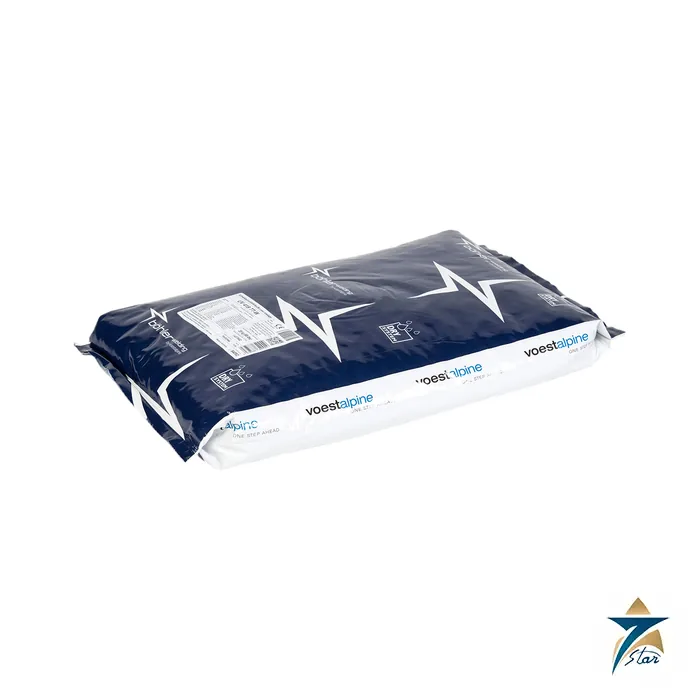
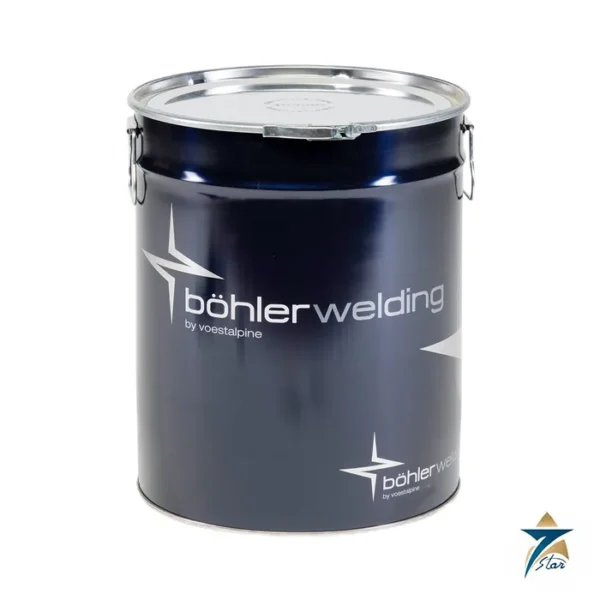
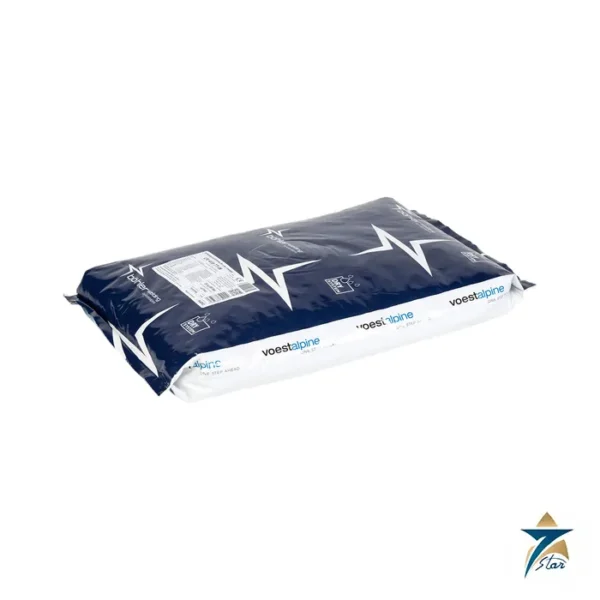
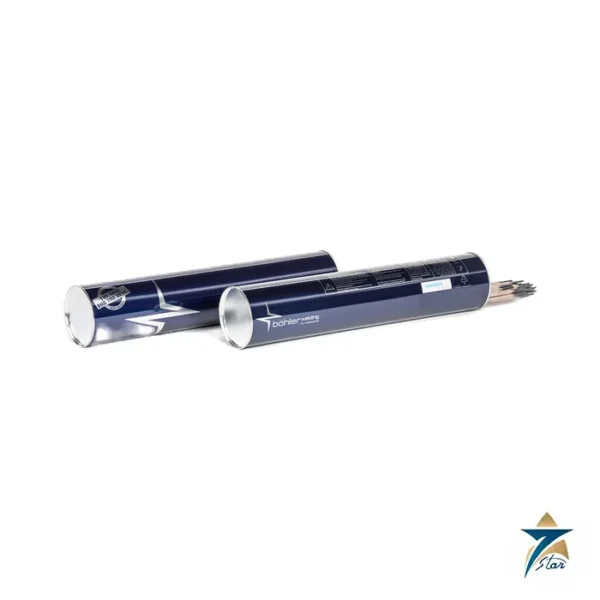
Böhler UV 418 TT Fluoride-Basic Submerged Arc Flux

Description

High-basicity flux for fine-grained structural steels and 2-run procedures

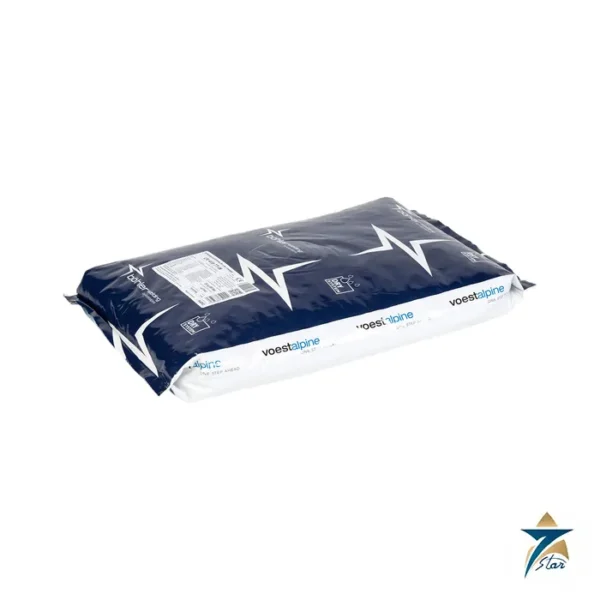
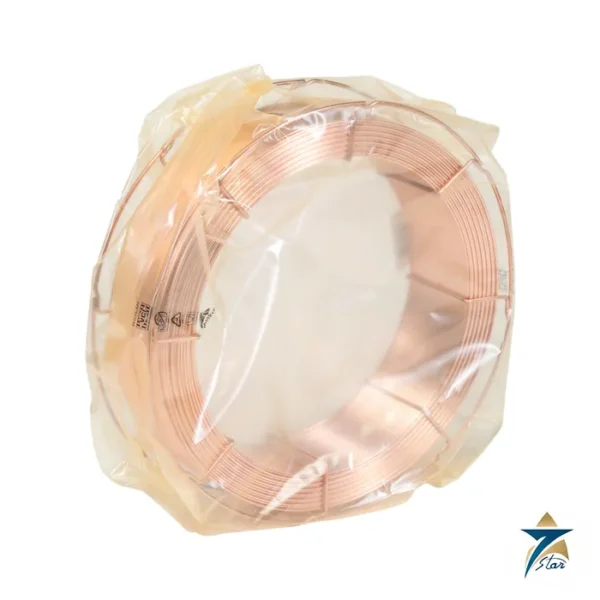
Böhler UV 418 TT is an agglomerated fluoride-basic flux for submerged arc welding of a wide scope of unalloyed and low-alloyed steel grades. Böhler Welding gives it a high basicity and neutral metallurgical behaviour and designs it for medium and high strength, fine-grained structural steels. The data sheet states very good toughness at -75 °F (about -59 °C) and CTOD values at -20 °F (about -29 °C), in both as-welded and PWHT condition, and an excellent bead appearance with very good slag release, even in narrow-gap joint preparations.

Technical specifications

Parameter Specification
Flux type Agglomerated, fluoride-basic, for low and medium alloy wires
Classification EN ISO 14174 S A FB 1 55 AC H5
Polarity DC / AC
Basicity index (Boniszewski) 2.6 wt %
Grain size (EN ISO 14174) 3 to 20 (0.3 to 2.0 mm)
Flux consumption 1.0 lb flux per lb of wire
Redrying 620 °F ± 45 (about 325 °C) for at least 2 hours
Diffusible hydrogen (ISO 3690) Max 5 ml per 100 g (as produced and re-dried)
Composition, wt % SiO2 + TiO2 15; CaO + MgO 38; Al2O3 + MnO 20; CaF2 25
Approvals as printed on the Böhler webshop ABS, DNV-GL

Two-run welding and wire choice

Thanks to its high current-carrying capacity, UV 418 TT is well suited to 2-run procedures with unalloyed and low-alloyed wires, the data sheet naming Union S 2 Mo and Union S 3 MoTiB as examples, with very good toughness. Its consumption of 1.0 lb flux per lb of wire is lower than that of some other Böhler fluxes. For the plain C-Mn wires

Union S 2 Si.

and

Union S 3 Si.

, the Böhler wire data sheets list UV 418 TT among their recommended fluxes. Fabricators of pressure vessels, offshore structures, storage tanks and wind-tower sections use this class of flux where low-temperature impact values are specified.

Related Böhler flux EN ISO 14174 class Intended for
UV 420 TTR-W S A FB 1 65 AC H5 Cr-Mo wires, long PWHT, AC welding
UV 400 S A AB 1 67 AC H5 General structural, boiler and pipe steels
Marathon 543 S A FB 1 55 DC H5 P91 / P92 multi-run welding

Handling, redrying and recycling

Agglomerated fluxes pick up moisture from humid air, and moisture becomes diffusible hydrogen in the weld. Redry opened or damaged bags at the temperature on the data sheet, store the flux in a heated hopper or cabinet at the machine, and keep recycled flux free of mill scale, slag fragments and dust by sieving and blending it with fresh flux. In a hot, humid climate the same discipline applies even more strongly, because a bag left open on the shop floor overnight can lose its low-hydrogen quality. Good flux handling matters most on high-strength steels, where hydrogen cracking risk is highest.

How the Böhler UV 418 TT flux works

In submerged arc welding, a bare wire is fed into a layer of granular flux that covers the arc completely. The flux melts to form a slag, which protects the weld pool, shapes the bead and affects the chemistry of the weld metal. UV 418 TT is an agglomerated fluoride-basic flux, classified EN ISO 14174 S A FB 1 55 AC H5. Its high basicity gives neutral metallurgical behaviour, so the weld metal takes its properties mainly from the wire. The data sheet reports very good toughness down to -75 degrees F and CTOD values at -20 degrees F.

Where the UV 418 TT is used

  • Pressure vessels.
  • Offshore structures.
  • Storage tanks.
  • Wind tower sections.
  • Medium and high strength fine-grained structural steels.

Selection checklist for the UV 418 TT

  • Flux type: agglomerated, fluoride-basic.
  • Classification S A FB 1 55 AC H5.
  • Polarity DC or AC.
  • Basicity index of 2.6.
  • Grain size of 3 to 20, which is 0.3 to 2.0 mm.
  • Flux consumption of 1.0 lb per lb of wire.
  • Diffusible hydrogen of at most 5 ml per 100 g.
  • Matching wires such as Union S 2 Mo or Union S 3 MoTiB.
  • Redrying at about 325 degrees C for at least 2 hours.
  • Approvals as printed by the maker, to be checked for the job.

Installation, commissioning and maintenance notes

Agglomerated fluxes pick up moisture from humid air, and the moisture turns into diffusible hydrogen in the weld. Store the flux sealed in a dry place, and redry it as the data sheet states before use if the pack has been open. Keep the flux hopper clean and do not mix different fluxes. Control the heat input and the interpass temperature as the weld procedure requires, and record the flux batch for each job.

Requesting a quotation for the Böhler UV 418 TT

Send the wire used, the pack size and the quantity. Seven Star LLC serves industrial customers in Oman and the GCC and replies with a quotation based on the information provided.

Two-run welding

The high current-carrying capacity suits 2-run procedures, in which each side of the joint is welded in one pass.

Bead appearance

The data sheet describes an excellent bead appearance and very good slag release, even in narrow-gap joint preparations.

Composition of the flux

The flux contains about 15 percent SiO2 and TiO2, 38 percent CaO and MgO, 20 percent Al2O3 and MnO, and 25 percent CaF2.

Flux records

Record the flux batch, the wire and the redrying time for each job.

Matching wire and flux with the UV 418 TT

The flux works as a system with the wire, so choose the pair for the steel grade and the toughness requirement. The data sheet names Union S 2 Mo and Union S 3 MoTiB for 2-run work, and the plain C-Mn wires Union S 2 Si and Union S 3 Si list this flux among their recommended fluxes. Related fluxes in the same range include UV 420 TTR-W for Cr-Mo wires and long post weld heat treatment, UV 400 for general structural, boiler and pipe steels, and Marathon 543 for P91 and P92 multi-run welding.

Documents and quotation

The Böhler Welding product data sheet for UV 418 TT (US edition, 03/2021) can be downloaded from this page. Confirm wire grade, polarity, joint design, impact temperature and PWHT before ordering, and keep the flux dry as instructed. Other products are in the Submerged Arc Fluxes category. For a quotation, send quantity, packaging and certificate needs.

Datasheets & Documents
  • PDF Datasheet Böhler Welding UV 418 TT product data sheet (US edition, 03/2021) Download
Reviews (0)

Reviews

There are no reviews yet.

How would you rate this product?

It takes about 10 seconds — just tap a star. Your email is never published.

About brand

Böhler Welding is the welding consumables and equipment brand of voestalpine Böhler Welding, part of the Austrian steel and technology group voestalpine. Its roots go back to 1870, when the brothers Albert and Emil Böhler founded the Böhler company in Vienna; in 1894 they bought the steel works in Kapfenberg, Styria, which became the home of Böhler special steels and, later, Böhler welding filler metals. Welding became a separate division of the newly formed Böhler-Uddeholm group in 1991. voestalpine took over Böhler-Uddeholm in 2007, and the welding business, headquartered in Düsseldorf, Germany, has been part of voestalpine's Metal Engineering Division since 2013.

Böhler Welding company profile

Origins 1870, Vienna, Austria: Albert and Emil Böhler found the Böhler company; Kapfenberg steel works acquired in 1894
Welding business Separate division of Böhler-Uddeholm from 1991 (the same year it acquired UTP)
Ownership voestalpine AG (Linz, Austria), which took over Böhler-Uddeholm in 2007; welding integrated into the Metal Engineering Division in 2013
Headquarters Düsseldorf, Germany (voestalpine Böhler Welding); Austrian company seated in Kapfenberg
Brands in the group Böhler Welding (joining consumables and welding machines), UTP Maintenance (repair and hardfacing), Fontargen Brazing; product lines such as FOX, Thermanit, Union, diamondspark, FOXcore, Marathon and UV fluxes
Product families Stick electrodes, TIG rods, MIG/MAG solid wires, flux-cored and metal-cored wires, submerged arc wires and fluxes, welding machines and plasma cutters

Milestones

  • 1870: Albert and Emil Böhler found the company in Vienna.
  • 1894: The Kapfenberg cast steel works is purchased.
  • 1991: Böhler Welding becomes a separate division of Böhler-Uddeholm and acquires UTP.
  • 2007: voestalpine makes its takeover offer for Böhler-Uddeholm.
  • 2013: The welding business is integrated into voestalpine's Metal Engineering Division as voestalpine Böhler Welding.

Choosing Böhler welding consumables

The filler metal must match the base metal and the service. Carbon steel pipe is often welded with a cellulosic root (FOX CEL+, AWS E6010) because it penetrates well in vertical-down welding, followed by low-hydrogen fill and cap passes (FOX EV 50, E7018-1, or FOX BVD vertical-down electrodes). Creep-resistant chromium-molybdenum steels need matching consumables and controlled preheat and post-weld heat treatment: for example FOX DCMS Kb (E8018-B2) for 1.25Cr-0.5Mo, FOX CM 2 Kb (E9018-B3) for 2.25Cr-1Mo and Thermanit Chromo 9 V Mod for P91. Duplex stainless steel uses an over-alloyed 2209 filler (FOX CN 22/9 N-B, Thermanit 22/09) to keep the ferrite-austenite balance. Low-hydrogen electrodes must be stored dry and re-baked according to the data sheet.

Where Böhler Welding products are used

In Oman and the GCC, Böhler consumables are used on cross-country pipelines, oil and gas facilities, refineries and petrochemical plants, power and desalination plants with P91 and Cr-Mo piping, pressure vessel and tank fabrication, and structural steel work.

Böhler Welding products we list

Family Examples
Stick electrodes FOX CEL+ E6010, FOX EV 50, FOX EV PIPE, FOX BVD 85, FOX DCMS Kb, FOX CM 2 Kb, FOX CN 22/9 N-B, Thermanit Chromo 9 V Mod
TIG rods EMK 6, Union ER 80S-B2, Union ER 90S-B3, Thermanit GE-316L, Thermanit 22/09, Thermanit 309L
Flux-cored and metal-cored wires FOXcore 71 RC, diamondspark 52 RC, diamondspark X70 RC-Pipe, FOXcore 316L-T1, FOXcore 2209-T1
Submerged arc wires and fluxes Union S 2 Si, Union S 3 Si, Union S 1 CrMo 2, Thermanit MTS 3 LNi, UV 418 TT, Marathon 543
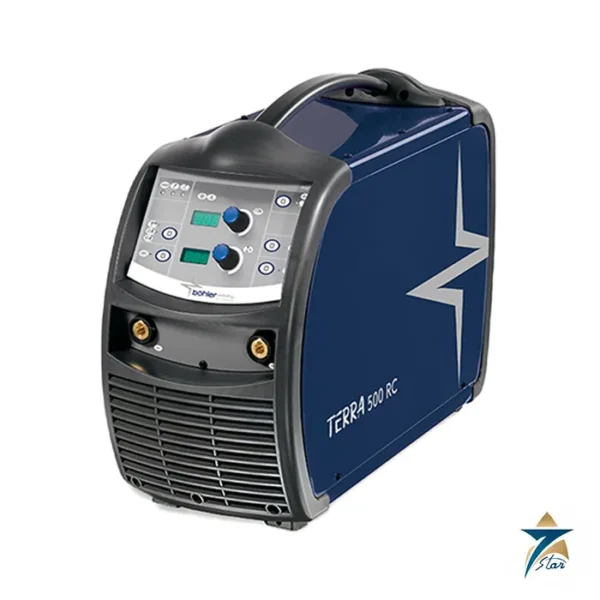
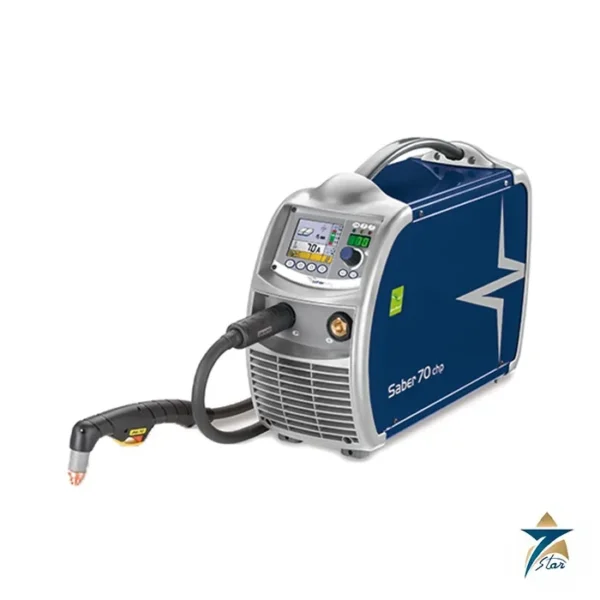
Welding and cutting machines TERRA 500 RC, TERRA NX 400 TLH, TERRA NX 500 PME, SABER 70 CHP

Ordering Böhler Welding products: what we need

Send the product name and AWS or EN classification (for example FOX EV 50, AWS A5.1 E7018-1), the diameter and the quantity in kg. For project work, tell us the base material, welding process and any certificate needed, such as an EN 10204 3.1 inspection certificate.

Facts checked against voestalpine's published company histories, October 2026.

FAQ

Questions about the Böhler UV 418 TT Fluoride-Basic Submerged Arc Flux

Answers from our engineering team on installation, compatibility and integration.

01What type of flux is UV 418 TT?
An agglomerated fluoride-basic flux, class S A FB 1 55 AC H5.
02What steels is it designed for?
Unalloyed and low-alloyed steels, especially medium and high strength fine-grained structural steels.
03Which polarity is allowed?
DC and AC.
04What toughness does the data sheet quote?
Very good toughness at -75 °F and CTOD values at -20 °F, as welded and after PWHT.
05How is the flux redried?
620 °F ± 45 for at least 2 hours.