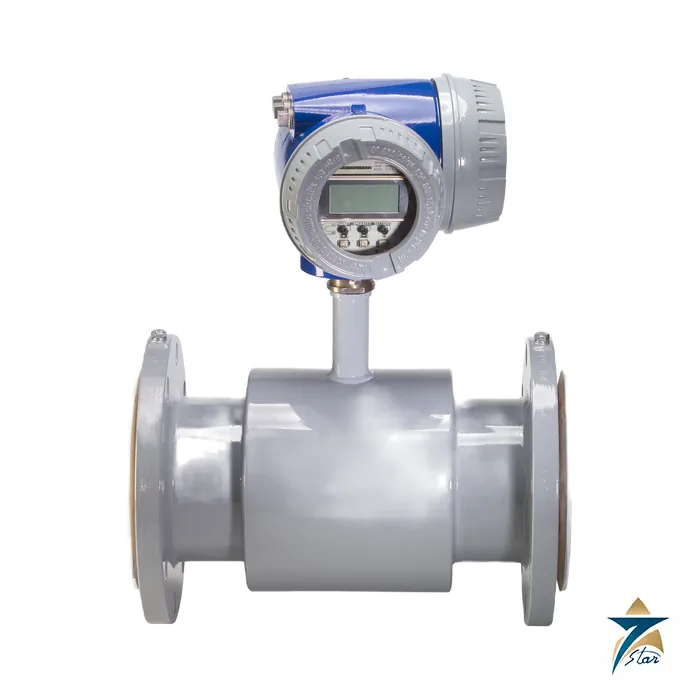
Badger Meter ModMAG M4000 electromagnetic flow meter, 0.20 percent accuracy, FM Class I Division 1
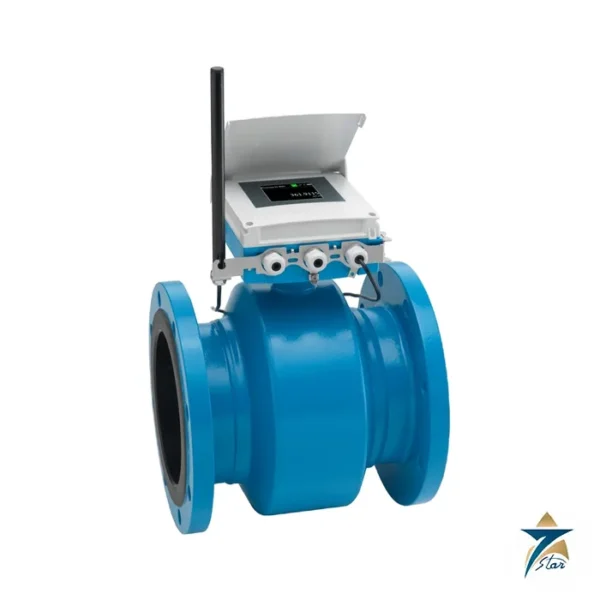
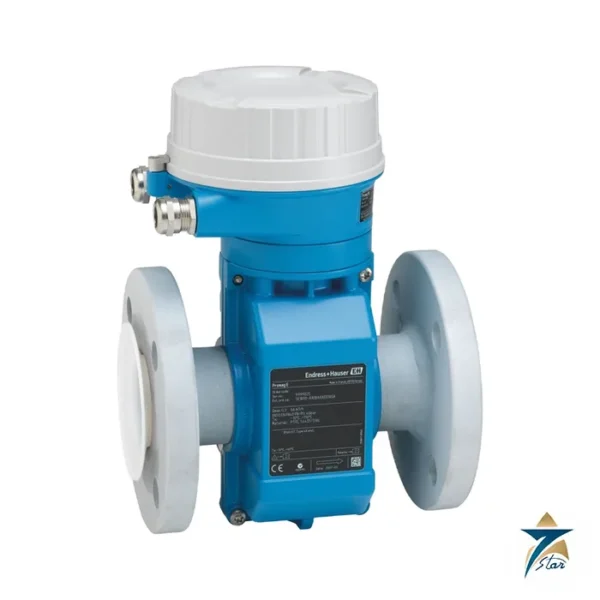
The Badger Meter ModMAG M4000 is a mains-powered electromagnetic flow meter built for industrial and oil and gas duty as well as municipal water. It is a digital-signal-processor based instrument with an accuracy of ±0.20 percent of rate ±1 mm/s over a 300:1 flow range, sizes from 1/4 in to 12 in (6 to 300 mm) and an amplifier enclosure that is FM approved for Class I Division 1 hazardous locations and CSA certified. Seven Star LLC supplies the M4000 in Oman and the GCC as an independent supplier in Muscat, and this page summarises the data sheet and the choices behind its part number.
How the M4000 differs from the M2000 and M5000
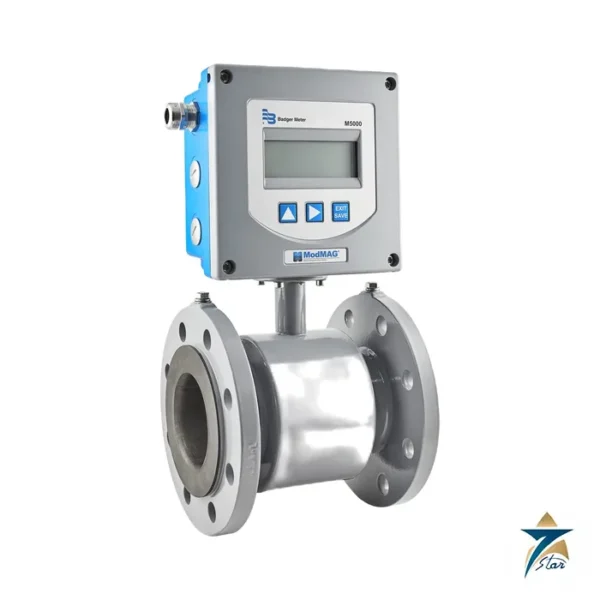
The ModMAG range has several members. The M5000 is battery powered for remote water lines, the M2000 is a general industrial and water meter on our site, and the M4000 is the higher-accuracy industrial version with analog and digital outputs, a four-line backlit display and the hazardous-location approval. The data sheet describes the M4000 as targeted at oil and gas, industrial and municipal applications, and it can have its amplifier mounted remotely up to 30 m (100 ft) from the detector. Its sizes are smaller than the 24 in maximum of the M5000, so for very large lines the other models are the choice.
Technical specifications of the M4000
| Parameter |
Specification |
| Manufacturer / part number |
Badger Meter / ModMAG M4000 |
| Sizes |
1/4 … 12 in (6 … 300 mm) |
| Flow velocity range |
0.03 … 12 m/s (0.1 … 39.4 ft/s) |
| Accuracy |
±0.20 % of rate ±1 mm/s; repeatability 0.1 % of rate |
| Power supply |
85 … 240 V AC, 45 … 65 Hz; or 24 V DC; consumption 20 W |
| Analog output |
0…10, 0…20 or 4…20 mA, programmable and scalable, maximum loop resistance 750 Ω |
| Digital outputs |
2 open collector (scaled pulse, flow alarm, status or frequency), max. 24 V DC, 0.5 W; frequency output to 10 kHz |
| Communication |
RS232C serial |
| Display |
4 lines x 16 characters, backlit; shows 3 totalizers, rate, alarms, status and diagnostics |
| Fluid conductivity |
Minimum 5 µS/cm (20 µS/cm for demineralised water) |
| Liner materials |
PFA 1/4 … 3/8 in; PTFE 1/2 … 12 in; hard rubber 1 … 12 in |
| Fluid temperature |
PFA and PTFE: -20 … +120 °C remote, -20 … +100 °C meter-mounted; hard rubber 0 … 80 °C |
| Electrode materials |
Alloy C (standard), 316 stainless steel, gold/platinum plated, tantalum, platinum/rhodium |
| Flanges and pressure |
ANSI/ASME B16.5 Class 150; carbon steel or 316 stainless steel |
| Housing |
Cast aluminium, NEMA 4X (IP66); three 1/2 in NPT wiring entries |
| Ambient temperature |
-20 … +50 °C; altitude to 2000 m |
| Hazardous approval |
FM: Class I Div 1 Groups C and D, Class II Div 1 Groups E, F, G; CSA certified |
| Other approvals |
NSF listing for hard rubber 4 in and larger and PTFE all sizes; KTW with PTFE; ANSI/NSF 61 Annex G |
Measurement functions
The M4000 uses pulsed DC excitation with a programmable excitation frequency of 3.75, 7.5 or 15 Hz and automatic zero-point correction. The converter applies noise dampening from 1 to 30 seconds and a low-flow cutoff from 0 to 100 percent of full scale. Flow can be uni-directional or bi-directional with three separate totalizers of 10 digits for forward, reverse and net. An empty-pipe electrode between twelve and one o’clock stops the measurement and displays a message if it stays uncovered for five seconds. An auxiliary input can be programmed as a positive zero return, an external totalizer reset or a preset batch start, and the units list includes oil barrels, pounds and ounces besides gallons, cubic metres and litres.
How the M4000 part number is built
The data sheet builds the part number from the meter type M4, the detector size code (for example 005 for 1/2 in, 020 for 2 in, 060 for 6 in, 120 for 12 in), the detector liner and flange material (R1 hard rubber with carbon steel flanges, R4 hard rubber with stainless steel flanges, P1 PTFE with carbon steel flanges, P4 PTFE with stainless steel flanges, PA PFA with stainless steel flanges), the electrodes and grounding, the amplifier choice, the remote cable length, the communications and outputs, the wiring method and the units for totalizer and flow rate. The table also shows which size and liner combinations are not available, so ordering should always start from the application: line size, fluid, temperature and hazardous area.
Selection and ordering checklist for the M4000
- Line size and flange class (ANSI Class 150 per the data sheet).
- Fluid conductivity of at least 5 µS/cm, and temperature against the liner limits.
- Liner: PFA, PTFE or hard rubber; electrodes: Alloy C or a special material for corrosive or coating liquids.
- Hazardous area: confirm Class I Div 1 Groups C and D is suitable for the zone and the local scheme.
- Integral or remote amplifier, and cable length up to 30 m.
- Analog and digital outputs and unit of measure.
- Grounding rings or electrode.
Installation and commissioning
Fit the detector with the pipe running full, ground the meter according to the manual, and use the 1/2 in NPT entries with suitable glands for the area classification. Program the flow range, units, damping and low-flow cutoff from the keys or with the magnetic wand, which allows programming without opening the cover. Check the empty-pipe setting with the pipe empty and then full. The meter has no moving parts and practically no maintenance, but liner and electrode coating should be inspected during shutdowns where the liquid scales or deposits.
Typical applications in Oman and the GCC
Typical jobs include chemical injection and water injection lines, produced water and utility water headers, cooling water and desalination plant lines, and effluent and wastewater metering, wherever a conductive liquid with moderate solids passes through a full line. The hazardous-location approval and the local indication make it suitable for process areas, and the 4 to 20 mA output ties it to the DCS or SCADA.
Information to send with an RFQ for the M4000
- Line size and flange class
- Fluid, temperature, conductivity and flow range
- Liner, electrode and grounding choice
- Hazardous area classification and outputs
- Quantity and delivery site
Documents and quotation
The Badger Meter ModMAG M4000 product data sheet is attached on this page. It contains the dimension table and the part number construction chart.
Send the line data and Seven Star LLC will confirm availability and prepare a quotation.



















Reviews
There are no reviews yet.