Brand:

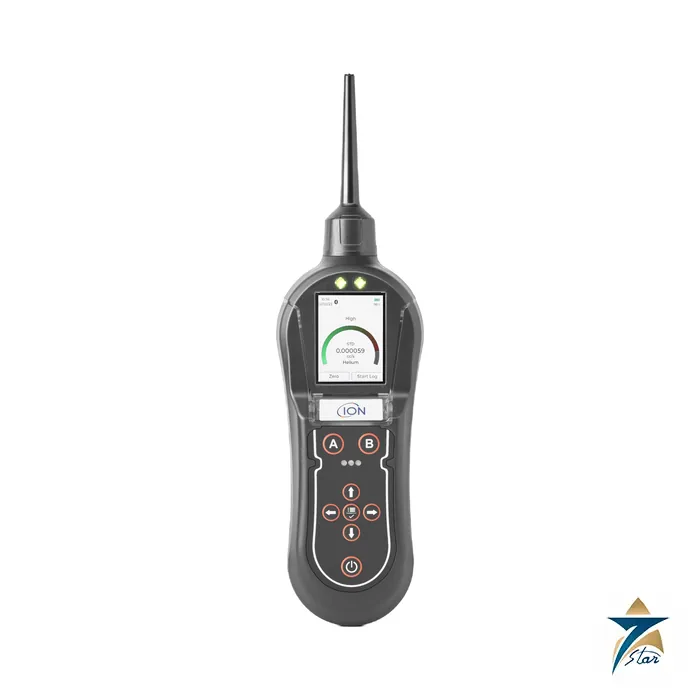
ION Science Panther Handheld Gas Leak Detector

Description

Overview

The ION Science Panther is a handheld gas leak detector that finds and quantifies leaks of helium, hydrogen and refrigerant gases. Seven Star LLC is an independent supplier serving Oman and the GCC. It replaces the earlier GasCheck line from the same manufacturer, and the brochure, version 1.0, describes more than 30 years of leak detection experience behind its design. This page rewrites that brochure for maintenance and quality teams who hunt leaks in refrigeration, tracer-gas testing or gas distribution systems.

A leak detector answers a different question from a toxic gas monitor. Instead of measuring concentration against an exposure limit, it must pinpoint where gas is escaping and report how large the leak is. The ION Science Panther does both: draw the probe along the surface being checked, listen and watch for the alarm, then hold it over the spot until the reading stabilises to quantify the rate.

Sensing principle of the ION Science Panther

The instrument uses a micro thermal conductivity detector. Gases that conduct heat differently from air change the temperature balance of a tiny heated element, and the electronics convert that change into a signal. Because the principle depends on the gas rather than on a consumable chemical reaction, the detector is fast and responds to many gases. An internal piezo pump provides an extremely stable sample flow, which keeps readings steady in draughty areas, and the brochure notes relative immunity to high electromagnetic fields.

The internal gas table lets the operator choose the target gas, such as helium, hydrogen or one of several refrigerants, and the measurement unit can be selected among ml/s, cc/s, g/yr, ppm, mg per cubic metre and percent by volume.

Technical data table for ION Science Panther

Parameter Published value
Detector Micro thermal conductivity detector
Sensitivity Helium 5 x 10 to the minus 6 cc/s; hydrogen 3.8 x 10 to the minus 6 cc/s
Response T90 1 second
Factory calibration 5,000 ppm helium plus or minus 5 percent; leak 0.0005 cc/s plus or minus 5 percent, at 50 percent RH
Flow rate 2 cc/s
Battery Rechargeable Li-ion, 20 hours
Audible alarm At least 90 dB at 10 cm
Data logging 10 days continuous (Panther PRO)
Ingress protection IP44
Operating range 0 to 50 degrees C, 0 to 99 percent RH
Weight and size About 447 g, about 320 x 80 x 55 mm
Interface Universal USB C port; Bluetooth with ION PC software on PRO

How Panther differs from other leak detectors in the range

The brochure distinguishes the standard Panther from the Panther PRO. The PRO adds datalogging for 10 days of continuous recording, Bluetooth connection to the ION PC software, a flexible 20 cm probe and a Bluetooth dongle in the box. The standard unit keeps the full gas table, torch, display and alarms. Compared with the SF6 Leakmate, which targets sulphur hexafluoride only with high voltage ionisation, the ION Science Panther is a thermal conductivity instrument that covers many gases, so it suits workshops that deal with several refrigerants or helium and hydrogen tracer tests.

Using the Panther in Oman and the GCC

Air conditioning and refrigeration contractors in the Gulf use leak detectors constantly, since high ambient temperatures put chillers and cold rooms under heavy load. The same instrument supports helium tracer testing on vessels and pipework, and hydrogen checks around electrolysers and generator cooling systems. Its splashproof IP44 body and integrated torch help in plant rooms, ceiling voids and dim equipment corners.

Technique for locating leaks

The brochure recommends moving the probe along the area at about 25 mm per second. When the alarm indicates a leak, retrace the route more slowly until the source is located, then hold the probe over the leak until the measurement stabilises. Zeroing is effortless, so repeat it often in changing background conditions. A removable spout protects the probe from dirt and moisture and should be inspected before each job.

Software, logging and warranty

ION PC software lets a user load new calibrations, compare datalog sessions and export them as graphs, CSV files or Excel sheets, and lets approved users set alarm and display preferences. Data logging and Bluetooth belong to the PRO model. Registration online within one month of purchase extends the warranty to two years.

Choosing a tracer or target gas

Helium is popular for tracer testing because it is inert, non-toxic and leaves a tiny molecule that escapes through very small defects. Hydrogen mixed with nitrogen is also used as a forming-gas tracer and is much cheaper. Refrigerant leaks are found by selecting the specific refrigerant in the gas table, which applies the correct response factor. Always work in a space where the background of the tracer gas is low, because a thermal conductivity detector responds to the concentration it sees, and a high background shrinks the contrast between a leak and its surroundings. Purge the area with fresh air, zero the instrument, and test again. When testing pressurised pipework, apply the tracer at the pressure given in your test procedure and allow time for the gas to reach the defect before you start scanning, particularly on large vessels or long runs where a leak may need several minutes to produce a measurable plume.

Care of the ION Science Panther

Charge the lithium-ion battery from any USB mains adaptor via the USB C port, keep the probe tip clean and dry, and avoid exposing it to liquids. Verify response with a known source before critical tests and recalibrate according to the manual. Store in a cool place and remove contamination from the spout regularly.

Ordering notes for Panther

State whether you need the standard Panther or the Panther PRO, the gases you will be looking for and any spare spouts or probes. Please confirm the exact order code before purchase, as standard and PRO kits contain different accessories.

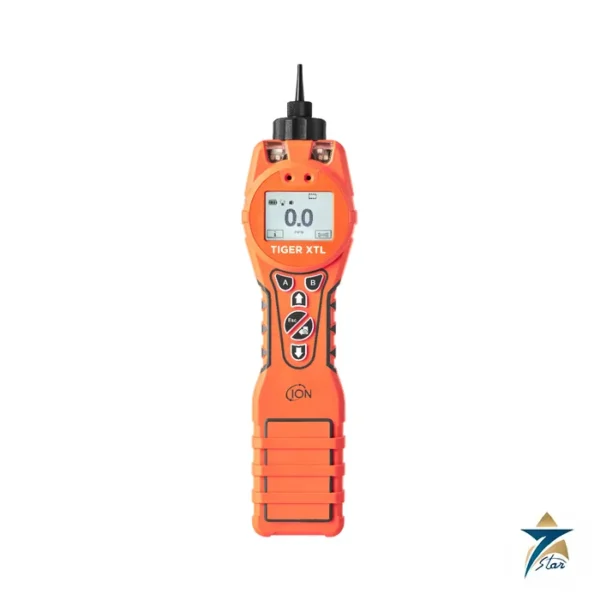
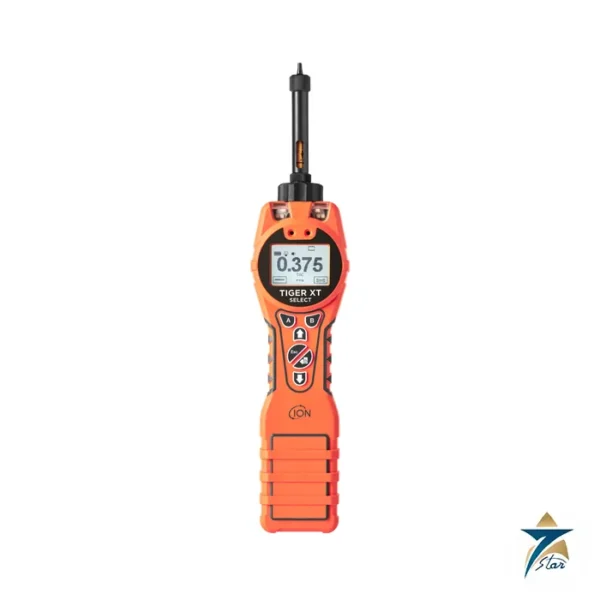
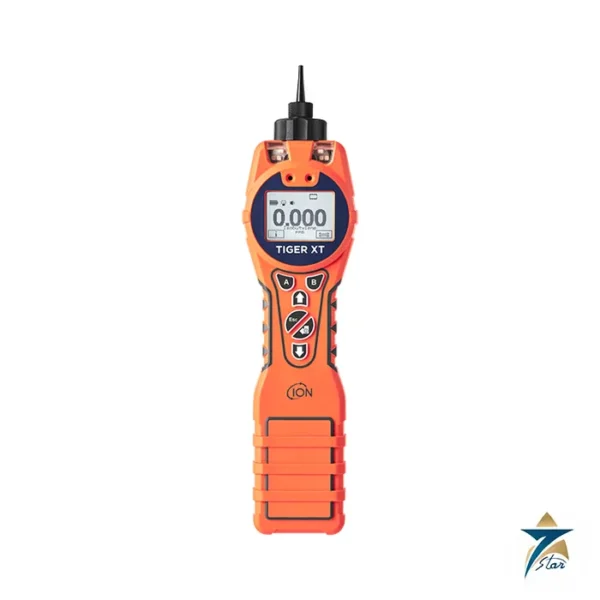
Related items you may also need: ION Science Tiger XT Handheld VOC Detector | ION Science Titan 2 Fixed Benzene Monitor | Oldham OLCT 710 Fixed Gas Detector | All ION Science products.

Documents and quotation

The manufacturer’s Panther brochure is attached to this page as a datasheet. Send your RFQ with the part number Panther, the version (standard or PRO), quantity and delivery location in Oman or the GCC.

Datasheets & Documents
  • PDF Datasheet ION Science Panther Handheld Gas Leak Detector Datasheet Download
Reviews (0)

Reviews

There are no reviews yet.

How would you rate this product?

It takes about 10 seconds — just tap a star. Your email is never published.

About brand

ION Science is a British maker of gas detection instruments, based in Fowlmere, Cambridgeshire. It has been active since 1989 and is best known for photoionisation detectors (PIDs) that measure volatile organic compounds at low concentrations. Its portable and fixed instruments are used for worker exposure monitoring, leak detection and environmental surveys.

Seven Star LLC is an independent supplier in Muscat. We list ION Science detectors for oil and gas, petrochemical and environmental users in Oman and the GCC.

ION Science company profile

Active since 1989, United Kingdom
Head office Fowlmere, Cambridgeshire
Core technology Photoionisation detection (PID) with patented Fence Electrode design
Product families Tiger XT and Cub portable PIDs, Titan benzene monitor, Falco fixed detectors

Milestones

  • 1989: ION Science begins operating.
  • 1998: Patents its PID sensor.
  • 2002: Patents the Fence Electrode for humidity-resistant PIDs.
  • 2017: Opens its head office in Fowlmere.

ION Science product series

The Tiger XT is a handheld VOC detector for hazardous areas, and the Titan 2 is a fixed benzene monitor.

A PID uses ultraviolet light to ionise volatile organic compounds and measures the resulting current, which allows detection down to ppb levels. Response factors convert the reading for each specific compound. General VOC detectors measure the total, while benzene-specific monitors separate benzene from other hydrocarbons, which matters because benzene has very low exposure limits.

Where ION Science detectors are used

Leak detection, confined space entry checks, worker exposure monitoring, refinery and terminal benzene monitoring, and environmental and soil surveys.

Ordering ION Science detectors: what we need

Send the model, the compounds and ranges, lamp type, hazardous-area requirement and accessories such as probes, filters and calibration kits.

Facts checked against ION Science's published company history, October 2026.

FAQ

Questions about the ION Science Panther Handheld Gas Leak Detector

Answers from our engineering team on installation, compatibility and integration.

01Which gases can the ION Science Panther detect?
Its internal gas table covers helium, hydrogen and refrigerants, using a micro thermal conductivity detector with a 1 second T90 response.
02What sensitivity does the Panther have?
The brochure lists 5 x 10 to the minus 6 cc/s for helium and 3.8 x 10 to the minus 6 cc/s for hydrogen.
03How long does the Panther battery last?
The rechargeable lithium-ion battery lasts up to 20 hours and charges through a universal USB C port.
04What does the Panther PRO add over the standard Panther?
The PRO adds 10 days of continuous datalogging, Bluetooth with ION PC software and a flexible 20 cm probe with a Bluetooth dongle.
05Is the ION Science Panther weatherproof?
It has IP44 splashproof protection and an operating range of 0 to 50 degrees C and 0 to 99 percent relative humidity.