Endress+Hauser TST602 Pt100 Surface Sensor with Cable

Description

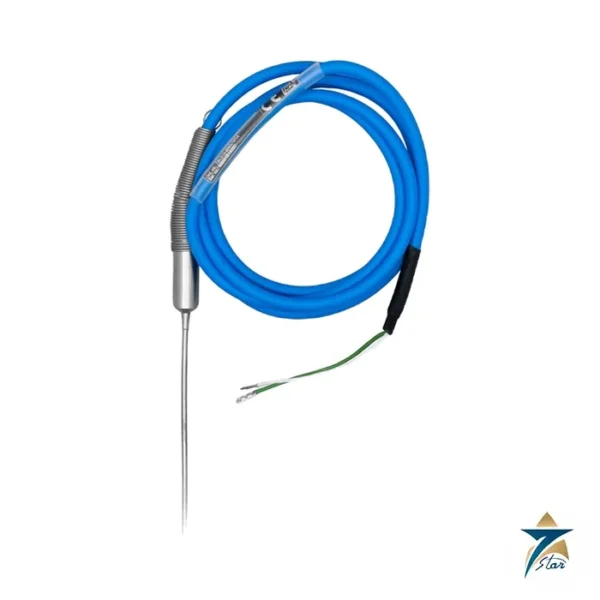
Endress+Hauser TST602: clamp-on RTD for pipe and vessel skins

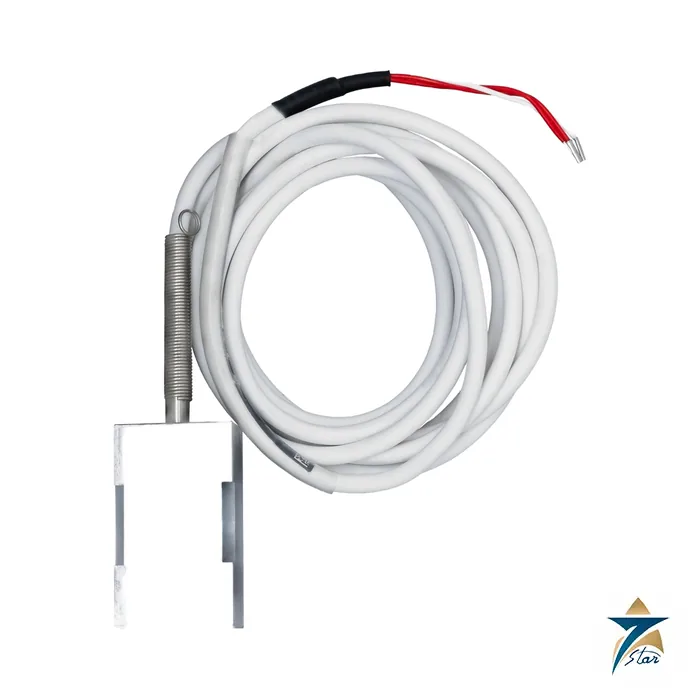
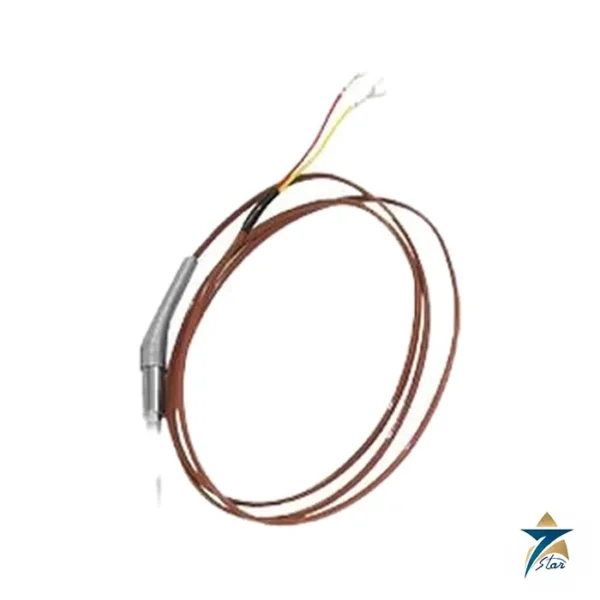
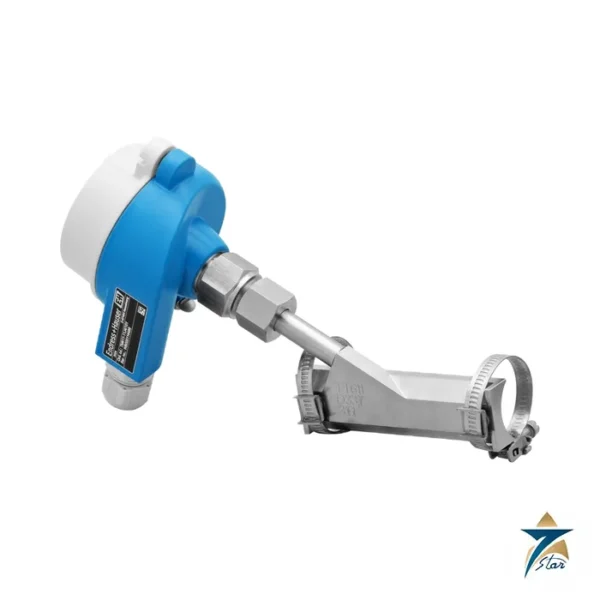
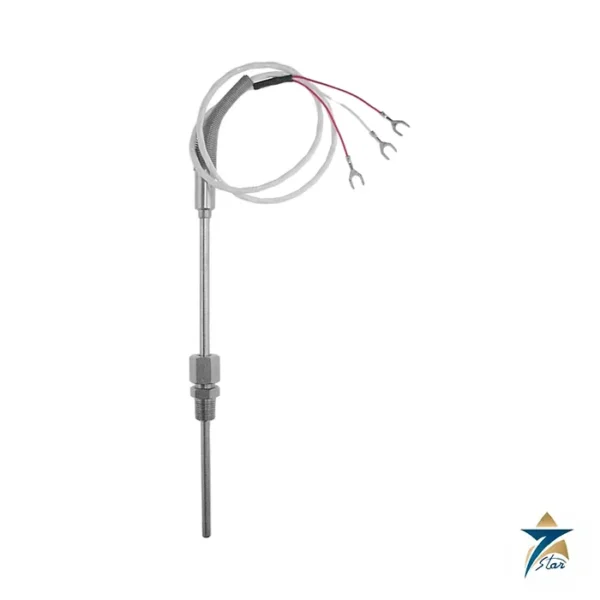
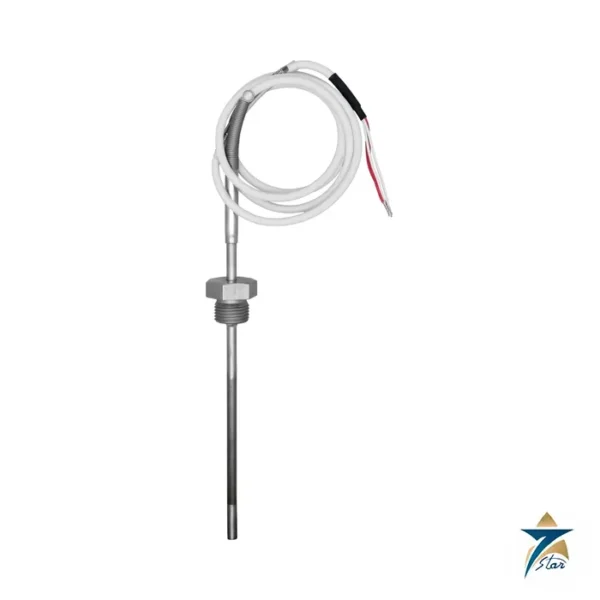
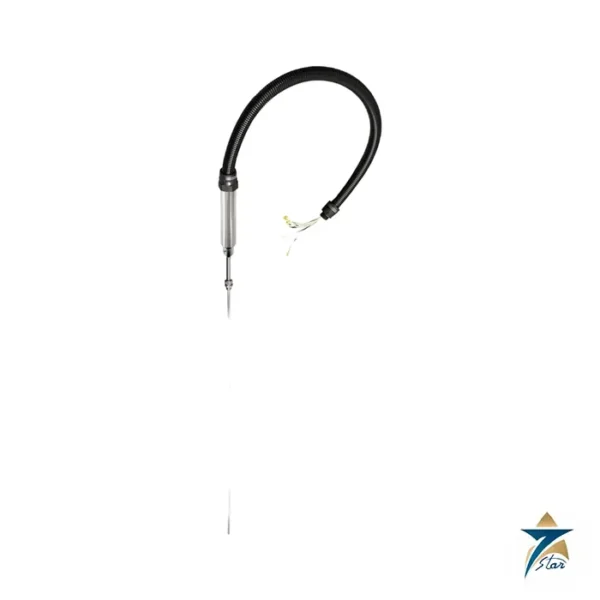
When a line cannot be opened, the Endress+Hauser TST602 measures from the outside. Technical Information TI00213T defines it as an RTD assembly with a connecting cable, made for the surface of pipes and vessels and normally strapped to a pipe with a hose clip. An aluminium measuring block carries one or two Pt100 elements; the contact face is either flat or cut with a triangular recess so that it sits on pipes of different diameters. The stated measuring range is -20 to +200 degrees C and depends on the cable insulation. Seven Star LLC is an independent supplier serving Oman and the GCC and is not affiliated with the manufacturer.

Cable insulation sets the range of the TST602

The element itself could go much higher, so the cable decides. The datasheet pairs wire and sheath materials with ranges: PVC with PVC -20 to +70 degrees C, PTFE with silicone -20 to +180 degrees C, silicone with PTFE -20 to +180 degrees C and PTFE with PTFE -20 to +200 degrees C. The same figures apply for the ambient temperature at the cable. Wires end in ferrules, and connection can be three-wire, two times three-wire for a duplex element, or four-wire.

Measuring principle Pt100 RTD per IEC 60751, single or double
Measuring range -20 to +200 degrees C, depending on cable
Connection 3-wire, 2 x 3-wire, 4-wire, flying leads with ferrules
Thin-film range -50 to +400 degrees C, Class A -50 to +250 degrees C, Class AA 0 to +100 degrees C
Wire-wound range -200 to +600 degrees C, Class AA -50 to +250 degrees C
Class AA tolerance +/-(0.1 + 0.0017 |t|) degrees C
Class B tolerance +/-(0.3 + 0.005 |t|) degrees C
Insulation resistance Over 100 megohm at 25 degrees C, test voltage at least 100 V DC
Measuring block Aluminium, Ra up to 1.6 um
Immersion depth in calibration bath 55 mm
Protection class Not defined by design
Typical weight 150 g with 2 m cable

What a surface sensor can and cannot promise

Manufacturer wording on the TST602 is clear: the accuracy class applies to the Pt100 element, but it has little relevance for the final measurement, because surface sensors in general do not match the accuracy or response of an invasive probe. Wind, humidity, ambient temperature, the thermal contact to the wall and the conditions in the pipe, for example fill level, flow and medium, all shift the reading. No reference response time is defined, so none is stated. Insulating the measuring point against the environment is described as highly effective. Calibration of the finished sensor is not recommended: only 55 mm can enter a calibration bath, the cable is heavily influenced by ambient temperature, and the main error comes from the application.

How TST602 differs from the cable probes TST310 and TSC310

The TST310 and TSC310 are inserted or screwed into the process and offer a measured range up to 600 or 1 100 degrees C, pressure ratings of 75 or 40 bar and fast response. The TST602 is not pressure-bearing at all, stops at +200 degrees C and trades speed and absolute accuracy for the ability to be fitted without shutting down a line.

Where the TST602 earns its place in Oman and GCC plants

Common jobs are checking an existing instrument, temporary surveys on steam and condensate lines, monitoring heat-exchanger shells, chilled-water headers and vessel walls in climate-control and production-automation systems, and retrofits where welding a thermowell is out of the question. In a hot climate, add a layer of insulation over the block so solar load does not bias the result.

Reading the tolerance classes for TST602

The datasheet distinguishes the element from the system. For thin-film elements the temperature ranges are: operating -50 to +400 degrees C, Class A from -50 to +250 degrees C and Class AA only from 0 to +100 degrees C. Wire-wound elements work from -200 to +600 degrees C, Class A over the full range and Class AA from -50 to +250 degrees C. At 100 degrees C, Class B allows +/-0.8 degrees C and Class AA +/-0.27 degrees C. These are limits for the element itself; once the block is clamped on a wall, thermal contact usually costs more accuracy than the class saves, so buying Class AA for a TST602 on an uninsulated pipe is seldom worthwhile. The better investment is insulation over the block, a clean contact surface and a firm clamp.

Self-heating is also covered: a Pt100 is measured with an external current, and that current warms the element slightly. In a block of aluminium the effect is spread out and is negligible for most installations, but the input device should still use the low measuring current recommended by its maker.

Fitting and wiring TST602

Clean the pipe surface to bare metal, apply heat-conductive compound if the procedure allows it, and press the block firmly onto the pipe using the hose clip so the recess lies across the pipe. Route the cable so it cannot pull on the block. Terminate flying leads on a transmitter or input card: the datasheet shows red/red and white/white pairs, with black and yellow for the second element in duplex versions. When a transmitter is needed, iTEMP head transmitters with 4 to 20 mA, HART, PROFIBUS PA or FOUNDATION Fieldbus output are named by the manufacturer for use with RTD assemblies.

Care and spare ordering

Inspect the cable, ferrules and hose clip at each turnaround. Replace a unit if the aluminium block is deformed or the cable sheath is damaged. When asking for a replacement TST602, state the number of Pt100 elements, class, wiring, cable material and length, since all of these are order options.

Documents and quotation

The datasheet TI00213T for the TST602 is attached. Please send an RFQ to Seven Star LLC that includes the part number TST602, the order code or the cable specification, quantity and delivery destination.

Datasheets & Documents
  • PDF Datasheet Endress+Hauser TST602 Pt100 Surface Sensor with Cable Datasheet Download
Reviews (0)

Reviews

There are no reviews yet.

How would you rate this product?

It takes about 10 seconds — just tap a star. Your email is never published.

About brand

Endress+Hauser makes process measurement instruments for flow, level, pressure, temperature and liquid analysis. Georg H. Endress and Ludwig Hauser started the business in Lörrach, Germany, on 1 February 1953, first selling level meters, and the Endress+Hauser name has been used since 1957. The group is headquartered in Reinach, Switzerland, and has been wholly owned by the Endress family since 1975.

Seven Star LLC is an independent supplier listing Endress+Hauser flowmeters, level and pressure transmitters, temperature assemblies and liquid analysis products for buyers in Oman and the GCC. Instruments are matched from the full order code on the nameplate.

Endress+Hauser company profile

Origin Founded in Lörrach, Germany, on 1 February 1953 by the Swiss engineer Georg H. Endress and Ludwig Hauser
Headquarters Endress+Hauser AG, Reinach (Basel-Landschaft), Switzerland
Ownership Family owned; the Endress family has been the sole shareholder since 1975, and a family charter commits the company to stay family owned
Size About 16,500 employees and sales of about EUR 3.7 billion (2023, as reported by the company)
Product families Proline flowmeters, Micropilot and Levelflex radar, Liquiphant switches, Cerabar and Deltabar pressure, iTEMP and iTHERM temperature, Liquiline and Memosens liquid analysis

Milestones

  • 1953: Georg H. Endress and Ludwig Hauser start the business in Lörrach on 1 February, first selling level meters.
  • 1957: The Endress+Hauser name comes into use.
  • 1975: The Endress family becomes sole shareholder.
  • 2023: About 16,500 employees and sales of about EUR 3.7 billion, as reported by the company.

Endress+Hauser product lines

Line Measuring principle Typical use
Promass F 300, Promass 80F, 83F/84F Coriolis mass flow Direct mass flow and density of liquids and gases, hydrocarbon transfer and chemical dosing
Promag P 300, P 500, H 300, W 400, W 10, 50P Electromagnetic flow Water, wastewater, slurries and other conductive liquids
Prowirl F 200, 72F Vortex flow Steam, gas and low-viscosity liquids
Prosonic Flow 92F, t-mass 65F Ultrasonic and thermal mass flow Water lines; compressed air and industrial gases
Micropilot FMR62, FMR67, FMR60, FMR10B, FMR20, FMR50, FMR52 Free-space radar level, 80 GHz and 26 GHz Tanks, process vessels, silos and open water channels
Levelflex FMP51, FMP50, FMP54, FMP55 Guided wave radar level Level and interface in vessels, separators and bypass chambers
Liquiphant FTL51, Prosonic S FMU90 Vibronic point level; ultrasonic level High and low level alarms, pump protection, open channel flow
Cerabar PMC71B, PMP51B, PMP71, Deltabar PMD78B, PMD75 Pressure and differential pressure Process pressure, hydrostatic level and DP flow
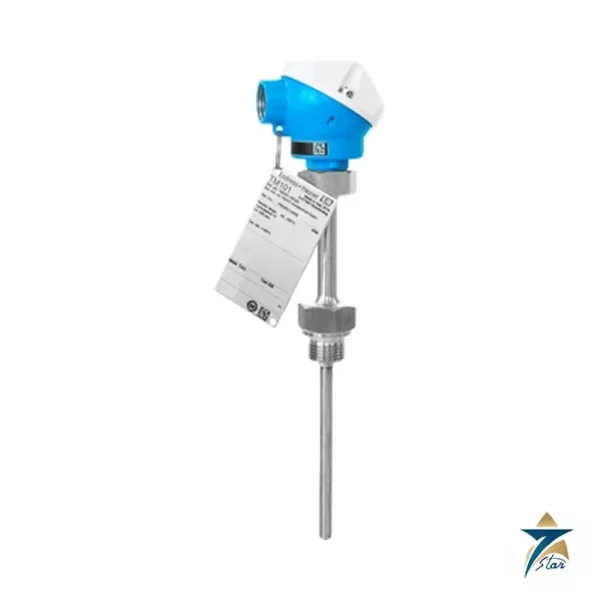
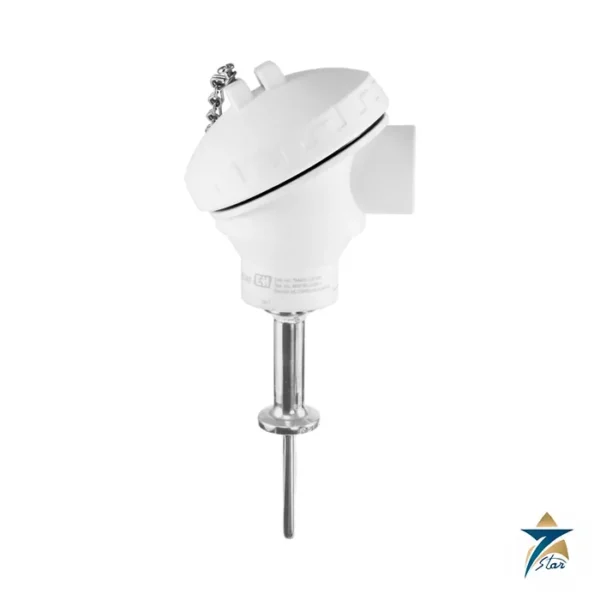
iTEMP TMT82, TMT162, iTHERM TM101, TR66, TR10 Temperature transmitters and thermometers RTD and thermocouple points with thermowells
Liquiline CM444, CM442, Memosens CPS11E, Stamolys reagents Liquid analysis pH, ORP, conductivity, dissolved oxygen and nutrient analysis in water treatment and process

Where Endress+Hauser instruments are used

In Oman and the GCC, Endress+Hauser instruments are common in oil and gas production and processing, refineries and petrochemicals, desalination and water networks, wastewater treatment, power plants and food and beverage plants. Coriolis meters measure hydrocarbon and chemical flows, electromagnetic meters cover water and wastewater, radar transmitters handle tank and silo level, and Liquiline analysers monitor water quality. Proline 300 and 500 flowmeters include Heartbeat Technology for in-situ verification, which reduces the need to remove a meter for checks.

Ordering Endress+Hauser instruments: what we need

The order code on the nameplate (for example PMP71-1QA1S11RDADU) defines every option: measuring range, process connection, materials, output, approvals and display. Send it with the serial number; Endress+Hauser can retrieve the original configuration from the serial number. For a new instrument add the medium, operating and design pressure and temperature, range, line size or tank geometry, process connection, wetted materials, output or protocol (4-20 mA HART, PROFIBUS, FOUNDATION Fieldbus, Modbus) and the hazardous-area approval required. Older models such as Promass 80/83 or Micropilot M are replaced by current Proline or 80 GHz Micropilot devices.

Facts checked against Endress+Hauser company history and product information, October 2026.

FAQ

Questions about the Endress+Hauser TST602 Pt100 Surface Sensor with

Answers from our engineering team on installation, compatibility and integration.

01What temperature range does the Endress+Hauser TST602 offer?
The range is -20 to +200 degrees C, but the cable insulation sets the real limit: PVC allows up to 70 degrees C, PTFE with silicone 180 degrees C and PTFE with PTFE 200 degrees C.
02How is the TST602 attached to a pipe?
It is usually fixed with a hose clip. The aluminium block has a flat or triangular-recess contact face so that it can sit on pipes of different diameters.
03Can a TST602 be calibrated in a bath?
The datasheet advises against it, because only 55 mm can be immersed, the cable is affected by ambient temperature and the main error comes from the surface application.
04Does the TST602 have an IP rating?
No. The datasheet states that no degree of protection is defined because of the design of the surface sensor.
05How accurate is a surface sensor such as the TST602?
The Pt100 element meets Class A or B, but the manufacturer says surface sensors do not reach the accuracy or response times of invasive probes; insulation of the measuring point improves results.