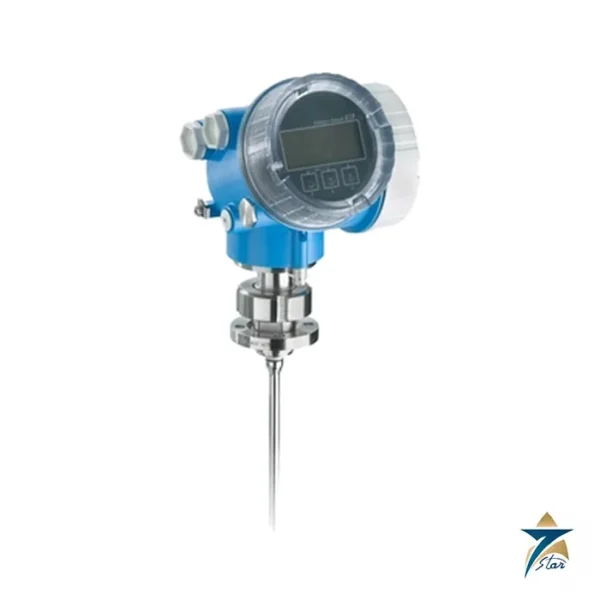
Endress+Hauser FDU91 Prosonic S ultrasonic level sensor
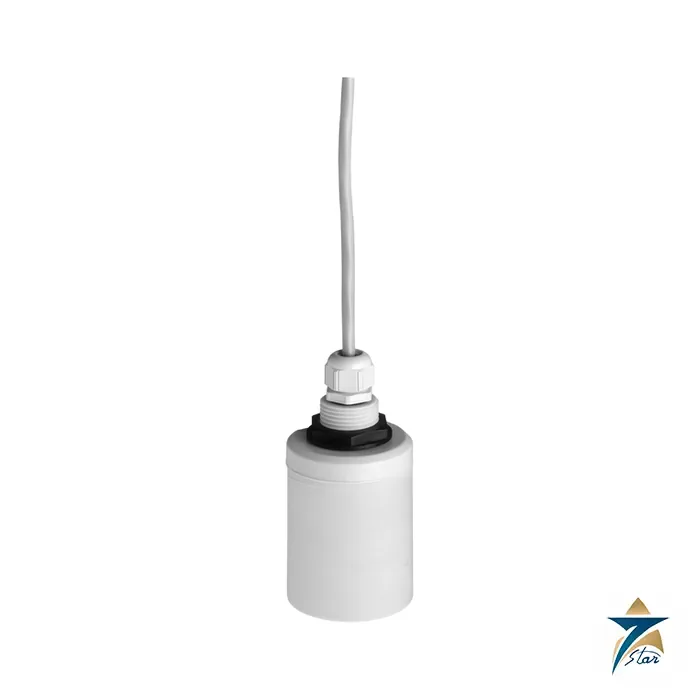
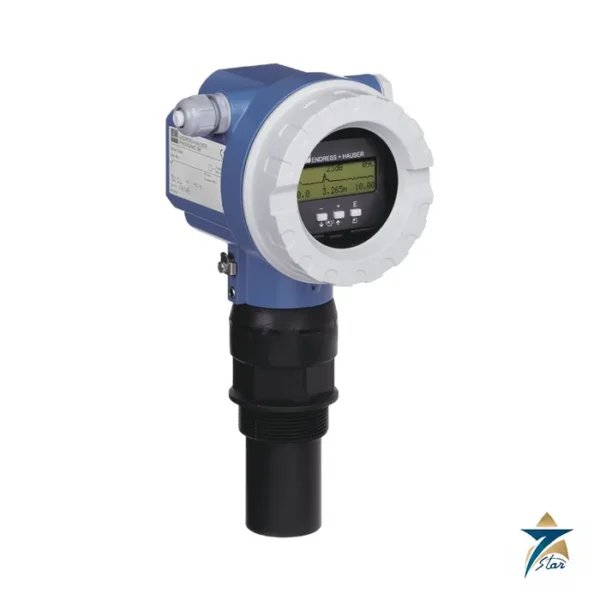
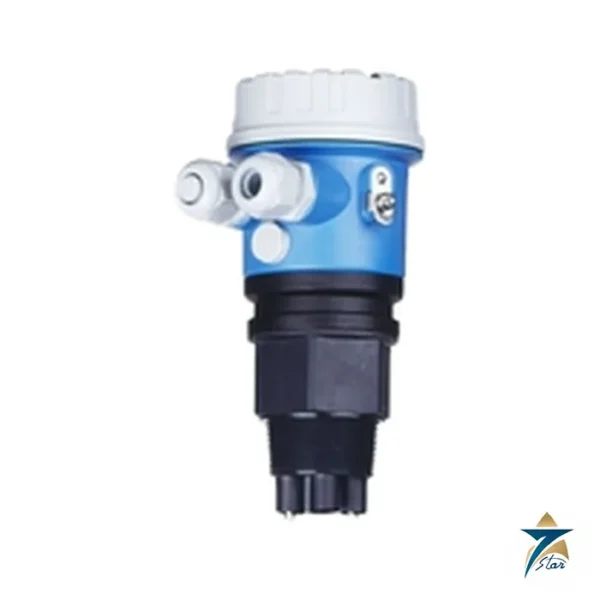
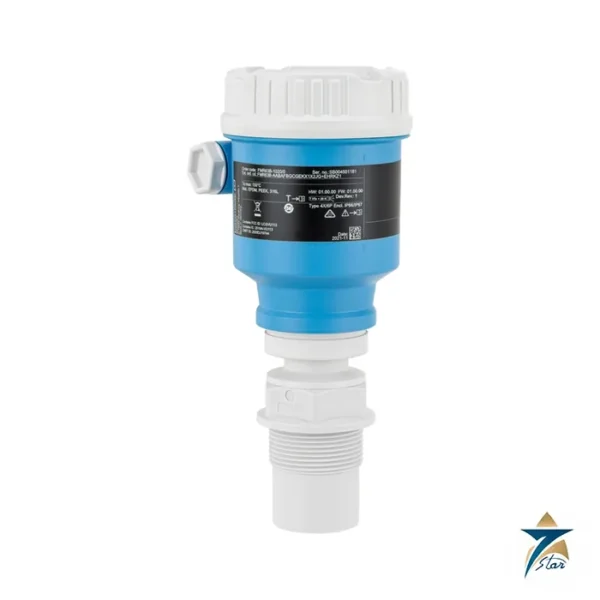
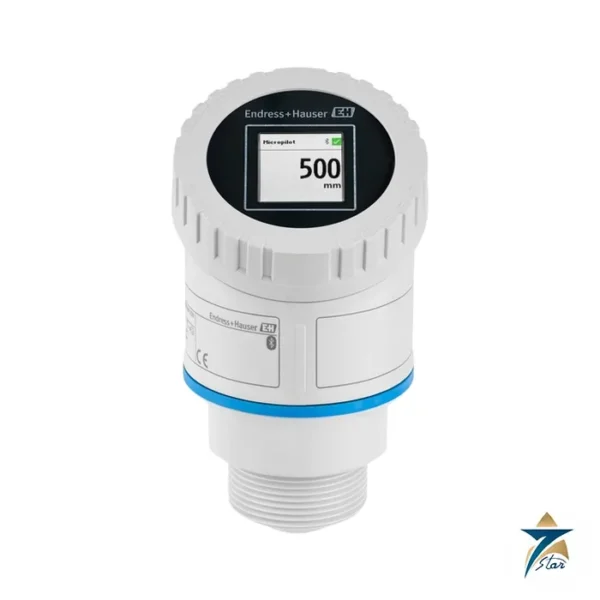
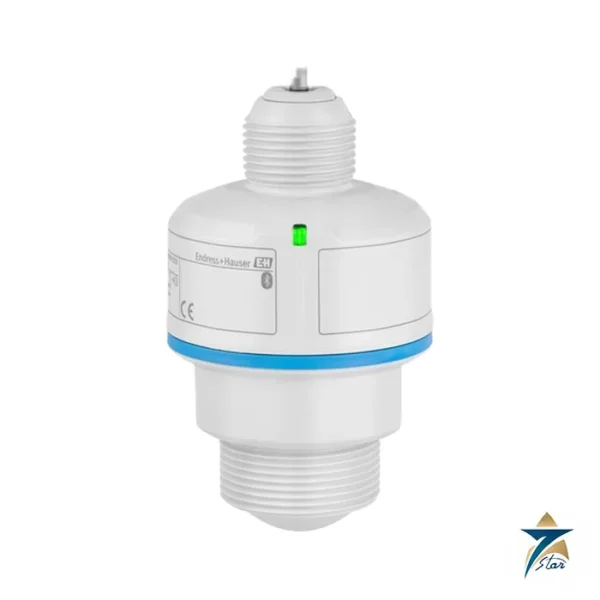
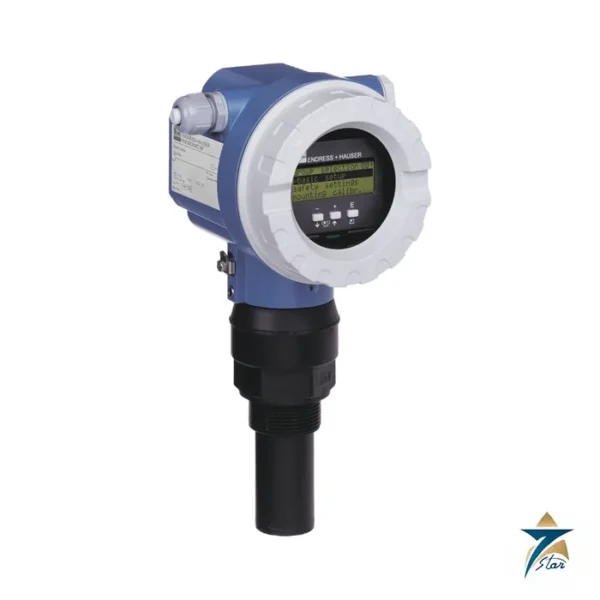
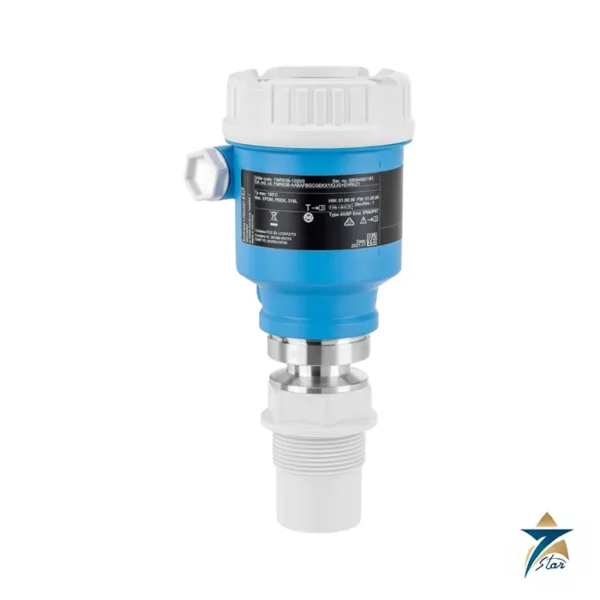
The Endress+Hauser FDU91 is a Prosonic S ultrasonic sensor for non-contact, maintenance-free level measurement in liquids, pastes, sludges and powdery to coarse bulk materials, and for flow measurement in open channels and at measuring weirs. The sensor is a separate head that connects to a Prosonic S transmitter (FMU90 or FMU95) with a cable up to 300 m, so the electronics can sit in a field housing or in a control cabinet on a top-hat rail. The sensor is fully welded in PVDF to IP68. Seven Star LLC supplies the FDU91 in Oman and the GCC as an independent supplier in Muscat.
Ultrasonic level is unaffected by dielectric constant, density or humidity, and the self-cleaning effect of the vibrating membrane limits build-up.
FDU91 technical specifications
| Parameter |
Specification |
| Manufacturer / part number |
Endress+Hauser / Prosonic S FDU91 |
| Measuring principle |
Ultrasonic time of flight |
| Maximum range |
Liquids 10 m; solids 5 m |
| Accuracy |
±2 mm + 0.17 % of measured distance |
| Process / ambient temperature |
−40 to +80 °C |
| Process pressure |
0.7 to 4 bar absolute |
| Wetted material |
PVDF, fully welded |
| Ingress protection |
IP68 / NEMA 6P |
| Connection to transmitter |
Up to 300 m; FMU90 or FMU95 |
| Communication (via transmitter) |
HART, PROFIBUS DP, 4-wire |
How the FDU91 measures distance
The sensor emits an ultrasonic pulse towards the product surface and times the echo. Level is the empty distance minus the measured distance, and the transmitter linearises it to volume or open-channel flow. The sensor cannot measure inside its blocking distance directly below the membrane, so the tank design must leave this space free. The effective range depends on attenuation by surface condition (calm surface 0 dB, waves 5 to 10 dB, very turbulent 10 to 20 dB) and by dust, vapour and temperature layers, which you add up and compare with the range chart in the document.
FDU91 data
Maximum measuring distance is 10 m in liquids and 5 m in solids. Accuracy is ±2 mm plus 0.17 % of the measured distance. Process and ambient temperature are −40 to +80 °C, and the permitted pressure is 0.7 to 4 bar absolute. The wetted part is PVDF, fully welded, tested to IP68/NEMA 6P (24 h at 1.83 m water). Vibration resistance follows DIN EN 60068-2-64. Communication is through the connected transmitter, which offers HART and PROFIBUS DP in a 4-wire design.
Selecting the FDU91 and matching transmitter
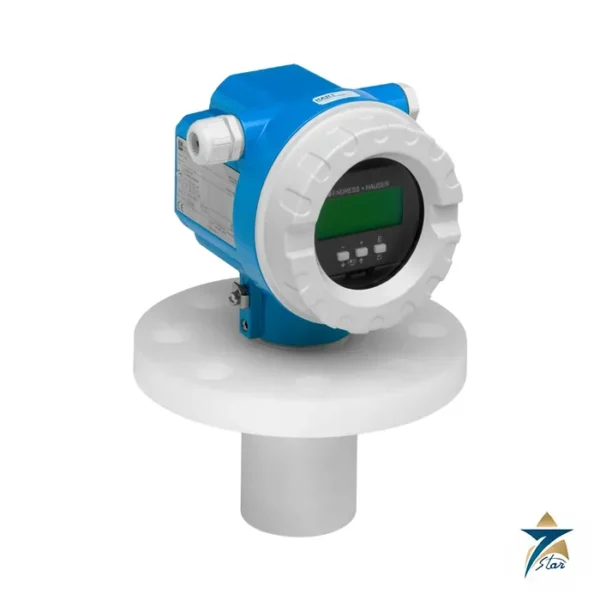
The FDU91 does not work alone. Pair it with a Prosonic S FMU90 (field or rail housing) or FMU95 transmitter; the connection diagram differs for each. Choose the number of sensors, relays and outputs from the transmitter order code. Select cable length, mounting thread or flange and whether the application needs the temperature-compensation sensor, which is built into the sensor.
Installing the FDU91 on a tank, channel or weir
Mount the sensor above the maximum filling level, outside the blocking distance, with a clear acoustic path free of ladders, pipes and inlet streams, and aligned vertically to the surface. In open channels place it above the flow at the distance and position given for the specific flume or weir. Keep the cable apart from power cables and ground the shield properly. Foam is a problem for ultrasonic; consider radar or guided radar for heavy foam.
FDU91 in Oman and GCC services
Ultrasonic sensors are used for water and wastewater: sump and pump-station level, clarifier and thickener level, effluent channels with Parshall flumes and weirs, and desalination or utility tanks. The sealed PVDF body resists humidity and many chemicals, but strong sunlight on the sensor face can create temperature layers, so use a shade. For stilling-well or hot tank applications, other sensors may be a better choice.
FDU91 with the Prosonic S family
| Part |
Role |
| FDU91 |
Sensor, 10 m in liquids, 5 m in solids |
| FMU90 |
Transmitter, field or rail housing |
| FMU95 |
Transmitter with extended functions |
Information to send with an FDU91 RFQ
- Medium, tank or channel geometry and maximum distance
- Process temperature and pressure
- Foam, dust or vapour present
- Transmitter model (FMU90 or FMU95) and cable length
- HART or PROFIBUS DP requirement
- Hazardous-area requirement and quantity
Maintenance, troubleshooting and echo problems
An ultrasonic sensor is only as good as its echo, so the first step in any fault-finding is to view the echo curve in the transmitter and check that the level echo is above the noise and false-echo threshold. Typical causes of weak or false signals are build-up on the membrane, ladders and weld seams inside the acoustic cone, condensation, strong turbulence at the surface and a sensor that is not vertical. A false-echo suppression (mapping) done with the tank at low level removes fixed obstructions from the evaluation.
The sensor face can be cleaned with water and a soft brush, never a hard tool, because the PVDF membrane is the active surface. The cable and the sensor connector should be checked for moisture entry and damaged insulation, and the screen must stay continuous up to the transmitter terminals. In dusty sites around cement, fertilizer or sand handling, schedule periodic wiping because heavy dust attenuates the signal and shortens the usable range. Record the empty distance, span and blocking distance settings so the instrument can be restored after replacement.
Documents and quotation
A copy of the manufacturer technical information for the FDU91 is attached on this page so you can check ranges, connections and ordering codes against your specification.
Send the full order code or the process data (fluid, temperature, pressure, line size or tank data, output and approvals) and Seven Star LLC will prepare a quotation and confirm lead time. We are an independent supplier in Muscat and do not represent the manufacturer.


















Reviews
There are no reviews yet.