Fisher FIELDVUE L2t liquid level controller: what it is
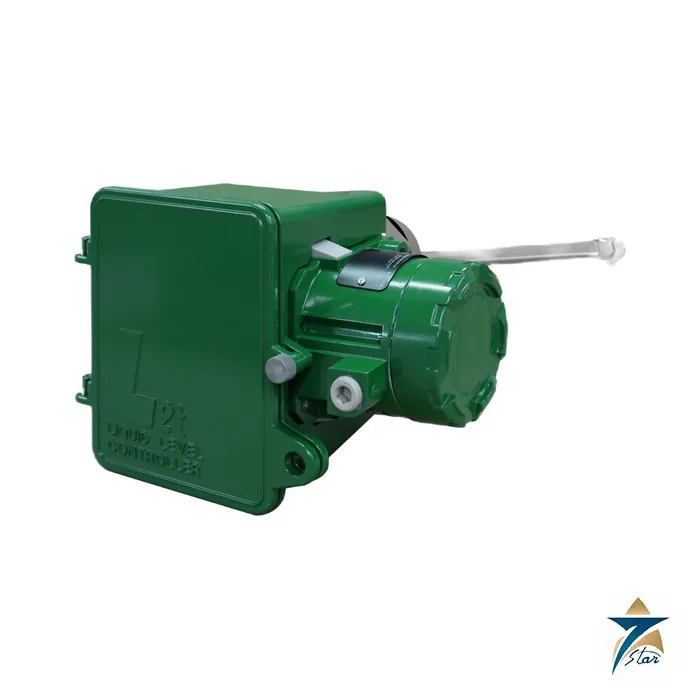
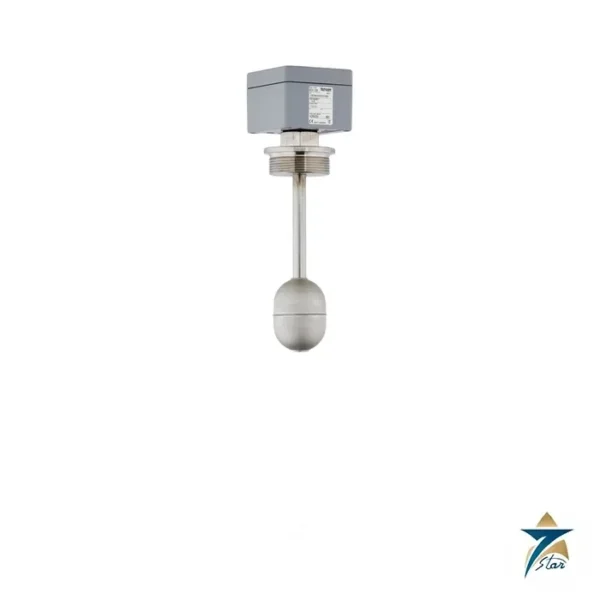
The Fisher FIELDVUE L2t is an electronic, displacer-type level controller from the L2 family. A displacer hangs on the side of a vessel and is buoyed up by the liquid; the L2t turns the movement of that displacer into a 4 to 20 mA signal with HART communication and two configurable limit switches. It can follow the level of a single liquid or the interface between two liquids of different specific gravity. Seven Star LLC supplies the L2t in Oman and the GCC as an independent supplier in Muscat.
L2t is a product name, and the bulletin builds a configuration from a short selection table: displacer material (PVC or S31603 stainless steel), displacer size (one size, 48 x 305 mm, about 541 cm³), sensor connection (2 NPT threaded or NPS 2 slip-on flange) and a hazardous-area agency code. That means a complete L2t order is four or five letter choices, which are explained below.
L2t technical specifications
| Parameter |
Specification |
| Manufacturer / part number |
Fisher (Emerson) / FIELDVUE L2t, product bulletin D104744X012 (February 2025) |
| Measurement |
Liquid level or liquid-to-liquid interface by displacer |
| Output |
4 to 20 mA DC with HART 7, plus two isolated solid-state limit switches |
| Saturation and alarms |
High 20.5 mA, low 3.8 mA; alarms above 21.0 mA or below 3.6 mA (NAMUR NE43) |
| Level span |
Minimum 102 mm / 4 in.; maximum 305 mm / 12 in. with the standard displacer |
| Minimum specific gravity |
0.4 |
| Power |
24 to 30 V DC, 25 mA recommended; reverse polarity protected; 17.75 V DC minimum compliance for HART |
| Accuracy / repeatability |
Reference accuracy ±1% of output span; repeatability ±0.25% of span |
| Sensor refresh |
100 ms / 10 Hz |
| Sensor connection |
2 NPT threaded or NPS 2 slip-on flange, CL150 through CL1500 |
| Displacer |
48 x 305 mm; PVC or S31603 stainless steel |
| Working pressure |
PVC displacer up to 258.5 bar / 3750 psig (200 bar for PED); S31603 displacer up to 99.3 bar / 1440 psig |
| Sensor temperature |
PVC -18 to 71°C; S31603 stainless steel -40 to 204°C |
| Ambient temperature |
-29 to 71°C / -20 to 160°F |
| Materials |
Aluminum case and cover; LCC sensor body; fluorocarbon O-rings; stainless steel pivot and spring |
| Enclosure |
Type 4X and IP66; EMC to EN 61326-1 and EN 61326-3-2 |
How the L2t senses level
A displacer weighs more than the liquid it displaces only when it is not submerged. As the liquid rises, buoyancy reduces the apparent weight and the displacer rod pivots. A magnet array on the lever moves past a Hall-effect sensor in the controller head, and the electronics convert that travel into the current output. For a vertical displacer on the standard lever arm in a liquid of specific gravity 1.0, the default change in level for a full output swing is 2.8 in., although the range is configurable between the 4 in. and 12 in. spans.
For an interface measurement, such as oil above water in a separator, the displacer spans the boundary, and its buoyancy changes with the position of the heavier liquid because the two specific gravities differ. This explains the 0.4 minimum specific gravity figure: very light liquids give too little buoyancy for a good signal.
L2t selection codes and how to read them
| Selection |
Code |
Meaning |
| Base model |
L2t |
Liquid level sensor |
| Displacer material |
A / B |
A = PVC; B = S31603 stainless steel |
| Displacer size |
A |
48 x 305 mm, 541 cm³ |
| Sensor connection |
A / B |
A = 2 NPT threaded; B = NPS 2 slip-on flange, CL150 to CL1500 |
| Approval agency |
A to I |
Agency and protection code, from flameproof listings for CSA (cCSAus), IECEx, ATEX, CML Japan, NEPSI China, ECAS UAE, SANS South Africa and Taiwan |
The bulletin lists hazardous-area approvals as flameproof or explosion-proof for the controller housing, with the intrinsically safe and increased safety options marked as pending. Treat approvals as something to confirm with the exact order code, particularly for Zone 1 or Class I Division 1 installations in Oman and the GCC, where the ECAS code is relevant for the UAE.
Where the L2t fits in the system
On gas separators and scrubbers, the L2t gives a continuous level signal that a PLC or DCS can use for throttling control of a dump valve. The bulletin highlights its pairing with the easy-Drive electric actuator, which allows a zero-emission loop because no instrument gas is vented, unlike pneumatic level controllers. The two limit switches can be set anywhere in the calibrated travel, or tied to a device alert, so that high and low level alarms or pump interlocks do not need separate switches.
The L2t is intended to be a field upgrade for older displacer controllers: with the standard 2 NPT connection, no mechanical change to the vessel is required. Converting between the threaded and flanged connection is carried out by the end user using the manufacturer’s supplement.
L2t ordering and selection checklist
- Process fluid, specific gravity (or both gravities for an interface) and the required span of 4 to 12 in.
- Operating pressure and temperature, to choose the PVC or S31603 displacer.
- Vessel connection: 2 NPT threaded or NPS 2 flange with class.
- Hazardous-area approval and local certification needed, such as ECAS for the UAE.
- Power supply of 24 to 30 V DC, HART requirement and the DCS or PLC input.
- Use of the two limit switches and whether an electric actuator is planned.
- Orientation of the displacer, vertical or horizontal, and any need for an extension.
Installation, calibration and maintenance
Mount the sensor on the side of the vessel so that the displacer hangs in the expected level band, within the standard lever arm plus one 6 in. extension. Keep the case vent screen on the back of the case clear. Setup and calibration use push buttons and need no tools, and the output can be set to reverse action by configuration. Power and wiring should respect the HART impedance range of 230 to 600 ohms across the loop.
Maintenance is limited. Check the displacer for deposits, since fouling changes its weight and displaced volume, and verify the 4 and 20 mA points at the process shutdown. Fluorocarbon O-rings and the stainless steel pivot are the wearing parts to keep in mind when planning spares.
Typical applications in Oman and the GCC
Displacer controllers are widespread on oil and gas production separators, gas scrubbers, knockout drums, free-water knockouts and heater treaters. Outdoor installations in Oman face heat, sun and dust, so the 71°C ambient limit and the IP66 aluminum housing should be checked against the actual shade and sun conditions. Interface duty on produced-water separators is one of the most common uses.
Information to send with an RFQ
- Part number L2t with the displacer material, connection and approval code.
- Vessel connection details, flange class and orientation.
- Fluid specific gravity or both gravities for an interface.
- Operating pressure and temperature, and required span.
- Supply voltage, HART needs and alarm requirements.
Documents and quotation
The manufacturer’s product bulletin for the L2t is attached on this page; please check the hazardous-area table and the dimension drawing against your vessel.
Send the part number L2t, and the selection details above, to Seven Star LLC for a quotation covering Oman and the GCC.
























Reviews
There are no reviews yet.