Endress+Hauser TMS02 iTHERM MultiSens Flex multipoint thermometer
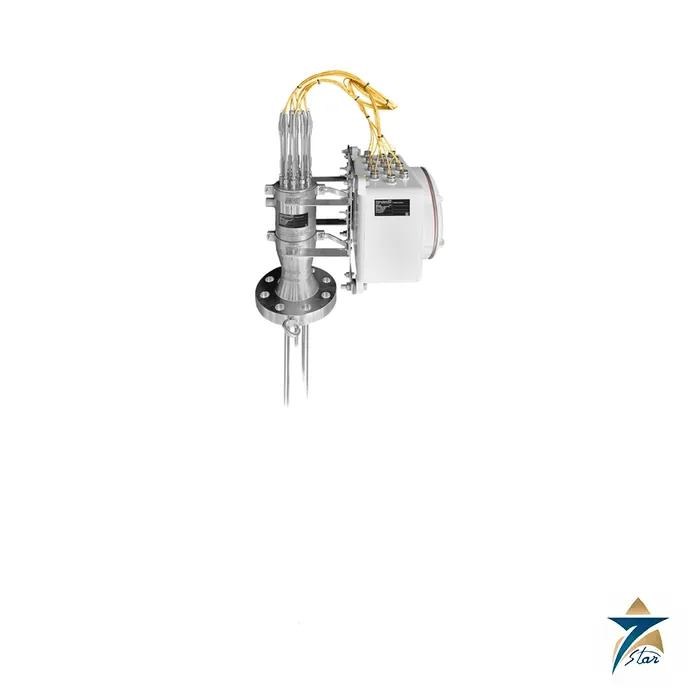
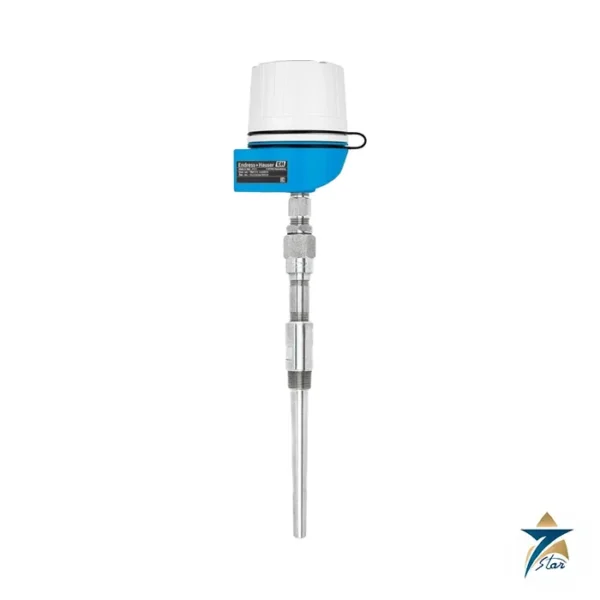
The TMS02 is the iTHERM MultiSens Flex multipoint thermometer with a diagnostic chamber, made for vessels, reactors and towers in refining and petrochemical service. Instead of one sensing tip it carries a bundle of individual metal-sheathed RTD or thermocouple elements that are routed through a single flange, so one nozzle gives a three-dimensional picture of the temperature profile. The flexible sensors can be spread out to match the catalyst bed or tray layout rather than being locked on a single straight line.
What defines the TMS02 is the closed diagnostic chamber on top of the process flange. If a weld or a sensor sheath fails, process fluid is directed into the chamber and held there, where it can be detected, instead of leaking to the junction box. Seven Star LLC supplies the TMS02 in Oman and the GCC as an independent supplier in Muscat; each unit is built to an engineered configuration, so the order starts from your nozzle and sensor-count data.
TMS02 technical specifications
| Parameter |
Specification |
| Manufacturer / part number |
Endress+Hauser / TMS02 (iTHERM MultiSens Flex, with diagnostic chamber) |
| Product type |
Direct-contact RTD/TC multipoint thermometer for 3D temperature profiling |
| RTD ranges |
Wire-wound –200 to +600 °C; thin-film 6 mm –50 to +400 °C; thin-film 3 mm –50 to +250 °C; StrongSens 6 mm –50 to +500 °C |
| Thermocouple ranges |
Type J –40 to +720 °C; type K –40 to +1 150 °C; type N –40 to +1 100 °C |
| Process temperature |
Up to +1 150 °C, depending on configuration and flange rating |
| Process pressure |
0 to 200 bar (2 900 psi), depending on configuration |
| Response time, 3 mm MI cable RTD |
t50 2 s, t90 5 s (water, 0.4 m/s, 10 K) |
| Response time, StrongSens 6 mm |
t50 below 5.5 s, t90 below 16 s |
| Vibration |
RTD 3 g at 10 to 500 Hz; StrongSens up to 60 g; thermocouple 4 g at 2 to 150 Hz |
| Process flange |
ASME 2, 3, 4, 6, 8 in, 600# to 2500#; EN DN80 to DN200, PN40 to PN160; AISI 316 or 347 for ASME |
| Alternative connection |
Welded thermowell insert (321, 347, 316/316L, Incoloy 825, Inconel 625) |
| Junction box |
Stainless steel or aluminium, IP66/67, –50 to +60 °C; cable glands IP66 |
| Typical weight |
About 70 kg for 12 inserts, 3 in main body, medium junction box |
| Maximum immersion length |
Up to 30 000 mm on request |
The figures above come from the manufacturer’s technical information and apply as a family envelope; the final limits are fixed by the flange class and materials you choose.
Basic, advanced and thermowell designs of the TMS02
The TMS02 is built from an insert bundle, a process flange with eyebolt, a junction box with its support frame, the diagnostic chamber and optional accessories such as valves, manifolds, purge systems and centering stars. Three design versions are described.
The basic design without thermowells welds the inserts to the chamber and connects the extension cables there. The sensors cannot be exchanged, but a leak at a weld ends up in the chamber. The advanced design without thermowells fits removable stump inserts through compression fittings on the top of the chamber, so only the outer section of each sensor can be replaced. The advanced design with thermowells places each sensor in its own welded thermowell that ends inside the chamber, so every sensor can be exchanged even while the process runs.
This choice drives both price and maintenance. For a hydrotreater where an unplanned shutdown is costly, the thermowell version is the one that allows live sensor swaps, and the chamber gives an early warning of thermowell wall attack.
How a TMS02 builds a 3D temperature profile
Each measuring element works as a stand-alone thermometer. Thermocouples use the Seebeck effect and are joined to head transmitters that carry a Pt100 cold-junction reference with ±1 K accuracy. Resistance elements are Pt100 to IEC 60751, thin-film for vibration and size or wire-wound for the widest range. Because the elements stand at different depths and angles, the control system can reconstruct hot spots, channelling or maldistribution in the bed. The datasheet also points to iTHERM ProfileSens technology for a high density of measuring points.
Compatible parts and related Endress+Hauser multipoint roots
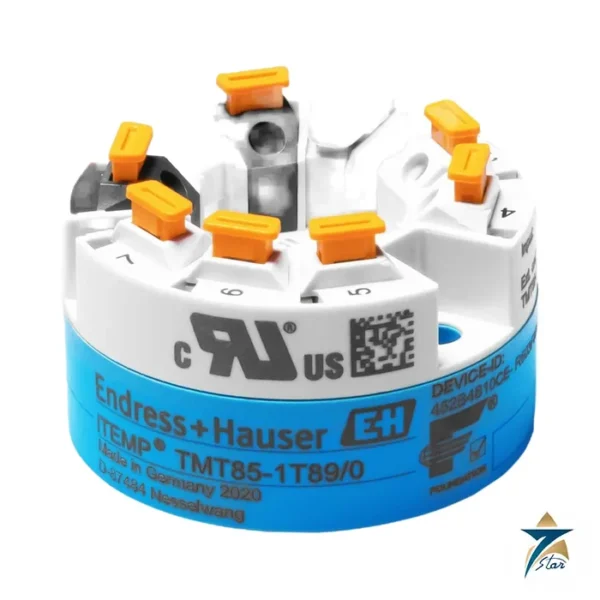
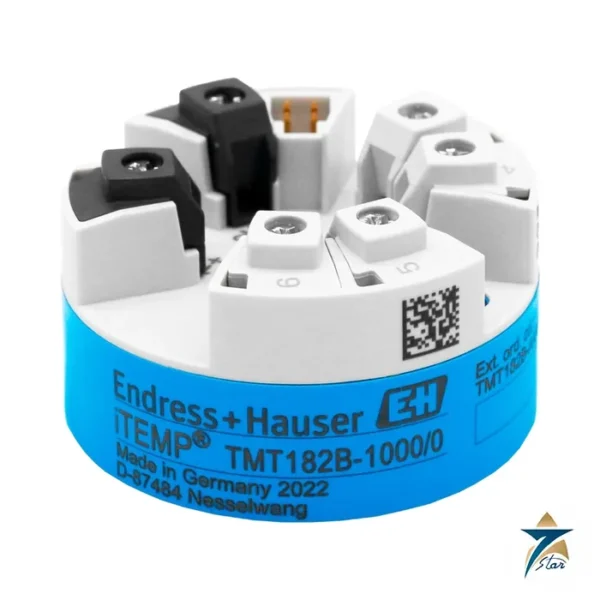
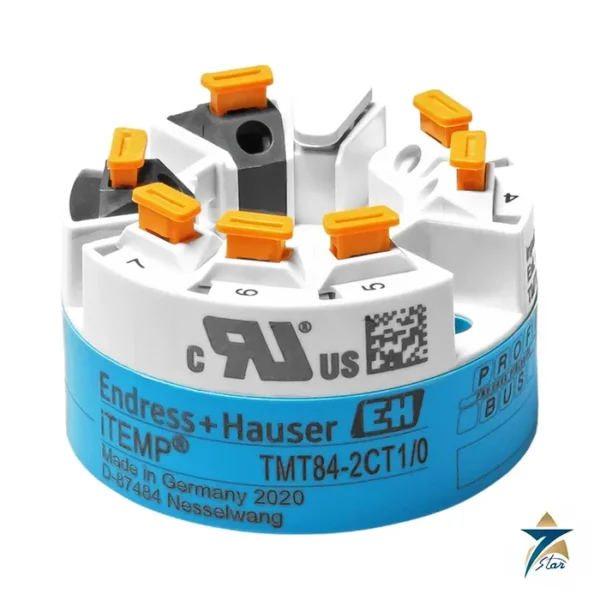
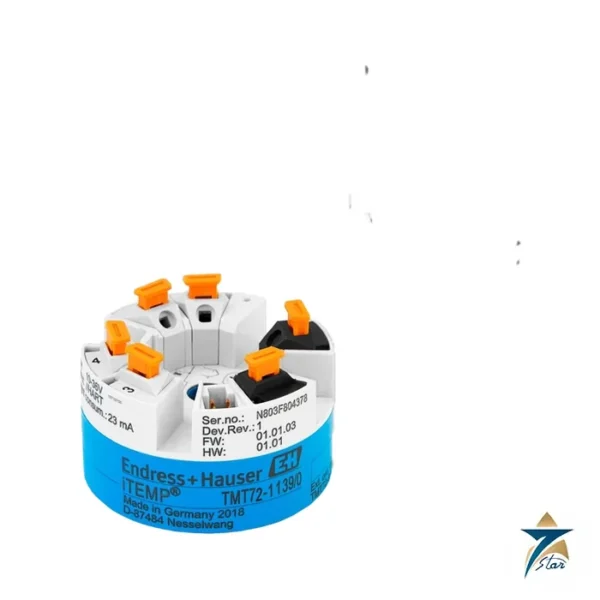
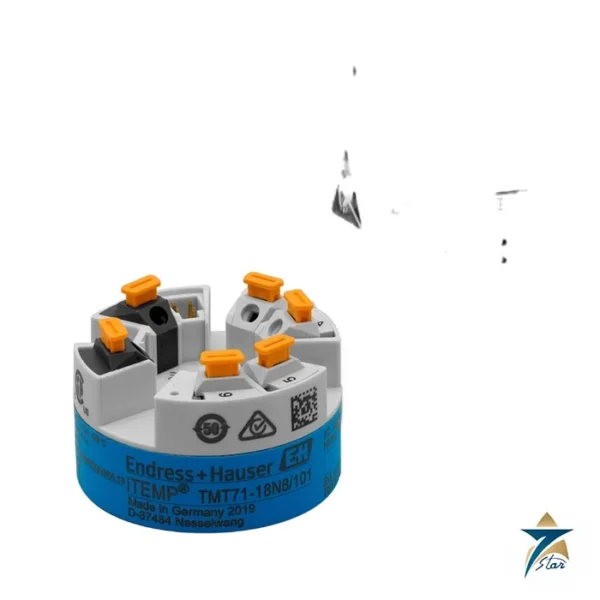
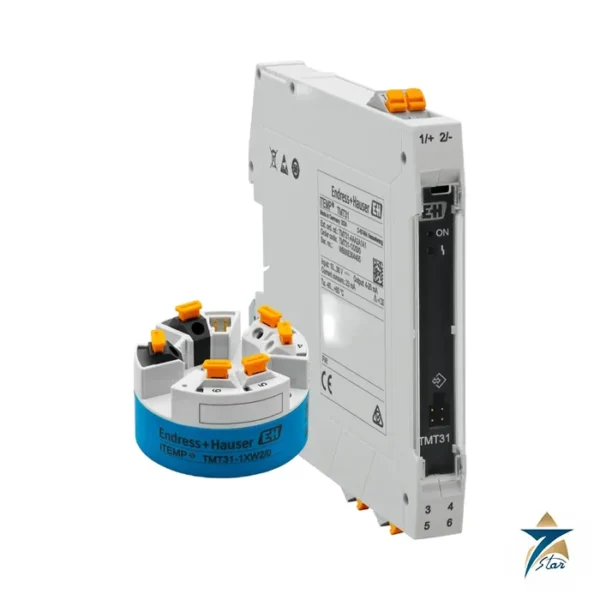
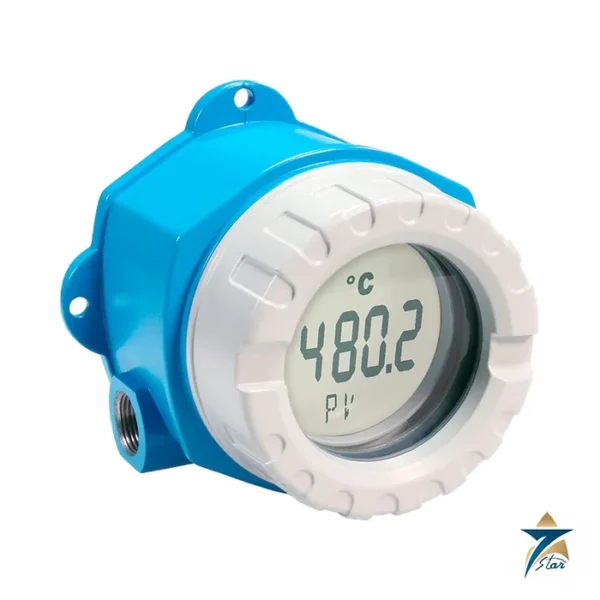
The TMS02 sits beside the TMS01 (the same flexible-sensor concept, rated to 0 to 100 bar, without the chamber described in its design section), the linear TMS11 with a primary thermowell and the slim TMS21 thermocouple probe. Individual replacement inserts are ordered through standard roots such as TSC310 or TST310, or as special inserts. Electronically, iTEMP head transmitters with HART, PROFIBUS PA, FOUNDATION Fieldbus or PROFINET output can be installed in the junction box, and the datasheet quotes functional safety (SIL) as an available option.
Selection and ordering checklist for the TMS02
- Nozzle data: flange standard, size, rating and facing, plus nozzle length and internal diameter.
- Number and layout of measuring points, linear or 3D, with the length of each sensor.
- Sensor type per point: thermocouple J, K or N, or Pt100 thin-film, wire-wound or StrongSens.
- Design version: basic, advanced or advanced with thermowells, and the thermowell material.
- Process temperature, pressure and fluid, so that the flange class and metallurgy are valid together.
- Junction box material, size, hazardous-area requirement and support-frame type.
- Head transmitters or terminal blocks, with the output protocol and tag scheme.
- Accessories: pressure transmitter, valves, manifold or purge on the diagnostic chamber.
Installing and servicing a TMS02 on a hot vessel
The unit is heavy, around 70 kg for a typical build, and may only be lifted by the eyebolt on the flange. Never loosen a threaded part on the process connection while the process is running; calibration after installation should be arranged with the manufacturer’s service team. A factory calibration of each sensor can be carried out in baths from –80 to 550 °C. At commissioning, verify each channel against the tag list, check cable shielding and glands, and record the diagnostic chamber baseline. In service, any rise in pressure or the presence of process vapour in the chamber should be treated as an early leak alarm.
Typical TMS02 applications in Oman and the GCC
The TMS02 targets atmospheric and vacuum distillation, catalytic cracking, hydrocracking, hydrotreating, catalytic reforming, visbreaking, delayed coking and hydrodesulphurisation. In Oman and the Gulf these are refinery and petrochemical units, where a reactor with hundreds of cubic metres of catalyst needs to be watched for hot spots. The chamber and the junction-box ratings suit hot, dusty and humid coastal sites, and sealed glands matter during sandstorms and monsoon-season humidity.
TMS02 compared with other multipoint roots
| Model |
Layout |
Pressure |
Main feature |
| TMS02 |
3D, flexible sensors |
0 to 200 bar |
Diagnostic chamber, replaceable sensors |
| TMS01 |
3D, flexible sensors |
0 to 100 bar |
Flanged, can reuse existing thermowells |
| TMS11 |
Linear |
0 to 240 bar |
Primary thermowell, leak monitoring |
| TMS21 |
Linear or flexible, slim |
0 to 90 bar |
Up to 59 thermocouple points |
Information to send with a TMS02 RFQ
- Vessel or reactor tag, nozzle flange details and bed height.
- Sensor count, type and each individual length or elevation.
- Design pressure, design and operating temperature, process fluid and any hydrogen, H2S or corrosion data.
- Junction-box material, hazardous-area zone and certification needed.
- Transmitter protocol or terminal-block wiring, plus any material certificates required.
- Quantity and delivery location in Oman or the GCC.
Documents and quotation
The official Endress+Hauser technical information for the TMS02 is attached on this page as a PDF. It describes the three design versions in detail. It is the reference for ranges, dimensions, materials and process-connection limits, so check your own configuration against it before you commit to a purchase.
Seven Star LLC is an independent supplier based in Muscat and supplies industrial instrumentation in Oman and the GCC. Send us the TMS02 configuration you need, the tag or datasheet line it must match and the delivery location, and we will reply with availability and a quotation.



















Reviews
There are no reviews yet.