Endress+Hauser TM112 iTHERM ModuLine thermometer for direct process contact
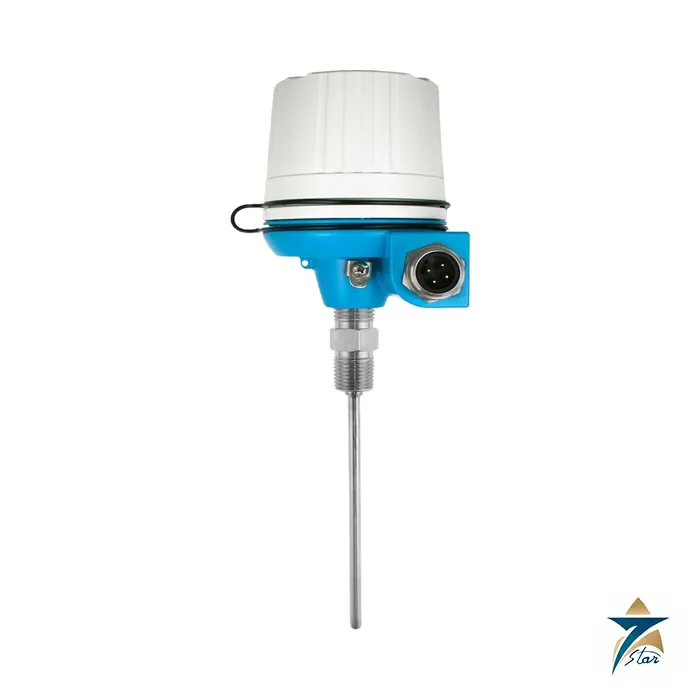
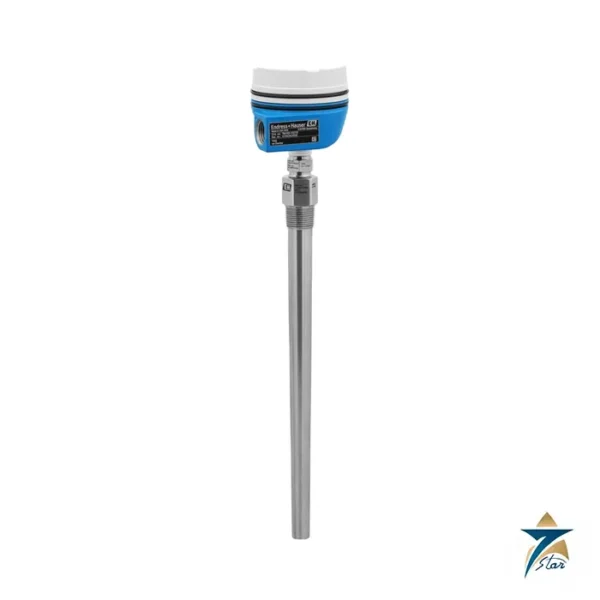
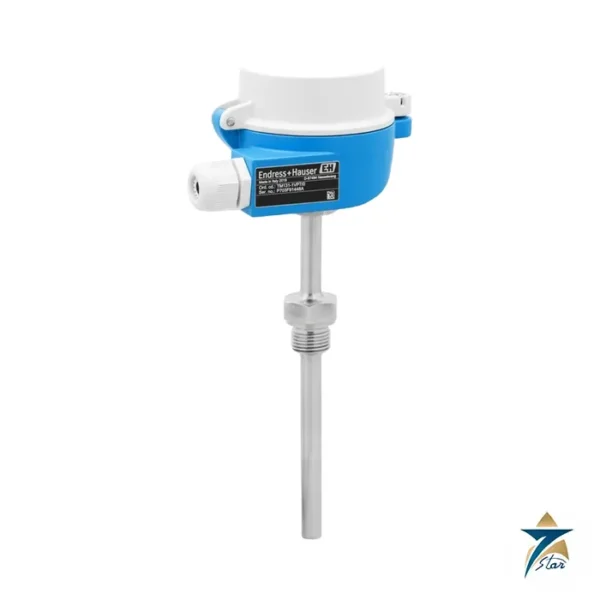
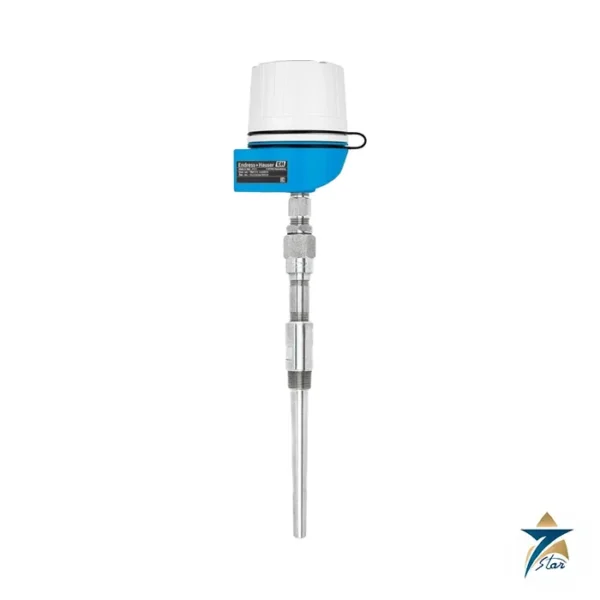
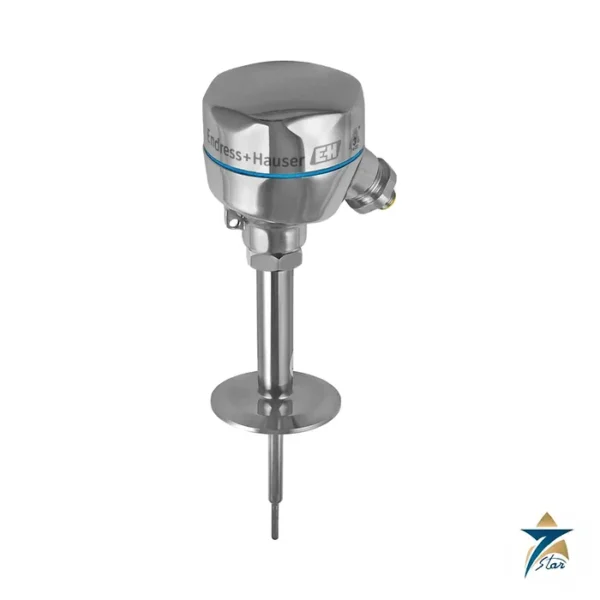
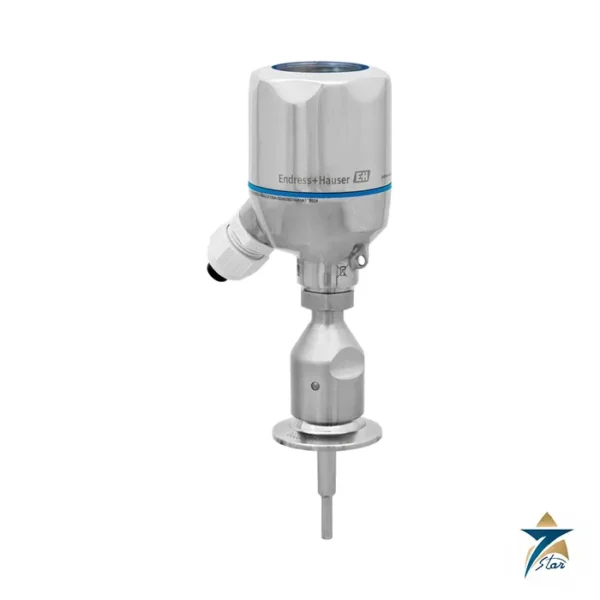
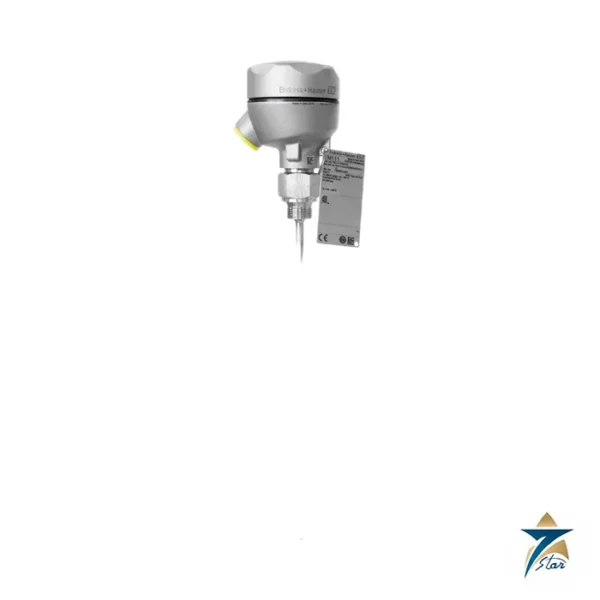
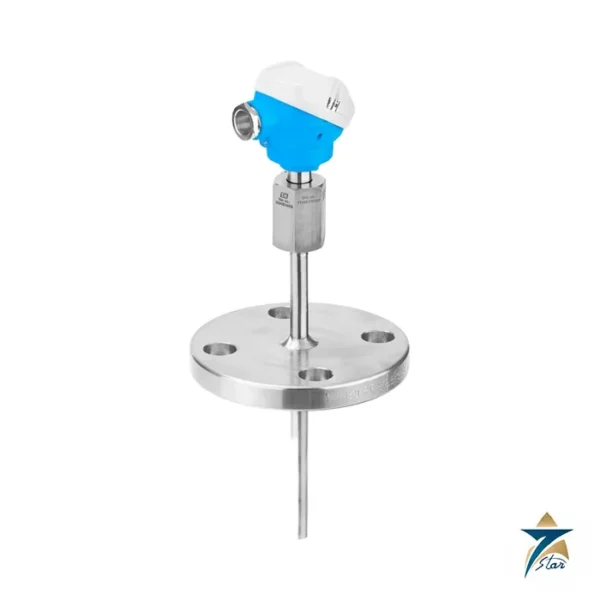
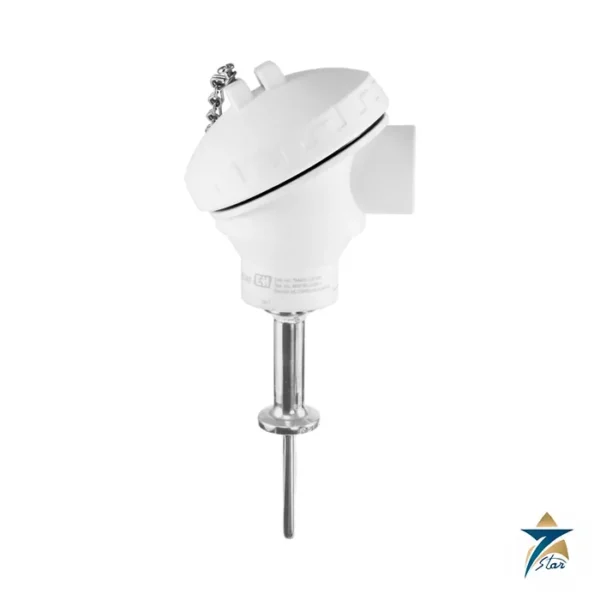
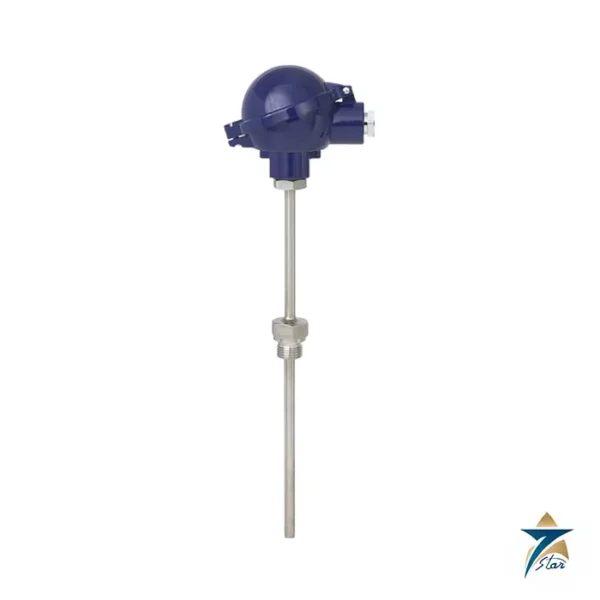
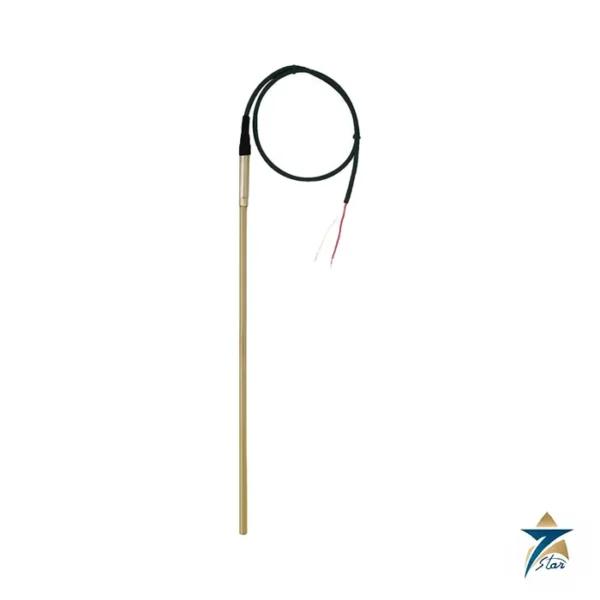
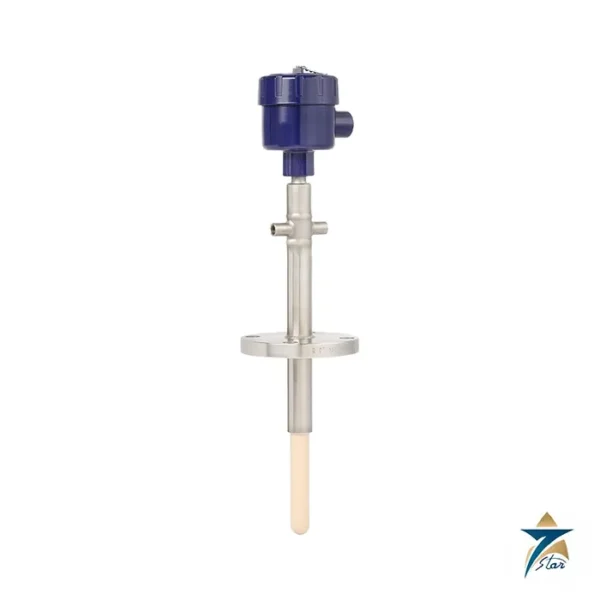
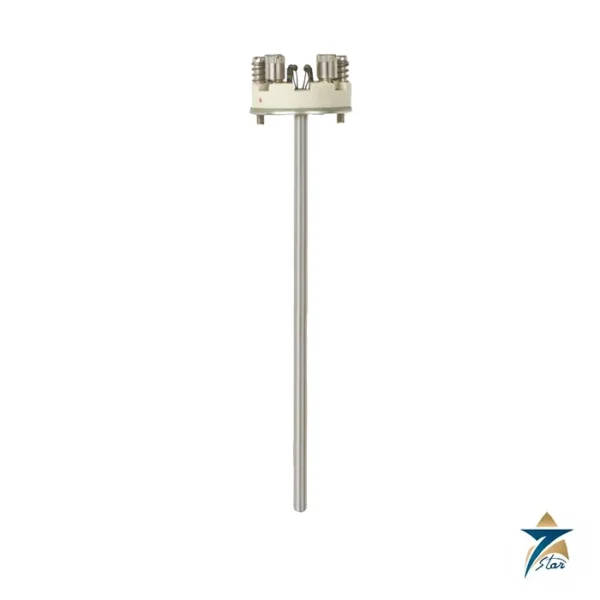
The TM112 is an imperial-style modular industrial thermometer from the Endress+Hauser iTHERM ModuLine family. Its sensing insert touches the process medium directly, so there is no thermowell between the sensor and the fluid. That shortens the thermal path and gives a fast reading, which is the main reason to pick the TM112 over a thermowell version for clean, moderate-pressure duties. The manufacturer positions it as a universal thermometer with a measuring span of –200 to +1 100 °C and a pressure capability up to 75 bar, depending on the sensor and fitting chosen.
The name does not hide a fixed code: TM112 is a configurable product root. Sensor type, insert diameter, immersion length, process connection, terminal head and any head transmitter are all selected during configuration. Seven Star LLC supplies the TM112 in Oman and the GCC as an independent supplier in Muscat, so the useful first step is to agree those choices against your loop drawing.
Two insert technologies stand out. The iTHERM QuickSens insert is built for speed, with a t90 of 1.5 s in the manufacturer test, while the iTHERM StrongSens insert is built for pipework that shakes, with a vibration rating of 60 g at the sensor tip. Standard thin-film, wire-wound and thermocouple (type J, K or N) inserts cover the remaining ranges.
TM112 technical specifications
| Parameter |
Specification |
| Manufacturer / part number |
Endress+Hauser / TM112 (iTHERM ModuLine, imperial, direct contact) |
| Measuring principle |
Pt100 resistance thermometer (IEC 60751, thin-film or wire-wound) or thermocouple type J, K, N |
| Overall measuring range |
–200 to +1 100 °C (–328 to +2 012 °F), depends on sensor |
| Insert diameter |
3.175 mm (1/8 in) or 6.35 mm (1/4 in), depending on the selected thermometer |
| Process pressure |
Max. 75 bar to +200 °C for standard thin-film and QuickSens Pt100; max. 50 bar to +400 °C for all other sensor types |
| Response time, standard Pt100 |
t50 5 s, t90 11 s (water, 0.4 m/s, 10 K step) |
| Response time, QuickSens |
t50 0.5 s, t90 1.5 s |
| Response time, thermocouple |
t50 2.5 s, t90 7 s |
| Process threads |
1/2 in NPT and 3/4 in NPT, or compression fitting (316L or PEEK ferrule) |
| Wetted materials |
AISI 316 / 1.4401 (to 650 °C in air), alloy 600 / 2.4816 (to 1 100 °C in air) |
| Ambient temperature |
–40 to +85 °C with head transmitter; –30 to +85 °C with display |
| Insulation resistance |
Above 1 GΩ at 20 °C and above 5 MΩ at 500 °C (500 VDC) |
| Terminal head interface |
DIN EN 50446 flat-face heads with M24x1.5 or 1/2 in NPT thread |
| Electrical output |
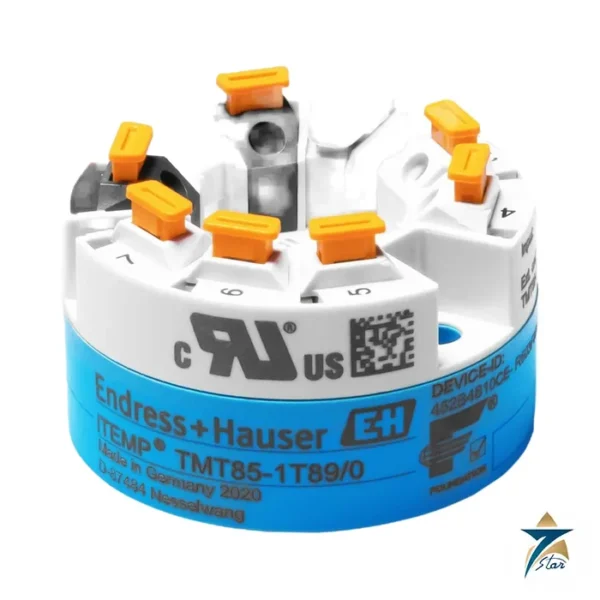
Direct sensor wiring, or iTEMP head transmitter (4 to 20 mA, HART, PROFIBUS PA, FOUNDATION Fieldbus, PROFINET with Ethernet-APL, IO-Link) |
Temperature limits for a given insert depend on the sensor class chosen; the table above is the envelope of the family, not a promise for every configuration.
How the TM112 turns temperature into a signal
A Pt100 element is a platinum resistor of 100 Ω at 0 °C with a temperature coefficient of 0.003851 per kelvin. In the thin-film form the platinum track is vapour-deposited on a ceramic base, which makes the element small and tolerant of vibration. The wire-wound form uses a coil of fine platinum wire, is larger and more sensitive to shock, but holds its curve well toward 600 °C. The datasheet notes that thin-film elements drift slightly from the standard curve at high temperature, so IEC class A limits can only be kept up to roughly 300 °C with that technology.
Thermocouple versions rely on the Seebeck effect. Two dissimilar conductors joined at the tip generate a small voltage that depends on the difference between the tip and the cold end. The TM112 wiring guidance is explicit that thermocouples should not be plugged straight into a connector, because the pins themselves can form an unintended junction. Pairing the thermocouple with an iTEMP head transmitter, which contains an internal Pt100 cold-junction reference, avoids that error.
Tolerance classes follow the standards. For the Pt100, class A allows ±(0.15 + 0.002 × |t|) °C, class AA allows ±(0.1 + 0.0017 × |t|) °C and class B allows ±(0.3 + 0.005 × |t|) °C. For thermocouples the standard IEC 60584 class 2 limit is ±2.5 °C up to 333 °C, then 0.75 % of the reading, and class 1 is offered on request.
Where the TM112 fits in the ModuLine range
Endress+Hauser separates its modular thermometers by whether a thermowell is used and by metric or imperial style. The TM112 is the imperial, direct-contact member. Its sibling TM152 is the imperial thermometer used with a barstock thermowell, which is the better choice when the sensor must be pulled without opening the process or when the fluid is aggressive or fast. If your plant works in metric threads and flanges, the metric ModuLine roots are the comparison, and for multipoint profiling the TMS01, TMS02, TMS11 and TMS21 families cover vessels and reactors.
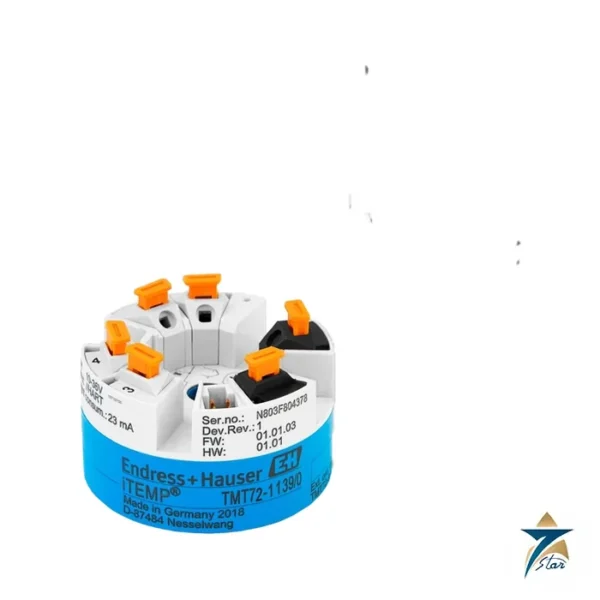
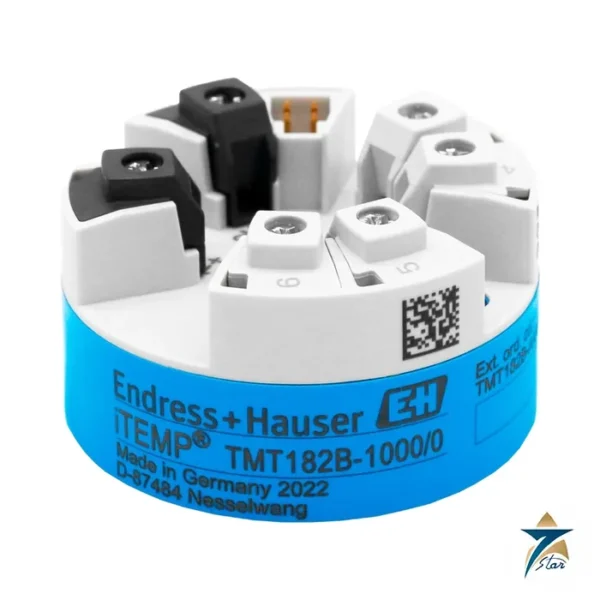
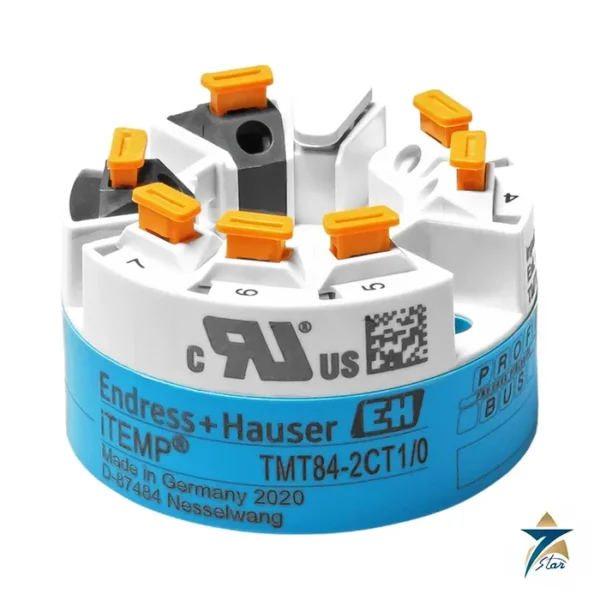
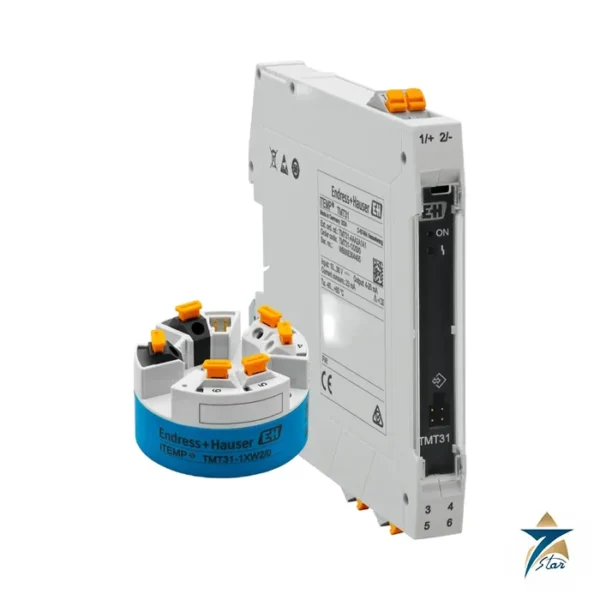
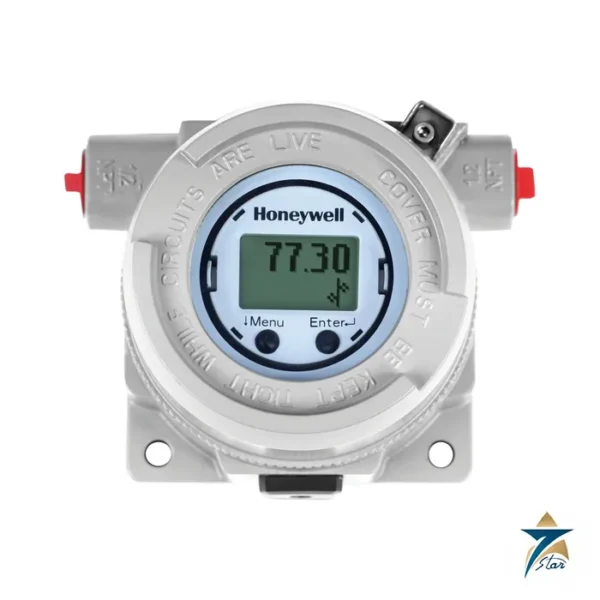
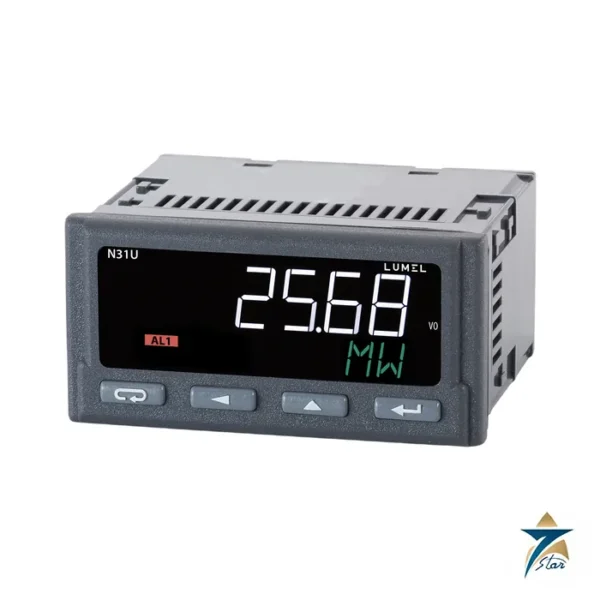
On the electrical side the TM112 accepts the iTEMP head transmitters TMT7x, TMT31, TMT36 and the dual-input TMT8x, or field transmitters such as TMT162 and TMT142B on remote versions. Surge arresters from the HAW family, RN-series active barriers and RIA process indicators are named in the datasheet as system partners for the measuring point.
Selecting a TM112: sensor, length and connection checklist
- Pick the sensor for the duty: QuickSens for the fastest response in a small-bore or batch loop, StrongSens for pumps, compressors and piping with vibration, standard thin-film for general lines, wire-wound or thermocouple for the extremes.
- Check pressure against temperature. A 400 °C line is limited to 50 bar, whereas a standard thin-film insert at or below 200 °C is rated to 75 bar.
- Choose the immersion length so that the tip sits in the flow and not in the pipe-wall boundary layer; the insertion length is calculated automatically from the serial number.
- Decide on a fixed NPT thread or a compression fitting. The 316L compression fittings are single-use because the ferrule deforms; PEEK ferrules must never see a lower temperature than the one at which they were first tightened.
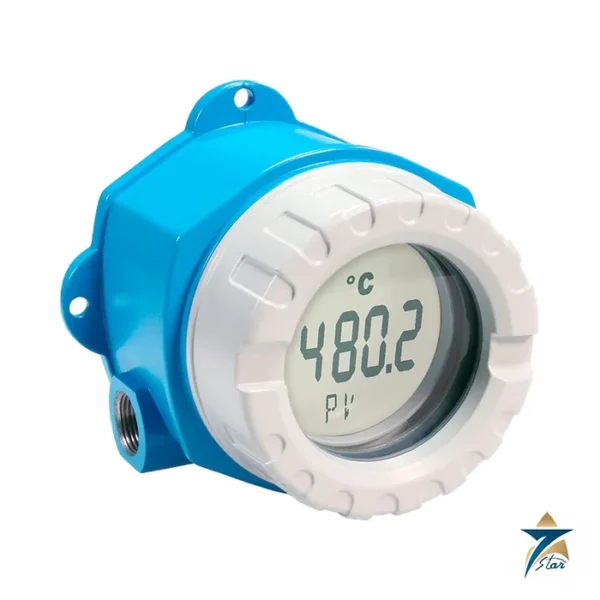
- Select a terminal head for the climate: aluminium (TA20AB, TA30A, TA30D), polyamide (TA30P) or stainless steel with an optional display window rated IP66/68.
- Decide between direct wiring and a head transmitter, and confirm protocol and hazardous-area requirements before ordering.
- Ask whether a thermowell is required by plant standard; the datasheet recommends one when mechanical loading is a concern.
Installing, commissioning and maintaining the TM112
There is no orientation restriction, but the datasheet asks that the installation drains itself in the process. Fit the insert to the length shown on the nameplate, tighten compression fittings to the torque stated in the datasheet and avoid over-tightening, which crushes threads and glands. Because the insert is in direct contact with the medium, the process must be depressurised and drained before removing it.
On the bench, check the loop with an insulation test at 500 VDC; the manufacturer values are above 1 GΩ at 20 °C. Where a head transmitter is fitted, load the Callendar-Van Dusen coefficients if sensor-transmitter matching was ordered, and record the tag. For recalibration, a fixed-point check at the ice point or a comparison against a reference thermometer in a dry-block or bath is the practical route. Keep a spare insert of the same sensor class and length, and a spare compression fitting set, since the fitting cannot be reused.
TM112 in Oman and GCC process plants
In Oman and the wider Gulf, direct-contact thermometers like the TM112 are common on utilities and skid packages: cooling-water headers, seawater intake lines, lube-oil coolers, compressor aftercoolers and fuel-gas heaters in oil and gas and petrochemical sites, and brine and permeate lines in desalination. Power plants use them on auxiliary water and air systems. The high ambient temperatures and dust of the region favour a tightly sealed head, and the 85 °C ambient limit with a transmitter fitted is worth checking against sun-loaded heads on exposed pipe racks. Where sour or aggressive fluids are present, move up to a thermowell version.
TM112 sensor options at a glance
| Sensor |
Range |
Notes |
| Pt100 thin-film, basic |
–50 to +200 °C |
General duty |
| Pt100 thin-film, QuickSens |
–50 to +200 °C |
t90 1.5 s; 60 g on the 6 mm insert |
| Pt100 thin-film, standard |
–50 to +400 °C |
Vibration up to 4 g |
| Pt100 thin-film, StrongSens |
–50 to +500 °C |
Vibration up to 60 g |
| Pt100 wire-wound |
–200 to +600 °C |
Extended range |
| Thermocouple type J |
–40 to +750 °C |
Vibration up to 3 g |
| Thermocouple type K |
–40 to +1 100 °C |
Highest range of the family |
Information to send with a TM112 RFQ
- Sensor type and number of elements (single or dual Pt100, or thermocouple J, K or N).
- Insert diameter (1/8 in or 1/4 in), immersion length and total length.
- Process connection: 1/2 in or 3/4 in NPT, or compression fitting with its ferrule material.
- Operating temperature and pressure, and the fluid, so the 75 bar or 50 bar limit can be checked.
- Terminal head type, cable-entry thread and ingress protection needed.
- Head transmitter model, output protocol, hazardous-area classification and any SIL requirement.
- Required quantity, tag numbers and the delivery point in Oman or the GCC.
Documents and quotation
The official Endress+Hauser technical information for the TM112 is attached on this page as a PDF. Several variants share the same product root, so quote the exact configuration. It is the reference for ranges, dimensions, materials and process-connection limits, so check your own configuration against it before you commit to a purchase.
Seven Star LLC is an independent supplier based in Muscat and supplies industrial instrumentation in Oman and the GCC. Send us the TM112 configuration you need, the tag or datasheet line it must match and the delivery location, and we will reply with availability and a quotation.




















Reviews
There are no reviews yet.