Promass P 100 Coriolis flowmeter for hygienic and sterile processes
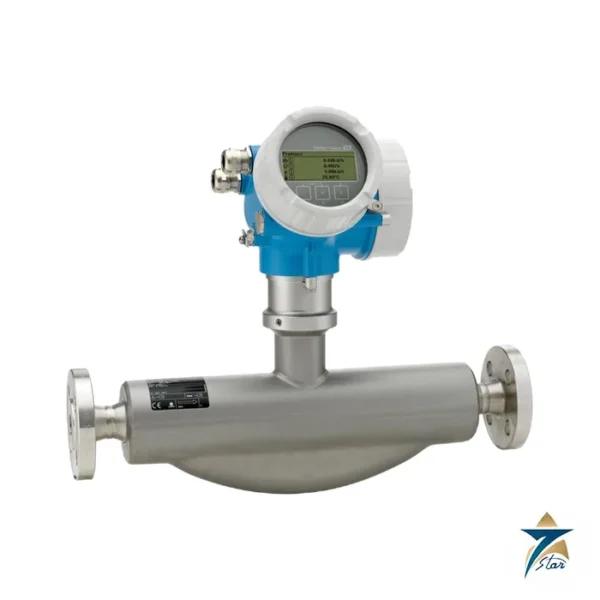
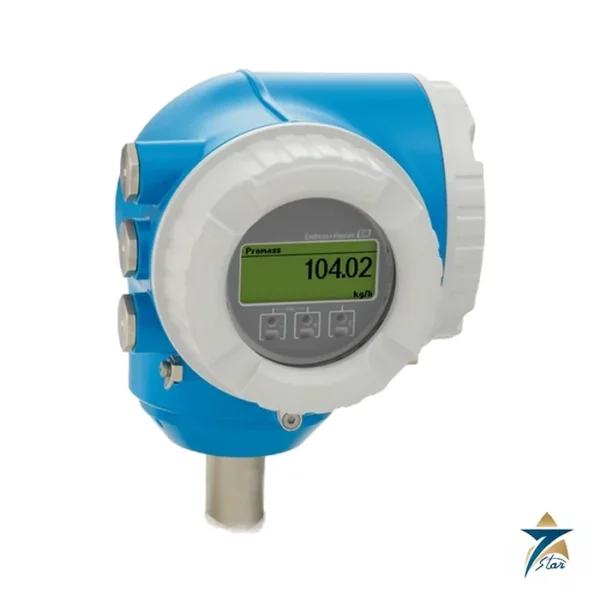
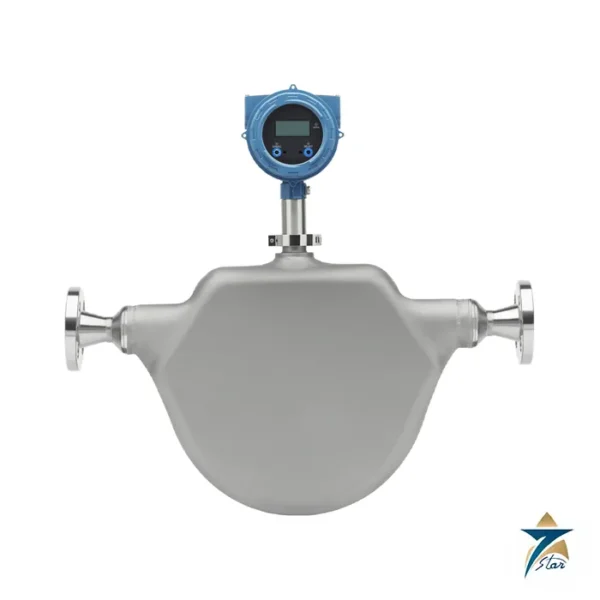
The Endress+Hauser Promass P 100 is a Coriolis mass flowmeter built for processes where cleanability and surface finish matter as much as accuracy. Its single bent measuring tube is made of 1.4435 (316L) stainless steel and the transmitter is an ultra-compact, hygienic unit that sits directly on the sensor. The name tells you the line: Promass is the Coriolis family, P is the sensor for sterile and regulated industries, and 100 is the compact transmitter generation. Seven Star LLC supplies the Promass P 100 in Oman and the GCC as an independent supplier based in Muscat.
The device measures mass flow, density and temperature at the same time and calculates volume flow, corrected volume flow and reference density from them. Line sizes run from DN 8 (3/8 in) to DN 50 (2 in), covering full-scale flows from 2,000 kg/h up to 70,000 kg/h of liquid.
Decoding the Promass P 100 model name
- Promass is the Endress+Hauser Coriolis flowmeter family.
- P identifies the hygienic single-tube sensor for life sciences, with polished wetted surfaces and low delta-ferrite content (below 1 %).
- 100 identifies the ultra-compact transmitter generation, loop-wired with 4-20 mA HART or with a fieldbus output, and operated through an optional local display or an integrated web server.
The full ordering structure of the Promass P 100 is defined by Endress+Hauser order codes for housing, output, tube material and surface roughness, connection, approvals and application packages. We confirm the exact code against your requirements before quoting.
Promass P 100 technical specifications
| Parameter |
Specification |
| Manufacturer / part number |
Endress+Hauser / Promass P 100 (Proline Coriolis flowmeter) |
| Measuring principle |
Coriolis, bent single-tube sensor |
| Nominal diameter range |
DN 8 to DN 50 (3/8 to 2 in) |
| Liquid full-scale range |
DN 8: 2,000 kg/h; DN 15: 6,500 kg/h; DN 25: 18,000 kg/h; DN 40: 45,000 kg/h; DN 50: 70,000 kg/h |
| Operable flow range |
Over 1000 : 1 |
| Mass and volume flow accuracy (liquids) |
±0.10 % of reading |
| Density accuracy (liquids) |
±0.0005 g/cm³ under reference conditions; ±0.01 g/cm³ standard calibration; ±0.002 g/cm³ wide-range option |
| Temperature accuracy |
±0.5 °C ± 0.005 · T °C |
| Repeatability |
±0.05 % of reading (flow); ±0.00025 g/cm³ (density) |
| Medium temperature |
Standard −50 to +150 °C; extended version −50 to +205 °C |
| Ambient temperature |
−40 to +60 °C (−50 to +60 °C with option JM) |
| Wetted materials |
Measuring tube 1.4435 (316L); process connections 1.4435 and 1.4404 (F316/F316L) |
| Surface finish |
Ra ≤ 0.76 µm mechanically polished; Ra ≤ 0.38 µm electropolished |
| Protection |
IP66/67, Type 4X; IP69 available with sensor option CM |
| Supply and power |
DC 20 to 30 V; maximum 3.5 W (2.45 W for intrinsically safe Modbus RS485) |
| Outputs |
4-20 mA HART with pulse/frequency/switch; PROFIBUS DP; Modbus RS485; EtherNet/IP; PROFINET |
| Weight (DN 8 / 15 / 25 / 40 / 50) |
12 / 14 / 20 / 36 / 59 kg with EN PN 40 flanges and aluminium transmitter |
How the Promass P 100 measures flow and density
The sensor excites its measuring tube at resonance. When fluid flows through the oscillating tube, Coriolis forces delay the vibration at the inlet and advance it at the outlet. Two electrodynamic pickups measure that phase shift, which grows in direct proportion to mass flow. A swinging counter-mass vibrating in antiphase keeps the system balanced so that plant vibration has little effect.
Density comes from the resonance frequency itself: a heavier fluid lowers the frequency of the tube-plus-medium system, and the electronics convert that shift into a density signal. A tube temperature sensor compensates the measurement and is also available as an output. Because the principle does not depend on conductivity, viscosity or flow profile, the Promass P 100 needs no straight inlet or outlet run.
Hygienic design and standards behind the Promass P 100
The wetted parts are designed for CIP and SIP cleaning and fast recovery after steam sterilisation. The datasheet lists conformity to ASME BPE, 3-A (only with the order option LP), EHEDG Type EL Class I (only with option LT), FDA 21 CFR 177, USP <87>, USP <88> Class VI at 121 °C, and cGMP-derived requirements through option JG, which generates a serial-number-specific declaration. These marks apply to specifically ordered options, so they must be requested when the unit is configured and cannot be assumed on a standard device.
Process connections for the Promass P 100
Connection families listed for the sensor include EN 1092-1, ASME B16.5 and JIS B2220 flanges, DIN 11864-2 flanges, Tri-Clamp and other ISO 2852 / DIN 32676 clamps, eccentric clamps for drainability, sterile orbital (BBS) fittings, Neumo BioConnect and the dairy threads DIN 11851, SMS 1145 and ISO 2853. The datasheet notes that clamp connections are good to 16 bar, although the clamp and seal chosen may set a lower limit.
Where the Promass P 100 fits in a system
As a point instrument the Promass P 100 reports to a PLC or DCS over 4-20 mA HART or one of the digital protocols above. Pressure and temperature values from the control system can be written to the meter to improve corrected volume flow. Within the same Proline 100 platform, the Promass A 100 covers very low flows and the Promass F 200 and Promass E 300 cover larger industrial lines, so it is worth comparing them when the application is not strictly hygienic.
Selection checklist for the Promass P 100
- Fluid, density range and whether gas or air bubbles can be present.
- Required full-scale flow, which fixes the DN size; aim for about 20 to 50 % of full scale in normal operation.
- Maximum process temperature, to choose between the standard and extended tube versions.
- Hygienic requirement: surface roughness, 3-A, EHEDG, cGMP declaration and connection standard.
- Output protocol and whether an intrinsically safe Modbus version with the Promass 100 safety barrier is needed.
- Housing choice, aluminium or stainless hygienic, and whether IP69 is required for wash-down.
Installation, commissioning and care of the Promass P 100
Mount the sensor so the tube stays full and, for sterile duty, so it can drain; the orientation must support drainability to claim EHEDG results. Avoid mounting at the highest point of a line where gas collects, and keep sufficient back pressure downstream of pumps to prevent cavitation. Perform a zero adjustment under no-flow conditions with the tube filled. The integrated web server and optional Heartbeat Technology allow verification of the meter without taking it out of the line, which helps in audited environments.
Typical applications of the Promass P 100 in Oman and the GCC
Hygienic Coriolis meters in the region are found in pharmaceutical and nutraceutical plants, dairies and beverage bottling, food processing, personal care and cosmetics, and in water and desalination plants where food-grade or chemical dosing lines need accurate mass-based batching. The IP66/67 housing and a rated ambient range up to +60 °C suit warm, humid halls, while shade or a weather cover is advisable for outdoor skids in direct sun.
Information to send with your RFQ
- Full order code or nameplate photo if you are replacing an existing meter.
- Fluid, density, viscosity, minimum and maximum flow, and process temperature including steam sterilisation.
- Line size, connection standard and surface roughness.
- Output type, power supply and hazardous-area requirement.
- Documents needed, for example material or calibration certificates.
Documents and quotation
The Endress+Hauser Technical Information for the Promass P 100 is attached on this page as a datasheet. Send us the part number with your fluid and flow data and we will confirm configuration, availability and lead time for Oman and the GCC.
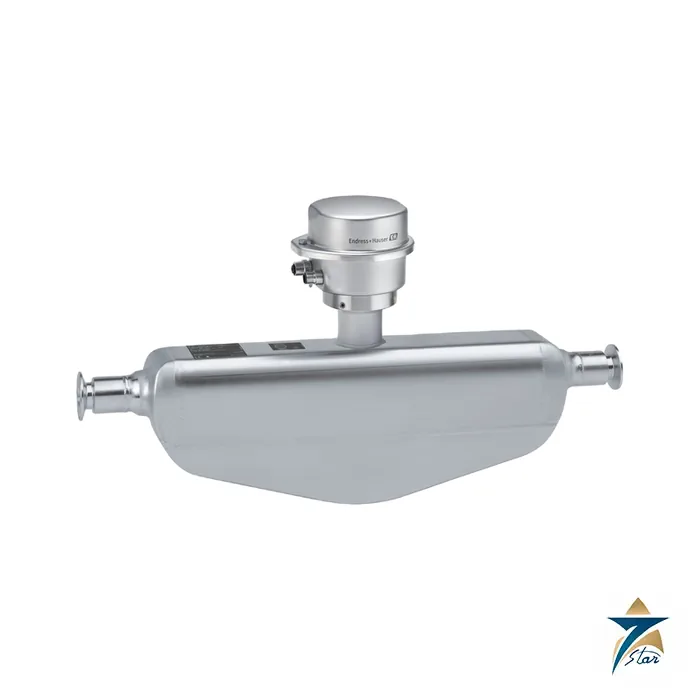
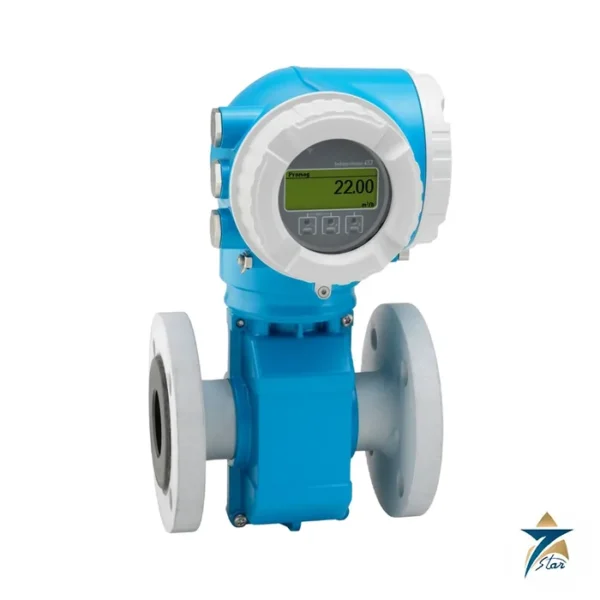
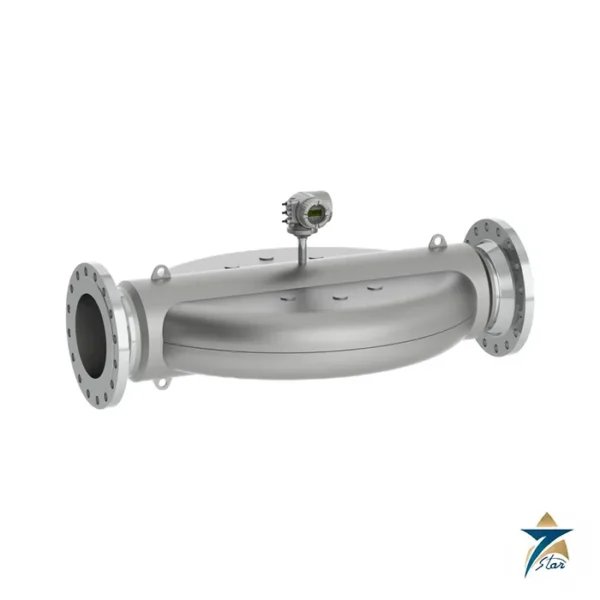
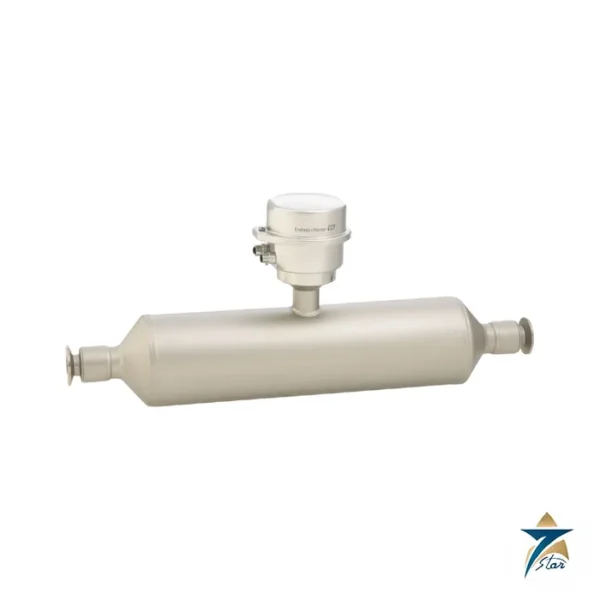
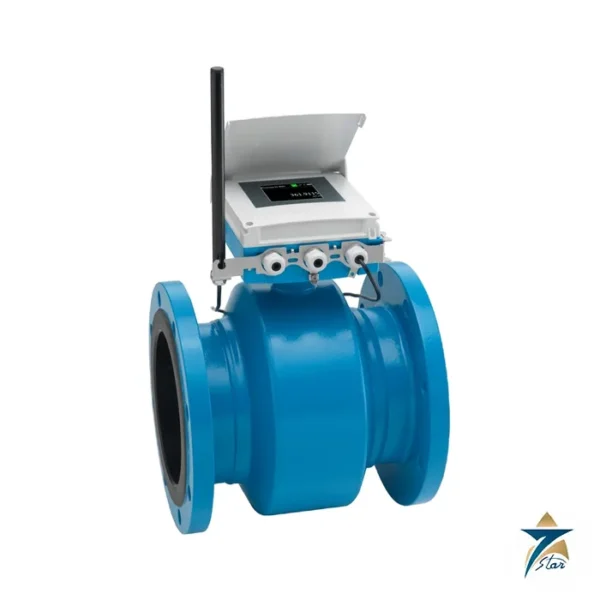
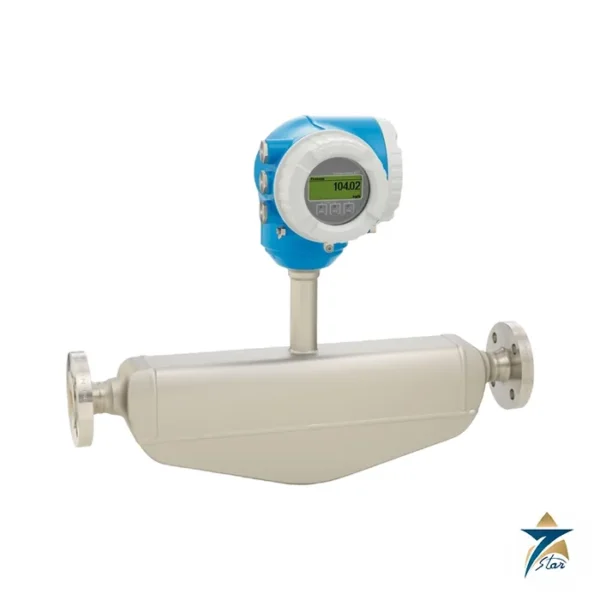
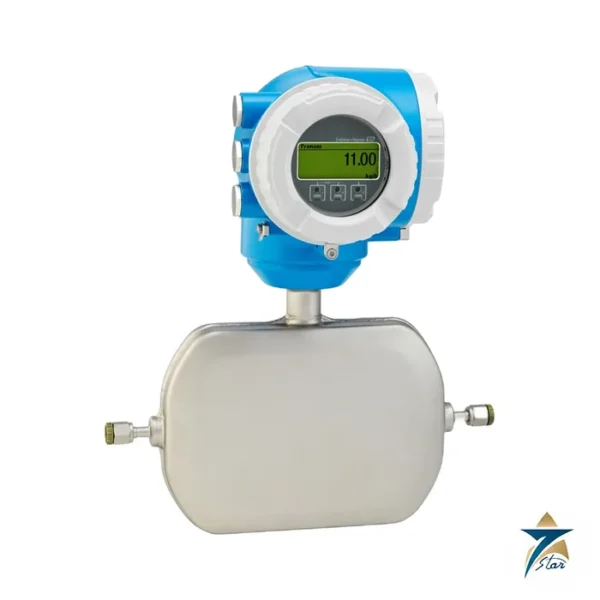
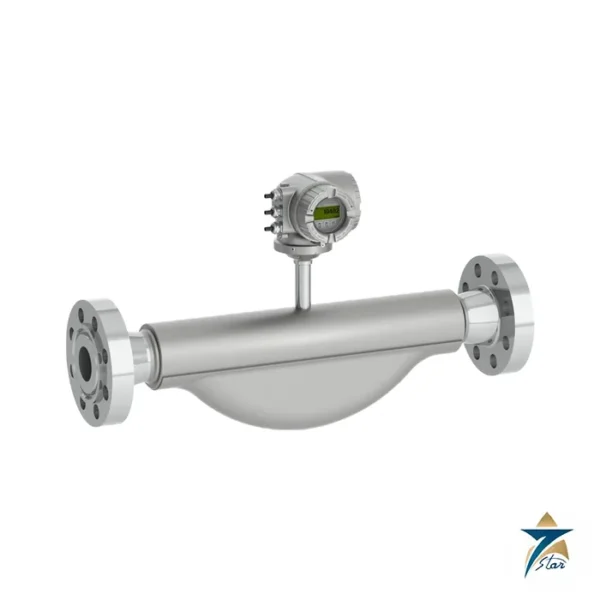
Other Models in the Eh Promass Coriolis Range
Seven Star LLC supplies models from the Eh Promass Coriolis range in Oman and the GCC. Compare the related models below and request a quote for the one that matches your application.






















Reviews
There are no reviews yet.