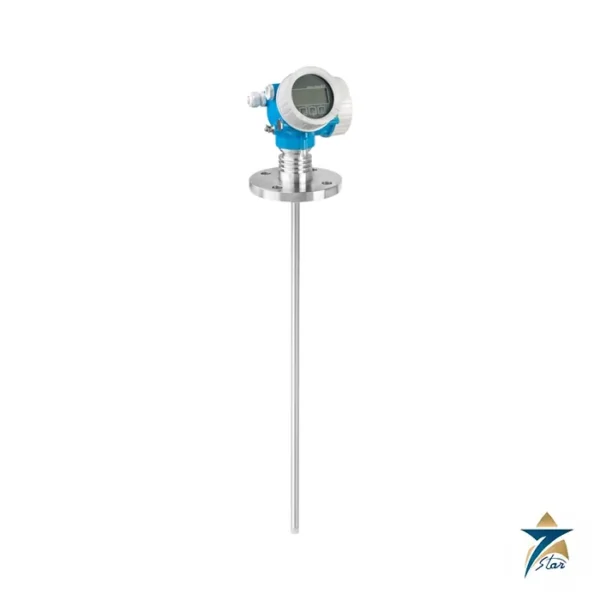
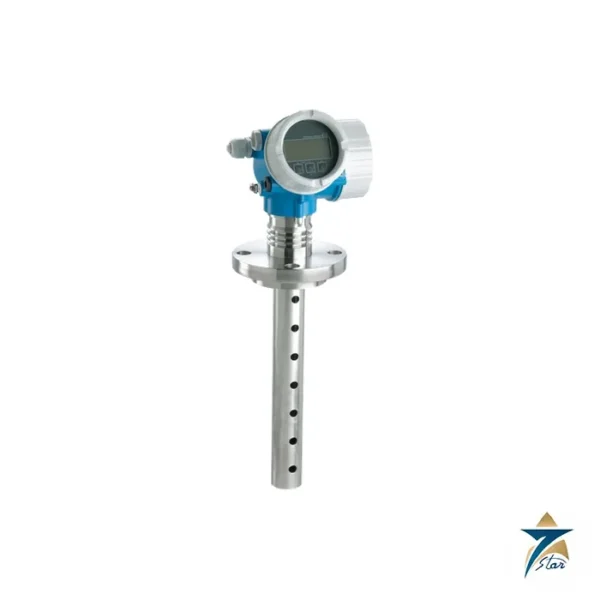
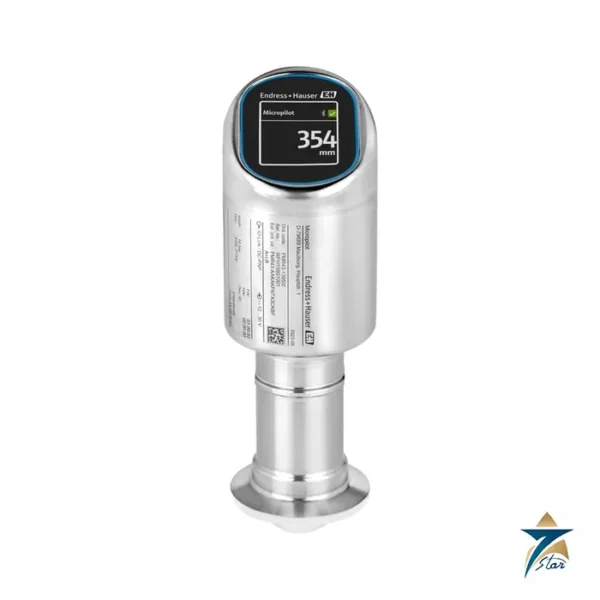
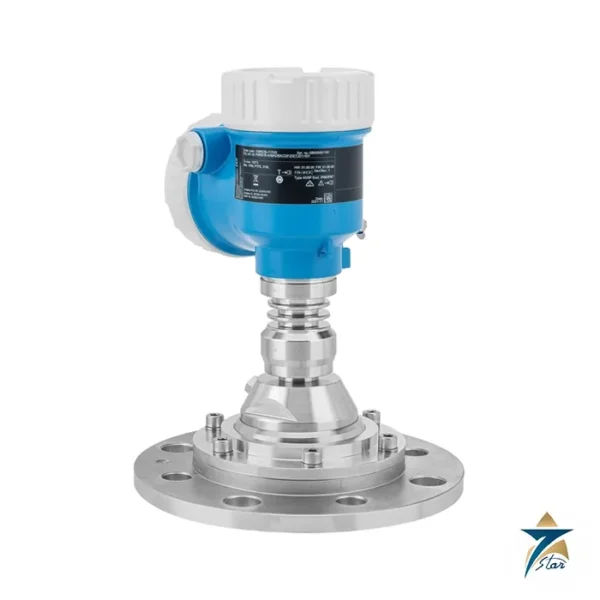
Endress+Hauser Micropilot FMR67 80 GHz Bulk Solids Radar

Description

Overview of the Endress+Hauser Micropilot FMR67 Radar for Bulk Solids

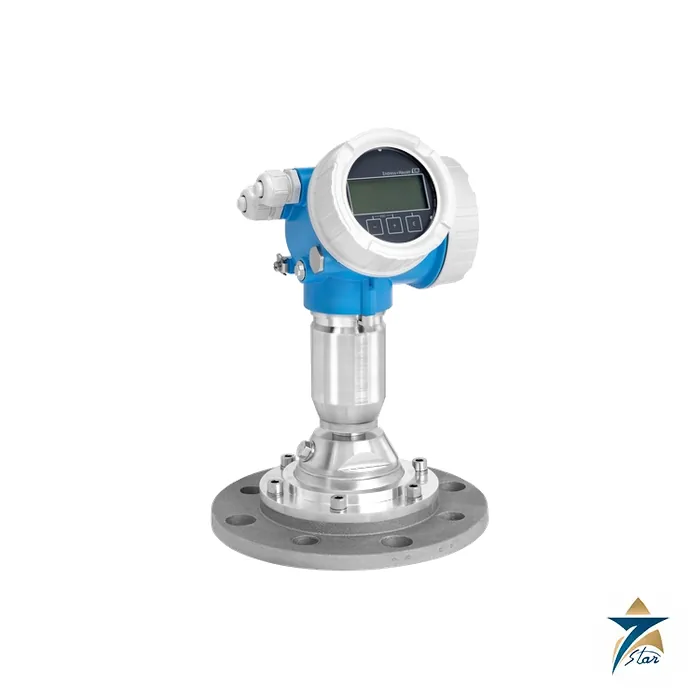
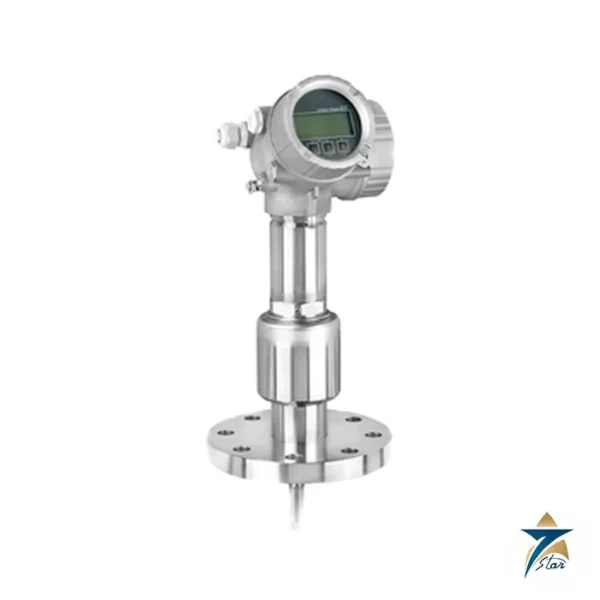
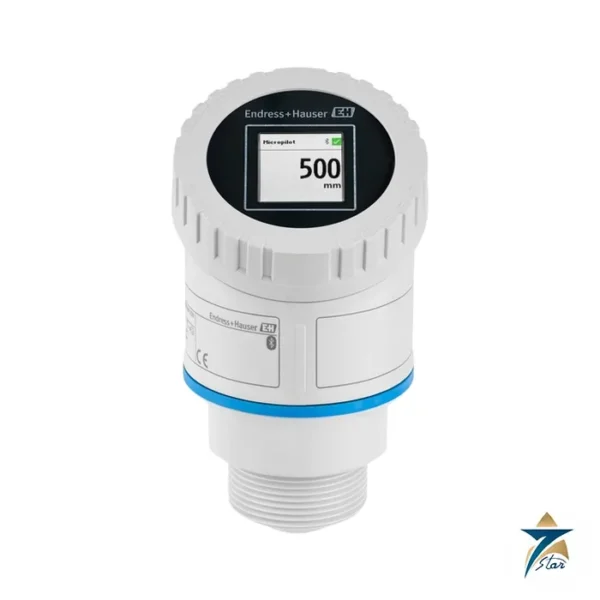
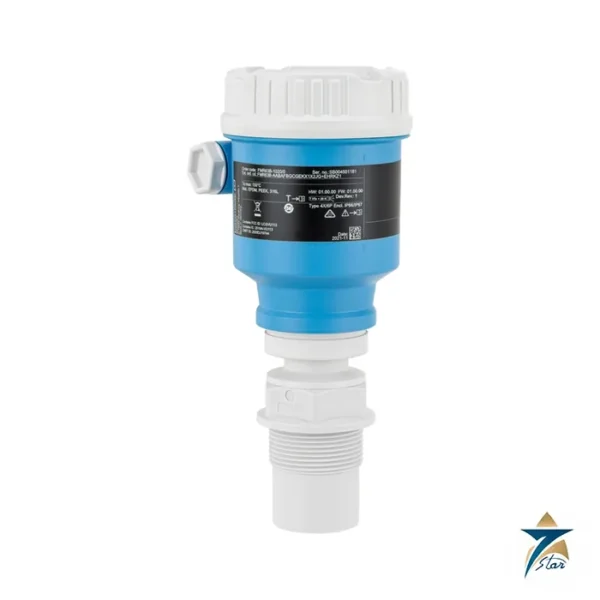
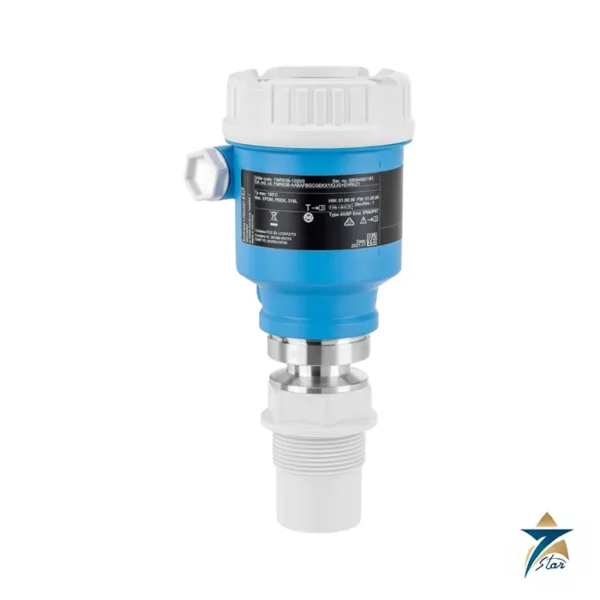
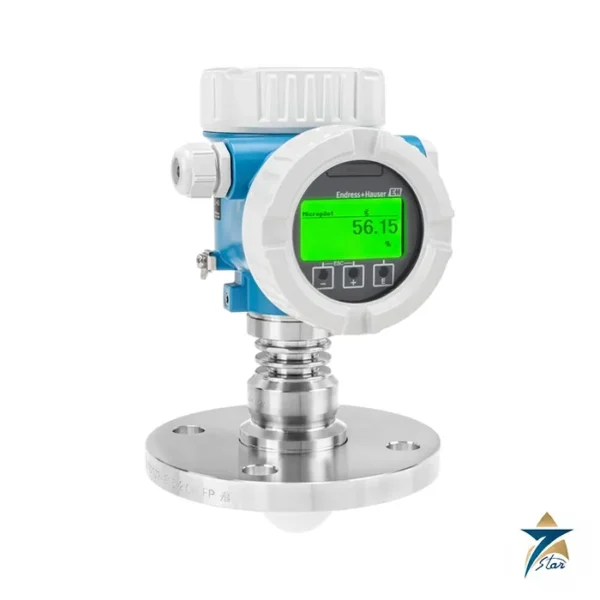
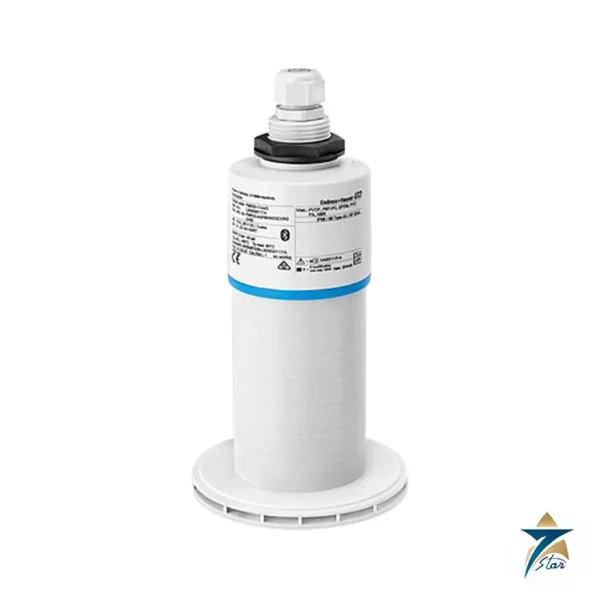
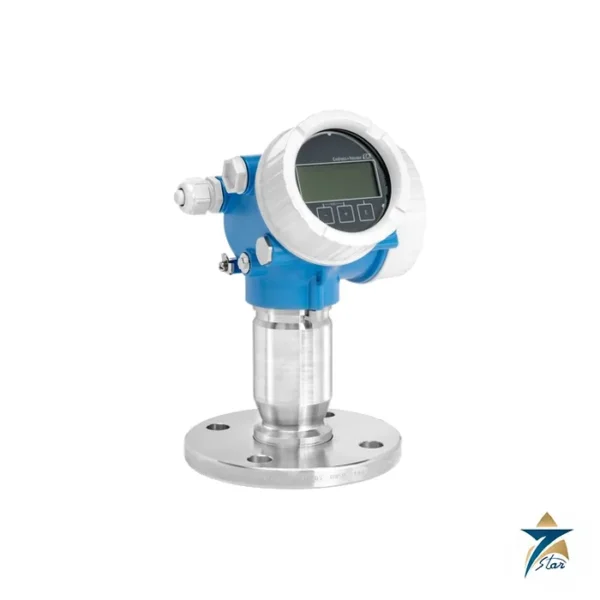
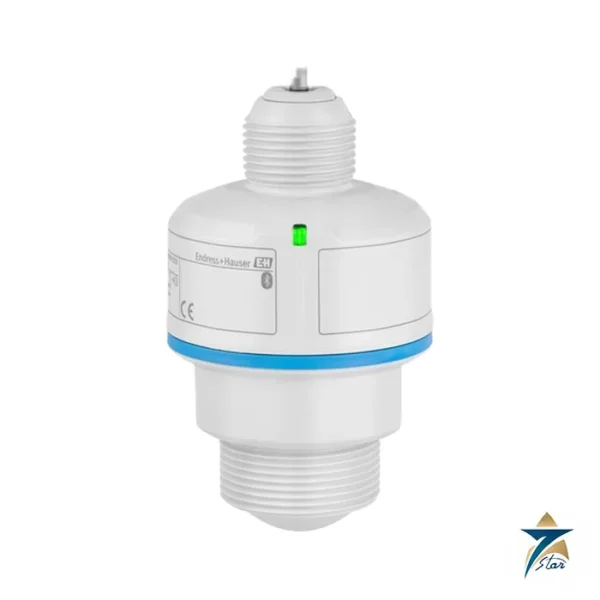
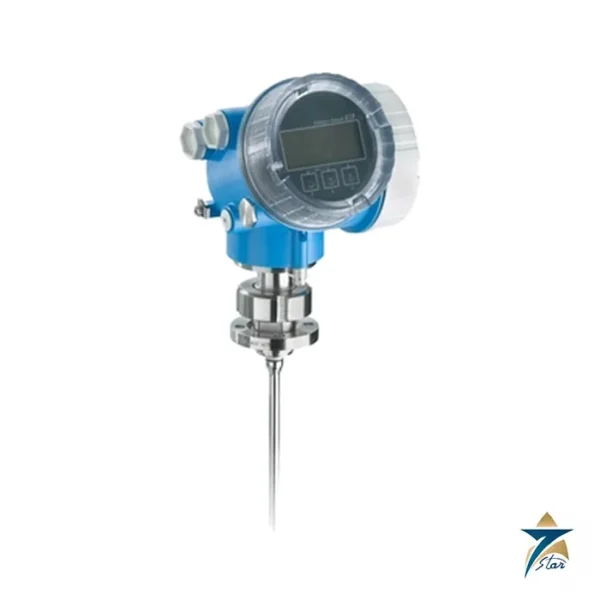
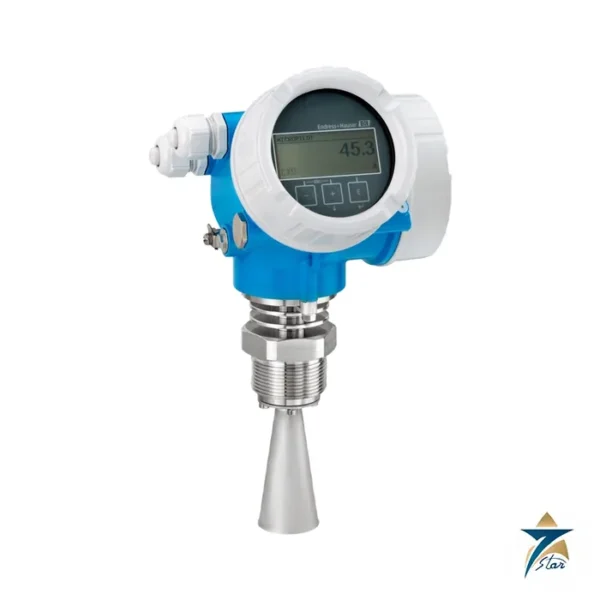
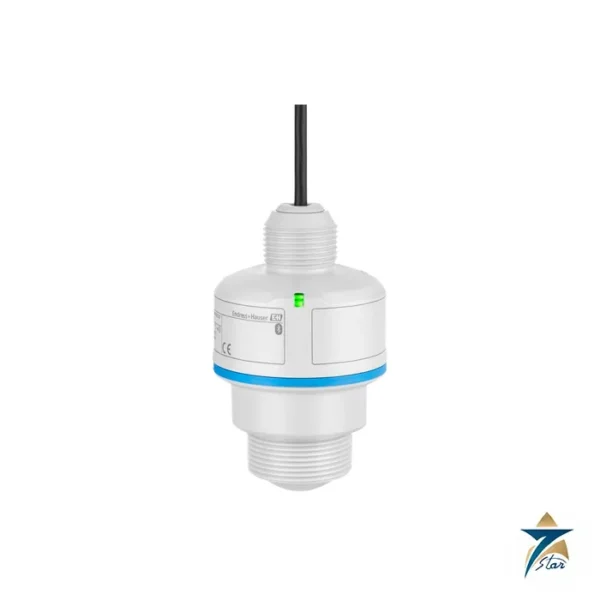
The Endress+Hauser Micropilot FMR67 is an 80 GHz free space radar developed specifically for continuous, non-contact level measurement of bulk solids ranging from fine powders to lumpy material. Where the sister device FMR62 serves liquids, the FMR67 adds a PTFE drip-off antenna, a flush-mounted antenna, an integrated purge-air connection and an optional alignment device so that the beam can be aimed at the material cone. It measures up to 125 m with an accuracy of ±3 mm.

As the official trusted supplier and regional supplier for Endress+Hauser, Seven Star LLC proudly supplies the Endress+Hauser Micropilot FMR67 to customers across the Sultanate of Oman and the wider GCC. Cement, minerals, grain and plastics handlers can ask Seven Star LLC for the Technical Information TI01304F together with a quotation that fits the silo nozzle and dust conditions.

Working Principle of the Endress+Hauser Micropilot FMR67

The Endress+Hauser Micropilot FMR67 applies the frequency modulated continuous wave (FMCW) method at approximately 80 GHz. A sawtooth-modulated wave leaves the antenna, is reflected by the surface of the bulk material and returns with a delay; the difference between the transmitted and received frequency gives the distance D = (c · Δt) / 2, and the content of the silo is derived from the empty distance. Transmission power is limited to 6.3 mW peak and 63 µW average, and up to eight devices can operate in one silo without mutual influence.

Bulk solids create angled surfaces, dust and filling cones that scatter radar energy, so the beam shape matters. The 50 mm drip-off antenna has a beam angle of 6° and the 80 mm flush-mounted antenna 4°, which means the beam diameter is only 10 % or 7 % of the measuring distance. Mapping suppresses fixed echoes from silo walls, struts and inlet pipes, Multi-Echo Tracking follows the level echo through the filling cycle, and the dielectric constant of the product must be 1.6 or higher.

Engineering Design of the Endress+Hauser Micropilot FMR67

Two antennas are offered. The PTFE drip-off antenna of 50 mm (2") measures up to 50 m and sheds condensate and buildup, and the PTFE flush-mounted antenna of 80 mm (3") measures up to 125 m. A purge-air connection in G¼" or NPT¼" lets dry purge air keep the antenna clean in applications with strong dust, at 200 to 500 mbar in continuous operation or up to 6 bar in pulse operation. UNI flanges from DN80 to DN250 and an alignment unit make it easier to fit the radar on existing silo nozzles and to tilt it towards the discharge cone.

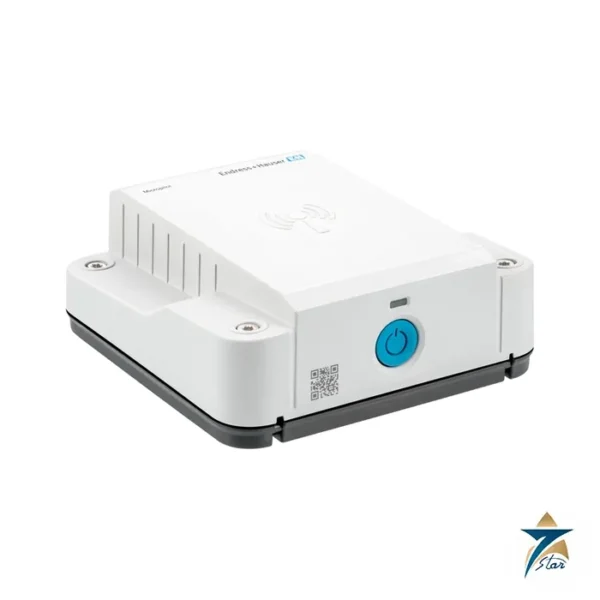
The housing options are plastic GT19, aluminum GT20 and stainless steel GT18, and the transmitter outputs 4–20 mA HART with PROFIBUS PA, FOUNDATION Fieldbus and optional Bluetooth through the SmartBlue app. The two-wire version needs 14 to 35 V in non-hazardous areas, and the measuring device operates at ambient temperatures between –40 and +80 °C. Dust-Ex and other hazardous-area versions are available according to the separate safety instructions.

Key Features of the Endress+Hauser Micropilot FMR67

The Endress+Hauser Micropilot FMR67 offers the following features, all documented in the manufacturer’s Technical Information:

  • Maximum measuring range of 125 m with the 80 mm flush-mounted antenna and 50 m with the drip-off antenna.
  • Accuracy of ±3 mm for measuring distances above 1.5 m, resolution of 1 mm and ±0.02 % on the analog output.
  • Process temperature from –40 to +200 °C and process pressure from –1 to +16 bar, depending on the antenna and flange.
  • Innovative PTFE drip-off antenna that reduces buildup from condensate and dust.
  • Integrated purge-air connection for cleaning under extreme dust conditions.
  • Alignment device for aiming the radar beam at the bulk solid surface.
  • Highest functional safety, SIL 2 according to IEC 61508 and SIL 3 with homogeneous or diverse redundancy.
  • HistoROM memory, RFID tag and Heartbeat Technology for easier commissioning and maintenance.

Industrial Applications of the Endress+Hauser Micropilot FMR67

This radar is chosen for silos and bunkers holding cement, clinker, fly ash, lime, sand, grain, flour, plastic granules and wood chips, where mechanical probes wear or hang up and where dust prevents optical or lower-frequency radar from working. In Oman, bulk handling operations in the Sohar and Salalah economic zones, cement plants, mineral processing sites and port storage facilities can use the long range for tall silos and the drip-off antenna for dusty filling stations.

In Oman and the GCC, Seven Star LLC supplies the Micropilot range to customers in Oman and the GCC. Buyers can compare the

Endress+Hauser Micropilot FMR62

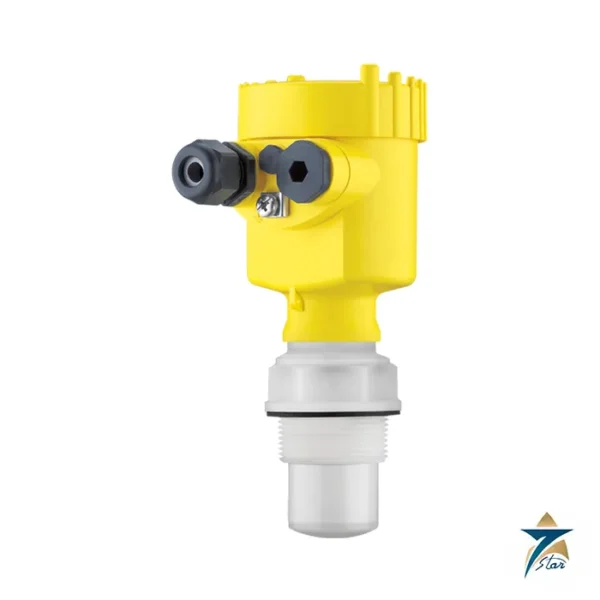
for liquids, the Micropilot FMR60 80 GHz radar, or the VEGAPULS 69 radar level transmitter that VEGA offers for bulk solids.

Technical Specifications of the Endress+Hauser Micropilot FMR67

The table summarizes the main data of the Endress+Hauser Micropilot FMR67 according to Endress+Hauser Technical Information TI01304F.

Parameter Specification
Model Endress+Hauser Micropilot FMR67
Measuring principle Free space radar, FMCW, approx. 80 GHz
Medium Bulk solids, powdery to lumpy (εr ≥ 1.6)
Maximum measuring range 50 m (drip-off antenna 50 mm); 125 m (flush mount 80 mm)
Beam angle 6° (drip-off 50 mm); 4° (flush mount 80 mm)
Accuracy ±3 mm above 1.5 m; max. ±20 mm up to 1.5 m
Process temperature –40 to +200 °C
Process pressure –1 to +16 bar
Purge air 200 to 500 mbar continuous, max. 6 bar pulsed; G¼" or NPT¼"
Outputs 4–20 mA HART, PROFIBUS PA, FOUNDATION Fieldbus
Degree of protection IP68 / NEMA 6P, IP66 / NEMA 4X
Functional safety SIL 2; SIL 3 with redundancy

Choosing a radar for a solids silo

Give the silo height, outlet position, filling stream and expected dust loading. Identify the antenna and any alignment or purge-air requirement. These choices determine how the beam reaches the solids surface during filling and discharge.

FMR67 manufacturer technical reference

Request a Quote for Endress+Hauser Micropilot FMR67

To specify the Endress+Hauser Micropilot FMR67, send Seven Star LLC your silo height, material, nozzle size and dust conditions so that we can prepare a formal RFQ with antenna, flange and purge-air options. The Technical Information TI01304F can be downloaded from this page, and our instrumentation division will confirm availability and lead time. In Oman and the GCC, we supply the Endress+Hauser Micropilot FMR67 with manufacturer documentation and local support.

Datasheets & Documents
  • PDF Datasheet Endress+Hauser Micropilot FMR67 Technical Information (TI01304F) Download
Reviews (0)

Reviews

There are no reviews yet.

How would you rate this product?

It takes about 10 seconds — just tap a star. Your email is never published.

About brand

Endress+Hauser makes process measurement instruments for flow, level, pressure, temperature and liquid analysis. Georg H. Endress and Ludwig Hauser started the business in Lörrach, Germany, on 1 February 1953, first selling level meters, and the Endress+Hauser name has been used since 1957. The group is headquartered in Reinach, Switzerland, and has been wholly owned by the Endress family since 1975.

Seven Star LLC is an independent supplier listing Endress+Hauser flowmeters, level and pressure transmitters, temperature assemblies and liquid analysis products for buyers in Oman and the GCC. Instruments are matched from the full order code on the nameplate.

Endress+Hauser company profile

Origin Founded in Lörrach, Germany, on 1 February 1953 by the Swiss engineer Georg H. Endress and Ludwig Hauser
Headquarters Endress+Hauser AG, Reinach (Basel-Landschaft), Switzerland
Ownership Family owned; the Endress family has been the sole shareholder since 1975, and a family charter commits the company to stay family owned
Size About 16,500 employees and sales of about EUR 3.7 billion (2023, as reported by the company)
Product families Proline flowmeters, Micropilot and Levelflex radar, Liquiphant switches, Cerabar and Deltabar pressure, iTEMP and iTHERM temperature, Liquiline and Memosens liquid analysis

Milestones

  • 1953: Georg H. Endress and Ludwig Hauser start the business in Lörrach on 1 February, first selling level meters.
  • 1957: The Endress+Hauser name comes into use.
  • 1975: The Endress family becomes sole shareholder.
  • 2023: About 16,500 employees and sales of about EUR 3.7 billion, as reported by the company.

Endress+Hauser product lines

Line Measuring principle Typical use
Promass F 300, Promass 80F, 83F/84F Coriolis mass flow Direct mass flow and density of liquids and gases, hydrocarbon transfer and chemical dosing
Promag P 300, P 500, H 300, W 400, W 10, 50P Electromagnetic flow Water, wastewater, slurries and other conductive liquids
Prowirl F 200, 72F Vortex flow Steam, gas and low-viscosity liquids
Prosonic Flow 92F, t-mass 65F Ultrasonic and thermal mass flow Water lines; compressed air and industrial gases
Micropilot FMR62, FMR67, FMR60, FMR10B, FMR20, FMR50, FMR52 Free-space radar level, 80 GHz and 26 GHz Tanks, process vessels, silos and open water channels
Levelflex FMP51, FMP50, FMP54, FMP55 Guided wave radar level Level and interface in vessels, separators and bypass chambers
Liquiphant FTL51, Prosonic S FMU90 Vibronic point level; ultrasonic level High and low level alarms, pump protection, open channel flow
Cerabar PMC71B, PMP51B, PMP71, Deltabar PMD78B, PMD75 Pressure and differential pressure Process pressure, hydrostatic level and DP flow
iTEMP TMT82, TMT162, iTHERM TM101, TR66, TR10 Temperature transmitters and thermometers RTD and thermocouple points with thermowells
Liquiline CM444, CM442, Memosens CPS11E, Stamolys reagents Liquid analysis pH, ORP, conductivity, dissolved oxygen and nutrient analysis in water treatment and process

Where Endress+Hauser instruments are used

In Oman and the GCC, Endress+Hauser instruments are common in oil and gas production and processing, refineries and petrochemicals, desalination and water networks, wastewater treatment, power plants and food and beverage plants. Coriolis meters measure hydrocarbon and chemical flows, electromagnetic meters cover water and wastewater, radar transmitters handle tank and silo level, and Liquiline analysers monitor water quality. Proline 300 and 500 flowmeters include Heartbeat Technology for in-situ verification, which reduces the need to remove a meter for checks.

Ordering Endress+Hauser instruments: what we need

The order code on the nameplate (for example PMP71-1QA1S11RDADU) defines every option: measuring range, process connection, materials, output, approvals and display. Send it with the serial number; Endress+Hauser can retrieve the original configuration from the serial number. For a new instrument add the medium, operating and design pressure and temperature, range, line size or tank geometry, process connection, wetted materials, output or protocol (4-20 mA HART, PROFIBUS, FOUNDATION Fieldbus, Modbus) and the hazardous-area approval required. Older models such as Promass 80/83 or Micropilot M are replaced by current Proline or 80 GHz Micropilot devices.

Facts checked against Endress+Hauser company history and product information, October 2026.

FAQ

Questions about the Endress+Hauser Micropilot FMR67 80 GHz Bulk Solids

Answers from our engineering team on installation, compatibility and integration.

01What is the Endress+Hauser Micropilot FMR67 designed for?
It is an 80 GHz free space radar for continuous, non-contact level measurement of bulk solids ranging from powdery to lumpy material in silos and bunkers.
02What measuring range does the Micropilot FMR67 provide?
The PTFE drip-off antenna of 50 mm measures up to 50 m and the PTFE flush-mounted antenna of 80 mm measures up to 125 m, with accuracy of ±3 mm above 1.5 m.
03How does the FMR67 cope with dust and buildup?
The drip-off antenna sheds condensate and buildup, an integrated purge-air connection accepts dry purge air, and an optional alignment device aims the beam at the material surface.
04What process temperature, pressure and safety ratings apply to the FMR67?
The process temperature range is -40 to +200 °C and the pressure range is -1 to +16 bar depending on antenna and flange. The design is SIL 2 and SIL 3 with redundancy.
05Is Seven Star LLC a trusted supplier for Endress+Hauser products?
Yes. Seven Star LLC is a trusted supplier of Endress+Hauser products, supplying instrumentation across Oman and the GCC, with genuine documentation and local technical support.