Overview
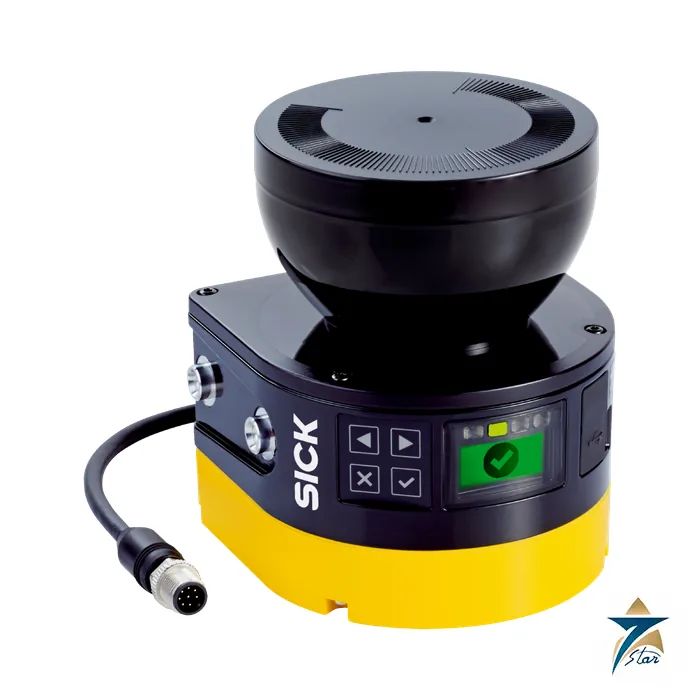
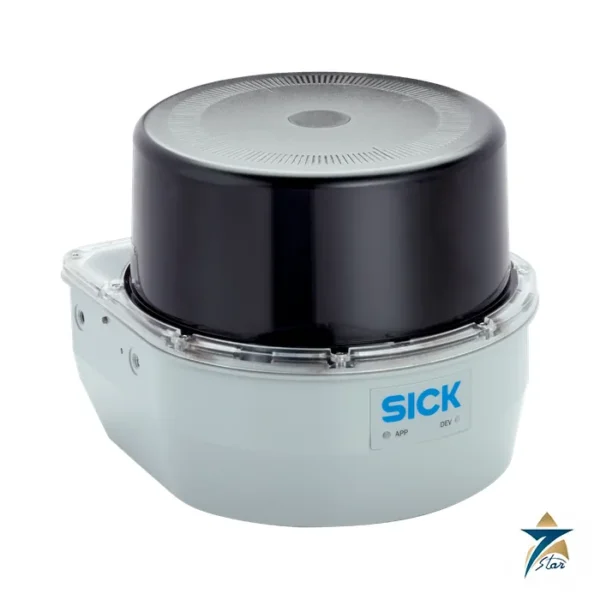
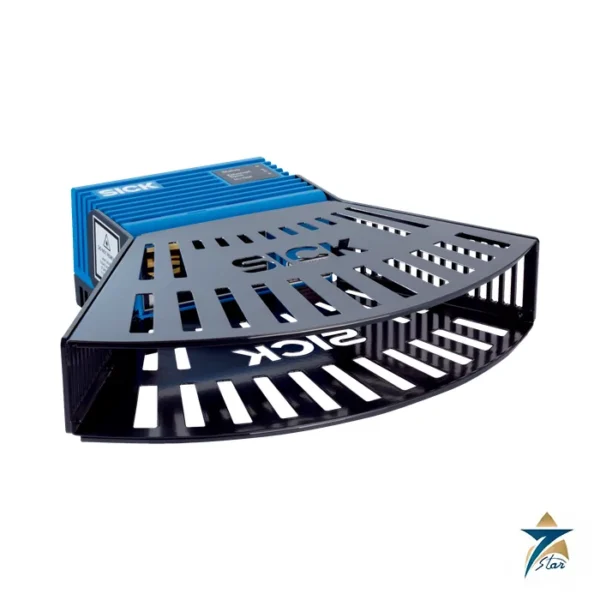
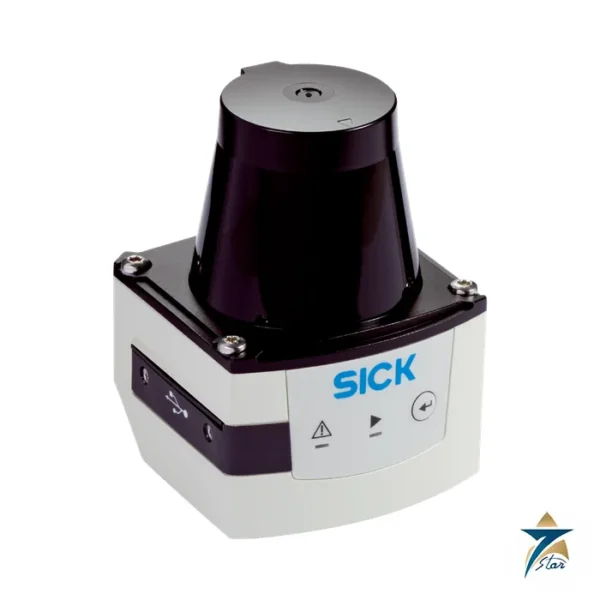
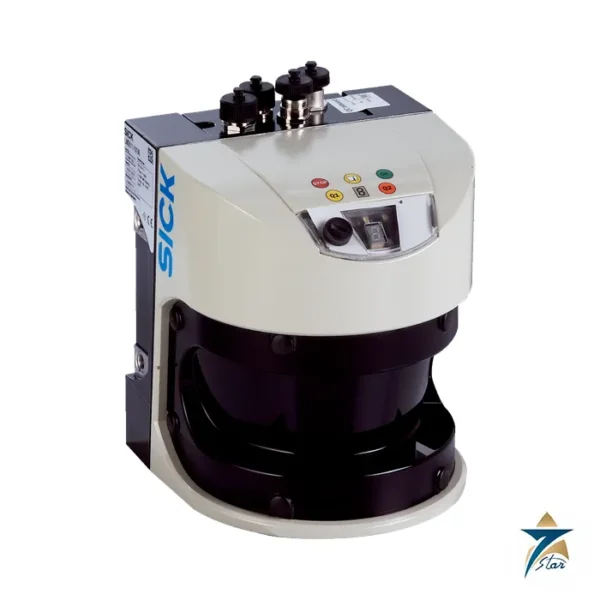
The SICK microScan3 is a compact, opto-electronic safety laser scanner engineered to protect personnel around stationary machinery, robotic work cells, and mobile platforms such as AGVs and AMRs. Built on SICK’s patented safeHDDM® (High Definition Distance Measurement) scanning technology, the microScan3 combines a 275° scanning angle with a protective field range of up to 9 meters, giving plant engineers a single sensor that can safeguard hazardous zones, define warning fields, and output contour data simultaneously. It is the officially designated successor to the SICK S3000 and S300 safety laser scanner families, carrying forward the same field-proven detection principle while adding higher-resolution measurement, more configurable fields, and native fieldbus safety connectivity for modern automated production lines.
Working closely with plant engineers in the region, Seven Star LLC proudly supplies the SICK microScan3 safety laser scanner to industrial facilities across Oman and the wider GCC. Plant managers and safety engineers in Muscat, Sohar, and Salalah rely on Seven Star LLC for SICK microScan3 safety laser scanners with application support and Safety Designer configuration assistance, helping machine guarding projects meet both international safety standards and local regulatory expectations from day one.
Operating Principle of the SICK microScan3
The SICK microScan3 measures distance using time-of-flight laser pulses combined with safeHDDM® scanning technology, which correlates multiple laser pulses per angular increment rather than relying on a single measurement point. This statistical correlation approach allows the SICK microScan3 to reliably filter out interference from ambient light, airborne dust, condensation, and dirt on the front screen, dramatically reducing nuisance trips that would otherwise stop a production line unnecessarily. The rotating mirror assembly inside the housing sweeps the pulsed infrared laser beam across the full 275° field of view, building a real-time two-dimensional map of every object and person within range, and the scanner cross-checks this map against up to eight simultaneously active protective fields to determine whether a safety-rated stop signal must be issued.
Because the microScan3 is a non-contact optical sensor, it protects personnel without any physical barrier, moving guard door, or mechanical interlock in the detection zone, which keeps the work area open for material flow and operator access. Up to 128 freely configurable field sets can be stored and switched dynamically based on machine state, robot position, or vehicle speed, so a single SICK microScan3 device provides both close-range protective fields and longer-range warning fields that slow a process down before a hazardous stop becomes necessary. The practical result is a safety solution with virtually no moving parts to wear out, no obstruction to production logistics, and response times as fast as 70 milliseconds depending on the configured protective field.
Engineering Design of the SICK microScan3
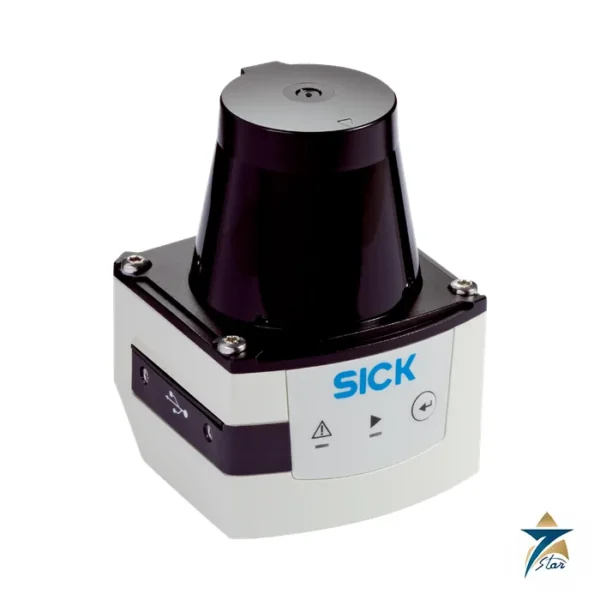
Physically, the SICK microScan3 is housed in a rugged, low-profile enclosure with an IP65-rated front screen and a rotating optical head that scans in a single plane, allowing it to be mounted at floor level around a hazardous machine perimeter or overhead to monitor a mobile robot’s direction of travel. The device integrates a multi-color status display and dedicated function keys directly on the housing, giving technicians on-site diagnostic feedback, field-set status, and configuration confirmation without needing to open a laptop at every commissioning step. A pluggable system connector with integrated configuration memory means a faulty or damaged unit can be swapped in the field and the replacement automatically inherits the exact protective field configuration of the original, minimizing machine downtime during maintenance.
Connectivity on the SICK microScan3 is standardized around modern industrial safety networks: the device supports safe integration via I/O, SICK’s EFI-pro system, EtherNet/IP™ CIP Safety™, PROFINET PROFIsafe, and EtherCAT® FSoE, allowing it to report both safety-rated outputs and rich diagnostic data back to the plant control system over a single Ethernet connection. Commissioning and field-set configuration are performed through SICK’s Safety Designer software, which provides a graphical interface for drawing protective and warning fields, assigning them to machine states, and validating the configuration against the application before the scanner is placed into service. This combination of on-device diagnostics, hot-swappable configuration memory, and standardized network integration makes the SICK microScan3 straightforward to specify into new machine guarding projects or retrofit into existing S3000 and S300 installations.
Key Features
The SICK microScan3 safety laser scanner combines advanced scanning technology with flexible configuration to suit demanding industrial safety applications:
- Patented safeHDDM® scanning technology filters out ambient light, dust, and dirt for consistently reliable detection and high machine availability.
- Protective field range of up to 9 meters with a 275° scanning angle covers wide hazardous areas from a single mounting point.
- Up to 128 freely configurable field sets and 8 simultaneous protective fields support complex, multi-state machine and robot safety zones.
- Response times as fast as 70 milliseconds ensure rapid safety-rated stop signals when a person enters a protected zone.
- Standardized safety network integration via EtherNet/IP CIP Safety, PROFINET PROFIsafe, EtherCAT FSoE, and I/O simplifies PLC and robot controller integration.
- Pluggable system connector with integrated configuration memory enables fast device replacement without reconfiguration downtime.
- Intuitive Safety Designer software provides step-by-step field configuration, diagnostics, and application validation.
- Multi-color on-device display and function keys give technicians immediate status and diagnostic information at the point of installation.
Industrial Applications
The SICK microScan3 is deployed wherever personnel work in close proximity to automated equipment, including robotic welding and palletizing cells, CNC machining centers, packaging and filling lines, and automated guided vehicle (AGV) and autonomous mobile robot (AMR) fleets in warehousing and logistics operations. Its ability to run multiple simultaneous protective and warning fields makes it particularly effective on mobile platforms, where the safety zone must automatically adjust as a vehicle changes speed or direction, and on stationary cells where different machine states each require a different guarded perimeter.
With fast quotation turnaround and technical support, Seven Star LLC distributes the SICK microScan3 safety laser scanner to manufacturing plants, logistics centers, oil and gas facilities, and process industries throughout Oman and the GCC, including operations within the Sohar and Salalah economic zones. Facility engineers in the Sultanate of Oman and across the wider Gulf region depend on Seven Star LLC to supply genuine SICK microScan3 safety laser scanners with full regional technical support, ensuring machine safety upgrades and new robotic cell installations in Muscat, Sohar, and Salalah meet both project timelines and applicable machine safety standards.
Technical Specifications
The table below summarizes the key operating parameters of the SICK microScan3 safety laser scanner; consult the SICK datasheet for the full list of type-specific variants.
| Parameter |
Specification |
| Model |
SICK microScan3 |
| Scanning Technology |
safeHDDM® (High Definition Distance Measurement) |
| Scanning Angle |
275° |
| Protective Field Range |
Up to 9 m (type dependent) |
| Response Time |
≥ 70 ms (type dependent) |
| Configurable Field Sets |
Up to 128, with up to 8 simultaneous protective fields |
| Interface |
Ethernet, EtherNet/IP™ CIP Safety™, PROFINET PROFIsafe, EtherCAT® FSoE, I/O |
| Configuration Software |
SICK Safety Designer |
| Connector |
Pluggable system connector with integrated configuration memory |
| Enclosure Rating |
IP65 |
| Application |
Indoor, stationary and mobile machine guarding |
| Successor To |
SICK S3000 & S300 safety laser scanner series |
Request a Quote for SICK microScan3 Safety Laser Scanner
Facility engineers and procurement teams evaluating the SICK microScan3 safety laser scanner for a new machine guarding or mobile robot safety project are invited to submit a formal RFQ to Seven Star LLC. With engineering support in Muscat, Seven Star LLC supplies on request, provides the full technical datasheet on request, and connects customers directly with the instrumentation and machine safety division for application sizing, Safety Designer configuration support, and technical support. Contact Seven Star LLC today to request a quotation for the SICK microScan3 and ensure your safety installation is supplied and supported by the region’s trusted SICK supplier.
Related Products

 Automation & Control
 Electrical & Power
 Fittings & Valves
 Sensors & Transmitters
 Emergency Power
 Analyzer Systems
 Metering Systems
 Welding
 Fire & Gas Systems
 Motors, Pumps & Turbines
 Portable Test & Measurement
 Compressor & Cooling
 Bearings & Power Transmission
 Filtration
 Safety & PPE
 Material Handling & Lifting Equipment
 Non-Destructive Testing (NDT)




Reviews
There are no reviews yet.