
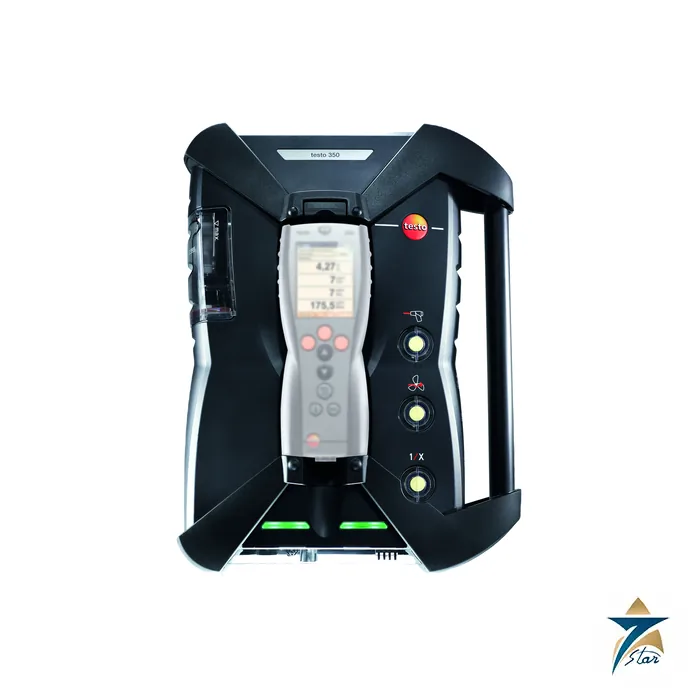
The testo 350 is a professional, portable measurement system for industrial emission measurement and combustion tuning. It consists of two parts: an analyzer box that contains the gas sensors, pump, gas preparation and probe connections, and a removable Control Unit with a large colour graphic display that shows readings and controls the measurement. One Control Unit can operate several analyzer boxes, and an analyzer box can also be run from a PC, a notebook or an Android smartphone or tablet using the free Testo app.
Seven Star LLC supplies the testo 350 to power stations, refineries, gas processing plants, desalination facilities and boiler service contractors throughout Oman and the GCC. Our engineers in Muscat help customers configure the sensor set, probes and accessories for their stacks and engines, and we provide engineering support for sites in Muscat, Sohar, Duqm and Salalah.
The analyzer box draws a flue gas sample through the probe and hose and passes it over electrochemical cells for O2, CO, NO, NO2, SO2 and H2S. Each cell produces a current proportional to the concentration of its target gas. The CO cells are H2 compensated, and a filter can be fitted to the NO sensor to block SO2 cross-sensitivity. CO2 is measured directly with an NDIR infrared sensor that includes absolute pressure measurement, while hydrocarbons such as methane, propane and butane are measured with a pellistor (CxHy) sensor. From these values the testo 350 calculates efficiency, flue gas loss, dew point and CO2.
Because electrochemical cells saturate at high concentrations, the instrument offers dilution. A single slot can be diluted with selectable factors of 2, 5, 10, 20 or 40, or all sensors can be diluted by factor 5, extending, for example, CO up to 50,000 ppm. The optional Peltier gas preparation cools the sample and removes condensate with a peristaltic pump, which prevents NO2 and SO2 from being absorbed in condensate and keeps readings stable during long measurements. A fresh air valve supports long-term measurement by automatically flushing the sensors.
The testo 350 analyzer box has an industrial-standard housing with integrated impact protection, robust plug-in connections and closed chambers that keep dust and dirt away from the inside of the instrument, so downtime due to contamination is almost eliminated. Gas sensors and wearing parts are easy to reach and exchange on site. The analyzer box is equipped with an O2 sensor, a differential pressure sensor, thermocouple inputs for Type K NiCr-Ni and Type S Pt10Rh-Pt, an integrated combustion air NTC probe, a trigger input, data memory, a rechargeable battery and USB, and it can be upgraded to a maximum of six gas sensors.
The Control Unit weighs 440 g, measures 88 × 38 × 220 mm, stores up to 250,000 readings and runs about five hours on its lithium battery. Analyzer boxes and Control Units communicate over the Testo databus, which can link several analyzers to a PC with the easyEmission software. For integration into plant control systems, a testo 350 Modbus adapter provides Modbus RTU access, and an analog output box delivers six 4 to 20 mA channels for recorders.
The testo 350 offers the following capabilities for industrial emission work:
The testo 350 is used for emission compliance checks, burner and boiler tuning, monitoring of stationary gas and diesel engines, gas turbines, thermal processes and furnaces, and for verifying scrubbers and other flue gas treatment equipment. A dedicated SO2low set measures low sulfur dioxide levels after scrubbers, and industrial probe sets withstand flue gas temperatures up to 1,200 °C, or 1,800 °C with a ceramic shaft. Heated probe sets and hoses keep the sample above its dew point on wet or acidic gases.
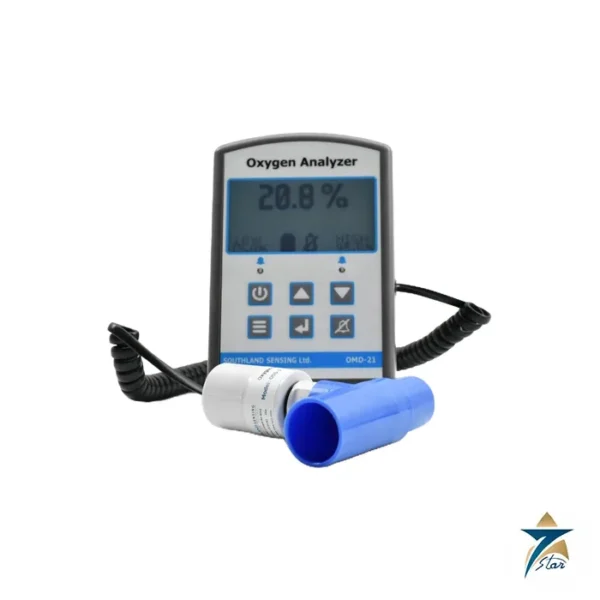
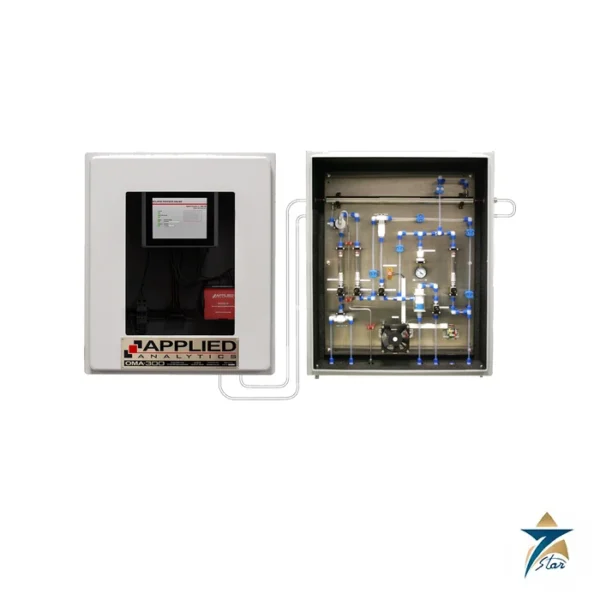
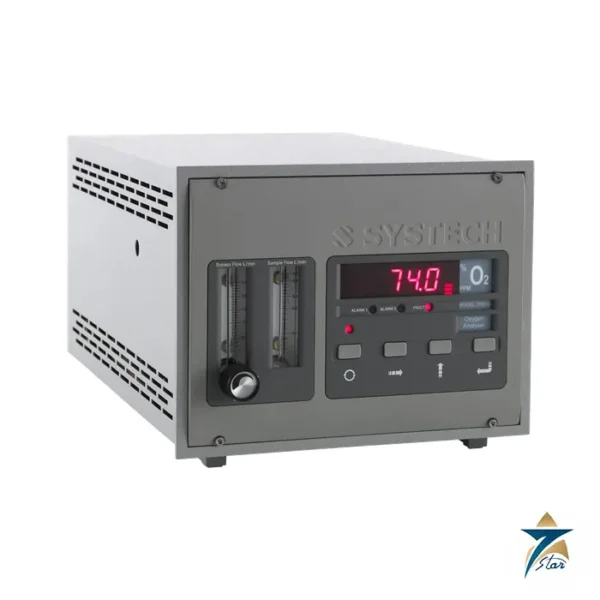
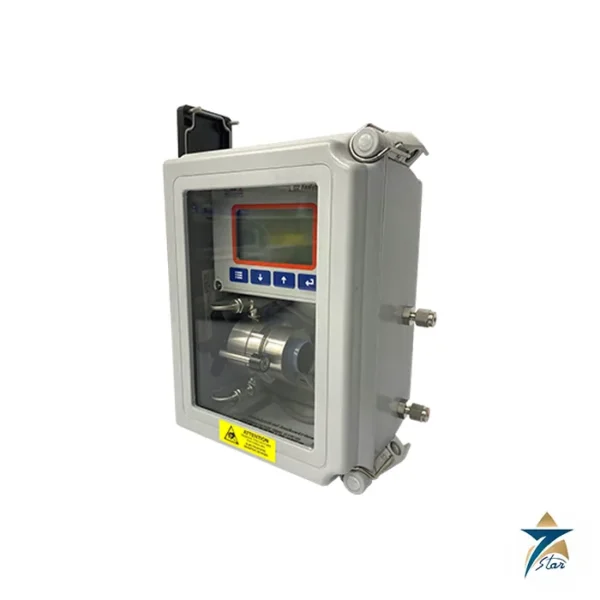
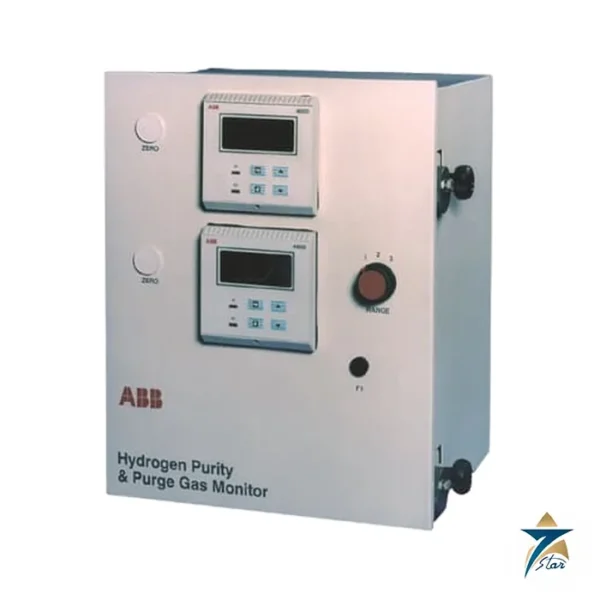
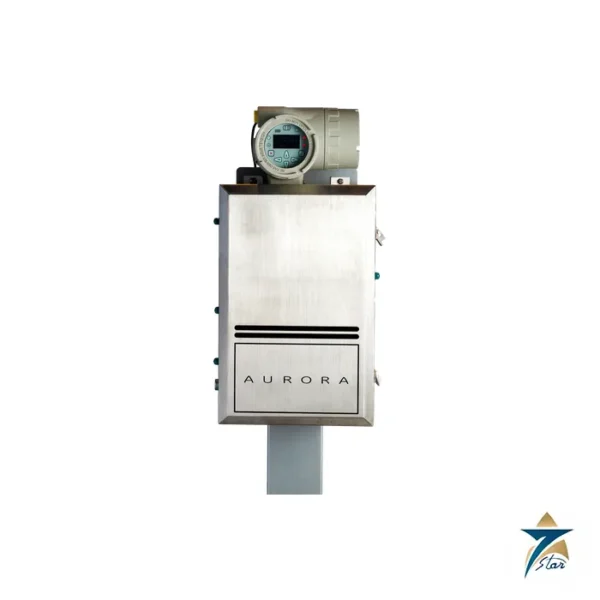
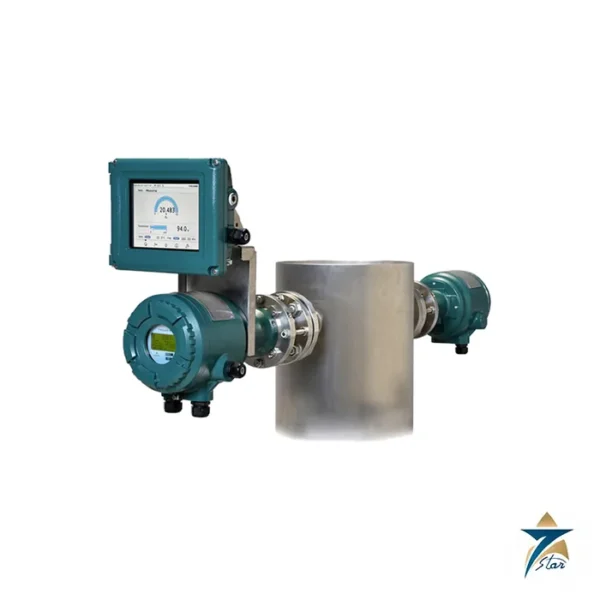
In Oman, typical users are independent power producers, refinery and petrochemical units in Sohar, gas compression stations in the interior, district cooling plants and service companies that tune boilers and generators for hotels and hospitals. Seven Star LLC supplies the testo 350 as a trusted supplier and also supports continuous analyzers for permanent installations, such as the Servomex SERVOTOUGH Laser 3 Plus combustion analyzer, the ABB Endura AZ40 oxygen and CO analyzer and the Teledyne 3000RS oxygen analyzer.
The testo 350 values below are taken from the Testo data sheet for the testo 350 flue gas analyzer for industry.
| Parameter | Specification |
|---|---|
| Model | testo 350 analyzer box (part no. 0632 3510) with testo 350 Control Unit (part no. 0632 3511) |
| O2 | 0 to 25 vol.%, ±0.8% of full scale, resolution 0.01 vol.% |
| CO (H2 compensated) | 0 to 10,000 ppm, resolution 1 ppm; COlow 0 to 500 ppm, resolution 0.1 ppm |
| NO / NOlow | 0 to 4,000 ppm, resolution 1 ppm / 0 to 300 ppm, resolution 0.1 ppm |
| NO2 | 0 to 500 ppm, resolution 0.1 ppm |
| SO2 | 0 to 5,000 ppm, resolution 1 ppm |
| CO2 (NDIR) | 0 to 50 vol.%, resolution 0.01 vol.% (0 to 25 vol.%) |
| H2S | 0 to 300 ppm, resolution 0.1 ppm |
| CxHy | Methane 100 to 40,000 ppm; propane 100 to 21,000 ppm; butane 100 to 18,000 ppm |
| Differential pressure | -40 to +40 hPa and -200 to +200 hPa |
| Flow velocity | 0 to 40 m/s with Pitot tube |
| Temperature | Type K -200 to +1,370 °C; Type S 0 to +1,760 °C |
| Control Unit | Colour graphic display; 2 MB memory (250,000 readings); 5 h battery life; 440 g; 88 × 38 × 220 mm; IP40 |
| Control Unit operating temperature | -5 to +45 °C |
To order the testo 350, send Seven Star LLC an RFQ listing the gases, ranges, probe lengths and flue gas temperatures you need to cover, or share your existing analyzer configuration. Our team in Muscat will propose a sensor and accessory set, confirm availability and lead time, and supply the Testo data sheet for download. Seven Star LLC supplies Testo measuring instruments across Oman and the GCC with engineering support in Muscat.
Choose the option that best fits your needs to get the fastest response from our team.
Automatically fill the RFQ form with this product's details for a faster process.
Manually enter multiple part numbers, specific brands, or custom requirements.













Reviews
There are no reviews yet.