Overview
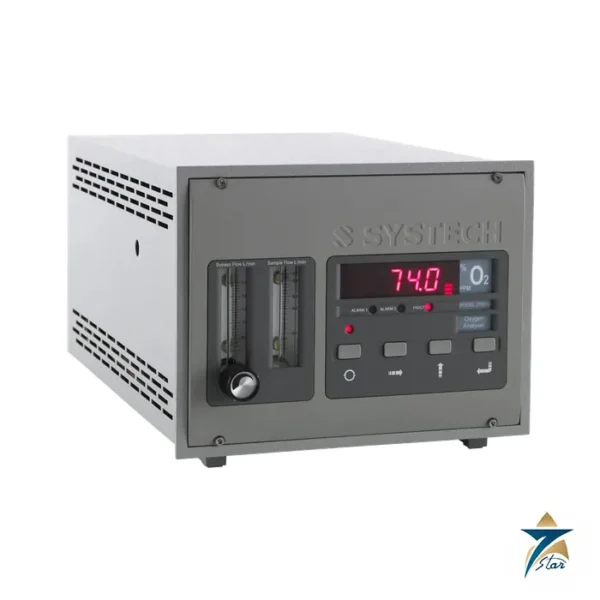
The Southland Sensing OMD-625 Oxygen Analyzer is a hazardous area online process oxygen analyzer with an advanced sample system, ATEX and IECEx certified for use in explosive and hazardous locations. It provides precision oxygen measurement using galvanic fuel cell sensor technology, covering a measuring range from 0.01ppm to 25% oxygen for continuous monitoring in industrial processes, gas analysis, and safety-critical applications.
Seven Star LLC supplies the Southland Sensing OMD-625 and related oxygen analysis instrumentation to process and safety-critical facilities across Oman and the GCC, with technical guidance on sensor selection for specific application requirements.
Measurement Principle
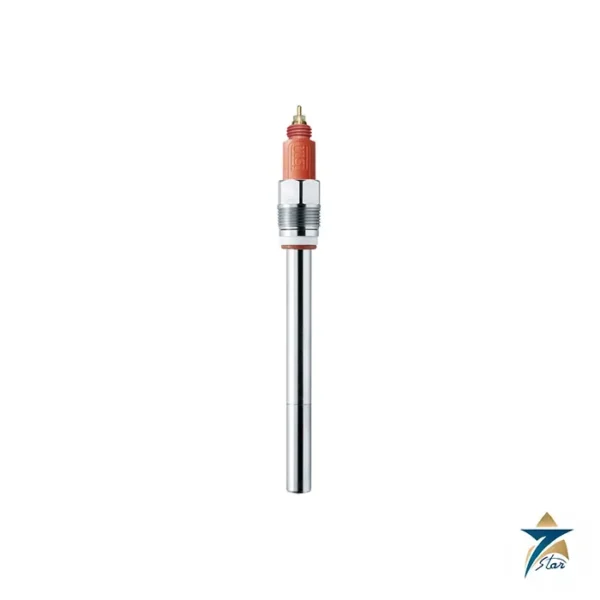
The OMD-625 uses galvanic fuel cell sensor technology, where oxygen molecules react at the sensor’s electrode to generate a current proportional to the oxygen concentration in the sample. Different sensor variants extend this principle across trace-level and percentage-level ranges, and Southland Sensing offers a family of oxygen sensor options for the OMD-625, including the TO2-133 for standard trace analysis, the TO2-233 for trace analysis in acidic environments, the TO2-238 for trace analysis compatible with less than 500 ppm H2S, the PO2-160 for standard percent-level analysis, and the PO2-24 for percent-level analysis in acidic environments.
This sensor flexibility lets a single analyzer platform be configured for the specific chemistry of the sample gas, rather than forcing a generic sensor to handle conditions it was not designed for, which matters for measurement accuracy and sensor service life alike.
Engineering Design of the OMD-625
The analyzer is certified for Zone 1 IIB + H2 hazardous area applications, reflecting both ATEX and IECEx certification for deployment in classified hazardous locations. Its large backlit display supports easy reading in any environment, and its custom full-scale range configuration (for example 0-99.5 ppm or 0-25%) allows the analyzer to be tuned to the specific measurement span application requires rather than using a fixed, generic scale.
Communication and integration options include analog output calibration, optional MODBUS RS485 RTU communication for integration into plant systems, two configurable alarm relay contacts for safety notifications, and output simulation at standard 4mA, 8mA, 12mA, 16mA, and 20mA signals for loop testing without needing a live gas sample.
Key Features
- ATEX and IECEx certified for Zone 1 IIB + H2 hazardous areas
- Galvanic fuel cell sensor technology
- Measuring range 0.01ppm to 25% oxygen
- Custom full-scale range configuration
- Large backlit display for easy field reading
- Optional MODBUS RS485 RTU communication
- Two configurable alarm relay contacts
- Output simulation at standard 4-20mA signal levels
Industrial Applications
The OMD-625 is used for hazardous area process monitoring, industrial gas measurement, petrochemical plant analysis, inert gas blanketing verification, environmental safety monitoring, power generation facility oxygen tracking, and oxygen purity and trace analysis. Its ATEX/IECEx certification makes it suitable for deployment directly in classified process areas rather than requiring remote sampling to a safe area.
Across Oman, Muscat, Sohar, Salalah, and the GCC, Seven Star LLC supports process safety and gas analysis teams as a trusted supplier of Southland Sensing oxygen analyzers, helping facilities maintain accurate, continuous oxygen monitoring in both trace and percentage-level applications.
Technical Specifications
| Model |
Southland Sensing OMD-625 |
| Sensor Technology |
Galvanic fuel cell |
| Measuring Range |
0.01ppm to 25% oxygen |
| Hazardous Area Certification |
ATEX, IECEx, Zone 1 IIB + H2 |
| Communication |
Analog output, optional MODBUS RS485 RTU |
| Alarm Outputs |
2 configurable relay contacts |
| Sensor Options |
TO2-133, TO2-233, TO2-238, PO2-160, PO2-24 |
Request a Quote for Southland Sensing OMD-625 Oxygen Analyzer
Contact Seven Star LLC for a quotation, availability, and technical support on the Southland Sensing OMD-625 Oxygen Analyzer and the full range of oxygen analysis instrumentation across Oman and the GCC.
Choosing the Right Sensor and Range
The accuracy and life of a galvanic oxygen analyzer depend mostly on matching the sensor to the sample. When specifying the OMD-625, provide:
- The expected oxygen level in normal operation and during upsets, which decides between a trace (ppm) sensor and a percent sensor, and sets the full-scale range.
- The full sample composition, especially acid gases such as CO2 and H2S, which determine whether a standard or acid-resistant sensor is needed.
- Sample pressure, temperature, flow and whether liquids or particulates may be present.
- The hazardous area classification of the installation point and the required outputs and alarms.
Installation and Sample Handling
Trace oxygen measurement is very sensitive to air ingress, so the sample line matters as much as the analyzer. Use clean, leak-tight metal tubing and fittings, keep sample lines as short as practical, and avoid materials that are permeable to oxygen. Regulate sample pressure and flow to the values in the analyzer documentation and make sure the vent is not restricted. Where condensate or particles may be present, fit appropriate filtration and liquid removal upstream of the sensor. After installation, allow the sensor time to purge down to the process level before accepting readings, and connect the 4–20 mA output, relays and optional Modbus RTU link to the control system, using the output simulation function to check the loop end to end.
Calibration and Maintenance
- Calibrate at the intervals set by the site procedure, using certified span gas suited to the range, or air for percent-level ranges where appropriate.
- Watch for slow response or falling sensor output, which indicate that the sensor is approaching the end of its life.
- Keep a spare sensor of the correct type in stock and replace it according to the manufacturer’s storage and installation guidance.
- If readings are unexpectedly high on a trace application, leak-test the sample system before suspecting the analyzer.
Applications in Oman and the GCC
In the region, the OMD-625 suits natural gas processing and pipeline gas quality monitoring, nitrogen blanketing of storage tanks and vessels, inert gas generation on marine terminals, and trace oxygen measurement in hydrocarbon and petrochemical streams where oxygen can affect catalysts, corrosion or safety.
Sourcing Through Seven Star LLC
Seven Star LLC supplies the OMD-625 together with replacement sensors and sample-system components. Send your process conditions and gas composition through our quote request, and we will confirm the sensor type, range and certification documents for your application.
Related Products
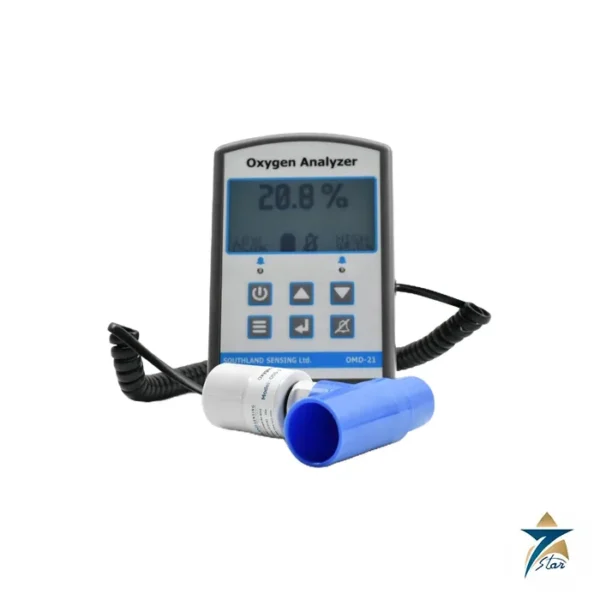
Also available: Southland Sensing OMD-21 Portable Percent Oxygen Analyzer















Reviews
There are no reviews yet.