- Automation & ControlView all 3,164 products
- Automation Accessories
- AC Drives
- PLC & I/O Cards
- Industrial Communications
- Vibration Monitoring
- Controllers & Data Acquisition
- Isolator & Barrier
- Safety Switches & Guard Locking
- Encoders
- Motor Soft Starters
- CCTV & Security
- Pneumatic Cylinders
- HMI Displays
- Servo Drives
- Industrial Computers
- Machine Vision
- Automation Software
- Robotics
Brand: Metrohm
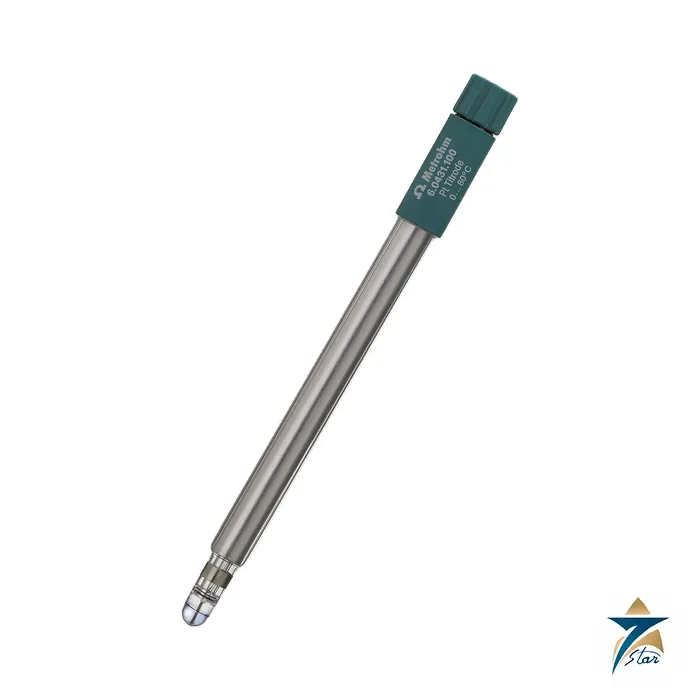
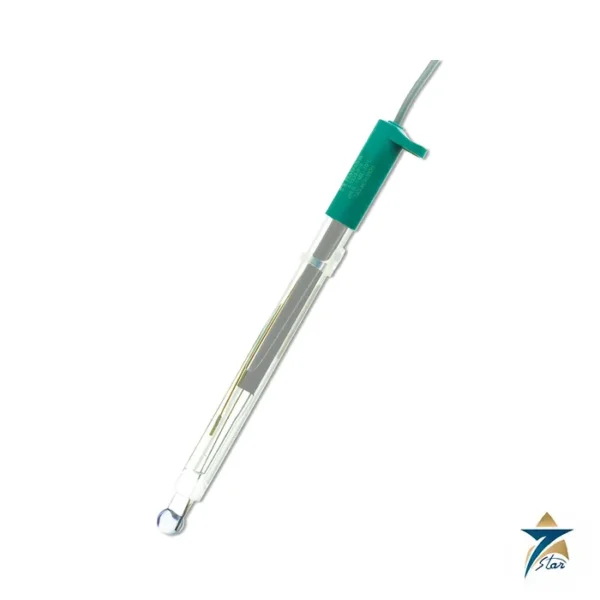
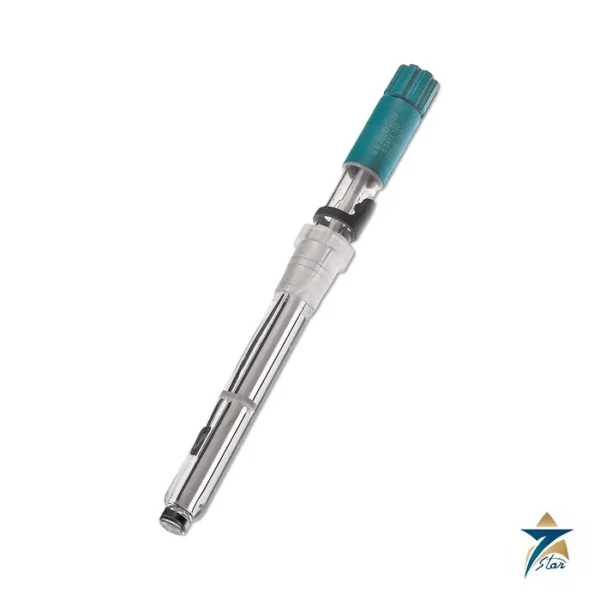
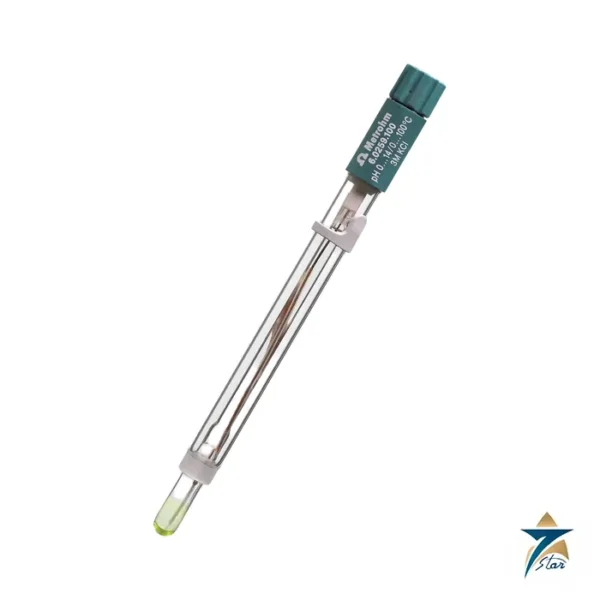
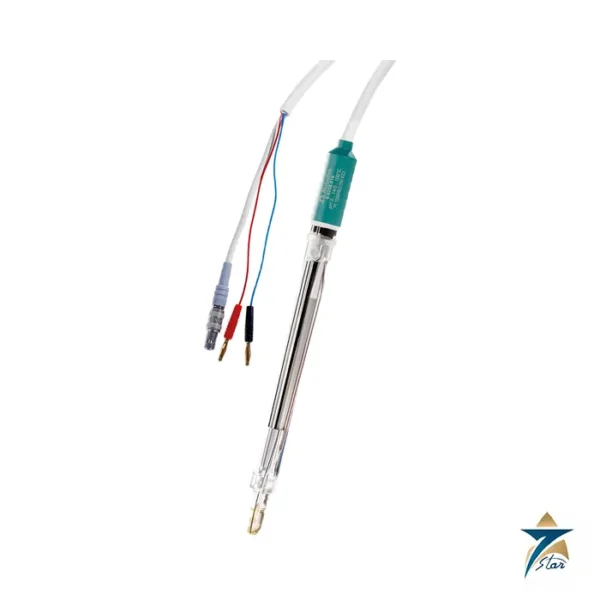
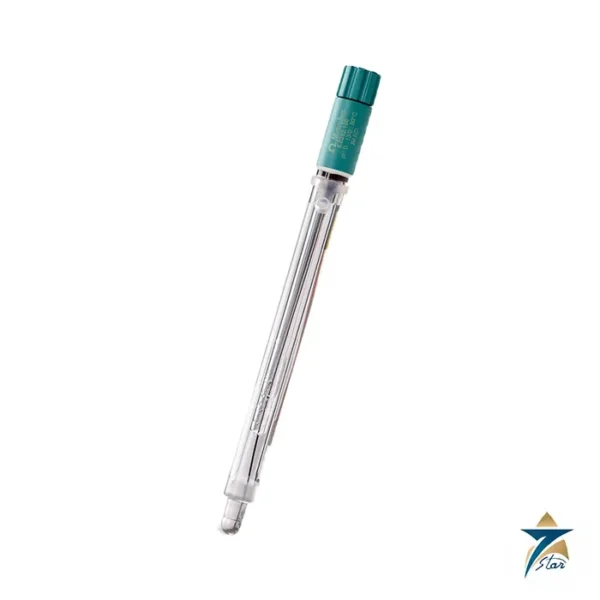
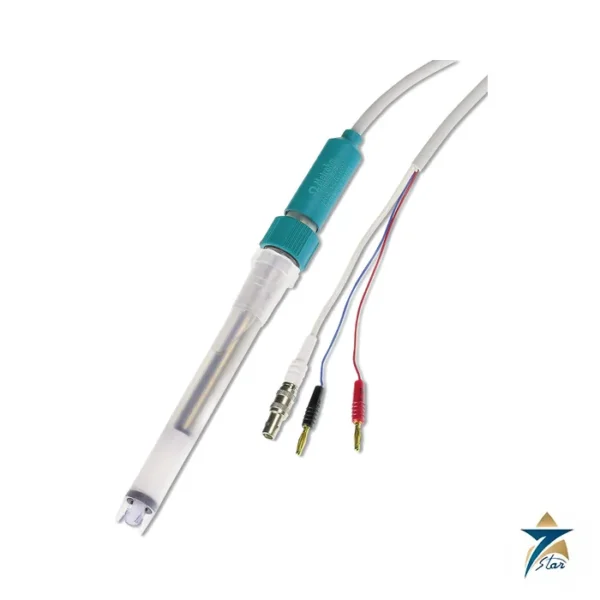
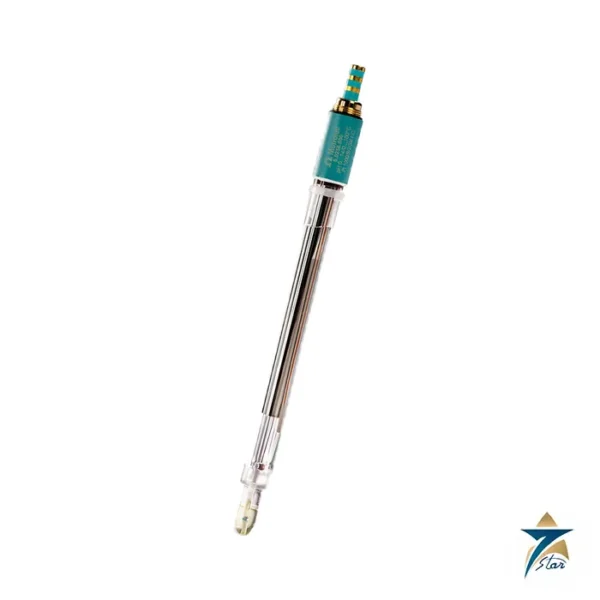
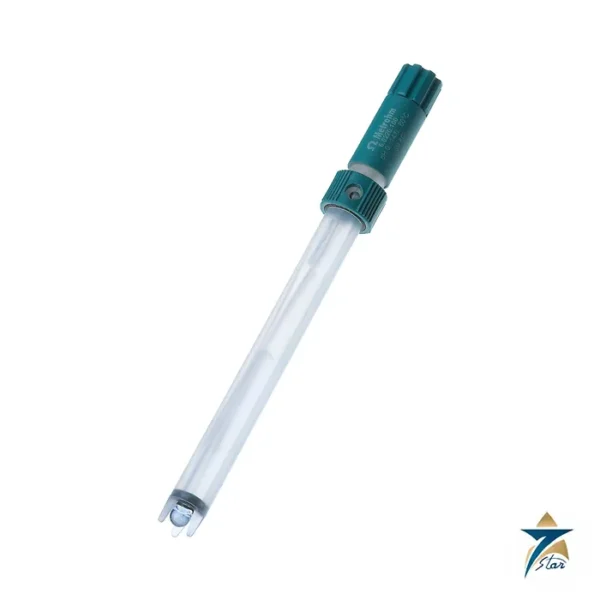
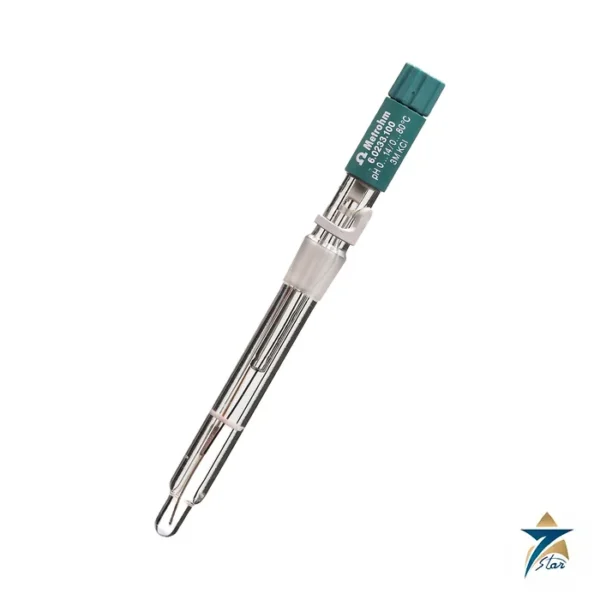
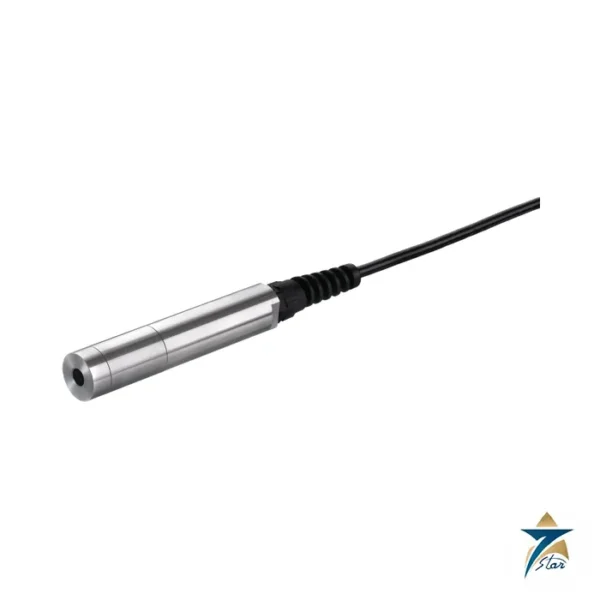
Metrohm 6.0431.100 Pt Titrode Combined Redox Electrode
Description
Overview
A Titrode combines an indicator and a reference in one body, and the Metrohm 6.0431.100 does so with a platinum ring as the indicator and a pH glass membrane acting as the reference electrode. Metrohm describes it as a maintenance-free combined electrode that is well suited to redox titrations when the pH value remains constant, with iodometry, chromatometry, cerimetry and permanganometry as typical examples. There is no electrolyte to refill and no diaphragm to clog, because the glass membrane takes that role, and the electrode is stored in deionised water. Seven Star LLC is an independent supplier serving Oman and the GCC.
That design is the main reason laboratories choose it: nothing leaks, nothing needs topping up, and routine care is limited to rinsing and cleaning the platinum.
Technical particulars of Metrohm 6.0431.100
| Item | Metrohm data |
|---|---|
| Order number | 6.0431.100, Pt Titrode |
| Indicator | Platinum, ring and hemisphere shape |
| Reference system | pH glass membrane |
| Diaphragm | None |
| Resistance | 150 to 400 kOhm per the product data table |
| Measuring range | minus 2000 to plus 2000 mV |
| Temperature range | 0 to 80 degrees C, long-term and short-term |
| pH range of use | 0 to 14 |
| Sleeve | Flexible ground-joint sleeve |
| Installation length | 125 mm maximum |
| Minimum immersion depth | 20 mm |
| Shaft | Glass, 12 mm |
| Plug-in head | Metrohm plug-in head G |
| Storage | Deionised water |
How the glass reference works
In an ordinary redox electrode pair the platinum measures a potential against an Ag/AgCl system. In the Pt Titrode the second contact is a pH-sensitive glass membrane. Its potential changes with pH, but during a titration at constant pH it is a stable and drift-free reference that cannot be poisoned through a diaphragm. That is why this electrode is the appropriate choice for iodometry or permanganometry in buffered or strongly acidic solutions, and why it is the wrong choice when the sample pH moves widely during titration.
How Metrohm 6.0431.100 differs from other redox electrodes
The combined Pt ring 6.0451.100 has a ceramic pin diaphragm, uses KCl 3 mol/L and has a 113 mm length with 15 mm immersion, and is meant for varying pH. The 6.0431.100 has 125 mm length, 20 mm immersion, no diaphragm and water storage, and is meant for constant pH. The gold ring 6.0352.100 is a separate indicator that needs an extra reference. The Karl Fischer double Pt wire electrodes are polarised indicators rated to 70 degrees C. When your method sheet says Titrode, this is the electrode type that is meant.
Applications in Oman and the GCC
Iodometric titrations determine peroxide values in oils and fats, active chlorine in disinfectants and copper in plating or mining samples. Permanganometry checks hydrogen peroxide and oxalate, while dichromate titrations remain relevant for chemical oxygen demand in wastewater and for iron. Industrial and municipal laboratories across the GCC use these methods in desalination, food processing, lubricant testing and environmental compliance, and a maintenance-free Titrode suits operators who run many such titrations per day.
Care, cleaning and storage
Metrohm’s leaflet instructs that Titrodes be stored in distilled water. When cleaning the platinum ring, take care not to damage the glass membrane. Rinse after every measurement, keep the metal clean and free from grease, and never use an ultrasonic bath. For persistent contamination use a moist paper towel and toothpaste or the polishing set 6.2802.000, with the caveat that abrasive cleaning should not be frequent. Trichloroethylene is allowed for degreasing. Because the glass membrane is part of the measuring circuit, scratches or deposits on it affect the signal.
Compatibility and settings
Connect it with a standard Metrohm cable to the electrode input of a titrator and select the millivolt measuring mode. The plug-in head G fits all current Metrohm cables. Do not select pH mode, and record the reading in a redox standard after cleaning so that the platinum surface health is documented.
Planning a redox method around this electrode
Before a method is released, the analyst should decide on the titrant, the sample pretreatment and the endpoint criterion, and then confirm that the pH stays constant throughout. Buffered samples or strongly acidic media, such as the sulfuric acid solutions used in permanganate work, satisfy that condition. If the sample is unbuffered and the titrant changes the pH, the glass reference will follow it and the curve will be distorted, so a combined ring electrode with a conventional reference is the better tool.
A second planning point is the response of the glass membrane to temperature and to certain ions. Because the membrane is rated to 80 degrees C, hot samples need cooling before measurement. Strong fluoride in acidic solution attacks glass, so avoid such media with this electrode. Keep one redox standard in the lab and check the electrode against it weekly; a reading far from the nominal value points to a dirty ring or damaged membrane long before a titration fails.
Spares and handling in the laboratory
Laboratories that run redox titrations daily should keep a spare electrode on the shelf, stored in water, so that an accidental breakage never stops a validated method. Handle the electrode by the head, not by the shaft, and place it in a holder rather than on the bench. Avoid knocking the platinum ring against the beaker wall when the stirrer is running at speed.
Troubleshooting
If the potential jump is small or the titration curve looks flat, first clean the ring. If problems persist, check that the glass membrane is intact and wet, since a dried membrane gives an unstable reference. Because there is no electrolyte, there is nothing to refill, which removes one of the most common causes of reference problems.
Ordering the Metrohm 6.0431.100
Quote the order number with quantity and ask us to include polishing sets or cables if needed. The leaflet states that defective electrodes should be returned for warranty processing within two months of delivery, so inspect on arrival.
Related items you may also need: Metrohm 888 Titrando Potentiometric Titrator | Metrohm 905 Titrando Potentiometric Titrator | Metrohm 916 Ti-Touch Compact Potentiometric Titrator | All Metrohm products.
Documents and quotation
The Metrohm leaflet on metal electrodes accompanies this page. Please send an RFQ with Metrohm 6.0431.100, quantity and delivery location in Oman or the GCC.
Other Models in the Metal Electrodes Range
Seven Star LLC supplies models from the Metal Electrodes range in Oman and the GCC. Compare the related models below and request a quote for the one that matches your application.
| Model | Category | |
|---|---|---|
| Metrohm 6.0451.100 Combined Pt Ring Electrode for Redox | Liquid Analysis Sensors | View details |
| Metrohm 6.0431.100 Pt Titrode Combined Redox Electrode | Liquid Analysis Sensors | You are viewing this model |
Datasheets & Documents
- Datasheet Metrohm 6.0431.100 Pt Titrode Combined Redox Electrode Datasheet Download
Reviews (0)
How would you rate this product? Cancel reply
About brand
Metrohm is a Swiss maker of instruments for chemical analysis, founded in 1943 by Bertold Suhner in Herisau, where it is still headquartered. It is best known for titration and also makes ion chromatography, electrochemistry, spectroscopy and process analysers. Metrohm is owned by a foundation.
Seven Star LLC lists the Metrohm 905 Titrando, the 916 Ti-Touch and the 2035 Process Analyzer, and supplies Metrohm instruments and accessories to laboratories and plants in Oman and the GCC.
Metrohm company profile
| Founded | 1943, Herisau, Switzerland |
|---|---|
| Founder | Bertold Suhner |
| Headquarters | Herisau, Switzerland |
| Ownership | Metrohm Foundation |
| Product families | Titrando and Ti-Touch titrators, ion chromatography systems, 2035 and 2060 process analysers, electrodes |
Metrohm instruments listed here
The 905 Titrando is a high-end potentiometric titrator for use with Dosino dosing units. It runs dynamic (DET), monotonic (MET) and set endpoint (SET) titrations, takes up to four 800 Dosino units, recognizes intelligent iTrode electrodes, and is operated from tiamo or OMNIS software or a Touch Control. The 2035 Process Analyzer is an online wet-chemistry analyzer for automatic analysis of samples drawn from the process.
Metrohm products we list
| Family | Examples |
|---|---|
| Liquid Analytical Systems | 2035 Process Analyzer, 905 Titrando Potentiometric Titrator, 916 Ti-Touch Compact Potentiometric Titr… |
Ordering Metrohm equipment: what we need
Metrohm article numbers follow a fixed pattern (the 905 Titrando is 2.905.0010), and that number is the best reference for instruments, electrodes and accessories. For a new application, tell us the sample, the parameter and its concentration range, the method or standard you follow, and for a process analyzer the number of sample streams and the signals your control system needs.
Facts checked against Metrohm's published company history, October 2026.
Browse Metrohm products by category: Liquid Analytical Systems.
FAQ
Questions about the Metrohm 6.0431.100 Pt Titrode Combined Redox
Answers from our engineering team on installation, compatibility and integration.
01What reference does the Metrohm 6.0431.100 use?
It uses a pH glass membrane as the reference electrode, so there is no diaphragm and no electrolyte to refill; it is maintenance-free.
02Which titrations suit the Metrohm 6.0431.100?
Metrohm lists redox titrations at constant pH such as iodometry, chromatometry, cerimetry and permanganometry.
03How is the Metrohm 6.0431.100 stored?
Titrodes are stored in distilled or deionised water, according to the Metrohm metal electrodes leaflet.
04What length and immersion depth does the 6.0431.100 have?
The maximum installation length is 125 mm and the minimum immersion depth is 20 mm, on a 12 mm glass shaft.
05When should the 6.0451.100 be chosen instead of the 6.0431.100?
When the sample pH changes during titration. The 6.0451.100 uses an Ag/AgCl reference with a ceramic pin diaphragm for such cases.


Reviews
There are no reviews yet.