Brand:

Meinberg TCR180PEX IRIG Receiver and Generator PCIe Card

Description

Overview

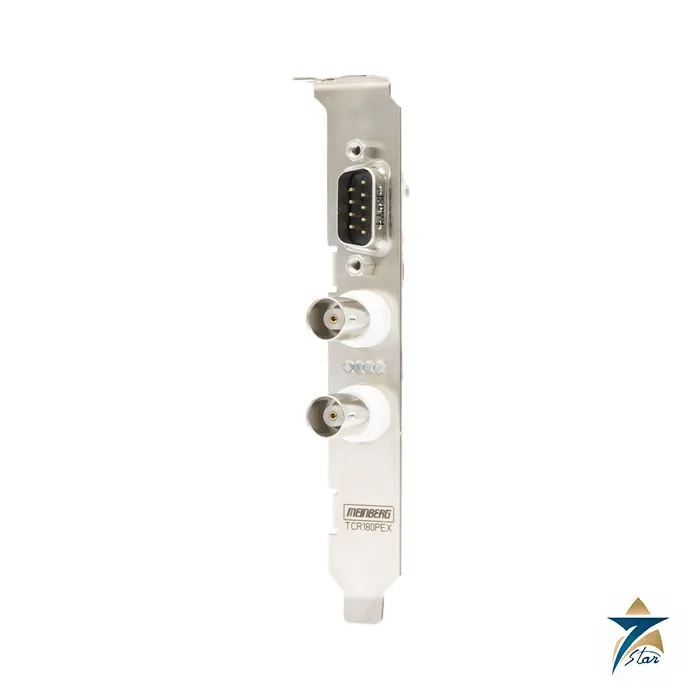
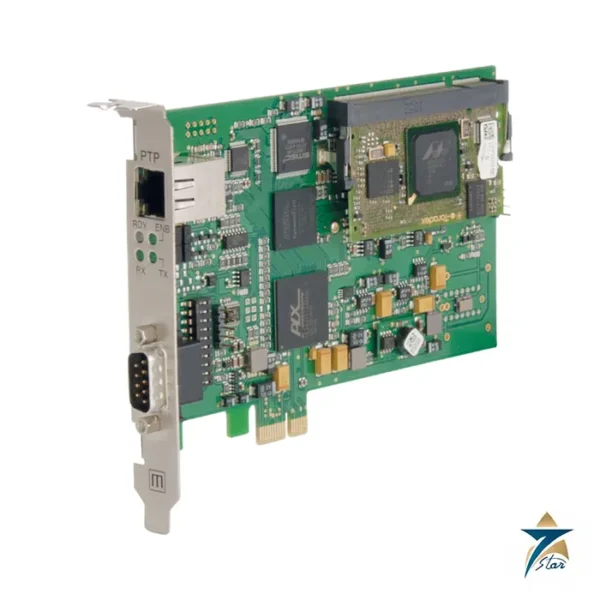
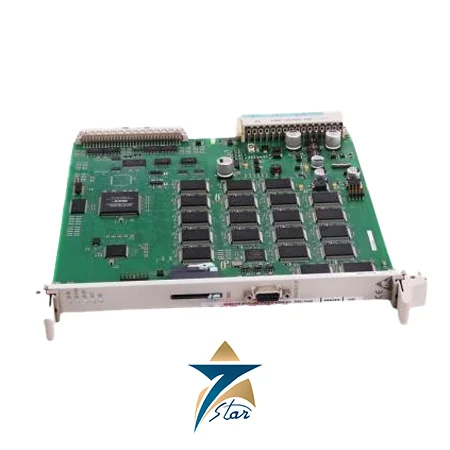
Meinberg TCR180PEX is a low-profile PCI Express card that reads IRIG-A, IRIG-B, IEEE 1344, IEEE C37.118 or AFNOR NF S87-500 time code and can use it to discipline the clock of the host computer. It is also a generator: the output time code is configured independently of the input, so the same card can sit between two pieces of equipment that speak different time code dialects and convert from one to the other. That combination of receiver and generator is why the board shows up in substations, test laboratories and data acquisition racks where there is no GPS antenna on the roof but an IRIG signal on a coax cable.
For buyers in Oman and the GCC, Meinberg TCR180PEX is the practical answer when an existing plant clock already distributes IRIG and a new server or recorder has to be brought into the same time base. Seven Star LLC is an independent supplier serving Oman and the GCC.

Key features of Meinberg TCR180PEX

  • Two receiver input channels for modulated and unmodulated codes, plus an optocoupler input for unmodulated codes at TTL or RS-422 level.
  • Automatic gain control that accepts modulated IRIG signals from 600 mVpp up to 8 Vpp.
  • Generator for IRIG-A/B, IEEE 1344, IEEE C37.118 and AFNOR codes, with modulated and unmodulated outputs.
  • Two time trigger inputs, three programmable pulse outputs and a DDS frequency synthesizer from 1/8 Hz up to 10 MHz.
  • Two independent RS-232 interfaces and four status LEDs.
  • Buffered real time clock with a lithium battery rated for at least 10 years of life.

Technical specification of Meinberg TCR180PEX

Bus interface Single-lane (x1) PCI Express, r1.0a compatible
Board type Low-profile card, 68.90 mm x 150 mm
Modulated input Transformer insulated, 50 ohm, 600 ohm or 5 kohm selectable by jumper
Unmodulated input DC level shift, photocoupler insulated
AGC amplitude range 600 mVpp to 8 Vpp
Free-run accuracy Plus or minus 1E-8 if the decoder was synchronous for at least 1 hour
Timebase precision Plus or minus 250 ns compared to the IRIG reference marker
Required source accuracy Plus or minus 100 ppm
Modulated output 3 Vpp high and 1 Vpp low into 50 ohm
Unmodulated output TTL into 50 ohm and RS-422, active high or low by jumper
Frequency output Synthesizer 1/8 Hz to 10 MHz, TTL or sine 1.5 Vrms
Pulse outputs Three programmable, TTL level; channel 0 also RS-232 level
Serial interfaces Two independent RS-232, 300 to 115200 baud
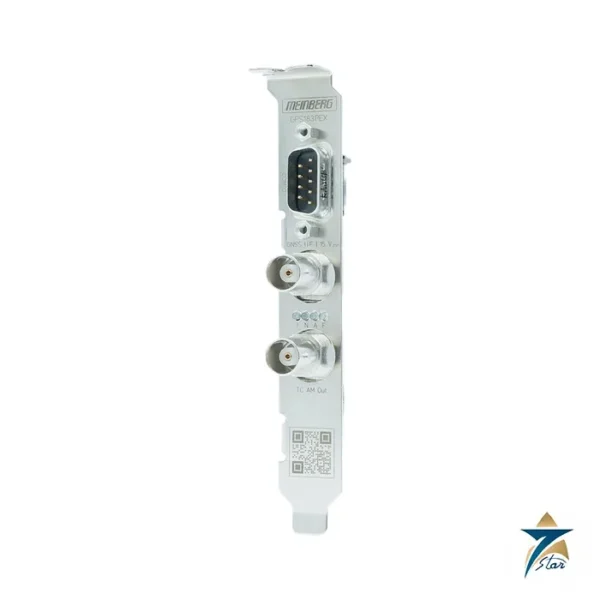
Connectors Female BNC and male 9-pole D-Sub
Operating temperature 0 to 50 degrees Celsius
Storage temperature minus 20 to plus 70 degrees Celsius
Humidity Maximum 85 percent, non-condensing, at 40 degrees Celsius
Options Optical input or output (ST connector, gradient fibre 50/125 or 62.5/125 micrometre); OCXO-LQ, SQ, MQ, HQ oscillators
Warranty Three years

Receiver and generator functions of TCR180PEX

The LED row tells the story of the receiver. Init in blue is lit while the receiver passes through initialization, Data in green means a correct time code was detected, Tele in green means a consistent telegram, and Fail in red means the internal timing is running in holdover. The status byte available to software repeats the information about holdover, synchronization since the last reset and validity of the clock data. Because the offset to UTC of the receiver and generator are configured independently, the card can read a code that carries local time and generate one in UTC, or the other way around.
The time codes recognised at the input cover IRIG A002, A132, A003, A133, A006, A136, A007, A137, B002, B122, B003, B123, B006, B126, B007 and B127, as well as IEEE 1344, AFNOR NF S 87-500 and IEEE C37.118; other codes are available on request.

Applications in Oman and the GCC

Power utilities with IRIG-B distribution use the card to bring engineering workstations and event recorders into line with substation time. Test benches in manufacturing and research use it for stand-alone computers without a network connection. Oil and gas control rooms with a legacy clock system can add a Linux or Windows server as an NTP stratum 1 source using the IRIG signal as reference, since the Linux and FreeBSD drivers allow the card to act as a reference clock for the NTP daemon.
Selection and compatibility notes

Match the input type to your source: transformer-insulated for modulated IRIG over coax, photocoupler for DC level shift codes. Choose an OCXO option when the IRIG source may disappear for hours and the holdover must be tight. If your cabling is fibre, order the optical input or output with ST connectors. The card is a low-profile board; check the slot bracket that suits your chassis. Software for Windows, Linux and FreeBSD is free to download, with an SDK for custom applications.

How TCR180PEX differs from other Meinberg PCIe cards

The GPS183PEX gets its time from satellites, the PTP270PEX from an IEEE 1588 network, and the TCR180PEX from IRIG signals. Its decode accuracy of 250 ns to the IRIG reference marker and its two receiver channels are specific to this board, as is the ability to generate IRIG-A at 1000 pps, which many of the satellite cards cannot do.

Installation, commissioning and maintenance

Install the card in a free x1 or larger PCIe slot, connect the IRIG coaxial cable to the input BNC, select the correct impedance by jumper, and install the driver. Watch the LEDs until Data and Tele are green. The battery maintains the clock through power loss; plan for replacement after its rated life. Keep drivers up to date.

Ordering notes

When you ask for Meinberg TCR180PEX, tell us the code type and carrier of your source, whether fibre options or an OCXO oscillator are required, and the operating system of the host.

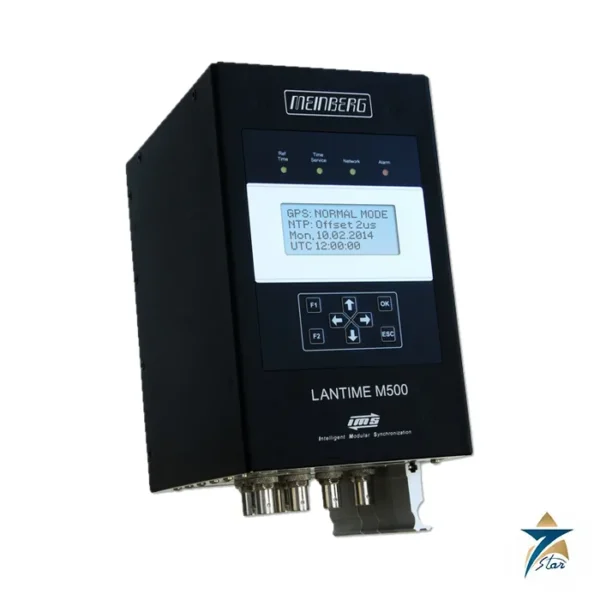
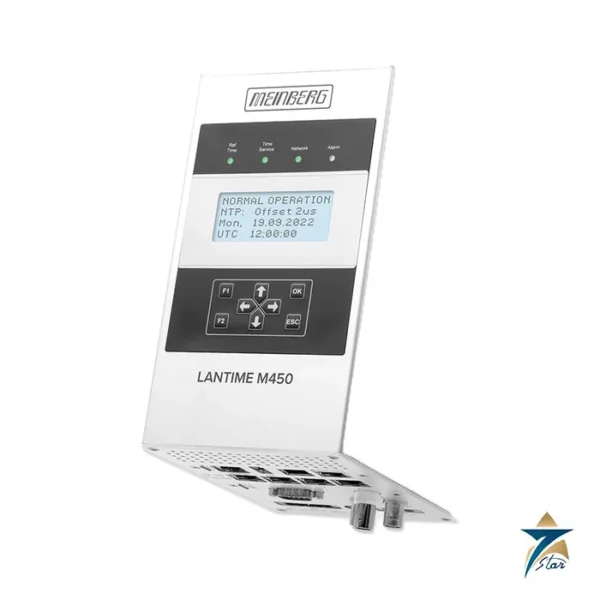
Related items you may also need: Meinberg LANTIME M500 Modular DIN-Rail Time Server | Meinberg LANTIME M450 DIN Rail NTP Time Server | Meinberg LANTIME M250 Compact NTP Time Server | All Meinberg products.

Documents and quotation

The manufacturer datasheet for TCR180PEX is attached to this page. Send an RFQ with the part number Meinberg TCR180PEX and the quantity to receive a quotation.

Datasheets & Documents
  • PDF Datasheet Meinberg TCR180PEX IRIG Receiver and Generator PCIe Card Datasheet Download
Reviews (0)

Reviews

There are no reviews yet.

How would you rate this product?

It takes about 10 seconds — just tap a star. Your email is never published.

About brand

Meinberg is a German maker of time and frequency synchronisation products, founded in 1979 by the brothers Werner and Günter Meinberg in Bad Pyrmont. It began with DCF77 longwave radio clock receivers and now makes GPS and GNSS-referenced NTP and PTP time servers. Meinberg is family-owned and designs and manufactures its products in Bad Pyrmont.

Seven Star LLC sources and supplies Meinberg LANTIME time servers for utilities and networks in Oman, including the M1000 and M320 listed here.

Meinberg company profile

Founded 1979, Bad Pyrmont, Germany
Founders Werner and Günter Meinberg
Ownership Family-owned
Manufacturing Bad Pyrmont, Germany
Product families LANTIME M150, M250, M320, M500 and M1000 NTP/PTP time servers, IMS modular systems, GNSS and DCF77 receivers, PTP grandmaster clocks

Meinberg LANTIME models listed here

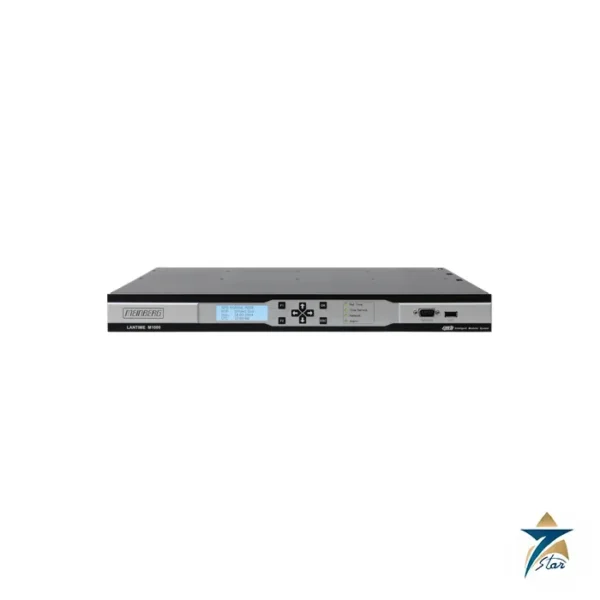
The LANTIME M320 is a 1U rackmount NTP time server. It works as a stratum 1 source with its own reference receiver, and Meinberg offers it with GPS, combined GNSS, DCF77 (PZF), MSF and IRIG time code references. The LANTIME M1000 is a 1U platform on the modular IMS system, with slots for up to two reference clocks, two power supplies and hot-pluggable I/O modules, plus PTP (IEEE 1588) and IEC 61850 time synchronization.

Meinberg products we list

Family Examples
Industrial Communications LANTIME M1000 Modular NTP/PTP Time Serve…, LANTIME M150 DIN-Rail NTP Time Server, LANTIME M250 Compact NTP Time Server, LANTIME M320/GPS/AD10 NTP Time Server, LANTIME M500 Modular DIN-Rail Time Server

Ordering a Meinberg time server: what we need

A Meinberg order code describes the build. In M320/GPS/AD10, GPS is the receiver and AD10 is the wide-range AC/DC power supply. Send the full code or serial number, the reference source, oscillator option, supply voltage, the outputs you need (PPS, 10 MHz, IRIG, extra LAN ports) and the antenna cable length. GCC utility projects often require redundant supplies.

Facts checked against Meinberg's own company history (meinbergglobal.com), October 2026.

FAQ

Questions about the Meinberg TCR180PEX IRIG Receiver and Generator PCIe

Answers from our engineering team on installation, compatibility and integration.

01Which time codes can the Meinberg TCR180PEX receive?
It receives IRIG-A and IRIG-B in modulated or unmodulated form, IEEE 1344, IEEE C37.118 and AFNOR NF S87-500, with other codes available on request.
02Can the TCR180PEX convert one time code format to another?
Yes. The code and the offset to UTC of the receiver and the generator are configured independently, so the card can be used for IRIG conversion.
03What input amplitude range does the TCR180PEX accept?
Automatic gain control accepts modulated IRIG signals from 600 mVpp to 8 Vpp; input impedance is 50 ohm, 600 ohm or 5 kohm by jumper.
04What do the four status LEDs on the TCR180PEX mean?
Init is blue during initialization, Data is green for a valid time code, Tele is green for a consistent telegram, and Fail is red in holdover.
05Does the TCR180PEX keep time when the PC is off?
A buffered real time clock keeps time and date after power-down, using a lithium battery with a rated life of at least 10 years.