- Automation & ControlView all 3,149 products
- Automation Accessories
- AC Drives
- PLC & I/O Cards
- Industrial Communications
- Vibration Monitoring
- Controllers & Data Acquisition
- Isolator & Barrier
- Safety Switches & Guard Locking
- Encoders
- Motor Soft Starters
- CCTV & Security
- Pneumatic Cylinders
- HMI Displays
- Servo Drives
- Industrial Computers
- Machine Vision
- Automation Software
- Robotics
Brand: Meinberg
Meinberg PTP270PEX IEEE 1588 PTP PCI Express Slot Card
Description
Overview
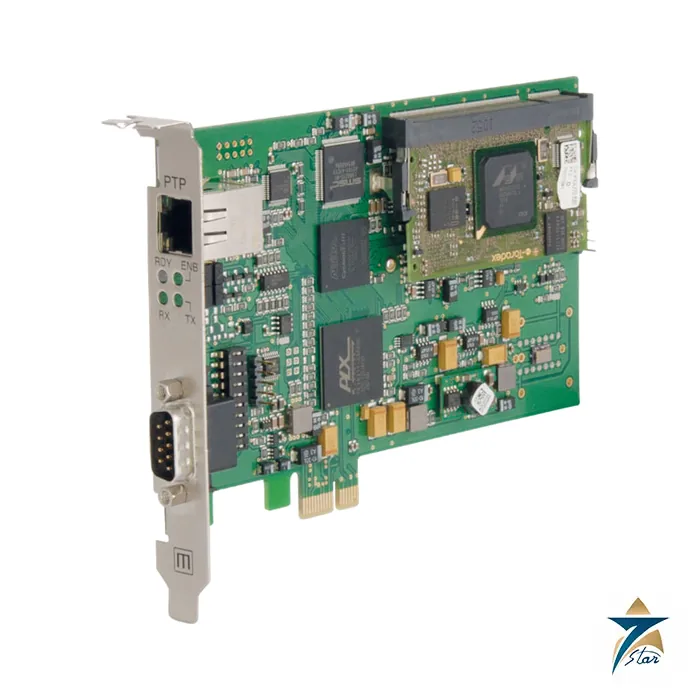
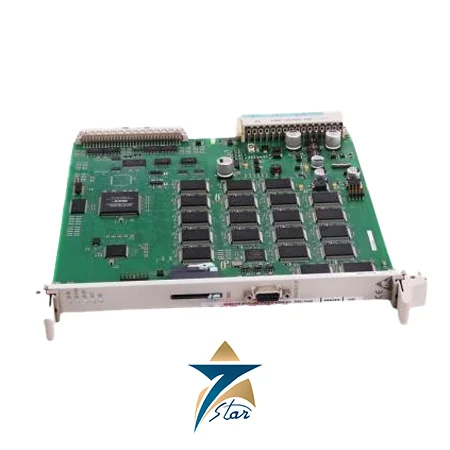
Meinberg PTP270PEX is a PCI Express slot card that makes a server or workstation a slave to an IEEE 1588-2008 (PTP version 2) grandmaster over a plain Ethernet cable. The card carries its own single board computer that runs the PTP stack, so no PTP software has to run on the host. The host only sees a Meinberg bus-level timing device that can be read through the same driver package as the satellite clock cards of the maker. The datasheet states a time accuracy of plus or minus 20 ns to the grandmaster clock.
The maker has marked the card as no longer available while continuing support for units already sold, so the typical buyer of Meinberg PTP270PEX is replacing a failed card in an existing data acquisition or measurement station. The datasheet does not name a replacement model, so we will not suggest one here. Seven Star LLC is an independent supplier serving Oman and the GCC.
Features of Meinberg PTP270PEX
- Single-lane PCI Express interface, compatible with PCI Express r1.0a.
- IEEE 1588-2008 ordinary clock using UDP over IPv4 (layer 3) or IEEE 802.3 (layer 2), with end-to-end or peer-to-peer delay mechanisms.
- Pulse per second output and a 10 MHz frequency output at TTL level.
- IRIG DCLS time code generator and an RS-232 serial interface.
- Time trigger inputs with 20 ns resolution that can be read through the PCI Express interface.
- Memory-mapped time reads for very high access rates from the host.
Technical data for PTP270PEX
| Accuracy | Plus or minus 20 ns to the grandmaster clock |
|---|---|
| Accuracy of pulse outputs | Plus or minus 100 ns relative to the grandmaster, after initial synchronization |
| Bus interface | Single-lane (x1) PCI Express, r1.0a compatible |
| Network interface | 1 x 10/100 Mbit RJ45, IEEE 1588 |
| Frequency output | 10 MHz, TTL |
| Pulse output | PPS, TTL, 200 ms pulse width |
| Serial interface | Single RS-232 |
| DCLS time code output | TTL into 50 ohm, active high or low |
| Time trigger inputs | 20 ns resolution, falling TTL edge |
| Supply | +3.3 V at 600 mA and +12 V at 300 mA |
| Board size | Standard height, 101 mm x 150 mm |
| Status LEDs | System status, outputs active, PTP packet sent, PTP packet received |
| Operating temperature | 0 to 50 degrees Celsius |
| Storage temperature | minus 20 to plus 70 degrees Celsius |
| Humidity | Maximum 85 percent, non-condensing, at 40 degrees Celsius |
| Oscillator option | OCXO-LQ, MQ or HQ instead of TCXO |
| Warranty | Three years |
How Meinberg PTP270PEX is used
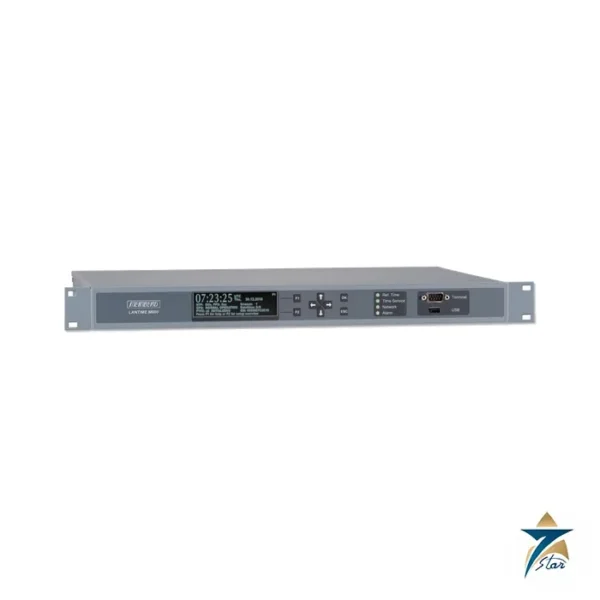
The time source of the card is a PTP grandmaster such as the LANTIME M600 in its GPS and PTP configuration, as the datasheet explains. Sub-microsecond accuracy in a PC once required a GPS receiver and an antenna cable to each machine; with PTP, a single grandmaster on the network serves every card. The card can also act as a stratum 0 reference for the NTP daemon so that a server becomes a stratum 1 NTP server without taking more rack space. It is designed purely as a timing device and cannot replace an ordinary network interface card.
Applications in Oman and the GCC
Data acquisition stations in power plants, test benches in manufacturing, and telemetry servers in oil and gas control rooms are typical hosts. In these systems, timestamps from analogue and digital input cards must agree to a fraction of a microsecond with events recorded on other machines. The PPS, 10 MHz and IRIG DCLS outputs let the card feed legacy instruments that cannot use network time.
Software support and selection notes
The Windows driver package includes a service that adjusts the system time continuously and a monitor program for status and configuration, while the Linux and FreeBSD packages include a kernel driver that makes the card a reference clock for the NTP daemon. The Meinberg API and SDK offer access to timestamps from software. Before ordering Meinberg PTP270PEX, check that a free x1 or larger PCIe slot exists, that the grandmaster supports the delay mechanism and transport you intend to use, and whether an OCXO variant is needed for better holdover.
Time stamping in practice with PTP270PEX
The two time trigger inputs deserve attention in measurement work. A falling TTL edge on a trigger input is stamped with 20 ns resolution and the stamp can be read by the host application, which makes the card useful for recording when an external event occurred relative to network time. Combined with the pulse per second output at 200 ms pulse width, an engineer can compare an external instrument against the PTP-disciplined board directly on an oscilloscope. The supported IRIG formats on the DCLS output are B002, B003, IEEE 1344 and AFNOR, which covers most legacy recorders that expect an unmodulated code.
How PTP270PEX differs from other Meinberg cards
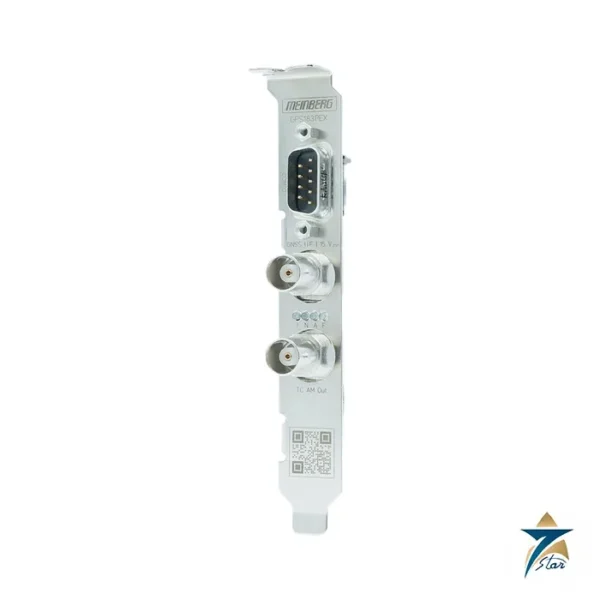
The GPS183PEX card takes time from an antenna and satellites. The PTP270PEX takes time from the network through its RJ45 port, and therefore needs no antenna. Its network accuracy of 20 ns to the grandmaster contrasts with GPS cards where the accuracy is linked to the receiver. It is a standard-height board of 101 mm by 150 mm, not a low-profile card.
Installation and maintenance
Switch the host off, seat the card in a PCIe slot, connect the Ethernet port to a network segment that carries PTP traffic, and install the driver package. Watch the four LEDs: system status, outputs active, PTP packets sent and PTP packets received show whether the card has found the grandmaster. Maintenance is limited to keeping drivers current and checking the network path. If the card loses its grandmaster, the host keeps running on the last disciplined time, and the oscillator grade then decides how long the card stays within tolerance; a site with strict holdover needs should order an OCXO variant instead of the standard oscillator. Document the VLAN or switch port used for the timing traffic so that a later network change does not silently break synchronization.
Ordering notes for Meinberg PTP270PEX
Tell us the operating system, whether an oscillator upgrade is required and the quantity for Meinberg PTP270PEX. Availability of this discontinued card is confirmed at quotation stage.
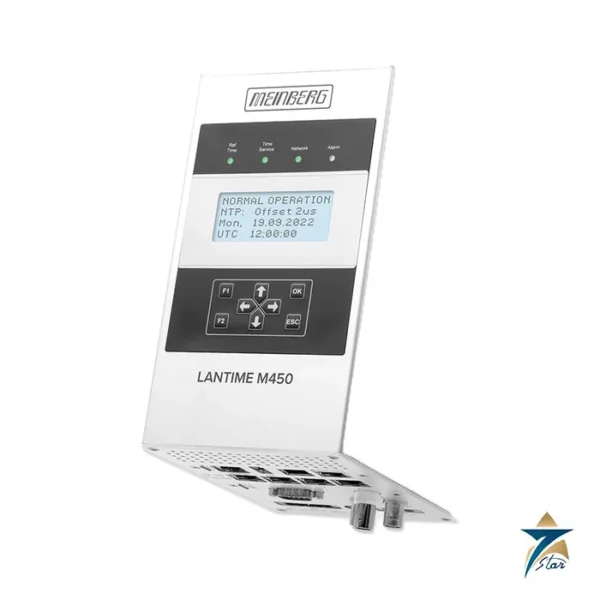
Related items you may also need: Meinberg LANTIME M450 DIN Rail NTP Time Server | Meinberg GNMANTv2 Dual-Band Multi-GNSS Antenna, IP65 | Meinberg LANTIME M250 Compact NTP Time Server | All Meinberg products.
Documents and quotation
The manufacturer datasheet for PTP270PEX is attached to this page. Please send an RFQ with the part number Meinberg PTP270PEX and the required quantity to receive a quotation.
Datasheets & Documents
- Datasheet Meinberg PTP270PEX IEEE 1588 PTP PCI Express Slot Card Datasheet Download
Reviews (0)
How would you rate this product? Cancel reply
About brand
Meinberg is a German maker of time and frequency synchronisation products, founded in 1979 by the brothers Werner and Günter Meinberg in Bad Pyrmont. It began with DCF77 longwave radio clock receivers and now makes GPS and GNSS-referenced NTP and PTP time servers. Meinberg is family-owned and designs and manufactures its products in Bad Pyrmont.
Seven Star LLC sources and supplies Meinberg LANTIME time servers for utilities and networks in Oman, including the M1000 and M320 listed here.
Meinberg company profile
| Founded | 1979, Bad Pyrmont, Germany |
|---|---|
| Founders | Werner and Günter Meinberg |
| Ownership | Family-owned |
| Manufacturing | Bad Pyrmont, Germany |
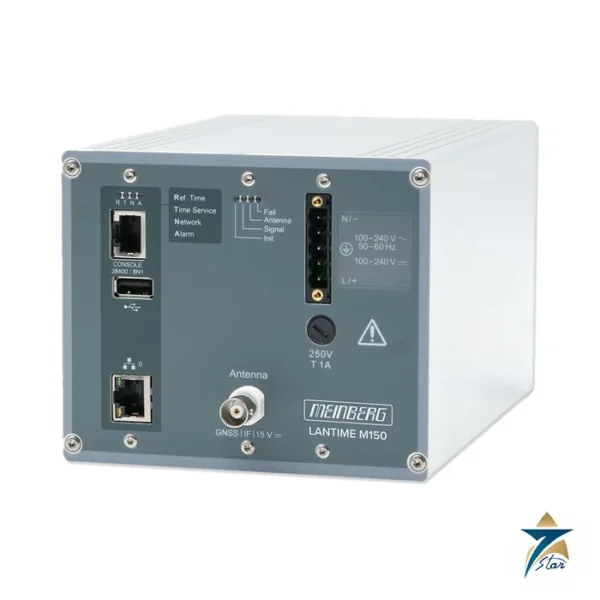
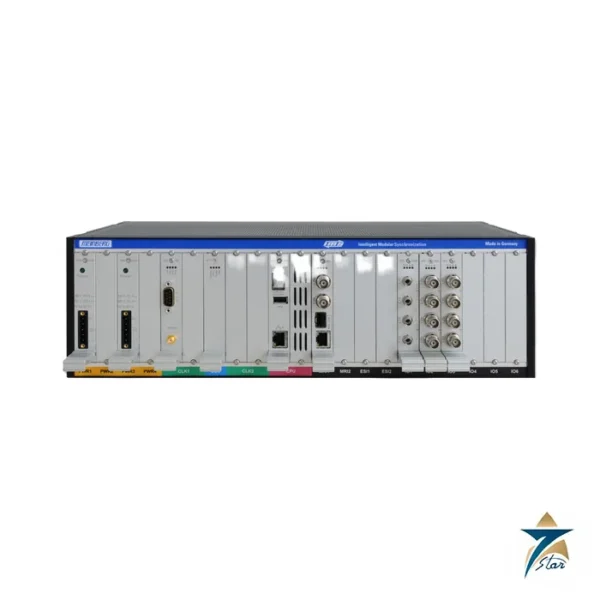
| Product families | LANTIME M150, M250, M320, M500 and M1000 NTP/PTP time servers, IMS modular systems, GNSS and DCF77 receivers, PTP grandmaster clocks |
Meinberg LANTIME models listed here
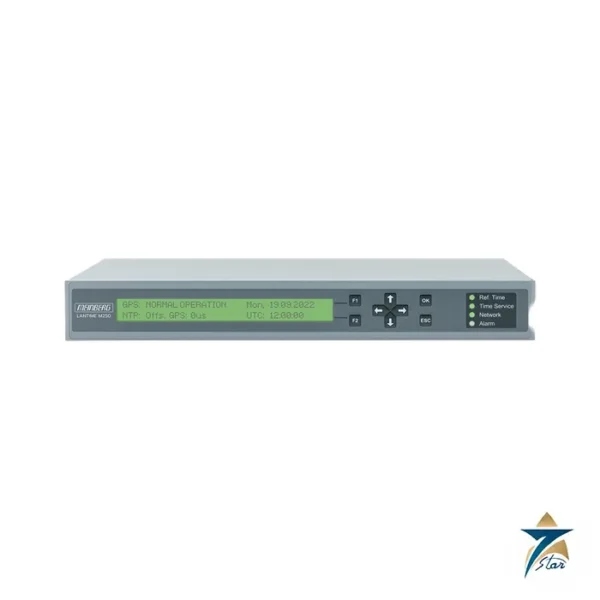
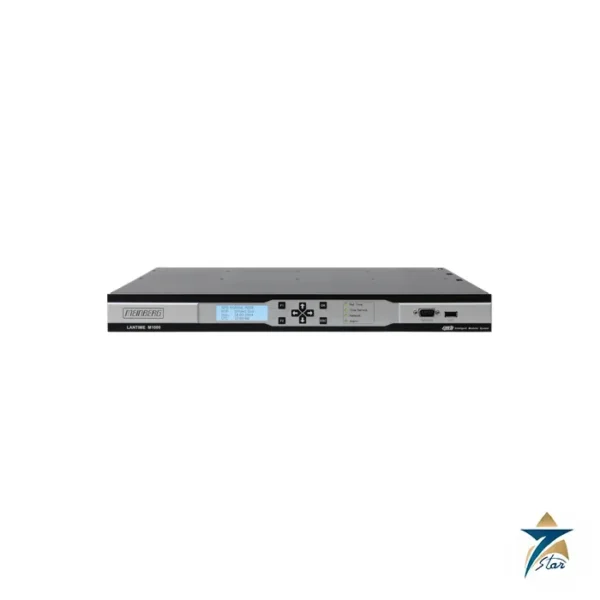
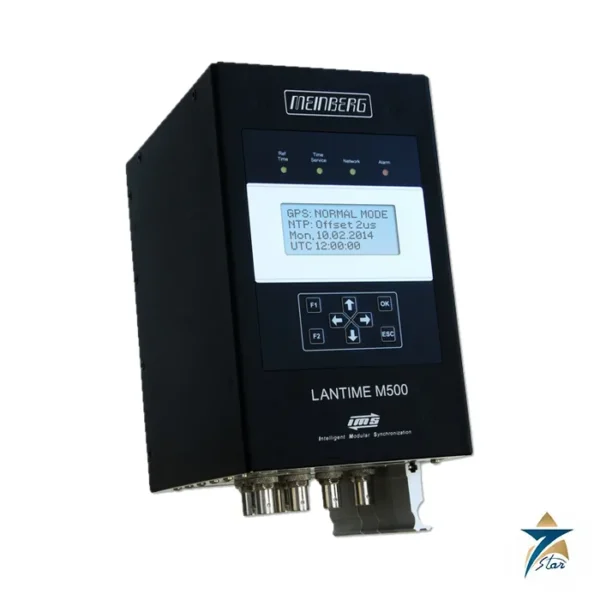
The LANTIME M320 is a 1U rackmount NTP time server. It works as a stratum 1 source with its own reference receiver, and Meinberg offers it with GPS, combined GNSS, DCF77 (PZF), MSF and IRIG time code references. The LANTIME M1000 is a 1U platform on the modular IMS system, with slots for up to two reference clocks, two power supplies and hot-pluggable I/O modules, plus PTP (IEEE 1588) and IEC 61850 time synchronization.
Meinberg products we list
Ordering a Meinberg time server: what we need
A Meinberg order code describes the build. In M320/GPS/AD10, GPS is the receiver and AD10 is the wide-range AC/DC power supply. Send the full code or serial number, the reference source, oscillator option, supply voltage, the outputs you need (PPS, 10 MHz, IRIG, extra LAN ports) and the antenna cable length. GCC utility projects often require redundant supplies.
Facts checked against Meinberg's own company history (meinbergglobal.com), October 2026.
Browse Meinberg products by category: Industrial Communications.
FAQ
Questions about the Meinberg PTP270PEX IEEE 1588 PTP PCI Express Slot
Answers from our engineering team on installation, compatibility and integration.
01What accuracy does the Meinberg PTP270PEX achieve?
The datasheet states plus or minus 20 ns to the grandmaster clock, and plus or minus 100 ns on the pulse outputs after the initial synchronization phase.
02Does the PTP270PEX need an antenna?
No. It takes time from an IEEE 1588 grandmaster over its RJ45 network port, so no antenna cabling is needed to the computer.
03Can the PTP270PEX replace a normal network card?
No. The maker states that the device is a timing device only and cannot be used as a standard network interface card.
04Is the PTP270PEX still sold by the manufacturer?
The datasheet marks it as no longer available while support for installed units continues. No replacement model is named in the datasheet.
05Which outputs does the PTP270PEX provide?
It provides a PPS output, a 10 MHz output, an IRIG DCLS time code output and an RS-232 serial interface, all at the levels listed in the datasheet.


Reviews
There are no reviews yet.