- Automation & ControlView all 3,116 products
- Automation Accessories
- AC Drives
- PLC & I/O Cards
- Industrial Communications
- Vibration Monitoring
- Isolator & Barrier
- Controllers & Data Acquisition
- Safety Switches & Guard Locking
- Encoders
- Motor Soft Starters
- CCTV & Security
- Pneumatic Cylinders
- HMI Displays
- Servo Drives
- Industrial Computers
- Machine Vision
- Automation Software
- Robotics
Brand: Meinberg
Meinberg microSync XS Ultra-Compact NTP and PTP Server
Description
Overview
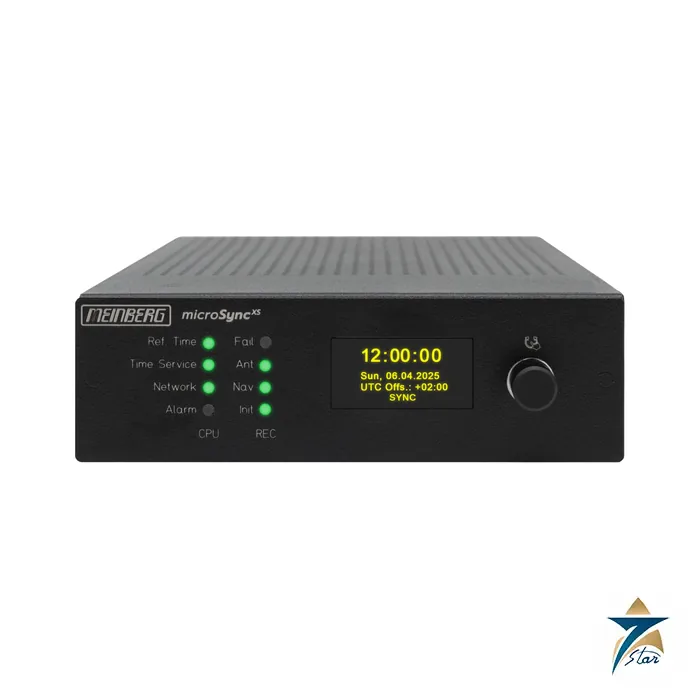
The Meinberg microSync XS is an ultra-compact, GNSS-synchronised NTP server and PTP clock in a desktop one-unit housing only 148 mm wide. It has two PTP-capable network ports that can run as timeTransmitter or timeReceiver, so the same box can be a grandmaster, a boundary clock or an ordinary clock. Seven Star LLC is an independent supplier serving Oman and the GCC. The summary here follows Meinberg’s datasheet and is intended for engineers choosing a small timing source for broadcast, utility or laboratory use.
Small size, full feature set
Many timing sources are rack-filling, but the Meinberg microSync XS takes only a fraction of the space, and Meinberg highlights outside broadcasting vans as an example where space is at a premium. It still offers three programmable SMA pulse outputs for signals such as PPS, PPM, PPH, DCLS time code and PTTI 1PPS, and it serves up to 10,000 NTP requests per second. A fully featured meinbergOS firmware provides a web interface, and a pre-activated Capture licence of PTP Track Hound lets the unit evaluate PTP traffic locally or forward it to central monitoring instances.
Data table for Meinberg microSync XS
| Item | Value |
|---|---|
| Function | GNSS-synchronised NTP server and PTP grandmaster, boundary or ordinary clock |
| Reference receivers | GPS; GNS-UC (GPS and Galileo); GNS (GPS, GLONASS, Galileo, BeiDou) |
| NTP performance | 10,000 requests per second |
| PTP modes | PTP v2; PTP v1 optional at Performance Level C |
| PTP profiles | E2E and P2P IEEE 1588-2008, IEEE C37.238-2011 and 2017, IEC/IEEE 61850-9-3, ITU-T G.8265.1, G.8275.1, G.8275.2, DOCSIS 3.1, SMPTE ST 2059-2, AES67, IEEE 802.1AS, AUTOSAR |
| PTP performance levels | PL-A 8 unicast clients; PL-B 256; PL-C 512 |
| Network ports | 2 x SFP: 10/100/1000 RJ45 or 1000FX |
| Pulse outputs | 3 x SMA, programmable |
| Oscillators | OCXO SQ: 1 day holdover plus or minus 65 microseconds; OCXO HQ: plus or minus 10 microseconds |
| Power | 20 to 60 V DC; typically 16.5 W |
| Housing | 6.33 inch desktop 1U steel; 148 x 236 x 44 mm; IP30; 1.35 kg |
| Temperature | operation minus 20 to plus 55 degrees C; storage minus 30 to plus 70 degrees C |
Network protocols and security of the Meinberg microSync XS
The unit supports IPv4 and IPv6, NTPv3 and v4, PTPv2, native PRP under IEC 62439-3, DHCP and DHCPv6, DSCP, VLAN filtering and tagging, 802.1p priority, SNMP v1 to v3 and remote syslog. Authentication through LDAP, TACACS+ and RADIUS is supported, and industry specific network functions such as IEC 61850 MMS are included. A single RS-232 interface, a USB type A port for configuration backup, logs, certificates and firmware updates, and synchronous Ethernet complete the interface list.
Choosing a reference receiver
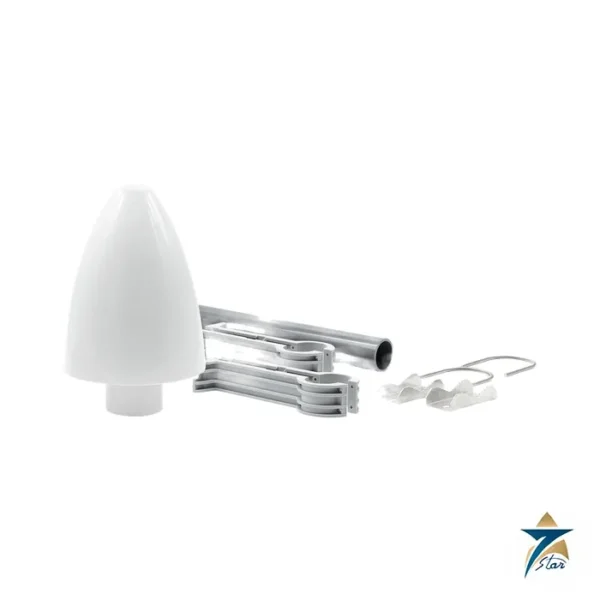
Meinberg offers three receivers. The GPS version uses a down-converter technology that allows long antenna cables and is recommended for fixed sites. The GNS-UC version receives GPS and Galileo for fixed and mobile applications. The GNS version covers all four main constellations, GPS, GLONASS, Galileo and BeiDou, and is also suitable for fixed and mobile use. In Oman, where open sky is usually available but roofs may be hot and dusty, any of them will work; multi-constellation is a good choice for added resilience against the loss of one constellation.
How microSync XS differs from larger Meinberg servers
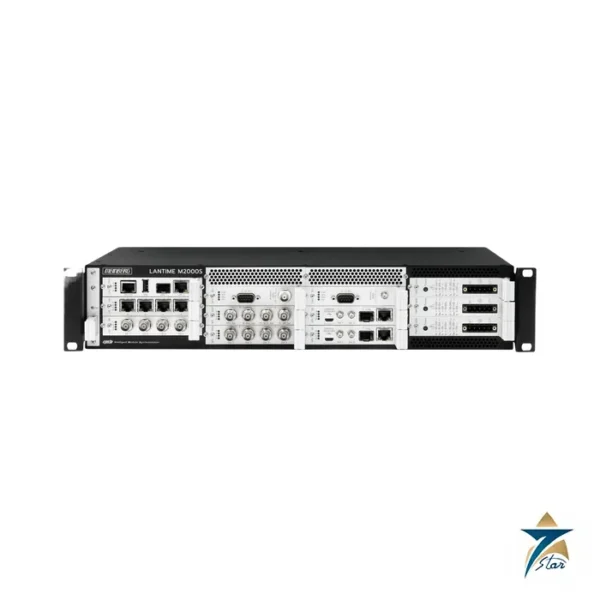
Compared with a LANTIME M1000 or M2000S, which accept many modules and can serve large networks with redundancy, the Meinberg microSync XS has a fixed configuration and a single power input. It has two PTP ports against up to six or ten PTP modules on the modular chassis, three SMA pulse outputs rather than dozens, and 10,000 NTP requests per second instead of 25,000. In exchange it is smaller, consumes about 16.5 W and costs less to deploy, which makes it ideal for edge sites and mobile installations.
Where small timing sources make sense
A remote substation, a mobile broadcast truck, a university laboratory, a pump station control room or a small data hall rarely justifies a modular rack system. A compact box with a reference receiver, two network ports and three pulse outputs can provide accurate NTP for dozens of clients and a PTP master for the few devices that need sub-microsecond time, and it can be mounted wherever a short antenna cable is possible. For sites in Oman that are far from service staff, the ability to back up the configuration to a USB stick, replace a unit quickly and restore the settings is an important operational advantage.
Holdover and oscillator selection
If GNSS reception is interrupted, the internal oscillator carries the time. The datasheet gives numbers for two grades: the SQ oscillator drifts by up to plus or minus 65 microseconds over a day and plus or minus 4.7 seconds over a year, and the HQ oscillator by plus or minus 10 microseconds over a day and plus or minus 788 milliseconds over a year. Utilities and broadcasters that need to ride through a long outage will choose the HQ version, while a laboratory that can tolerate a brief loss will choose the SQ.
Installation and use
Mount the unit on a desk, a shelf or with the bracket, connect the antenna, apply 20 to 60 V DC power and watch the optional OLED display during the first start. Configure the network and the PTP profile with the web interface, then verify that the receiver locks and the PTP state changes to synchronised. Select an oscillator according to holdover requirements: the HQ type offers a one-day holdover of plus or minus 10 microseconds, the SQ type plus or minus 65 microseconds. Keep the firmware up to date and back up the configuration to USB, so that a replacement unit can be put into service within minutes after a fault.
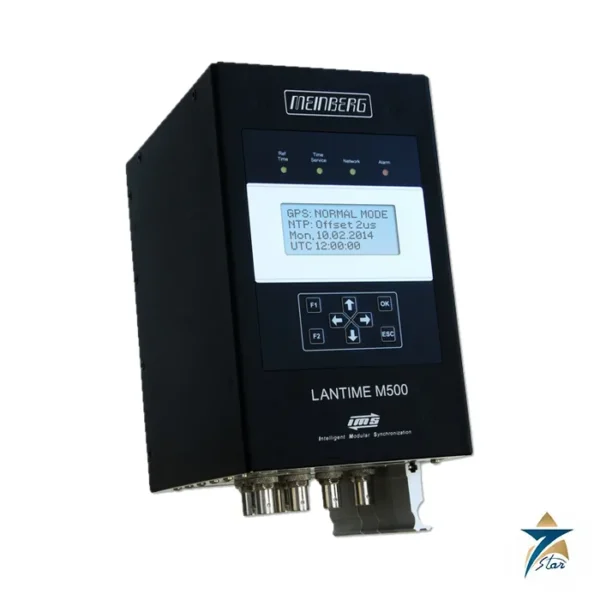
Related items you may also need: Meinberg LANTIME M1000 Modular NTP/PTP Time Server (IMS 1U) | Meinberg LANTIME M500 Modular DIN-Rail Time Server | Meinberg LANTIME M320/GPS/AD10 NTP Time Server | All Meinberg products.
Meinberg microSync XS ordering checklist
- When the Meinberg microSync XS replaces an installed unit, check the existing nameplate against the code on this page before ordering.
- Every enquiry for the Meinberg microSync XS is answered with a written confirmation of the code and expected lead time.
- Use the attached datasheet to check the Meinberg microSync XS ratings, dimensions and connection details against your drawings.
- We supply the Meinberg microSync XS as part of our industrial communications range to plants in Oman and the GCC.
- For critical duty, keeping one Meinberg microSync XS as a site spare shortens downtime after a failure.
Documents and quotation
Meinberg’s datasheet for the Meinberg microSync XS is attached to this page. Please send your RFQ with the model, the receiver type, oscillator, optional display and PTP performance level, with quantity and delivery location in Oman or the GCC.
Datasheets & Documents
- Datasheet Meinberg microSync XS Ultra-Compact NTP and PTP Server Datasheet Download
Reviews (0)
How would you rate this product? Cancel reply
About brand
Meinberg is a German maker of time and frequency synchronisation products, founded in 1979 by the brothers Werner and Günter Meinberg in Bad Pyrmont. It began with DCF77 longwave radio clock receivers and now makes GPS and GNSS-referenced NTP and PTP time servers. Meinberg is family-owned and designs and manufactures its products in Bad Pyrmont.
Seven Star LLC sources and supplies Meinberg LANTIME time servers for utilities and networks in Oman, including the M1000 and M320 listed here.
Meinberg company profile
| Founded | 1979, Bad Pyrmont, Germany |
|---|---|
| Founders | Werner and Günter Meinberg |
| Ownership | Family-owned |
| Manufacturing | Bad Pyrmont, Germany |
| Product families | LANTIME M150, M250, M320, M500 and M1000 NTP/PTP time servers, IMS modular systems, GNSS and DCF77 receivers, PTP grandmaster clocks |
Meinberg LANTIME models listed here
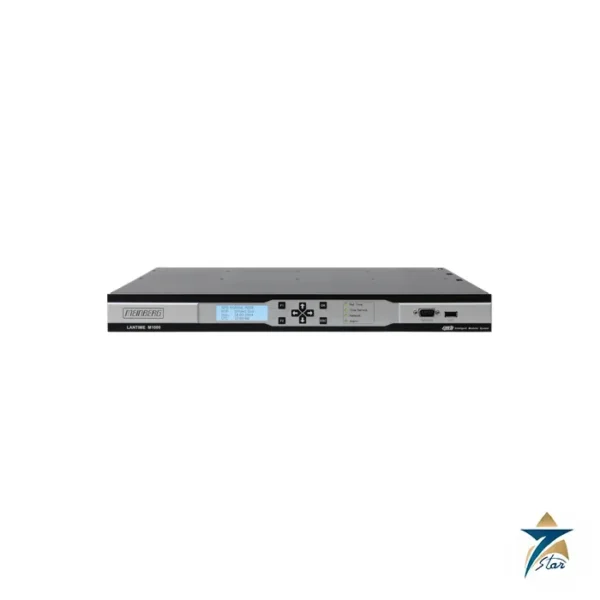
The LANTIME M320 is a 1U rackmount NTP time server. It works as a stratum 1 source with its own reference receiver, and Meinberg offers it with GPS, combined GNSS, DCF77 (PZF), MSF and IRIG time code references. The LANTIME M1000 is a 1U platform on the modular IMS system, with slots for up to two reference clocks, two power supplies and hot-pluggable I/O modules, plus PTP (IEEE 1588) and IEC 61850 time synchronization.
Meinberg products we list
Ordering a Meinberg time server: what we need
A Meinberg order code describes the build. In M320/GPS/AD10, GPS is the receiver and AD10 is the wide-range AC/DC power supply. Send the full code or serial number, the reference source, oscillator option, supply voltage, the outputs you need (PPS, 10 MHz, IRIG, extra LAN ports) and the antenna cable length. GCC utility projects often require redundant supplies.
Facts checked against Meinberg's own company history (meinbergglobal.com), October 2026.
Browse Meinberg products by category: Industrial Communications.
FAQ
Questions about the Meinberg microSync XS Ultra-Compact NTP and PTP
Answers from our engineering team on installation, compatibility and integration.
01What reference receivers are available for the Meinberg microSync XS?
The datasheet lists GPS, GNS-UC for GPS and Galileo, and GNS for GPS, GLONASS, Galileo and BeiDou.
02Can the microSync XS act as a PTP grandmaster?
Yes. Its two PTP-capable ports can run as timeTransmitter or timeReceiver, so it works as a grandmaster, boundary clock or ordinary clock.
03What power does the microSync XS need?
It runs from 20 to 60 V DC and typically consumes 16.5 W.
04How many NTP requests per second does the microSync XS handle?
The datasheet states 10,000 NTP requests per second.
05What pulse outputs does the microSync XS provide?
Three programmable SMA outputs for signals such as PPS, PPM, PPH, DCLS time code and PTTI 1PPS.


Reviews
There are no reviews yet.