Overview
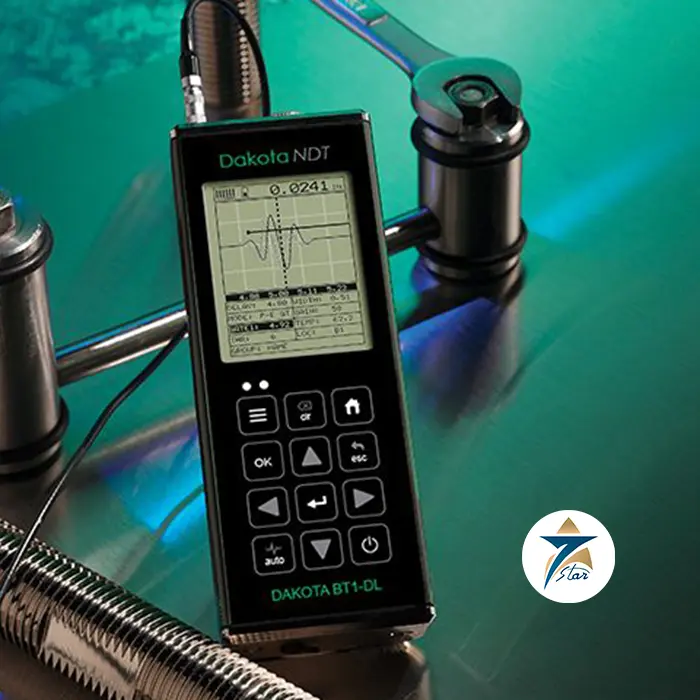
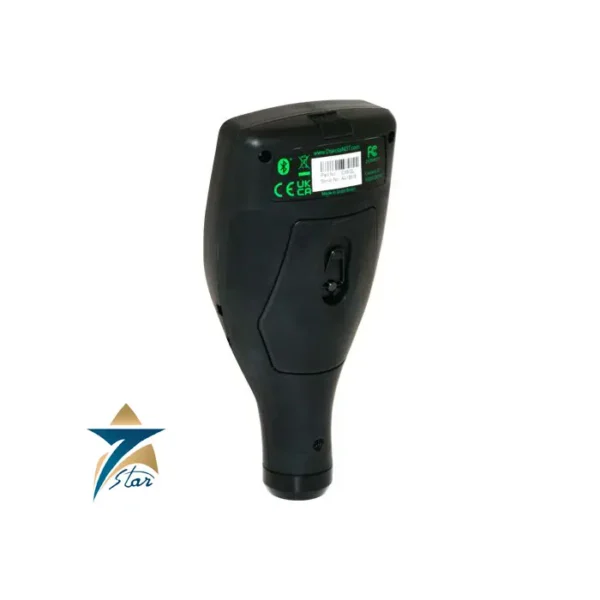
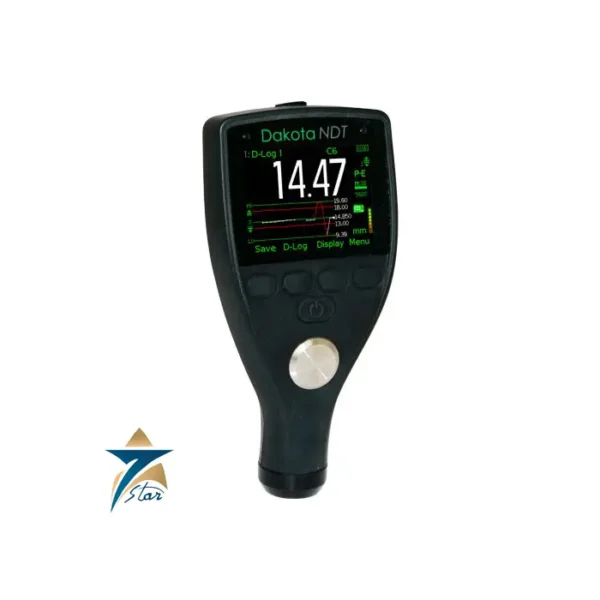
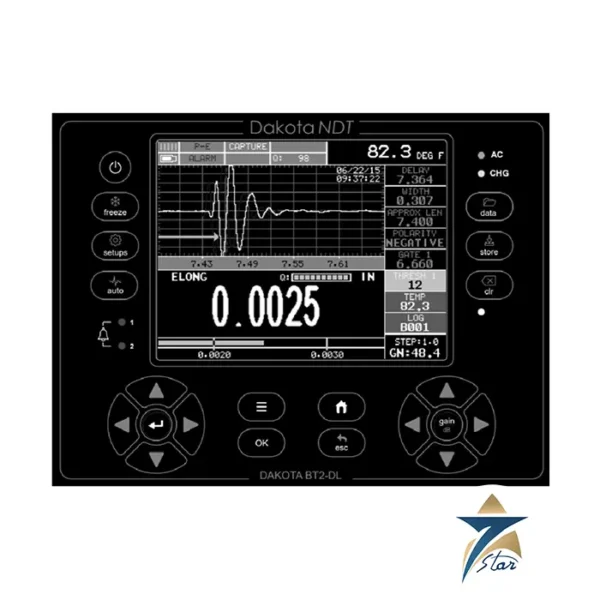
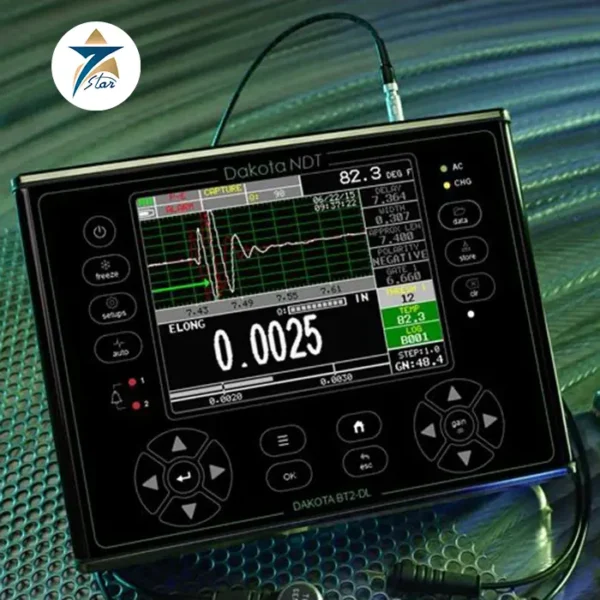
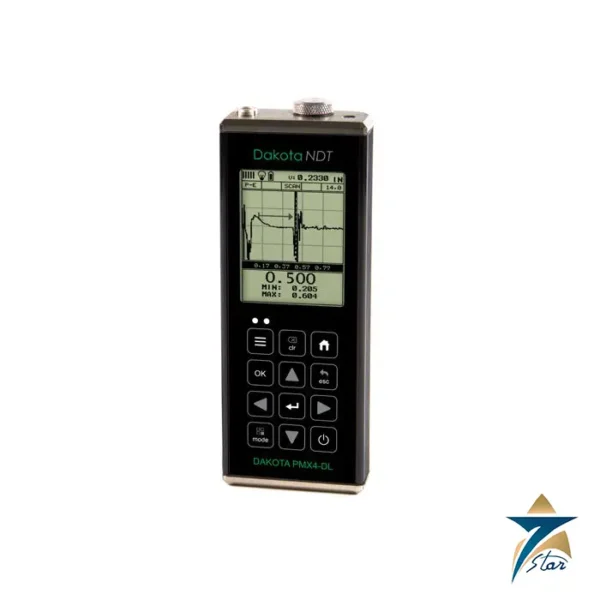
The Dakota BT1-DL is a handheld ultrasonic bolt tension monitor that measures fastener elongation directly, giving a true indication of bolt load without the temperature, friction, and thread-condition errors that affect torque-wrench methods. It is used by maintenance and inspection teams across Oman and the GCC responsible for critical bolted joints on wind turbines, structural steel, bridges, pressure equipment, and automotive or heavy-machinery frames.
Because torque-based tightening only estimates preload indirectly, a torque reading can be badly misleading on a lubricated, corroded, or previously-loaded fastener. The BT1-DL instead measures the bolt’s actual physical stretch, giving technicians a direct, repeatable measurement of applied load that torque alone cannot provide.
Operating Principle
The BT1-DL sends an ultrasonic pulse from a single-element contact transducer (1 to 10 MHz) down the length of the bolt and measures the time-of-flight to the far end. As a bolt is tightened, it stretches by a small, precisely measurable amount; comparing the loaded time-of-flight to an unloaded reference reading yields the elongation, and from elongation and the bolt’s known material properties the applied load or stress can be calculated. This direct-elongation method offers resolution down to 0.0001 mm (0.00001 inch), independent of tightening friction or thread lubrication.
Engineering Design of the Dakota BT1-DL
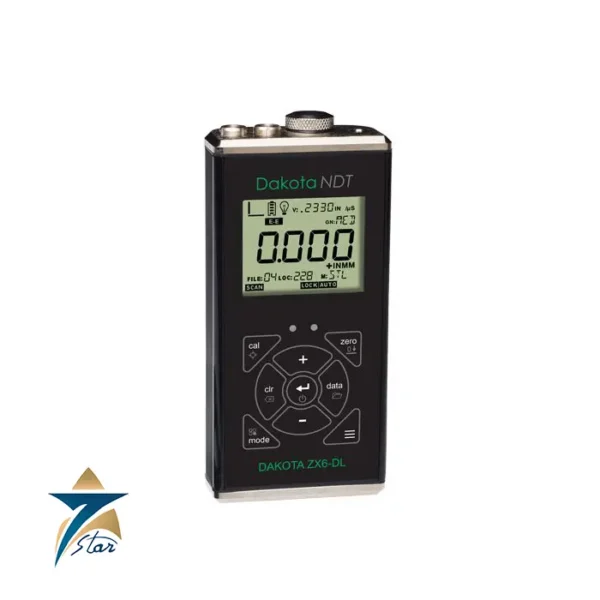
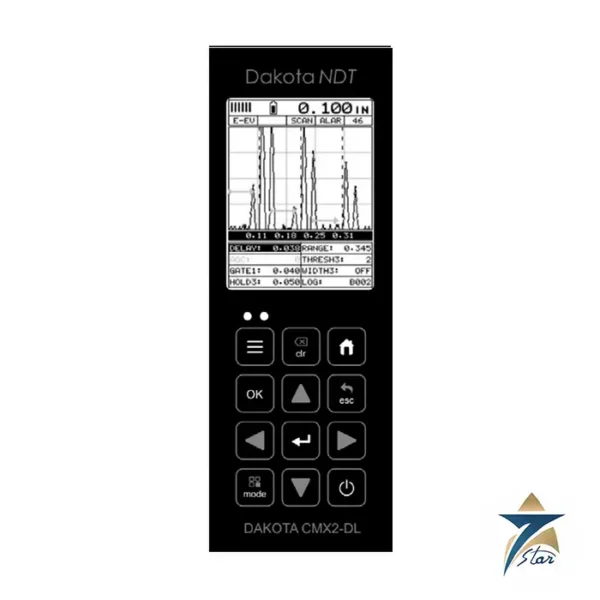
The instrument covers a bolt-length measurement range of 25.4 to 25,400 mm (1 to 999 inches), with switchable resolution of 0.001 mm (0.0001 in) or 0.0001 mm (0.00001 in) depending on the precision required for the application. Readings and bitmap waveform captures are stored in 4 GB of internal memory, organized with sequential and grid-batching options for structured inspection of multi-bolt joints such as flange rings or turbine tower sections, and reviewed later with a built-in capture viewer. A 1/8 VGA greyscale display (240×160 pixels) with adjustable backlighting keeps readings legible in bright outdoor field conditions typical of wind and structural inspection work.
Key Features
- Direct ultrasonic elongation measurement, unaffected by friction or lubrication
- Bolt-length range 25.4-25,400 mm (1-999 in)
- Switchable resolution: 0.001 mm (0.0001 in) or 0.0001 mm (0.00001 in)
- 4 GB internal memory with sequential/grid batching and bitmap capture viewer
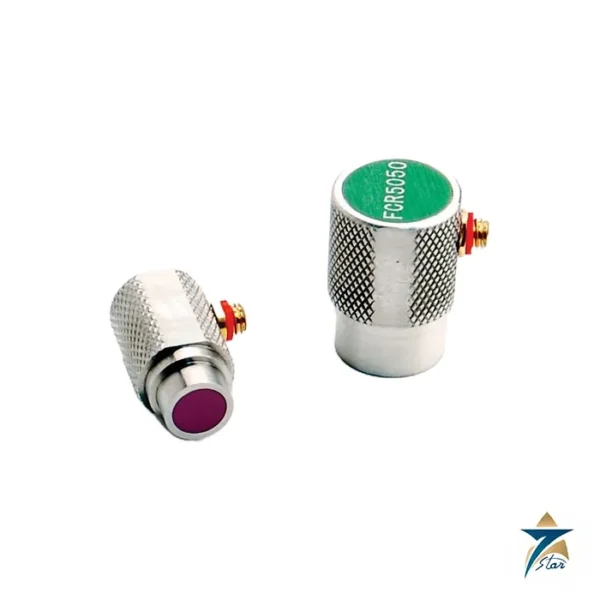
- Single-element contact transducer, 1-10 MHz, multiple connector options
- 1/8 VGA greyscale display, 240×160 px, adjustable backlight
- Handheld form factor for field bolt-by-bolt inspection
Industrial Applications
Across Muscat, Sohar, and Salalah, the BT1-DL is used for preload verification on wind-turbine tower and foundation bolting, structural steel connections, bridge fasteners, and critical flange joints in oil and gas and power generation facilities, where torque alone cannot reliably confirm actual bolt load. Grid-batching support makes it practical to systematically survey every bolt in a large flange or tower-section joint and retain a documented record for each.
The instrument is also used in heavy-equipment and automotive-frame fastener verification, and in periodic re-inspection programs where confirming that bolts have retained their design preload — rather than simply re-torquing them — is the actual engineering requirement.
Technical Specifications
| Parameter |
Specification |
| Measurement Method |
Direct ultrasonic elongation (time-of-flight) |
| Bolt Length Range |
25.4-25,400 mm (1-999 in) |
| Resolution |
0.001 mm (0.0001 in) or 0.0001 mm (0.00001 in), switchable |
| Accuracy |
Not stated by the manufacturer; resolution is ±0.0001 mm (0.00001 in) |
| Data Logging |
4 GB internal, sequential/grid batching, bitmap capture |
| Transducer |
Single-element contact, 1-10 MHz |
| Display |
1/8 VGA greyscale, 240×160 px |
| Quantities Measured |
Time (nanoseconds), elongation, load, stress and % strain |
| Velocity Range |
1250 to 13,995 m/s |
| Pulser |
Square wave, selectable 100, 150 and 200 V; spike, thin or wide pulse width (80 to 400 ns) |
| Power Supply |
Three AA cells or USB-C; alkaline 35 h, NiCad 10 h, NiMH 35 h |
| Weight |
383 g (13.5 oz) including batteries |
| Dimensions |
63.5 × 165 × 31.5 mm (2.5 × 6.5 × 1.24 in) |
| Operating Temperature |
-10 to 60 °C (14 to 140 °F) |
| Enclosure |
Extruded aluminum body with nickel-plated aluminum end caps, gasket sealed; meets IP65 |
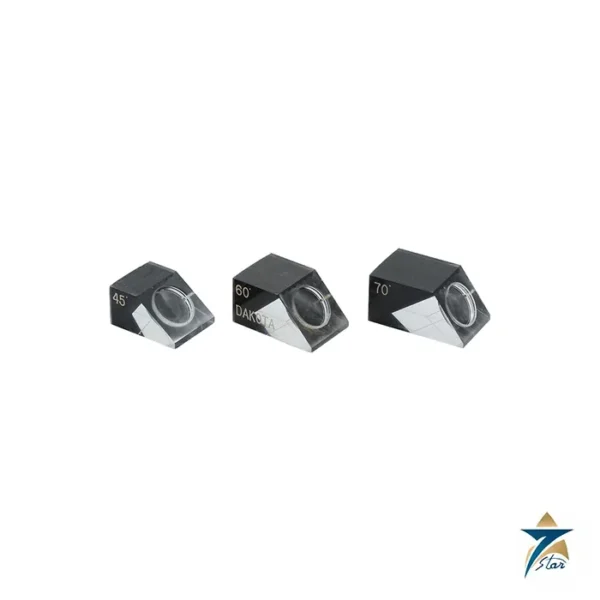
Also available: Dakota Delay Line Tips for Single Element Transducers
Measured Quantities and Calibration Options
According to Dakota NDT, the BT1-DL reports five quantities for each bolt: time in nanoseconds, elongation as a change in length, load, stress and percent strain, the last being the ratio of elongation to effective length. Bolt materials are selected from a preset or custom list. Zero calibration can be automatic, fixed, single-point or two-point, and a field calibration using a vector or regression correction curve is available to increase accuracy when working in load or stress. An Auto Set function automates the detection, scope and display settings for each individual bolt.
Measurement uses pulse-echo mode with zero-crossing detection and precision TCXO timing with a 100 MHz, 8-bit digitizer. The pulser is a square-wave type with selectable 100, 150 and 200 V output and spike, thin or wide pulse widths, and damping is selectable from 50 to 1500 Ω. A temperature probe connected to the 5-pin Lemo 1 socket provides automatic temperature compensation. Adjustable high and low alarm limits are signalled by LEDs and a beeper, and up to 64 user-defined setups can be stored alongside editable factory setups.
Standard Kit and Transducer Options
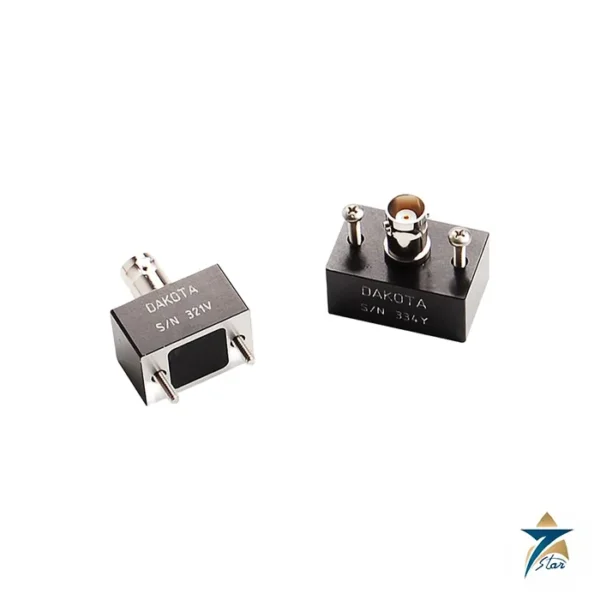
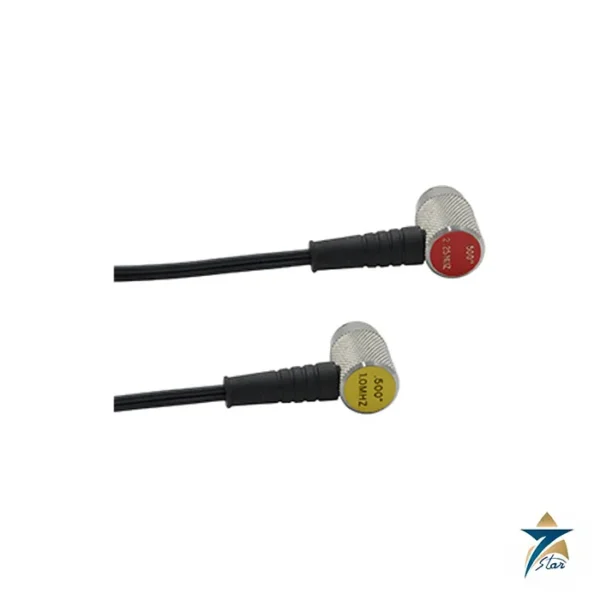
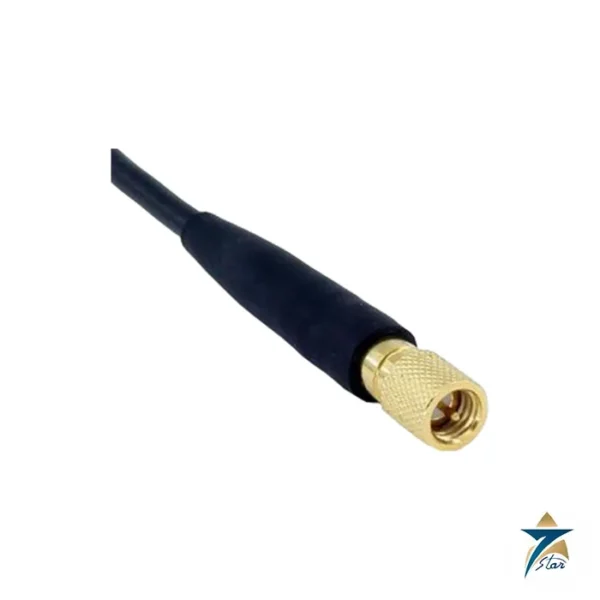
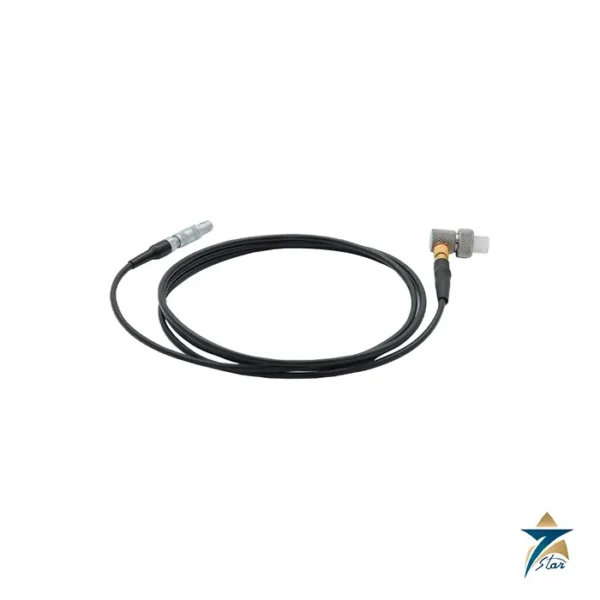
Dakota NDT lists the BT1-DL kit (part number Z-156-0008) as the gauge, three AA batteries, a 4 oz bottle of couplant, a USB Type A to Type C transfer cable, a carrying case, a 10 ft Lemo to Microdot transducer cable, PC utility software as a download, operating instructions and certification. Transducers are single-element types from 1 to 10 MHz in 1/8 in to 1 in diameters, with Microdot, Lemo 00 or BNC connectors depending on the model. Glue-on transducers are available for short bolts with small elongations. The manufacturer states that the BT1-DL replaces the MINIMAX and BG80TDL.
Request a Quote for Dakota BT1-DL Bolt Tension Monitor
Seven Star LLC supplies the Dakota BT1-DL handheld ultrasonic bolt tension monitor to inspection contractors and industrial facilities across Oman and the GCC. Contact our engineering team for a formal quotation and guidance on bolt-load verification programs for your critical joints.
Setting Up a Bolt Measurement Programme
Ultrasonic elongation measurement gives the best results when the bolts, the transducer and the procedure are prepared together. Before the first job, define:
- Bolt material, diameter, overall length and effective clamp length, which are needed to convert elongation into load or stress.
- The material velocity and stress factor settings for the bolt material, established from reference data or by calibrating on a sample bolt under a known load.
- A suitable transducer frequency and diameter for the bolt size, and the couplant to be used.
- A naming and grid structure in the instrument memory that matches the joint, so each reading can be traced to a specific bolt position.
Measurement Procedure
Bolt ends should be flat, clean and square enough for good ultrasonic contact; ground or faced ends improve repeatability considerably. A typical sequence is:
- Take and store the unloaded reference length of every bolt before tightening, noting the bolt temperature.
- Tighten the joint in the planned sequence using the chosen tool, whether torque wrench or hydraulic tensioner.
- Measure each bolt again after tightening; the instrument compares the reading with the stored reference to show elongation or load.
- Adjust any bolts outside the target band and record the final values as the joint record.
Temperature affects the speed of sound in steel, so apply temperature compensation where the bolt temperature differs between the reference and the loaded measurement, which is common on outdoor sites in the Gulf.
Common Measurement Issues
- Weak or unstable echo: check couplant, end-face condition and transducer contact pressure.
- Readings drifting between visits: confirm the same transducer, cable and settings are used, and compensate for temperature.
- Unexpected load values: verify the entered bolt data, clamp length and material factors.
Applications in Oman and the GCC
Bolt load verification is valuable on pipeline and pressure vessel flanges during shutdowns, on wind and structural steel projects, on compressor and turbine casings in power and oil and gas plants, and on heavy mining and construction equipment where fastener failure carries a high safety risk.
Sourcing Through Seven Star LLC
As the officially authorized Dakota NDT representative in Oman, Seven Star LLC supplies bolt tension monitors with their transducers and accessories, manufacturer documentation, and technical support across Oman and the GCC. Tell us your bolt sizes and materials through our quote request and we will help select a suitable instrument and transducer package, with documentation and calibration certificates.

























Reviews
There are no reviews yet.