Overview
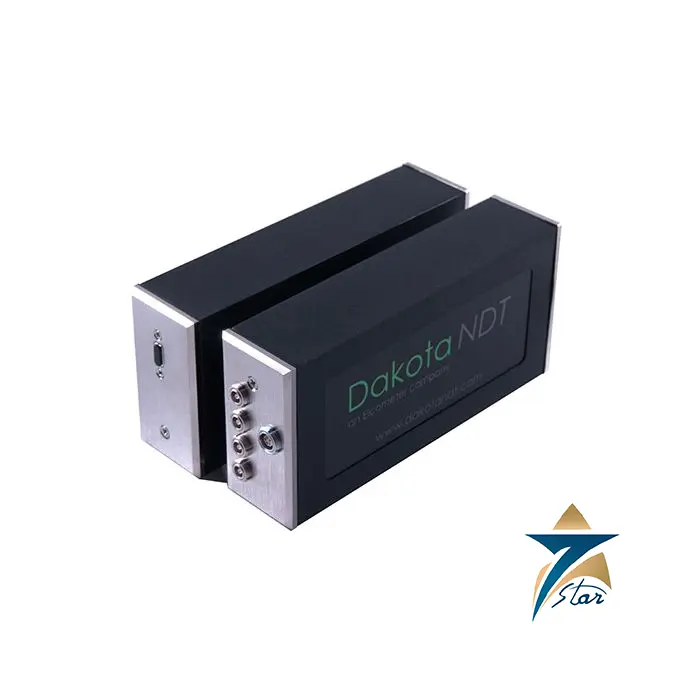
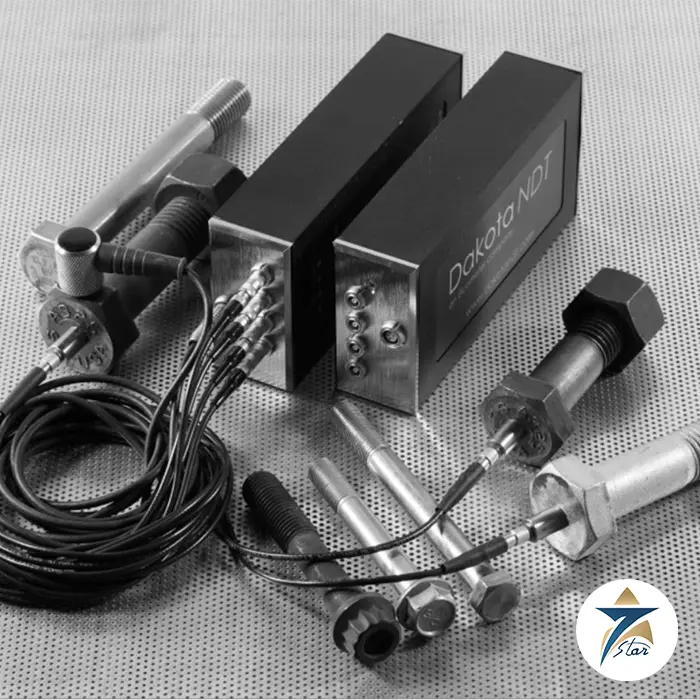
The Dakota MultiMax is a 4-channel ultrasonic bolt tension monitor built for continuous, simultaneous preload monitoring across multiple fasteners, using permanently installed glue-on transducers rather than a single handheld probe. It is used by asset-integrity teams and critical-machinery operators across Oman and the GCC who need ongoing, unattended tracking of bolt load on high-consequence joints rather than periodic spot checks.
Unlike the handheld BT1-DL or benchtop BT2-DL, which are used for on-demand spot measurements, the MultiMax is designed for permanent or semi-permanent installation, with each transducer bonded directly to its bolt so it can be monitored remotely and repeatedly without the placement variability of a handheld probe.
Operating Principle
The MultiMax uses the same pulse-echo ultrasonic elongation method as Dakota’s other bolt tension monitors, with zero-crossing detection for precise time-of-flight measurement, but multiplexes four channels through a single instrument, sequentially interrogating up to four glue-on transducers. Multiple MultiMax modules can be stacked together to expand the total number of monitored bolts on a single machine or structure, and the instrument includes automatic temperature compensation to correct for thermal expansion effects on the elongation reading.
Engineering Design of the Dakota MultiMax
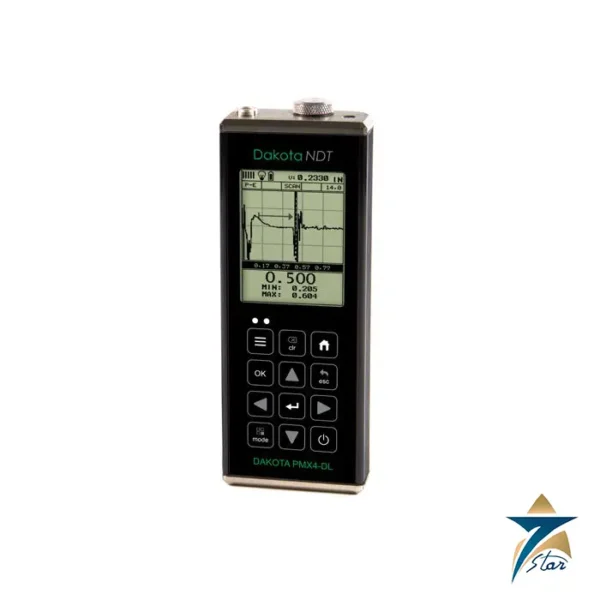
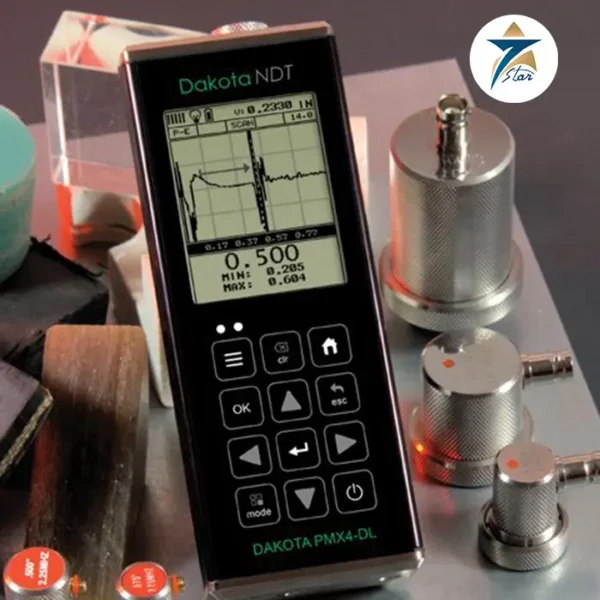
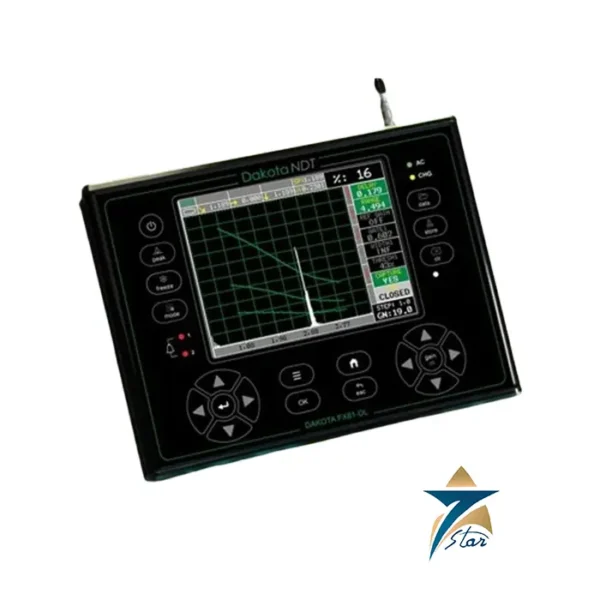
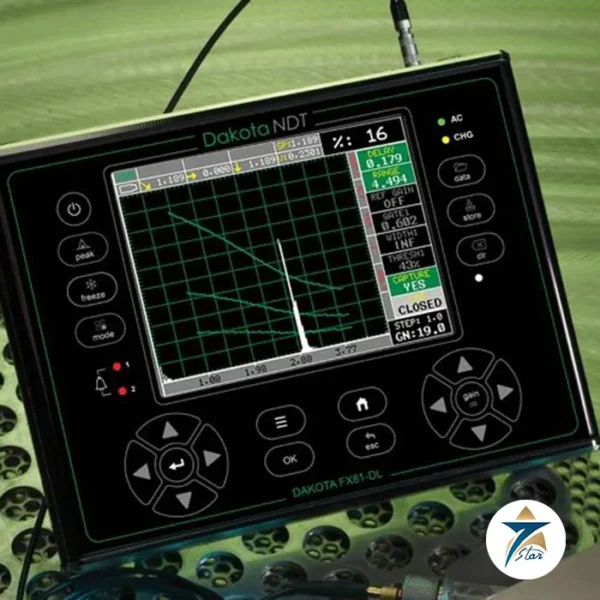
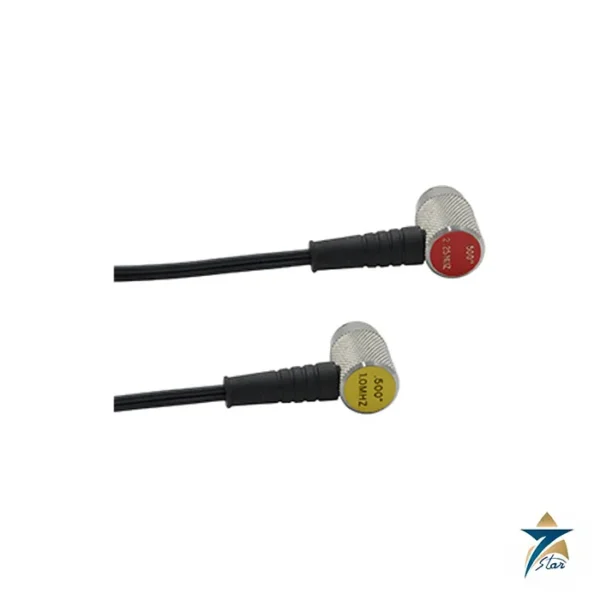
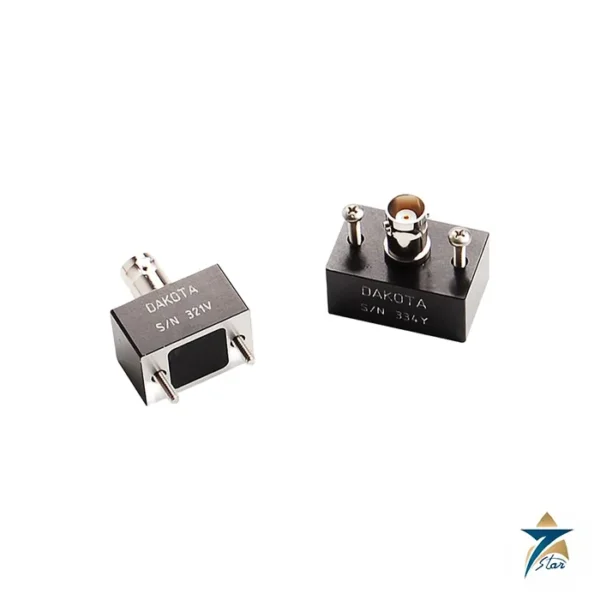
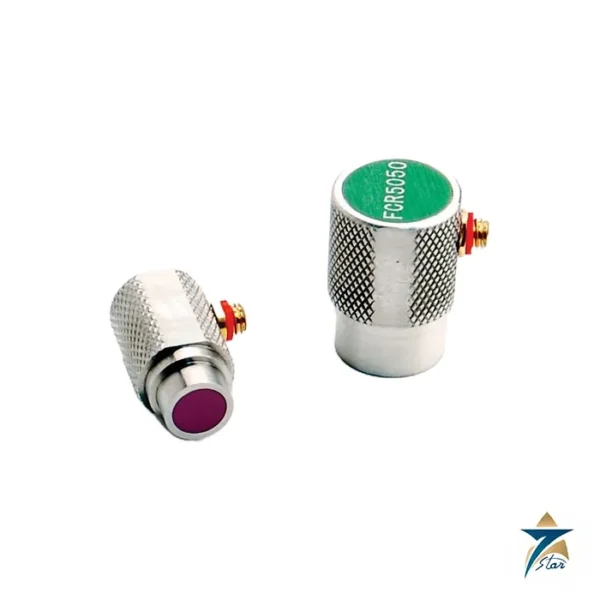
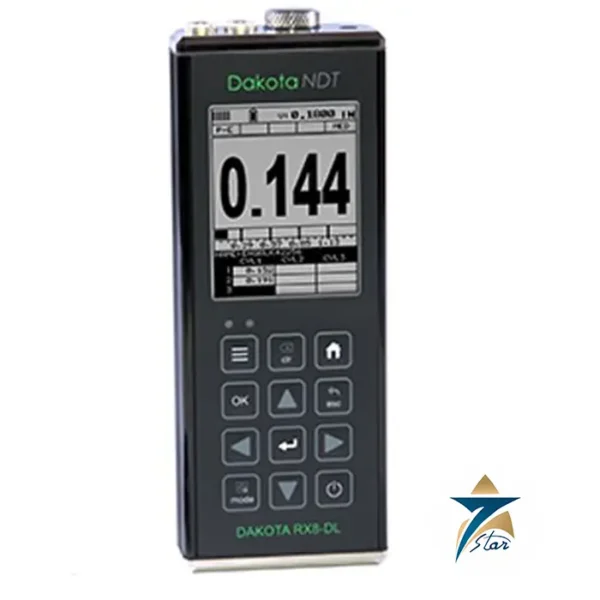
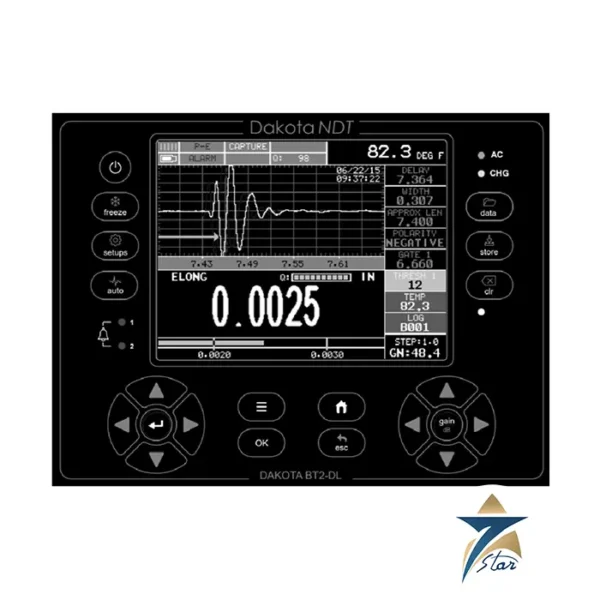
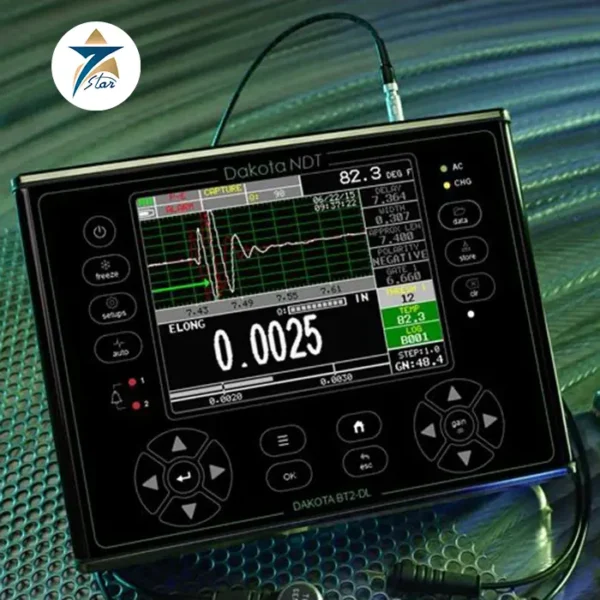
The MultiMax measures fasteners from 1 inch to 50 feet (25.4 mm to 15.2 m), depending on material type and consistency, at a resolution of ±0.00001 in (0.0001 mm). Glue-on single-element transducers are available from 1 to 10 MHz across diameters from 1/8 to 1 inch, bonded permanently in place to eliminate the placement and movement errors possible with a handheld probe. Readings and RF waveforms are shown on an A-scan display with a large digital numeric readout, and data is archived automatically or manually to 4 GB of internal SD storage in both proprietary (.sm2) and CSV formats for later analysis.
Key Features
- 4-channel multiplexed monitoring, stackable for more channels
- Permanent glue-on transducers eliminate placement/movement error
- Bolt length range 1 in-50 ft (25.4 mm-15.2 m)
- Resolution ±0.00001 in (0.0001 mm)
- Automatic temperature compensation
- 4 GB internal memory, .sm2/CSV data export
- A-scan RF waveform display with large digital readout
Industrial Applications
Across Muscat, Sohar, and Salalah, the MultiMax is used for continuous preload monitoring on critical unspared machinery joints, flange connections, and structural bolting in power generation, oil and gas, and heavy-industrial facilities, where an undetected loss of bolt tension could lead to a safety or reliability incident. Its permanent transducer installation suits it to long-term condition-based monitoring programs rather than one-time inspection surveys.
The instrument is also specified for wind-turbine tower and foundation bolting and other structures where repeated re-inspection of the same bolts over time is required, since the bonded transducers guarantee measurement repeatability at the exact same point on each fastener.
Technical Specifications
| Parameter |
Specification |
| Channels |
4, multiplexed; stackable for more |
| Measurement Method |
Pulse-echo ultrasonic, zero-crossing detection |
| Bolt Length Range |
1 in-50 ft (25.4 mm-15.2 m) |
| Resolution |
±0.00001 in (0.0001 mm) |
| Transducer |
Glue-on, single-element, 1-10 MHz, 1/8-1 in diameter |
| Data Logging |
4 GB internal SD, .sm2/CSV export |
| Display |
A-scan RF waveform + large digital readout |
Planning a Permanent Monitoring Installation
A successful bolt monitoring project starts with the bolt data. For each monitored fastener, record the material, diameter, total length, effective length (clamp length), and the target preload. Bolt ends must be flat and reasonably smooth for the glue-on transducer to bond well, so check or prepare the end faces before installation. Choose the transducer frequency and diameter to suit the bolt size and length: longer bolts and coarse materials usually need lower frequencies. Plan the cable routing from each bolt to the instrument so that cables are protected from heat, moving parts and damage during maintenance.
Installation and Baseline Readings
Clean and degrease the bolt ends, bond the transducers following the adhesive instructions, and allow full cure before taking readings. The most important step is to record a zero-load reference length for each bolt before tightening, together with the bolt temperature. After tightening, the Dakota MultiMax compares each reading with the reference to show elongation and, with the correct material factors, load. Label every channel clearly so that each reading can always be traced to the correct bolt.
Maintenance and Troubleshooting
- Weak or missing echo: check the transducer bond and cable connections; a failed bond may need rebonding.
- Readings shift with temperature: confirm the temperature compensation setup and the temperature input.
- Unstable readings: check the A-scan for the correct echo and adjust the gate and gain settings.
- Data gaps: check the storage settings and download data at regular intervals.
For long-term programs, set a routine for reviewing the stored readings, for example after start-up, after the first thermal cycles, and then at fixed intervals. Compare each bolt with its neighbours on the same joint: a single bolt losing load faster than the rest often points to gasket relaxation, thread damage or a local problem worth inspecting. Keep the reference lengths, material factors and channel labels in the maintenance records, so that the monitoring stays meaningful even when staff change or the instrument is replaced.
Use in Oman and GCC Facilities
In the region, bolt load monitoring is useful on large compressor and turbine joints, high-pressure flanges in gas processing and refining, and structural connections exposed to thermal cycling from high daytime temperatures. Seven Star LLC supplies Dakota Ultrasonics bolt measurement instruments and transducers across Oman and the GCC and can help plan the channel count, transducers and accessories for your joints.
Request a Quote for Dakota MultiMax – 4 Channel Bolt Tension Monitor
As the official authorized representative of Dakota NDT in Oman, Seven Star LLC supplies bolt tension monitors with technical support for asset-integrity teams across Oman and the GCC. Contact our engineering team for a formal quotation and guidance on permanent bolt-monitoring installations for your critical joints.

























Reviews
There are no reviews yet.