- Automation & ControlView all 3,167 products
- Automation Accessories
- AC Drives
- PLC & I/O Cards
- Industrial Communications
- Vibration Monitoring
- Controllers & Data Acquisition
- Isolator & Barrier
- Safety Switches & Guard Locking
- Encoders
- Motor Soft Starters
- CCTV & Security
- Pneumatic Cylinders
- HMI Displays
- Servo Drives
- Industrial Computers
- Machine Vision
- Automation Software
- Robotics
Brand: Metrohm
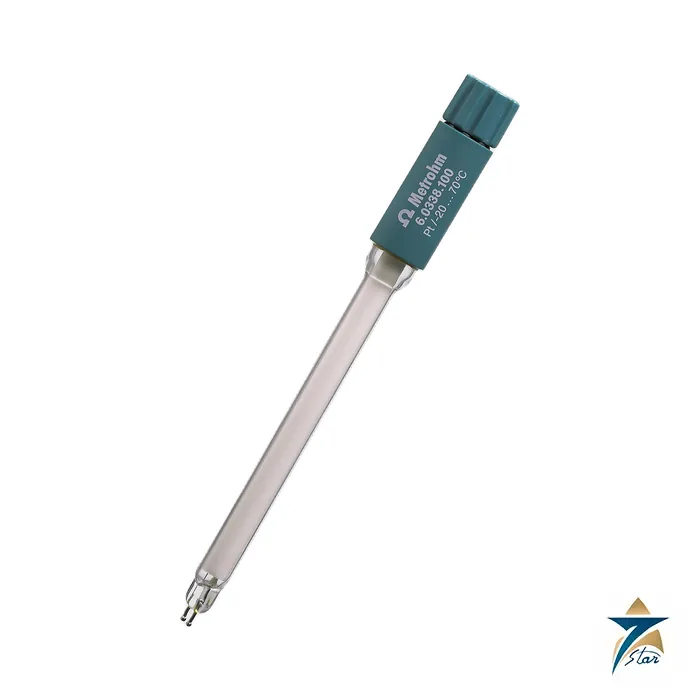
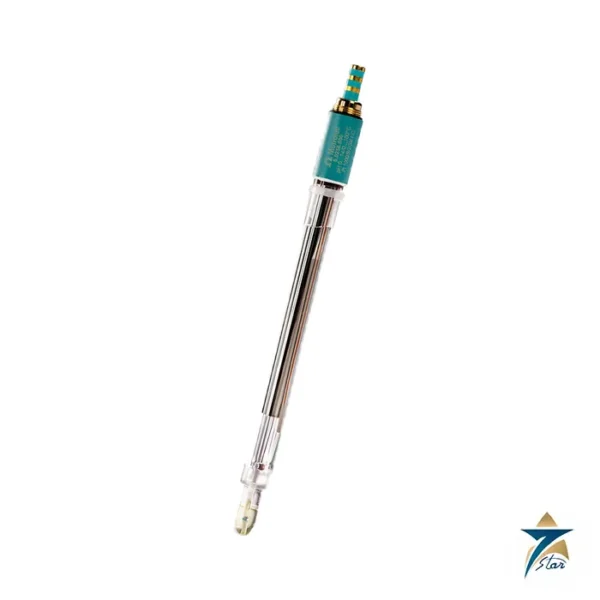
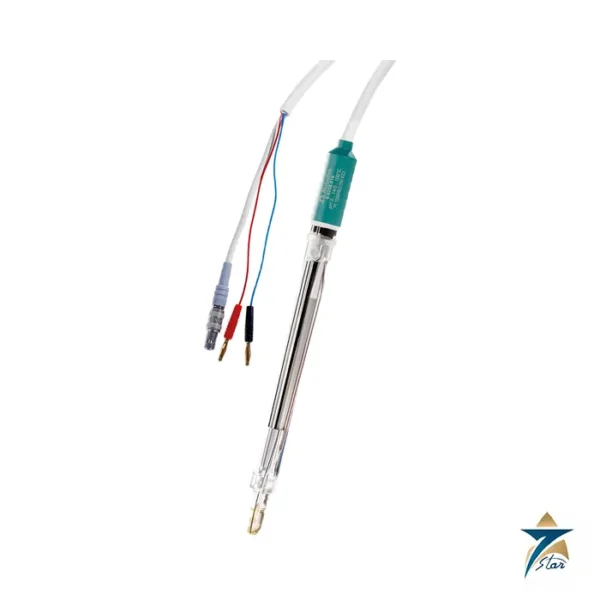
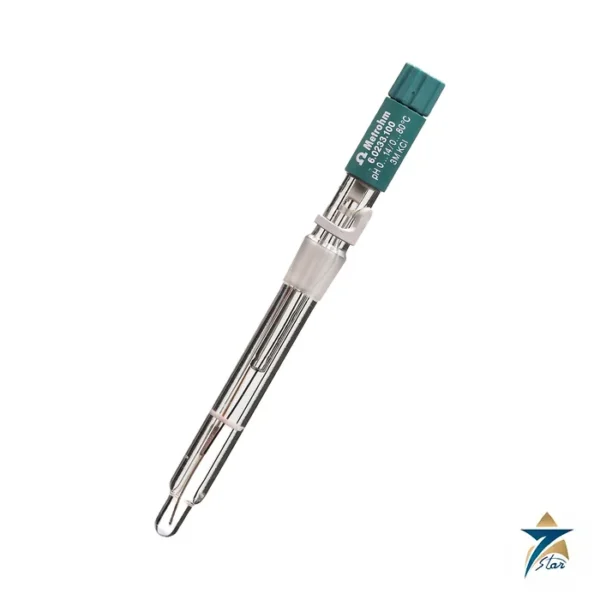
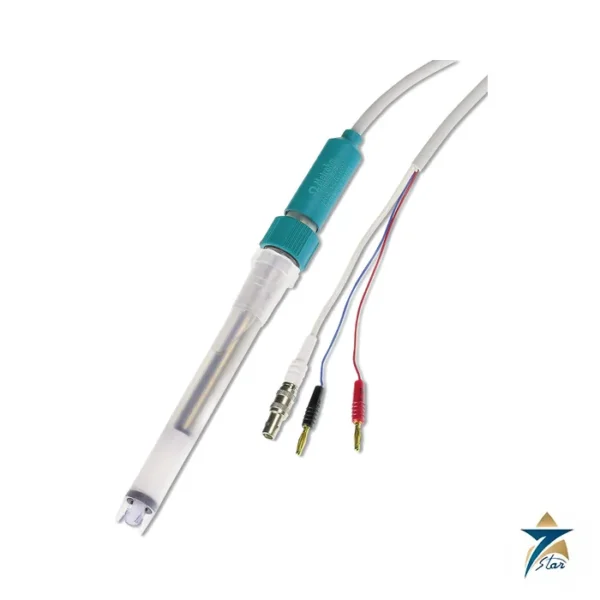
Metrohm 6.0338.100 Double Pt Wire Electrode for KF Titration
Description
Overview
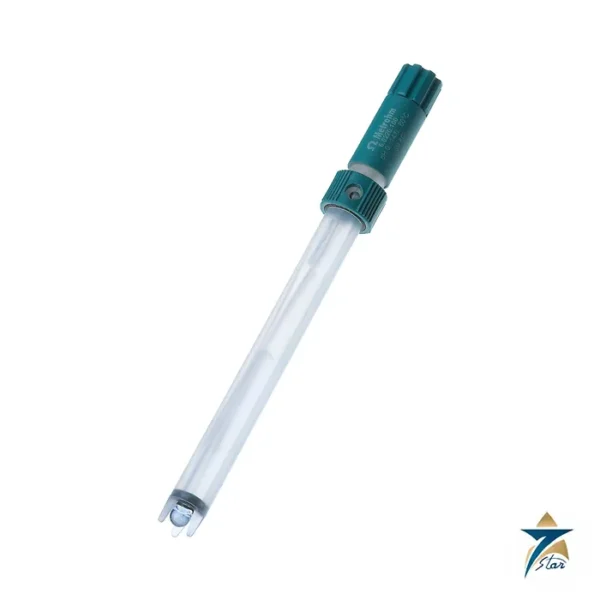
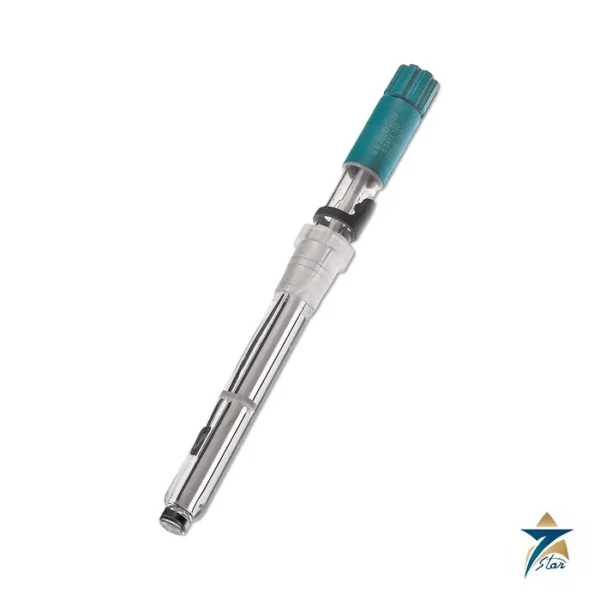
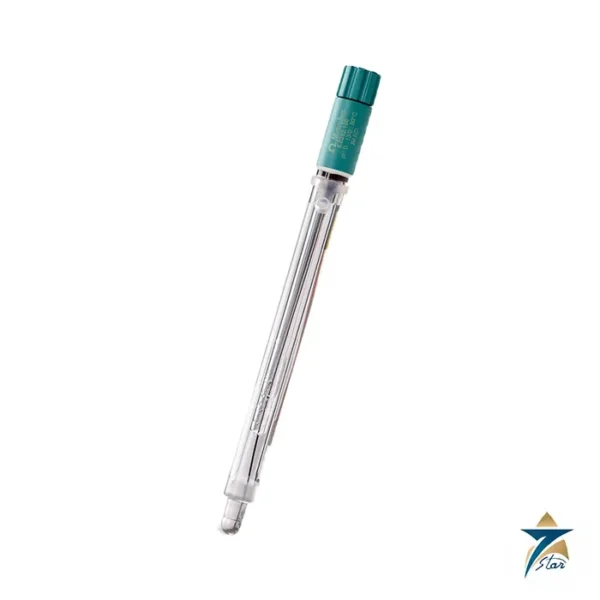
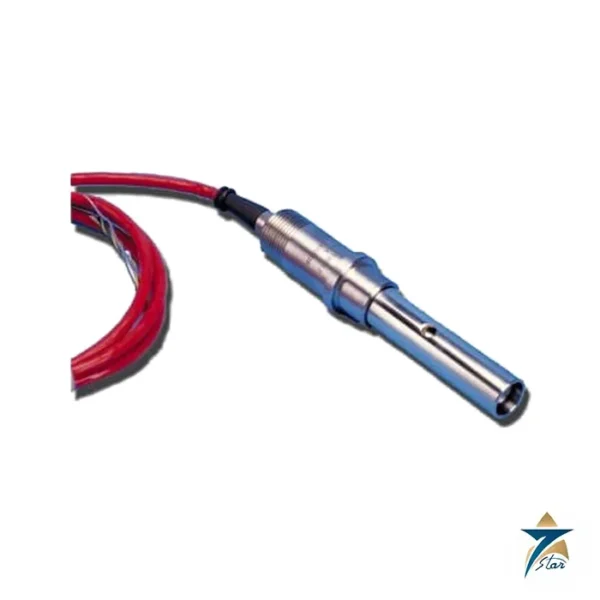
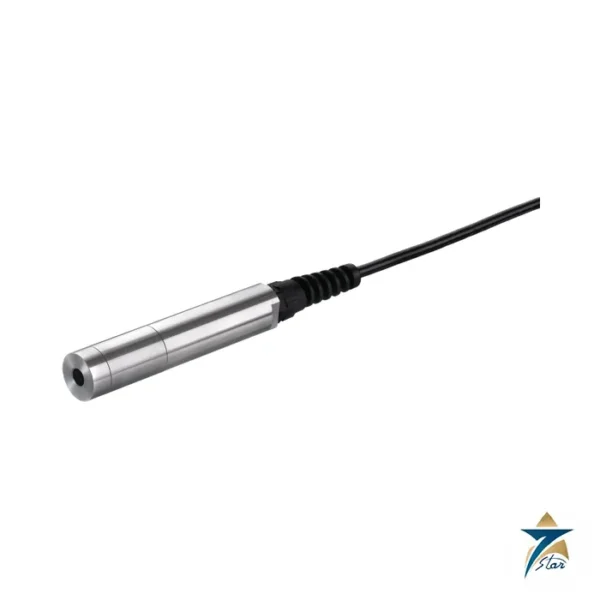
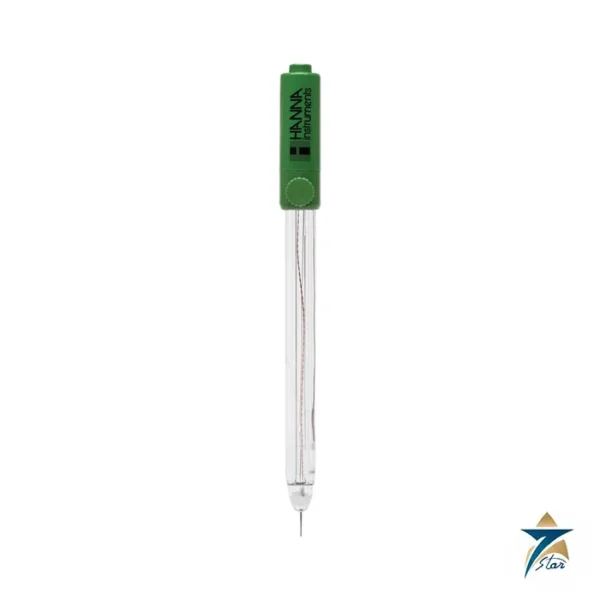
Volumetric Karl Fischer titration needs a sensor that tells the titrator when the last trace of water has been consumed, and the Metrohm 6.0338.100 is the double platinum wire electrode that Metrohm designates for that task. It is an indicator electrode: two thin platinum wires sit at the tip of a slim glass shaft, and the titrator applies a small constant current between them and monitors the voltage. While water remains, the voltage stays high; once the titrant is in slight excess, it drops abruptly, and that jump is the endpoint signal. Seven Star LLC is an independent supplier serving Oman and the GCC.
No reference electrode is needed, which is why the product page lists no sleeve and no electrolyte. The electrode is compact enough to dip into small titration vessels and the narrow shaft passes through standard lid openings.
Properties of Metrohm 6.0338.100
| Property | Metrohm data |
|---|---|
| Order number | Metrohm 6.0338.100, double Pt wire electrode for volumetry |
| Use | Indicator electrode, volumetric Karl Fischer titration |
| Indicator | Platinum, wire |
| Measuring range | minus 2000 to plus 2000 mV |
| Temperature range | minus 20 to 70 degrees C |
| Sleeve | None |
| Installation length | 96 mm maximum |
| Minimum immersion depth | 5 mm |
| Shaft | Glass, 8 mm diameter |
| Plug-in head | Metrohm plug-in head G |
What sets Metrohm 6.0338.100 apart from the other Karl Fischer electrodes
Metrohm offers several Karl Fischer electrodes and the differences are concrete. The coulometric double Pt wire electrode 6.0341.100 has a standard ground-joint sleeve 14/15, a 101 mm length, a 12 mm upper shaft tapering to 8.75 mm and a 10 mm immersion depth, whereas the volumetric Metrohm 6.0338.100 has no sleeve, a 96 mm length, an 8 mm shaft and a 5 mm immersion depth. The generator electrode 6.0344.100 is not an indicator at all but the unit that produces iodine, with a SGJ 29/22 sleeve and a 24 mm shaft. Choose the Metrohm 6.0338.100 when your titrator doses titrant from a burette.
Where volumetric titration fits in Oman and the GCC
Water content is a quality number for lubricating oils, transformer oils, fuels, solvents, glycols, amine solutions and many chemicals. Oil and gas laboratories, power utilities, petrochemical plants and cable manufacturers measure it routinely. Volumetric titration suits samples with water contents from about 100 ppm upward, while coulometric methods handle lower levels. A reliable indicator electrode is essential because the endpoint detection of every titration depends on it, and a drifting indicator shows up as unstable results and long titration times.
Fitting and connecting
Connect the electrode to the polarising input of the titrator with a standard Metrohm cable, and place it so that the platinum wires are covered by at least 5 mm of liquid but sit away from the stirring vortex and the burette tip. Set the polarisation current and the endpoint voltage according to the method of the instrument. The electrode has no sleeve, so it is held by the lid or by a stopper rather than by a joint.
Cleaning the indicator electrode
The Metrohm leaflet on Karl Fischer electrodes cautions to take care not to bend the platinum pins when cleaning. Contaminated indicator electrodes can be cleaned with an abrasive such as aluminium oxide powder from the polishing set 6.2802.000 or with toothpaste, then rinsed first with water and then with methanol. Never place electrodes in ultrasonic baths. Metrohm also does not recommend cleaning Karl Fischer accessories with solvents that contain ketones or aldehydes, which would react with the titration chemistry and leave residues.
Signs the electrode needs attention
A sluggish endpoint, a drifting baseline and results that fall short of control samples are the common signs. First inspect the pins for deposits, bending or a dull film. Clean them gently as described, rinse with methanol, and let the electrode dry before returning it to the cell. If the voltage signal stays erratic with a verified cable and a fresh solvent, replace the electrode. Handling the electrode carefully extends its life because the two wires are fine and the glass is thin.
Practical tips for reliable water determination
Keep the titration vessel closed, because moist air adds water and raises the drift. Condition the solvent until the drift is stable before adding a sample. Check the titrant titer regularly with a water standard, and record the indicator electrode signal during pre-titration. These routine steps matter as much as the electrode itself, but a clean, undamaged indicator makes all of them easier to carry out and to audit.
Understanding the bipotentiometric signal
The principle behind this electrode is bivoltametric endpoint indication. A small, constant polarisation current flows through the two platinum wires. In the presence of water the iodine that is added is consumed immediately, the solution contains iodide but almost no free iodine, and the wires are strongly polarised, so the voltage is high. The moment the last water reacts, free iodine appears, the polarisation collapses and the voltage falls by several hundred millivolts. Because that change is large and fast, the indicator electrode can detect it even in samples that contain only a trace of water, and the titrator can stop dosing with little overshoot.
Since the electrode needs no electrolyte and has no diaphragm, it has no refilling routine and no liquid junction that can clog, which is a real advantage in oily or viscous samples. Its weak points are mechanical: the fine pins can bend, and a film of sample residue can slow the response. Both are easy to prevent with careful handling and the cleaning routine in the leaflet.
Choosing the right electrode for your titrator
Volumetric Karl Fischer systems, such as titrators with a burette drive and a titration vessel with a lid, are designed around an indicator of this type. Coulometric systems need the combination of a generator electrode and a separate indicator electrode. When you order, make sure that the method is volumetric and that the lid opening accepts an 8 mm shaft.
Ordering the Metrohm 6.0338.100
Quote the order number Metrohm 6.0338.100 and the quantity. Tell us which titrator and titration stand you use so that the cable and plug configuration can be confirmed, and add a polishing set if you do not already have one.
Related items you may also need: Metrohm 916 Ti-Touch Compact Potentiometric Titrator | Metrohm 905 Titrando Potentiometric Titrator | Metrohm 888 Titrando Potentiometric Titrator | All Metrohm products.
Metrohm 6.0338.100 ordering checklist
- When the Metrohm 6.0338.100 replaces an installed unit, check the existing nameplate against the code on this page before ordering.
- Every enquiry for the Metrohm 6.0338.100 is answered with a written confirmation of the code, condition and expected lead time.
Documents and quotation
The Metrohm leaflet on Karl Fischer electrodes accompanies this page. Please send an RFQ with Metrohm 6.0338.100, the quantity and your delivery location in Oman or the GCC.
Datasheets & Documents
- Datasheet Metrohm 6.0338.100 Double Pt Wire Electrode for KF Titration Datasheet Download
Reviews (0)
How would you rate this product? Cancel reply
About brand
Metrohm is a Swiss maker of instruments for chemical analysis, founded in 1943 by Bertold Suhner in Herisau, where it is still headquartered. It is best known for titration and also makes ion chromatography, electrochemistry, spectroscopy and process analysers. Metrohm is owned by a foundation.
Seven Star LLC lists the Metrohm 905 Titrando, the 916 Ti-Touch and the 2035 Process Analyzer, and supplies Metrohm instruments and accessories to laboratories and plants in Oman and the GCC.
Metrohm company profile
| Founded | 1943, Herisau, Switzerland |
|---|---|
| Founder | Bertold Suhner |
| Headquarters | Herisau, Switzerland |
| Ownership | Metrohm Foundation |
| Product families | Titrando and Ti-Touch titrators, ion chromatography systems, 2035 and 2060 process analysers, electrodes |
Metrohm instruments listed here
The 905 Titrando is a high-end potentiometric titrator for use with Dosino dosing units. It runs dynamic (DET), monotonic (MET) and set endpoint (SET) titrations, takes up to four 800 Dosino units, recognizes intelligent iTrode electrodes, and is operated from tiamo or OMNIS software or a Touch Control. The 2035 Process Analyzer is an online wet-chemistry analyzer for automatic analysis of samples drawn from the process.
Metrohm products we list
| Family | Examples |
|---|---|
| Liquid Analytical Systems | 2035 Process Analyzer, 905 Titrando Potentiometric Titrator, 916 Ti-Touch Compact Potentiometric Titr… |
Ordering Metrohm equipment: what we need
Metrohm article numbers follow a fixed pattern (the 905 Titrando is 2.905.0010), and that number is the best reference for instruments, electrodes and accessories. For a new application, tell us the sample, the parameter and its concentration range, the method or standard you follow, and for a process analyzer the number of sample streams and the signals your control system needs.
Facts checked against Metrohm's published company history, October 2026.
Browse Metrohm products by category: Liquid Analytical Systems.
FAQ
Questions about the Metrohm 6.0338.100 Double Pt Wire Electrode for KF
Answers from our engineering team on installation, compatibility and integration.
01What is the Metrohm 6.0338.100 used for?
It is the double platinum wire indicator electrode for volumetric Karl Fischer titration, signalling the endpoint when titrant is in slight excess.
02What are the dimensions of the Metrohm 6.0338.100?
The maximum installation length is 96 mm, the glass shaft is 8 mm in diameter and the minimum immersion depth is 5 mm.
03How does the 6.0338.100 differ from the 6.0341.100?
The 6.0341.100 is for coulometric titration and has a SGJ 14/15 sleeve, a 101 mm length and 10 mm immersion depth. The 6.0338.100 has no sleeve.
04How should the Metrohm 6.0338.100 be cleaned?
Use aluminium oxide powder from the 6.2802.000 polishing set or toothpaste, then rinse with water and methanol; avoid bending the pins and ultrasonic baths.
05What temperature range does the Metrohm 6.0338.100 cover?
The data lists minus 20 to 70 degrees C for both long-term and short-term use, with a measuring range of minus 2000 to 2000 mV.


Reviews
There are no reviews yet.