700G27 precision pressure test gauge for 300 psi transmitter and gauge checks
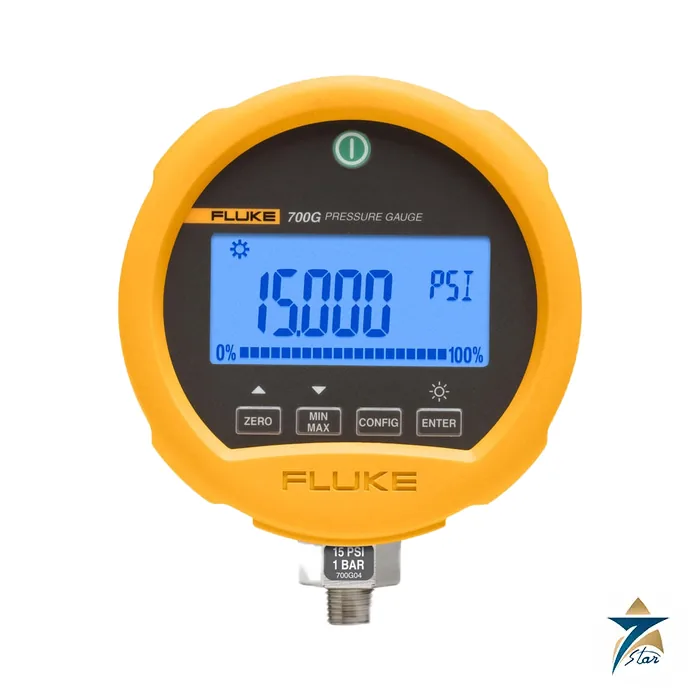
The Fluke 700G27 is a digital precision pressure test gauge covering -12 to 300 psi (-0.83 to 20 bar) with 0.01 psi resolution and an accuracy of 0.05 % of full scale. It is a gauge, not a calibrator: it shows pressure on a 5.5 digit display with a bar graph and acts as the reference when a hand pump applies pressure to a transmitter, switch or mechanical gauge. Seven Star LLC supplies the 700G27 in Oman and the GCC as an independent supplier in Muscat, not affiliated with the manufacturer.
The code decodes as follows: 700G is the series, and 27 is the range code of the 300 psi gauge in the datasheet ordering list (“Fluke-700G27 Pressure Gauge, 300 PSIG”).
700G27 technical specifications
| Parameter |
Specification |
| Manufacturer / part number |
Fluke / 700G27 |
| Range |
-12 psi to 300 psi (-0.83 bar to 20 bar) |
| Resolution |
0.01 psi, 0.001 bar |
| Accuracy |
±0.05 % of full scale (positive pressure) |
| Burst pressure |
1200 psi (80 bar) |
| Media |
Liquids or gases compatible with 316 stainless steel |
| Display |
5.5 digits, 16.53 mm high, with a 20-segment bar graph |
| Connection |
1/4 in NPT male; 1/4 in NPT to 1/4 in ISO adapter included |
| Housing / weight |
Cast zinc-aluminium / 0.56 kg with holster |
| Dimensions |
12.7 x 11.4 x 3.7 cm |
| Power / battery life |
Three AA alkaline / 1,500 hours without backlight, 2,000 hours at slow sample rate |
| Temperature compensation |
0 °C to 50 °C to rated accuracy; add 0.005 % FS per °C from -10 °C to 0 °C and 50 °C to 55 °C |
| Logging |
Up to 8,493 readings with 700G/TRACK software and cable (sold separately) |
| Hazardous area rating |
CSA Class 1, Div 2, Groups A-D; ATEX II 3 G Ex ic IIB T6 Gc |
| Warranty / supplied with |
Three years / traceable calibration certificate and 1/4 in NPT to ISO adapter |
Where 300 psi fits in the 700G series
The series runs from 10 inH2O to 10,000 psi, with absolute gauges at 15, 30, 100 and 300 psia and reference-class gauges at six pressure ranges. The 700G27 sits where compressed air and instrument air headers, hydraulic control circuits and many pumps operate, so one gauge can serve a broad workload. It sits below the 1,000 psi limit that separates the pneumatic and hydraulic pump kits, so either kit can be used depending on the medium and the pressure needed.
| Model |
Range |
Resolution |
Burst pressure |
| 700G06 |
-12 to 100 psi |
0.01 psi |
400 psi |
| 700G27 |
-12 to 300 psi |
0.01 psi |
1200 psi |
| 700G07 |
-12 to 500 psi |
0.01 psi |
2000 psi |
| 700G08 |
-14 to 1000 psi |
0.1 psi |
4000 psi |
Using the 700G27 with pump kits
With the Fluke-700PTPK pneumatic kit, the gauge connects directly to the 700PTP-1 hand pump, which generates up to 600 psi (40 bar) or a vacuum, and the case keeps the pump and gauge together. For hydraulic work, the 700HTPK kit with the 700HTP-2 pump reaches 10,000 psi, but the datasheet recommends hydraulic kits with gauges of 1,000 psi or more, so for a 300 psi gauge the pneumatic kit or a separate pump and hose is the usual choice. Transmitter test hoses rated to 5,000 or 10,000 psi are listed as accessories.
Reading the gauge correctly matters as much as choosing it. The bar graph shows the applied pressure as a percentage of range from 0 to 100 %, which helps to spot a slowly leaking connection, because the bar creeps down while the pump is idle. Hold the pressure steady for a few seconds before recording, allow for small temperature changes in a closed system after pumping, and record the reading together with the device output so that as-found and as-left errors can be calculated at each test point.
Selecting the 700G27
- Choose a gauge whose full scale is not far above the test pressure, so the resolution and accuracy are well used.
- Check that burst pressure of 1200 psi is not exceeded by the source or by thermal expansion in a closed system.
- Verify the media compatibility with 316 stainless steel.
- Plan a pump kit and hose set that matches the threads on your devices.
- Order the 700G/TRACK software if you want to log pressure over time.
Use and maintenance of the 700G27
Zero the gauge before each use with the port open to atmosphere, and use thread tape or a bonded seal appropriate to the fitting. Bleed pressure slowly before disconnecting. Keep the gauge in its holster, protect the display from sunlight and store it dry. Replace the three AA cells when the low-battery icon appears. Follow your quality system for the recalibration interval; a traceable certificate is included with the gauge as supplied.
Typical applications of the 700G27 in Oman and the GCC
Instrument workshops and field crews in oil and gas, power, water and desalination plants use a 300 psi gauge to check pressure transmitters on air and water lines, to calibrate dial gauges and to test relief and pressure switch settings. The Class 1 Div 2 and ATEX II 3 G Ex ic IIB T6 Gc ratings listed in the datasheet are useful in classified areas, subject to the site permit and the markings on the unit.
Information to send with an RFQ for the 700G27
- Part number 700G27
- Quantity and any pump kit, hose kit or software
- Pressure range, media and thread type
- Delivery location and time frame
- Calibration certificate requirement
Storage, handling and spares for the Fluke 700G27
Keep the Fluke 700G27 in its carrying case when it is not in use, and store it in a clean, dry place. Remove or charge the batteries as recommended in the user manual before long storage. Field teams in Oman and the GCC should avoid leaving the instrument in a vehicle in the sun, as high cabin temperatures can exceed the storage range and shorten battery life.
- Check the instrument, cables, hoses or lenses for damage before each job.
- Clean the unit with a soft, slightly damp cloth only; do not use solvents unless the manual allows them.
- Plan a calibration interval that matches your quality system, and keep the calibration certificate with the asset record.
- Order wear parts and accessories, such as batteries, test leads, hoses or adapters, together with the instrument.
For calibration and test work, it helps to state in your RFQ whether you need an accredited calibration certificate with the Fluke 700G27, so the right documents can be confirmed with the quotation.
Documents and quotation
A datasheet covering the 700G series is attached on this page.
Send us the part number 700G27 and the quantity and we will confirm availability and a quotation.
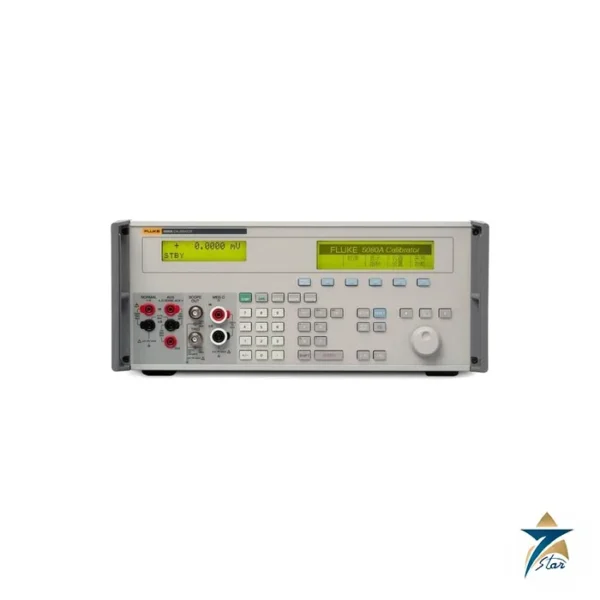
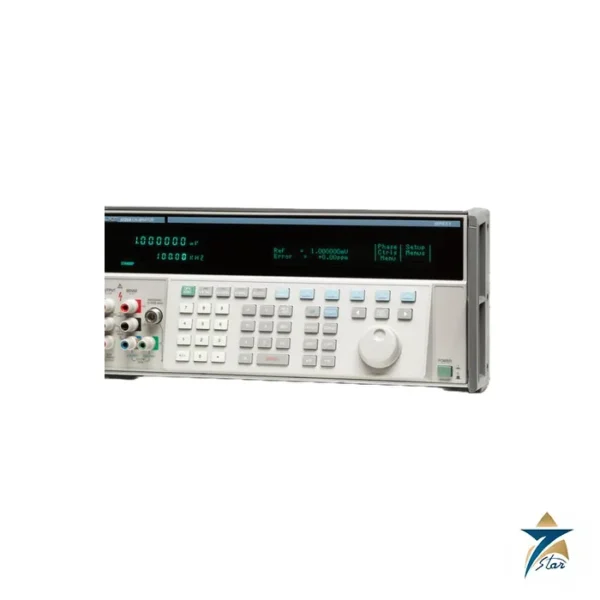
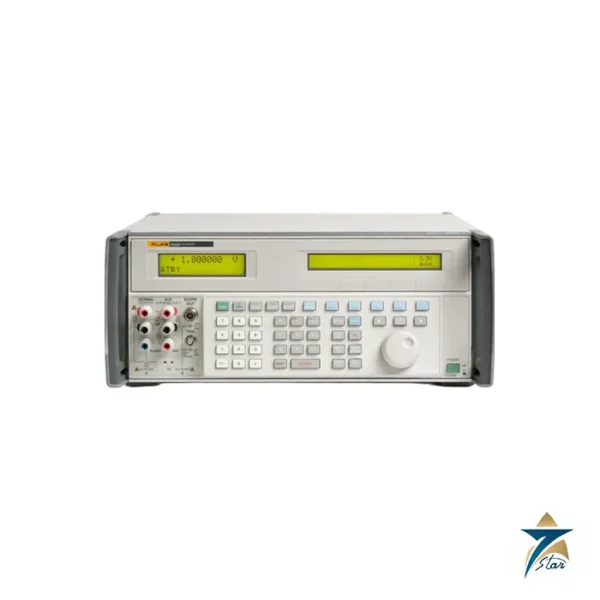
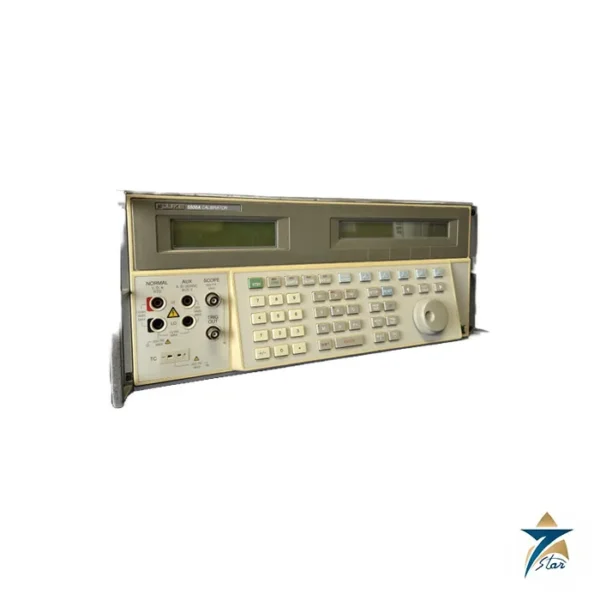
See also: Fluke 5500A Multi-Product Calibrator.




























Reviews
There are no reviews yet.