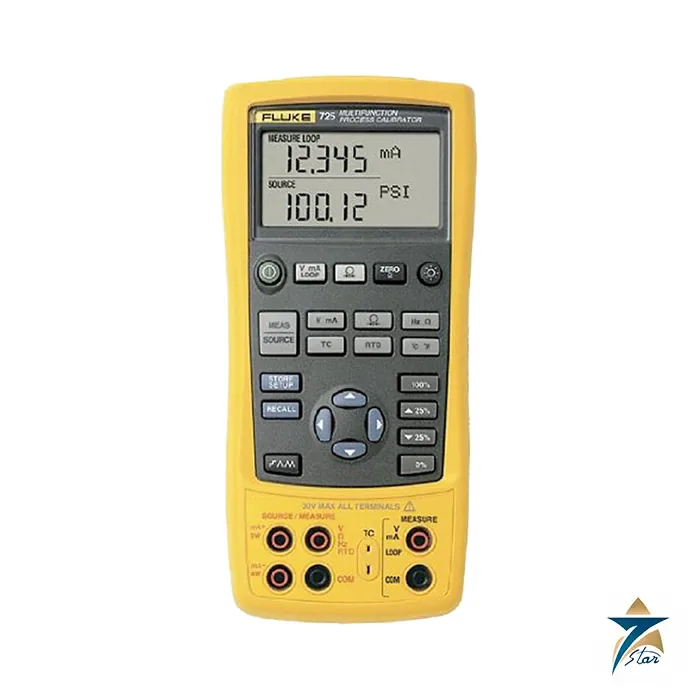
725 multifunction process calibrator for transmitters, sensors and I/P tests
The Fluke 725 Multifunction Process Calibrator is a handheld field calibrator that measures and sources the main signals of process instrumentation: dc voltage, milliamps, thermocouples, RTDs, resistance and frequency. With a Fluke 750P series pressure module it also measures pressure, and it can source milliamps while reading pressure for valve and I/P tests. It is simpler than the 726 and the 754 documenting calibrator, with no HART or documenting functions. Seven Star LLC supplies the 725 in Oman and the GCC as an independent supplier in Muscat, not affiliated with the manufacturer.
The ordering information lists model number 664133 with the description “Fluke-725 Multifunction Process Calibrator”. The included items are TL75 test leads, AC70A test clips and one pair of stackable test leads.
725 technical specifications
| Parameter |
Specification |
| Manufacturer / part number |
Fluke / 725 |
| Voltage |
0 to 100 mV; 0 to 10 V source; 0 to 30 V measure; 0.02 % of reading + 2 LSD |
| Milliamps |
0 to 24 mA, 0.001 mA resolution, 0.02 % of reading + 2 LSD; maximum load 1000 Ω |
| Thermocouple millivolts |
-10.00 mV to +75.00 mV, 0.025 % of range + 1 LSD |
| Resistance |
15 Ω to 3200 Ω |
| Frequency |
2.0 to 1000 CPM, 1 to 1100 Hz, 1.0 to 10.0 kHz; 5 V p-p square wave source |
| Loop supply |
24 V dc, 10 % |
| Thermocouples |
J, K, T, E, R, S, B, L, U, N; accuracy includes 0.2 °C cold junction uncertainty |
| RTDs |
Ni120, Pt100 (385, 3926, 3916), Pt200, Pt500, Pt1000, accuracy from 0.2 °C to 0.8 °C by type and range |
| Pressure |
Any of 50 Fluke 750Pxx pressure modules (measure or source with pump) |
| Maximum voltage |
30 V |
| Temperature coefficient |
±0.005 % of range per °C outside 18 °C to 28 °C |
| Batteries |
Four AA alkaline, about 25 hours typical |
| Size / weight |
96 x 200 x 47 mm / 650 g |
| Shock |
30 g, 11 ms half-sine, or 1 m drop test |
| Warranty |
Three years |
How the 725 is used to calibrate a transmitter
A typical test connects the calibrator source to the transmitter input and the measure channel to its output. For a temperature transmitter, select the thermocouple or RTD type, set the lower and upper range values and use the auto step or auto ramp feature to apply points at 0, 25, 50, 75 and 100 % of span while reading the 4 to 20 mA output. The 24 V loop supply powers the transmitter during the test, with simultaneous mA measurement, so no separate supply is needed. Measured error is compared with the tolerance in the instrument data sheet.
For valve and I/P testing, the calibrator sources milliamps to the I/P converter while a pressure module measures the output pressure. Frequency and CPM functions support flowmeter checks, and the stored test setups save keystrokes on repeated jobs.
Thermocouple accuracy is quoted including 0.2 °C of cold junction uncertainty. As examples from the datasheet, type K is specified at 1.2 °C below 0 °C and 0.8 °C from 0 to 1370 °C, while a Pt100 (385) RTD is specified at 0.33 °C over its range of -200 °C to 800 °C. Resolution is 0.1 °C for most thermocouple types and 1 °C for B, R and S. Because these are the values at the calibrator terminals, the uncertainty of the sensor and wiring in a real loop must be added.
725 compared with the 726 and 754
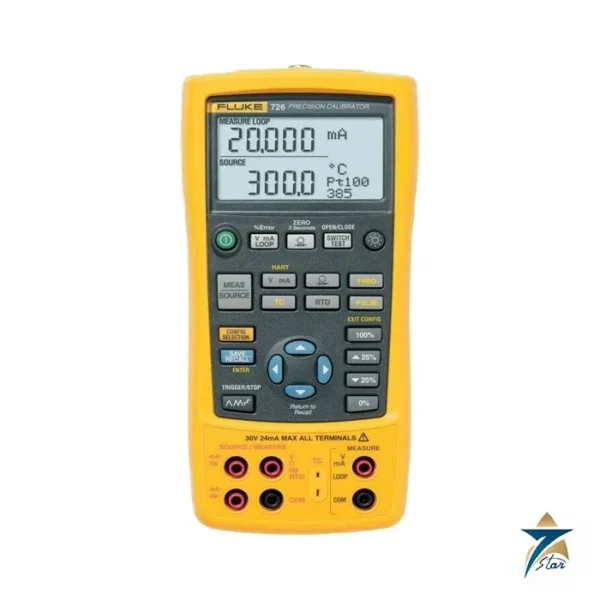
The 725 gives 0.02 % of reading on voltage and milliamps, while the 726 improves this to 0.01 %. The 726 adds a pressure switch test, transmitter error calculation, memory for results, a second channel and HART mode. The 754 is a documenting calibrator with HART communication. Choose the 725 for routine transmitter and loop work where results are written down by hand.
| Model |
mA and volts accuracy |
Result memory |
HART |
Pressure modules |
| 725 |
0.02 % of reading |
No |
No |
Up to 50 750Pxx modules |
| 726 |
0.01 % of reading |
Stored results, error calculation |
HART mode (250 Ω) |
29 700Pxx modules |
| 754 |
Documenting calibrator |
Yes |
Yes, HART communication |
Pressure modules |
Selecting the 725
- List the signals you calibrate: RTD type, thermocouple type, 4 to 20 mA, voltage and frequency.
- Check that the accuracy of the 725 is at least four times better than the instrument tolerance.
- Decide which pressure modules are needed and order them with the correct range.
- Confirm that you do not need HART or documented results; if you do, choose the 726 or 754.
- Add test lead accessories and a hand pump for pressure work.
Use and maintenance of the 725
Insert four AA batteries and set the measure and source functions. Do not apply more than 30 V to the inputs. Allow the calibrator to settle to ambient before use, because the temperature coefficient applies outside 18 °C to 28 °C. Keep a calibration record for the calibrator itself and send it for periodic recalibration. Inspect test leads and clips before each job and store the unit in a clean case.
Typical applications of the 725 in Oman and the GCC
Instrument teams in oil and gas, power, desalination and petrochemical plants use the 725 for routine calibration of temperature, pressure and flow transmitters, for loop checks during shutdowns and for commissioning. The backlight and large battery capacity suit long jobs in plant areas with poor lighting. In summer, instruments in the sun heat above ambient, so allow time for the calibrator and the device to stabilise.
Information to send with an RFQ for the 725
- Part number 725
- Quantity and pressure modules needed
- Signals and ranges to calibrate
- Delivery location and time frame
- Calibration certificate requirement
Storage, handling and spares for the Fluke 725
Keep the Fluke 725 in its carrying case when it is not in use, and store it in a clean, dry place. Remove or charge the batteries as recommended in the user manual before long storage. Field teams in Oman and the GCC should avoid leaving the instrument in a vehicle in the sun, as high cabin temperatures can exceed the storage range and shorten battery life.
- Check the instrument, cables, hoses or lenses for damage before each job.
- Clean the unit with a soft, slightly damp cloth only; do not use solvents unless the manual allows them.
- Plan a calibration interval that matches your quality system, and keep the calibration certificate with the asset record.
- Order wear parts and accessories, such as batteries, test leads, hoses or adapters, together with the instrument.
For calibration and test work, it helps to state in your RFQ whether you need an accredited calibration certificate with the Fluke 725, so the right documents can be confirmed with the quotation.
Documents and quotation
A datasheet for the 725 is attached on this page.
Send us the part number 725 and the quantity and we will confirm availability and a quotation.
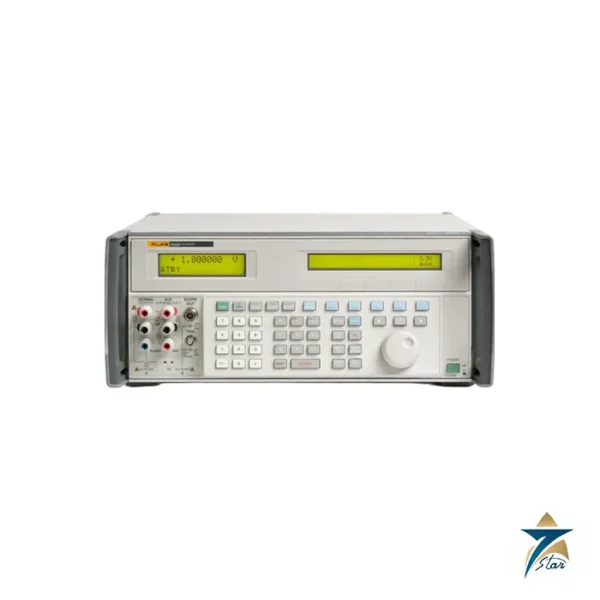
See also: Fluke 5500A Multi-Product Calibrator.
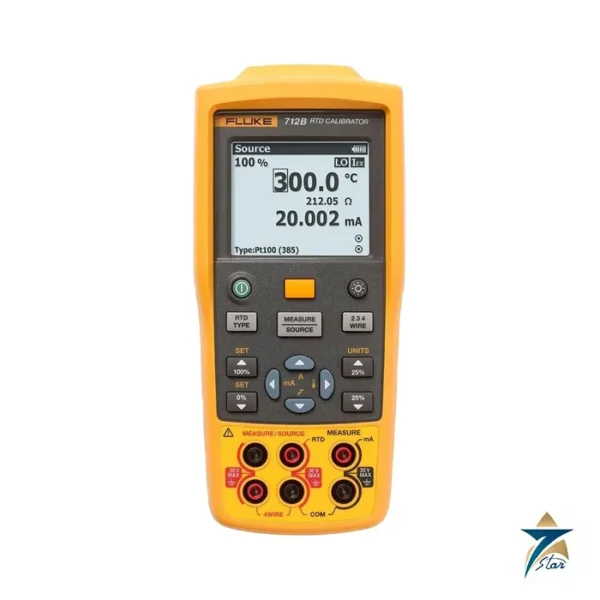
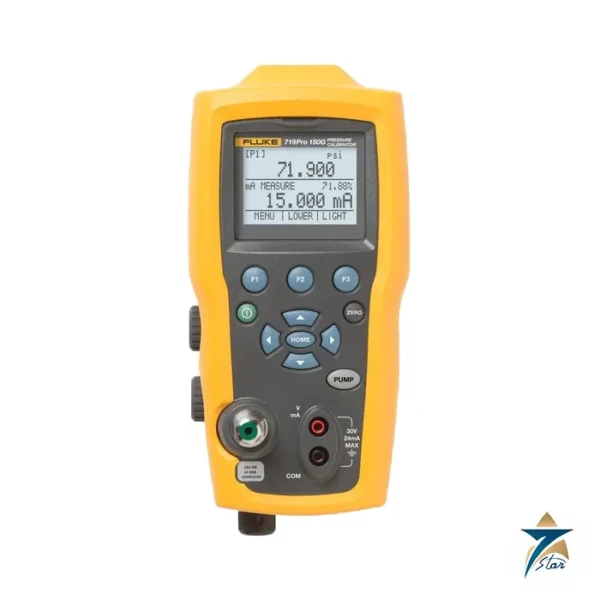
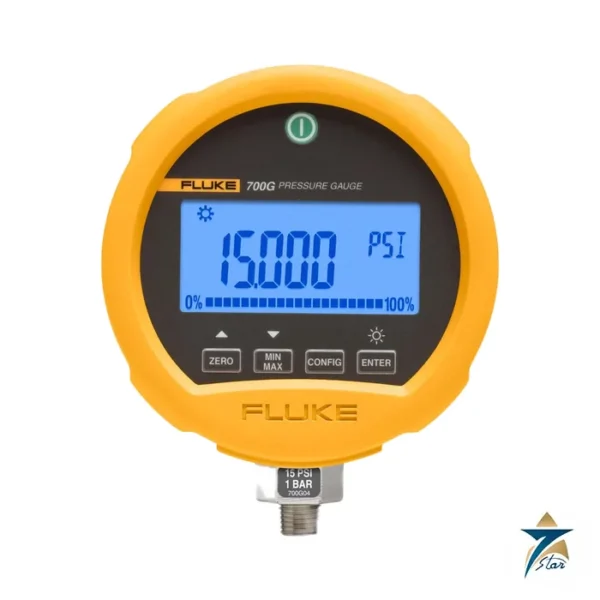
Other Models in the Fluke Process Calibrator Range
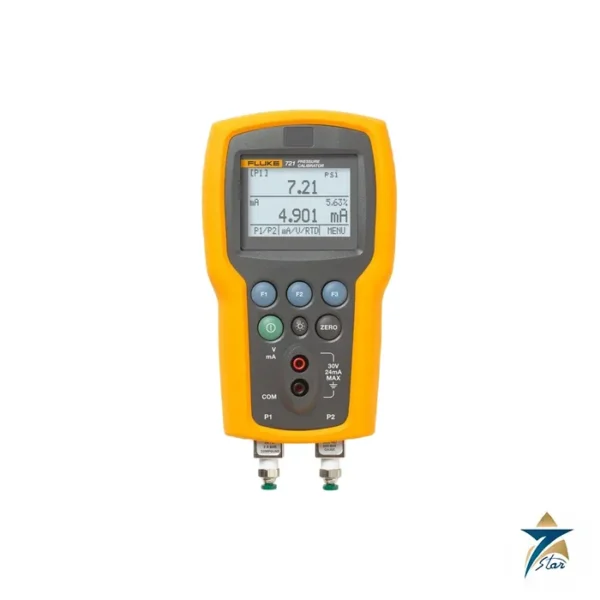
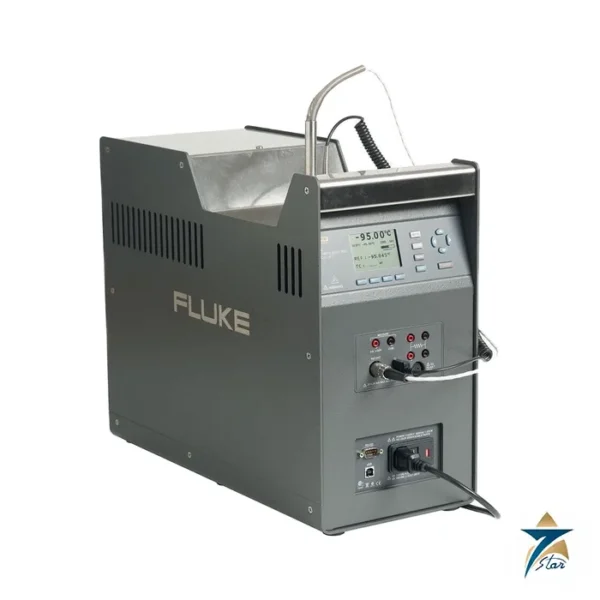
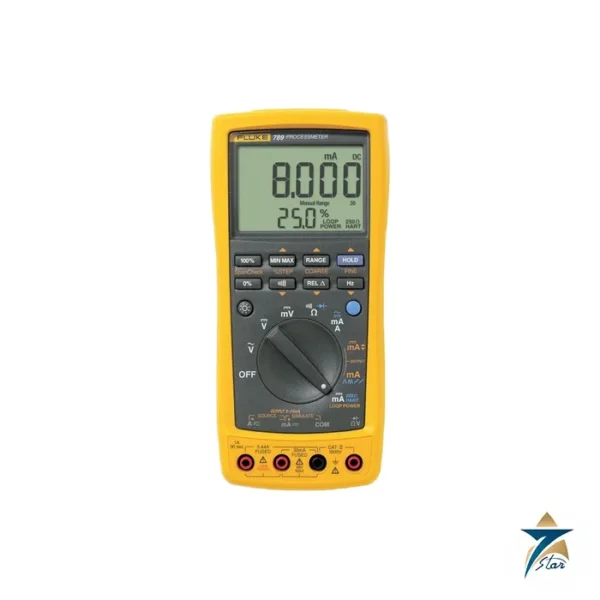
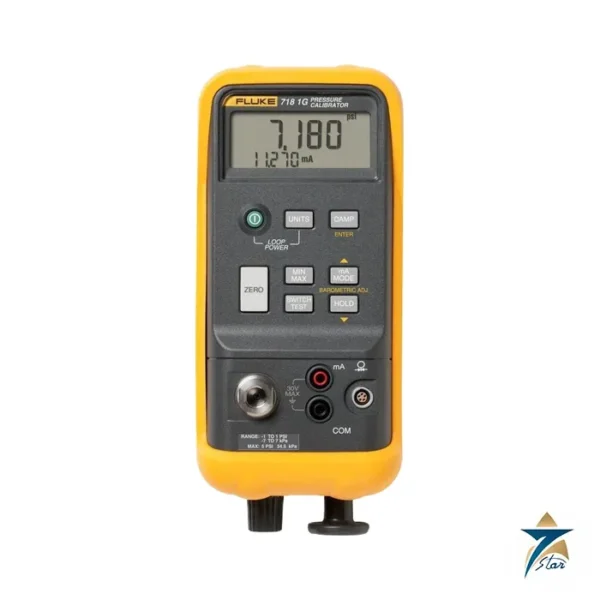
Seven Star LLC supplies models from the Fluke Process Calibrator range in Oman and the GCC. Compare the related models below and request a quote for the one that matches your application.
























Reviews
There are no reviews yet.