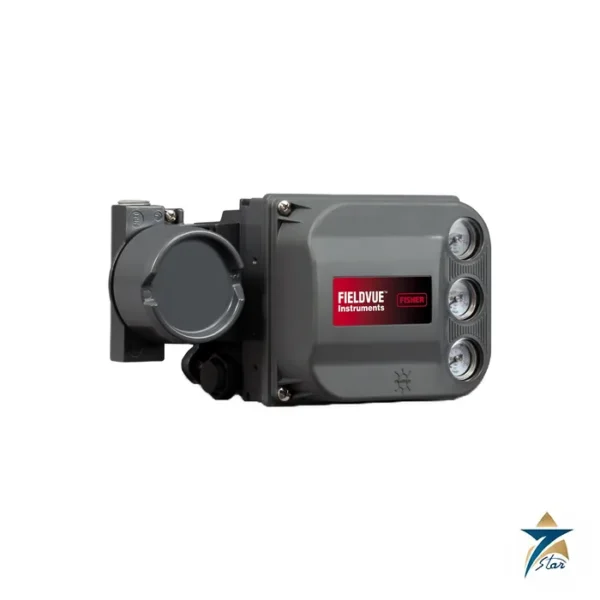
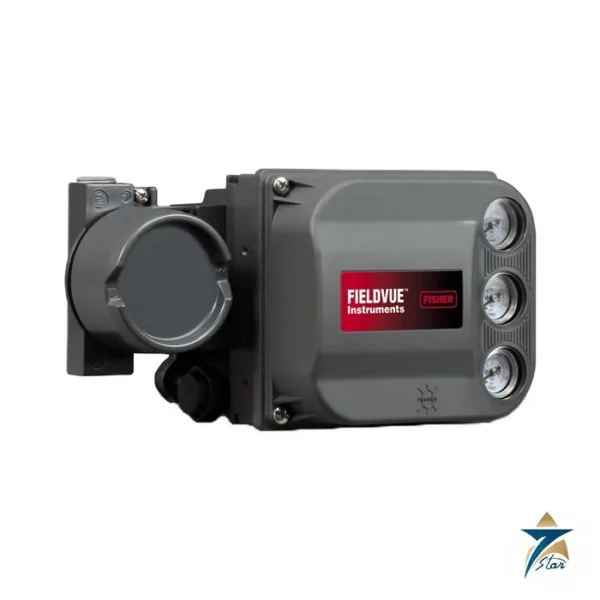
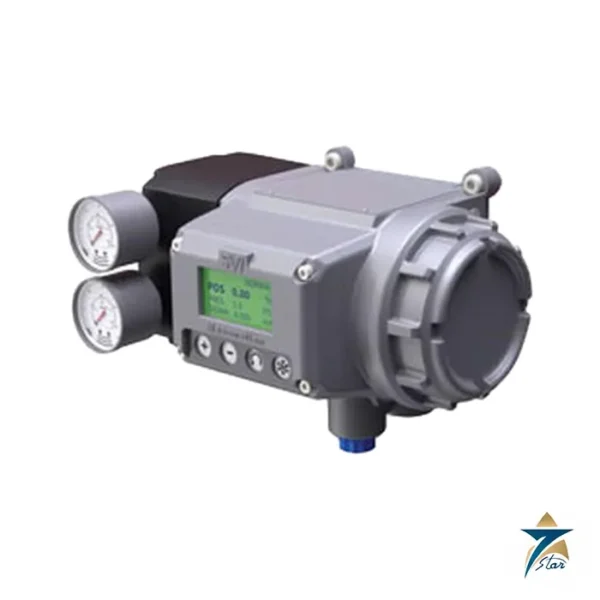
Fisher FIELDVUE DVC6200 SIS digital valve controller for safety shutdown valves
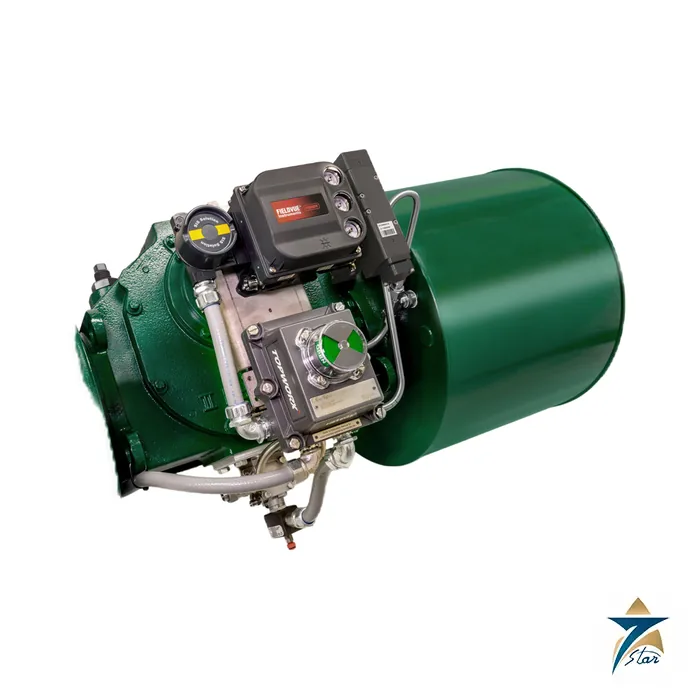
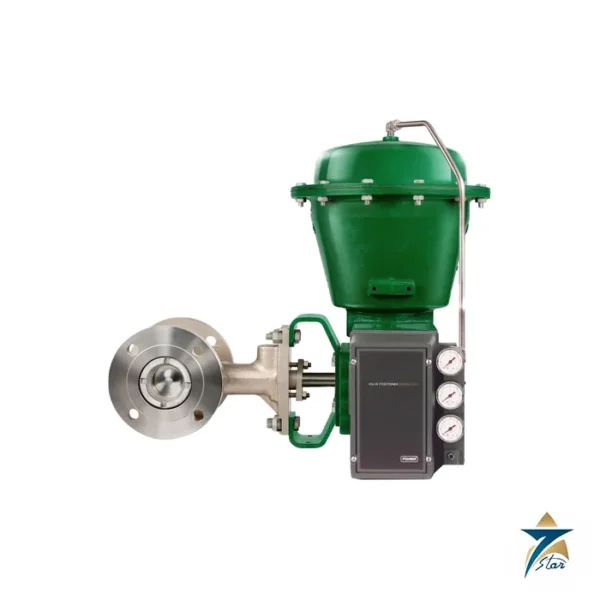
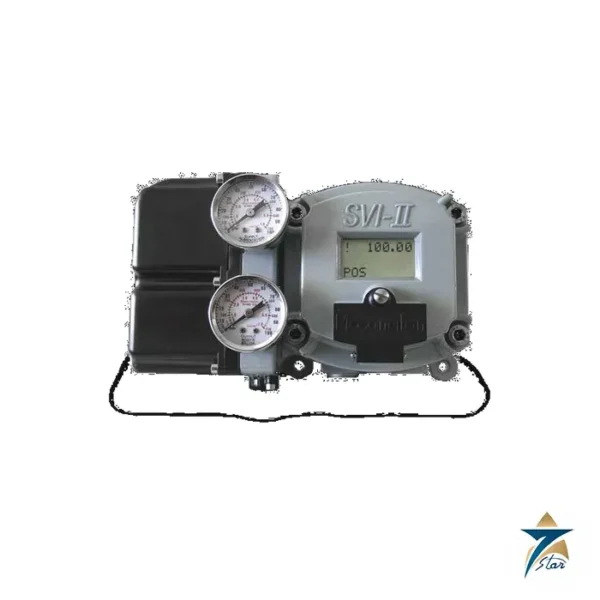
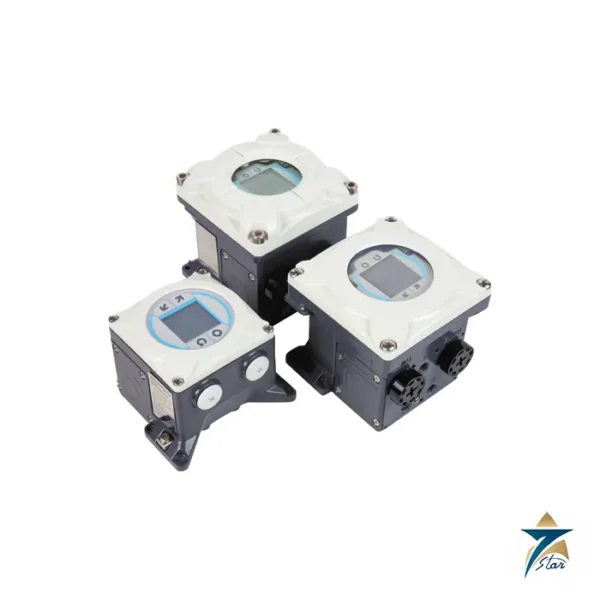
The Fisher FIELDVUE DVC6200 SIS is a HART communicating digital valve controller made for valves that carry a safety function: emergency shutdown, emergency blowdown, emergency venting and emergency isolation. It sits on the actuator of an on/off safety valve, watches the position of the final element, and lets the plant prove that the valve will move when a trip is demanded without taking the valve out of service. The functional safety assessment behind the DVC6200 SIS was carried out to IEC 61508 edition 2 (2010), and in the de-energize-to-trip or energize-to-trip configuration the instrument meets the systematic integrity requirements of SIL 3. The built-in position monitor, whether used as a position transmitter or a limit switch, is stated at SIL 2.
Seven Star LLC supplies Fisher DVC6200 SIS controllers in Oman and the GCC as an independent supplier in Muscat. This page summarises what the product bulletin states so that you can match the instrument to your SIS valve package before you request a quotation.
DVC6200 SIS technical specifications
| Parameter |
Specification |
| Manufacturer / part number |
Fisher (Emerson) / DVC6200 SIS |
| Function |
Digital valve controller for safety instrumented systems, with partial stroke and full stroke testing |
| Safety integrity |
IEC 61508 ed. 2, SIL 3 (DETT or ETT); position monitor SIL 2 |
| Communication |
HART 5 or HART 7 |
| Input signal |
4 to 20 mA DC point-to-point; minimum 9.5 V DC at terminals for analog control, 10 V DC for HART; maximum 30 V DC |
| Multi-drop supply |
11 to 30 V DC at 10 mA |
| Pneumatic output |
Up to full supply pressure, maximum span 9.5 bar / 140 psig; double, single direct or single reverse action |
| Supply pressure |
Low bleed relay: 0.3 bar / 5 psig above maximum actuator requirement; High Cv: 2.8 bar / 40 psig minimum; maximum 10.0 bar / 145 psig or the actuator rating |
| Output capacity |
Low bleed relay: 29.5 normal m³/h at 5.5 bar supply; High Cv: HCv1 1.2 Cv, HCv2 3.2 Cv, HCv3 6.2 Cv exhaust and 3.2 Cv fill |
| Ambient temperature |
−52 to 85 °C (−62 to 185 °F); limits vary with hazardous-area approval |
| Linearity |
Typical ±0.5 % of output span (not applicable below 19 mm travel or 60° rotation) |
| Enclosure |
IP66; CSA and FM Type 4X; ATEX, IECEx and UKEx hazardous-area routes listed |
| Housing material |
Low-copper aluminum alloy (standard) or stainless steel; polyester cover; fluorosilicone elastomers |
| Weight |
Aluminum: 3.5 kg with low bleed relay, 6.5 kg High Cv; stainless steel: 8.6 kg with low bleed relay |
How the DVC6200 SIS tests a safety valve in service
A safety valve that never moves is a valve nobody can trust. The DVC6200 SIS addresses this with two stored test routines. Partial stroke testing (PST) is an on-line test: the instrument ramps the valve through a user-defined portion of its travel, records the response and returns the valve to its safe-state position, all without interrupting the process. It can be started manually or automatically on a schedule. Full stroke testing (FST) ramps the valve over the entire travel and is intended for a shutdown, where it exposes failures that a partial stroke cannot reveal. Each test ends with a plain Pass or Abnormal result and a reason for any abnormal outcome, and ValveLink software time-stamps the reports for audit files.
A spurious-trip protection threshold is part of the PST. If the outgoing actuator pressure passes the configured value, the test aborts so that a sticky valve cannot be driven far enough to cause an unintended shutdown. Position feedback uses a linkage-less non-contact sensor, so no mechanical lever touches the stem, which helps in pipeline vibration and corrosive atmospheres.
Diagnostics on a demand
When the controller is commanded to trip, it can capture diagnostic data automatically. The bulletin lists examples of faults that can be recognised, including a stuck valve, a stuck solenoid, low or high supply pressure, dirty air, external leaks in diaphragm or tubing, piston actuator O-ring failure, excess or insufficient friction, a broken actuator spring and a broken valve or actuator shaft. Alerts follow NAMUR NE107 categories.
Solenoid health monitoring and wiring arrangements
If a solenoid valve is fitted between the DVC6200 SIS output and the actuator, the instrument can verify the solenoid by sensing the momentary pressure change when the solenoid is pulsed. On single-acting actuators the unused output port is piped downstream of the solenoid for this purpose. The function does not apply to the High Cv version. The bulletin shows three typical architectures: de-energize-to-trip with a low-power solenoid and line conditioner, de-energize-to-trip with no solenoid at all, and an energize-to-trip DVC6200 SIS used for PST only together with a separate de-energize-to-trip solenoid. A 0 to 24 V DC trip signal needs the LC340 line conditioner, which mounts on 35 mm DIN rail in a marshalling cabinet or junction box.
Selection checklist for DVC6200 SIS
- Actuator type and size: linear actuators with 6.35 mm to 606 mm travel, or rotary actuators from 45° to 180° (180° needs a special mounting kit).
- Relay choice: low bleed relay for standard actuators; High Cv (HCv1, HCv2, HCv3) for large actuators, which need at least an 8 in. cylinder for HCv1 and a 12 in. cylinder or 220 in² diaphragm area for HCv2 and HCv3.
- Action: double-acting, single direct or single reverse. HCv3 is available only for single direct action.
- Trip philosophy: de-energize-to-trip or energize-to-trip, and whether an LC340 line conditioner is needed.
- Position monitor: integral 4 to 20 mA transmitter (1 % reference accuracy) or one isolated limit switch (2 %), noting that the remote-mount version is not safety certified for this monitor.
- Housing: aluminum or stainless steel, plus options such as gauges, integral filter regulator (not with High Cv), tire valves and local control panels LCP100 or LCP200.
Installation, commissioning and maintenance
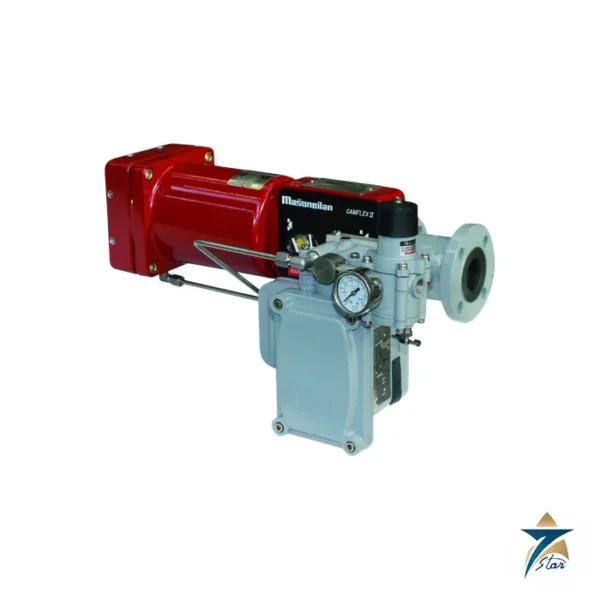
The controller mounts directly on Fisher rotary actuators, 657/667 and GX actuators, and on other actuators that follow IEC 60534-6-1, IEC 60534-6-2, VDI/VDE 3845 or NAMUR dimensions. The supply medium is air or natural gas, clean, dry and non-corrosive per ISA 7.0.01, with a maximum 40 micrometre particle size (5 micrometre for High Cv) and lubricant content not above 1 ppm. Pressure dew point should be at least 10 °C below the lowest expected ambient temperature, which matters on coastal sites with humid air. Electrical entries are 1/2 NPT or M20, and the terminal box isolates field wiring from the rest of the instrument. The design is modular, so working parts can be replaced without disconnecting wiring or tubing. Commissioning is done locally or remotely over HART with a field communicator, ValveLink software, DDs or DTMs.
Typical DVC6200 SIS applications in Oman and the GCC
Emergency shutdown valves on wellhead and gathering manifolds, pipeline isolation valves, compressor station blowdown valves, flare header valves and burner management shutoffs are the usual homes for this controller. In Gulf plants the long test interval of a normally idle valve, high ambient temperature and dusty, salt-laden air make remote proof testing valuable: the same valve can be tested from the control room instead of sending technicians into hot, hazardous areas. The approval list in the bulletin includes ESMA and ECAS-Ex for the UAE, ATEX, IECEx and marine approvals, although not every certification applies to every construction, so confirm the route you need with the exact configuration.
Related Fisher instruments
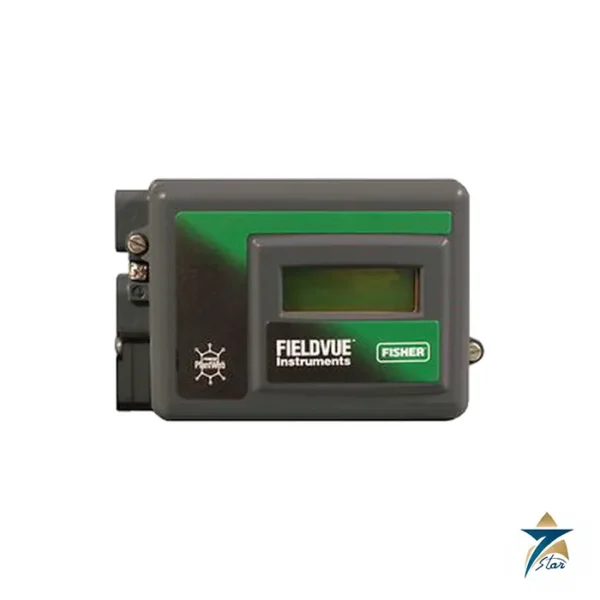
For modulating control valves, the Fisher FIELDVUE DVC6200 and DVC2000 digital valve controllers cover the continuous-duty role, while the DVC6200 SIS is aimed at on/off safety service. Supporting items named in the bulletin include the LCP100 and LCP200 local control panels, the LC340 line conditioner and the Fisher 67CFR filter regulator for integral mounting.
Information to send with an RFQ
- Valve and actuator manufacturer, model, size and actuator volume or piston diameter.
- Single or double acting, fail-safe direction and trip philosophy (DETT or ETT).
- Required SIL level and site hazardous-area classification and approval needed.
- Supply medium (air or gas), supply pressure range and ambient temperature range.
- Position output needed (transmitter or switch), local control panel, filter regulator and housing material.
- HART version and host or asset-management system.
Documents and quotation
The product bulletin for the DVC6200 SIS is attached to this page as a datasheet so you can check ratings and options. Please send the actuator details and the options above and we will prepare a quotation for the matching configuration.




















Reviews
There are no reviews yet.