TMT182B iTEMP HART head transmitter with universal input
The Endress+Hauser TMT182B is a head transmitter with one universal sensor input, a scalable 4–20 mA output and HART 7 communication. It fits a terminal head form B (flat face) to DIN EN 50446 and replaces the direct wiring of a sensor to the control room with a digital, diagnosed and configurable signal. It can be installed as intrinsically safe equipment in hazardous areas when ordered with the matching approval, and it can be supplied preprogrammed from the factory. Seven Star LLC supplies the TMT182B in Oman and the GCC as an independent supplier in Muscat.
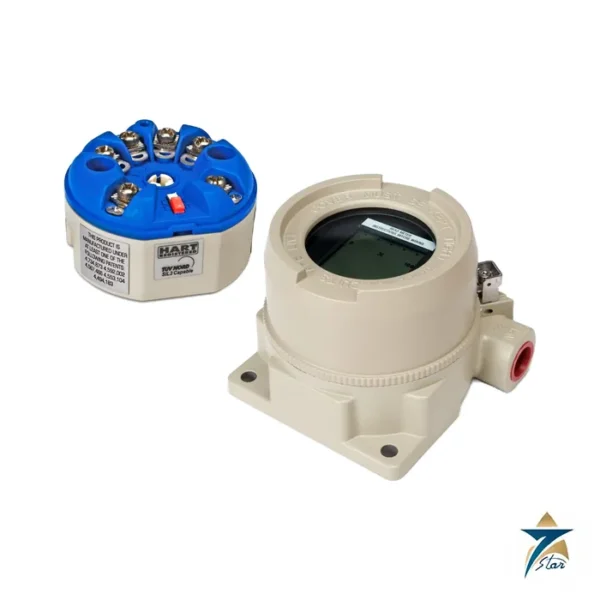
Within the iTEMP family it sits between the simple TMT31 analog unit and the field-mounted TMT142B. It has HART like the TMT142B but no housing, display or Bluetooth of its own, so it relies on the thermometer head for protection and on HART tools for configuration.
TMT182B technical specifications
| Parameter |
Specification |
| Manufacturer / part number |
Endress+Hauser iTEMP TMT182B |
| Type |
Head transmitter, terminal head form B, screw terminals |
| Input |
1 universal input: RTD (2-, 3-, 4-wire), thermocouple, resistance (10 to 400 Ω / 10 to 2,000 Ω), voltage (–20 to 100 mV) |
| Output / protocol |
4 to 20 mA or 20 to 4 mA; HART 7 with FSK ±0.5 mA at 1,200 baud |
| Supply voltage |
10 to 36 V DC, protected against polarity reversal (non-hazardous area) |
| Current consumption |
3.6 to 23 mA, minimum 3.5 mA, limit ≤ 23 mA; multidrop 4 mA |
| Load |
Rb max = (Ub max – 10 V) / 0.023 A; HART load minimum 250 Ω |
| Galvanic isolation |
2 kV AC for 1 minute, input/output |
| Typical accuracy |
Pt100, 0 to 200 °C: 0.1 °C digital value, 0.12 °C at the current output |
| Response time / update time |
≤ 1 s / approx. 100 ms |
| Ambient temperature |
–40 to 85 °C; storage –50 to 100 °C |
| Degree of protection |
IP 20 as a bare unit; in service it depends on the terminal head or field housing |
| Vibration / shock |
2 to 100 Hz at 4 g; shock test per KTA 3505 |
| Weight / housing |
40 to 50 g; polycarbonate housing, QSIL 553 potting |
| Insulation class / MTTF |
Class III / 168 years (theoretical) |
All data are from the manufacturer technical information. Supply and ambient limits for hazardous areas are given in the Ex documentation of the ordered version, so verify them before installation.
What the TMT182B measures and how it protects the signal
The single input accepts the most common sensor types in one device. A Pt100 covers –200 to 850 °C, a Pt1000 –200 to 250 °C, and nickel and copper types are available for specific plant standards. Thermocouples run from type A to type U, with type K covering –270 to 1,372 °C, and a millivolt input spans –20 to 100 mV. The reference junction is internal, or a preset value between –40 and 85 °C can be configured.
Failure information follows NAMUR NE 43, with a selectable low alarm at 3.6 mA or below and high alarm at 21 mA or above. Standard diagnostics monitor open circuits and short circuits on the sensor wires, wrong wiring, internal faults, range violations and device temperature. A low-voltage detection routine drops the signal below 3.6 mA for about 5 s if the supply sags, then tries again, so the control system does not read a false value from a damaged supply or cable. Diagnostic categories follow NAMUR NE 107.
TMT182B HART data and configuration
The device identifies itself on the loop with manufacturer ID 17 (0x11) and device type code 0x11D2. The HART variables are the primary value, the device temperature, and the measured sensor values, with a condensed status. Multidrop addresses 0 to 63 are set by software, and in multidrop operation the current is fixed at 4.0 mA.
Configuration uses HART or the CDI service interface. Software write protection uses a user-role concept with password assignment. The manufacturer offers the free DeviceCare software and the FieldCare tool, with a HART modem or Commubox FXA195 interface for intrinsically safe connection. Sensor-transmitter matching with Callendar-Van Dusen coefficients is available for a calibrated Pt100, and a preprogrammed version can be ordered so the unit arrives ready to install.
TMT182B ranges and measurement error
| Sensor |
Measuring range limits |
Minimum span |
| Pt100 (IEC 60751) |
–200 to 850 °C |
10 K |
| Pt500 |
–200 to 500 °C |
10 K |
| Pt1000 |
–200 to 250 °C |
10 K |
| Ni100 / Ni120 |
–60 to 250 °C |
10 K |
| Thermocouple type K |
–270 to 1,372 °C |
50 K |
| Thermocouple type N |
–270 to 1,300 °C |
50 K |
| Thermocouple type S / R |
–50 to 1,768 °C |
50 K |
| Millivolt |
–20 to 100 mV |
5 mV |
Typical errors at reference conditions of 25 °C ± 3 K and 24 V DC are 0.1 °C on a Pt100 (digital) and 1.5 °C on a type S thermocouple over 0 to 800 °C. The figure for a Pt100 is also stated as 0.08 °C plus 0.006 % of (measured value – lower range value), which is useful for narrow spans.
Related parts: where TMT182B sits in the iTEMP range
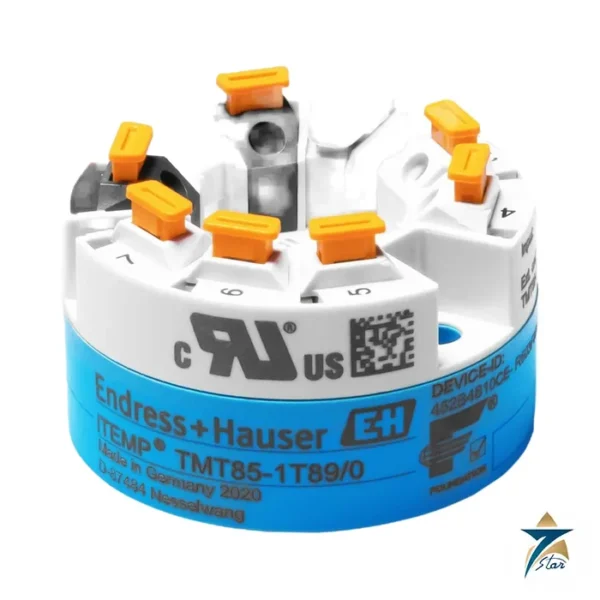
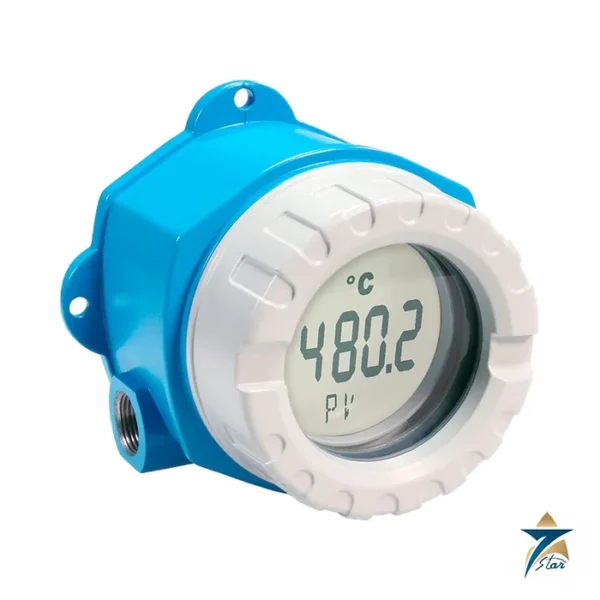
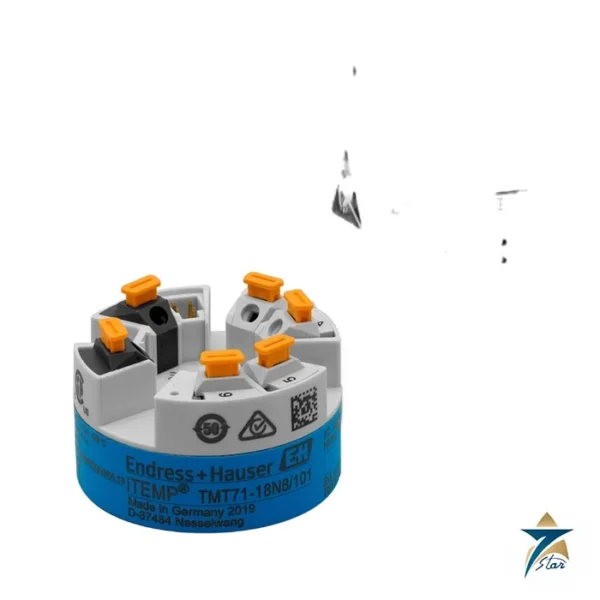
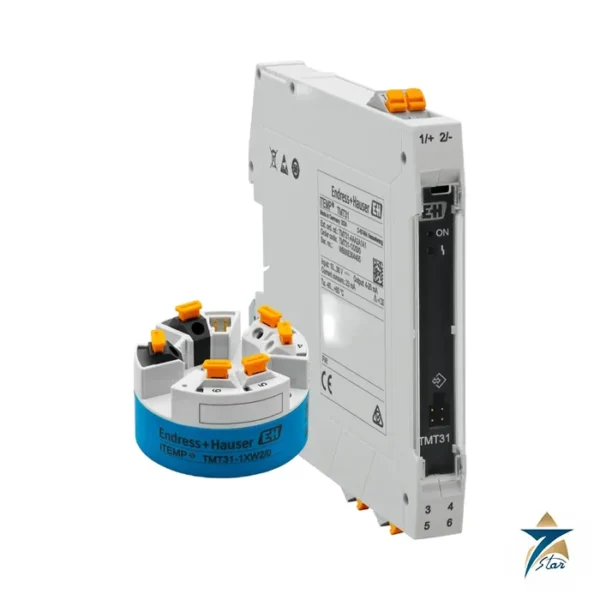
For a loop with a plain 4–20 mA signal and no HART, the TMT31 is the economical sibling and also exists as a DIN rail unit. For field mounting with a local display and optional Bluetooth, the TMT142B is the matching HART product. For fieldbus segments the TMT85 offers two inputs with FOUNDATION Fieldbus. The TMT182B is the logical choice when HART diagnostics and hazardous-area use are needed in a thermometer head.
Accessories include the TA30 range of field housings for a remote installation, a DIN rail clip adapter (TH35), a DIN mounting set or US M4 screws, and wall and pipe mounting brackets in 316L. An active barrier of the RN22 or RN42 type, together with a HART modem, forms the usual interface on the system side.
TMT182B selection and ordering checklist
- Confirm that the loop is 4–20 mA with HART and a minimum 250 Ω load.
- State sensor type, wiring and the range to be programmed.
- Choose the hazardous-area approval and give zone, gas group and temperature class.
- Check that the thermometer head is form B and has enough free depth.
- Decide on factory programming or configure on site with DeviceCare or FieldCare.
- Plan the interface: HART modem or handheld, and an active barrier if the loop is in a hazardous area.
- Select the field housing, if the transmitter is to be separated from the process.
Installing and commissioning the TMT182B
Place the transmitter on the insert with the spring-loaded screws and observe the free-space note for the head. Screw terminals accept up to 1.5 mm². Use a shielded cable earthed at both ends so HART communication is interference-free in electrically noisy areas, as the manufacturer recommends. Shielded sensor cable is also good practice on long runs.
At power-up the device needs up to 7 s before the first valid measured value appears at the current output, and the current is held at 3.8 mA or below during this time. After connecting the HART modem, read the device identification, check the sensor type and range, test the loop at 4, 12 and 20 mA, and confirm that a disconnected sensor produces the configured alarm. Record the device tag and configuration in the loop sheet.
TMT182B applications in Oman and GCC industry
Head transmitters like this are fitted to thermowell-protected sensors throughout oil and gas production, gas processing, power stations, desalination units and petrochemical plants. Typical points include heat-exchanger and cooler outlets, turbine bearing and lube-oil lines, reactor and furnace skin thermocouples, and steam and condensate lines, where HART diagnostics make it quick for instrument technicians to find a sensor fault from the control room.
The transmitter itself is rated to 85 °C ambient, but a terminal head mounted close to a hot pipe or in direct sun can exceed this. A longer neck or extension tube, a shaded location and insulated lines help keep the electronics in range, and a sealed head with the right glands protects against dust and humidity on coastal sites.
What to send with your TMT182B RFQ
- Complete order code or a nameplate photo of the unit being replaced.
- Sensor type, wiring and range, and the alarm level required.
- Hazardous-area approval and installation zone.
- Quantity, delivery site and the HART tools available.
- Whether a field housing, mounting kit or configuration interface is also needed.
Documents and quotation
A datasheet (Technical Information) for the TMT182B is attached on this page, with the input table, accuracy data, HART details and installation notes.
To receive a quotation, send the order code or the requirement from the list above and Seven Star LLC will confirm availability and lead time for Oman and the GCC.
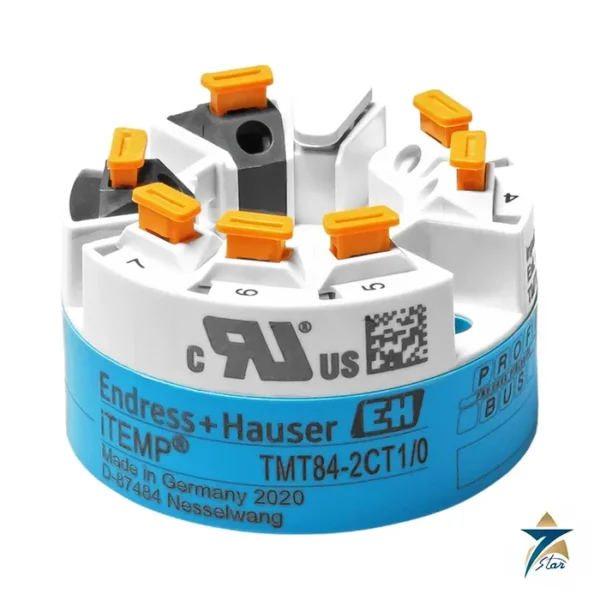
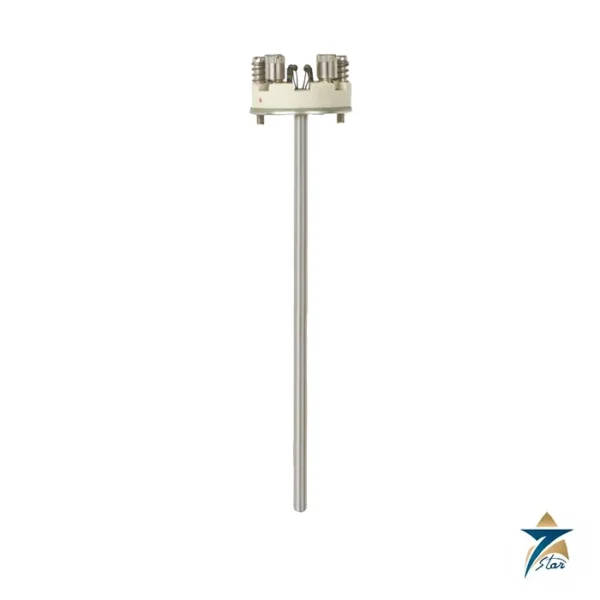
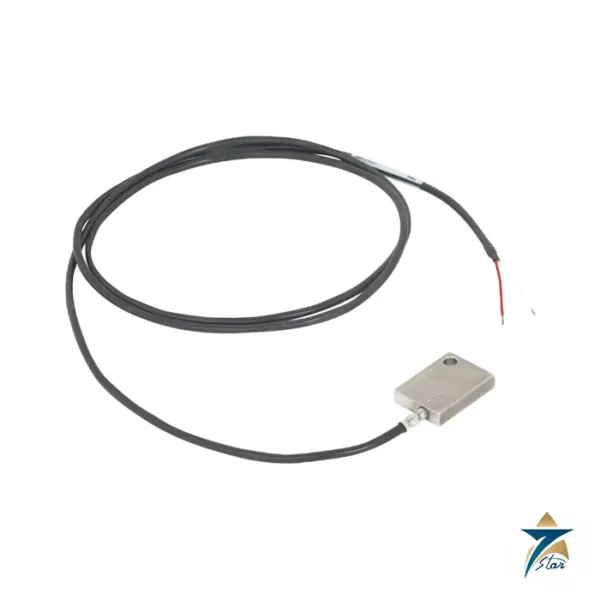
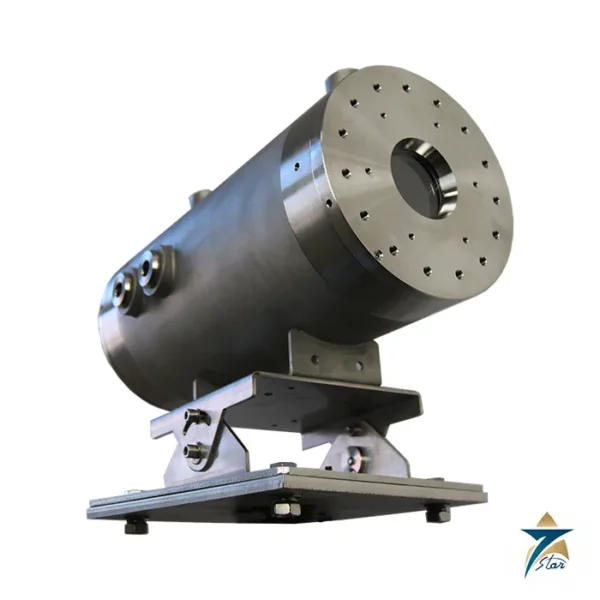
Other Models in the Itemp Transmitter Range
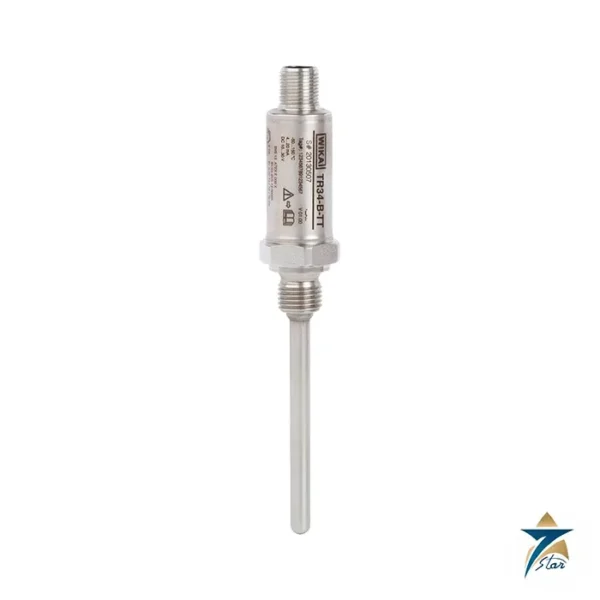
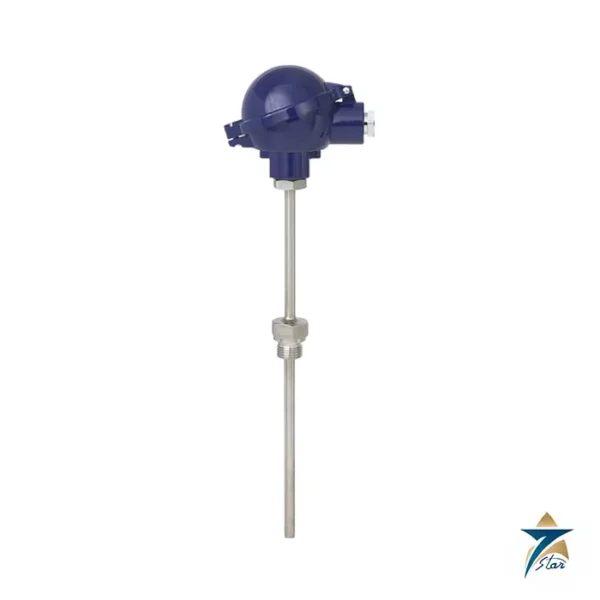
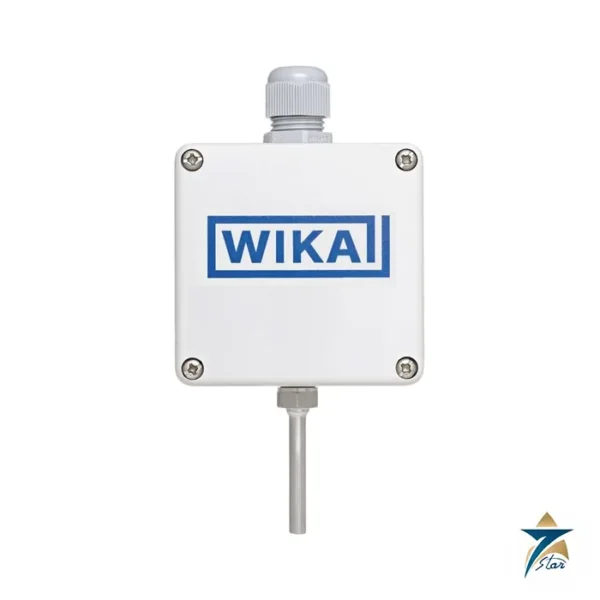
Seven Star LLC supplies models from the Itemp Transmitter range in Oman and the GCC. Compare the related models below and request a quote for the one that matches your application.

























Reviews
There are no reviews yet.