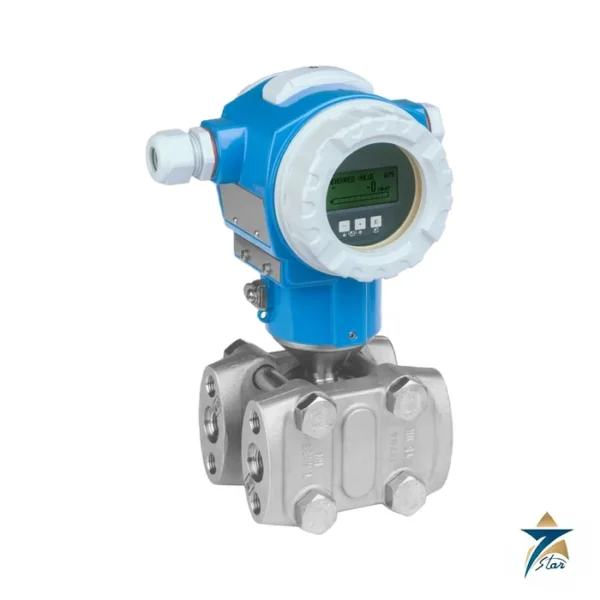
Endress+Hauser FMP52 Levelflex guided-wave radar for corrosive liquids
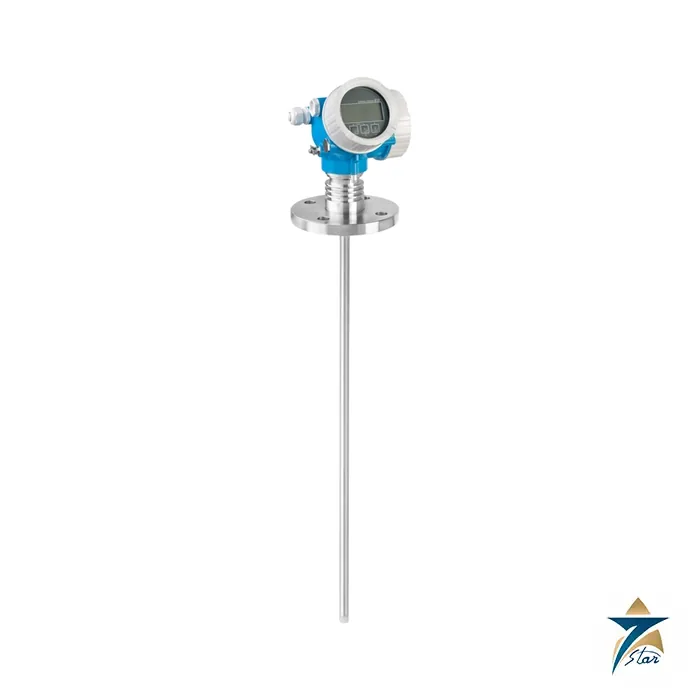
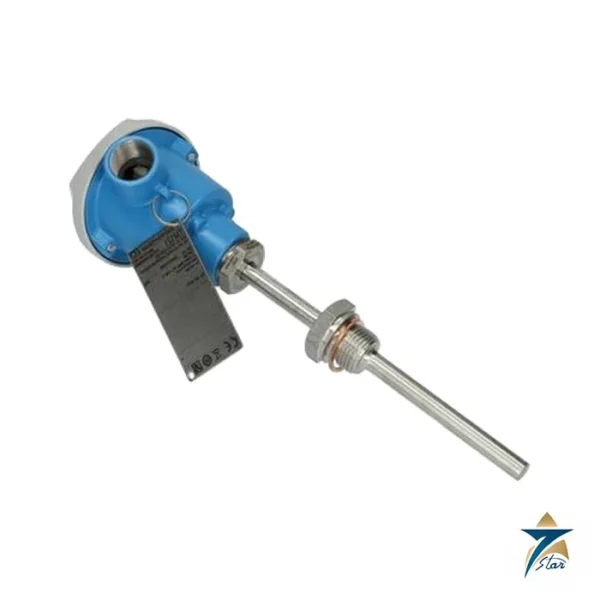
The Endress+Hauser FMP52 is a Levelflex guided-wave radar transmitter for continuous level and interface measurement in aggressive liquids. The FMP52 sends microwave pulses down a probe, and the position of the reflection shows the product surface. What distinguishes the FMP52 inside the Levelflex FMP5x range is its PFA-coated probe: the metal core is covered so that acids, alkalis and other corrosive media only touch fluoropolymer. The FMP52 is part of the same technical information as the FMP51 and FMP54, and is the corrosion-resistant member of that group. Seven Star LLC supplies the FMP52 in Oman and the GCC as an independent supplier in Muscat and prepares quotations from the tank and probe data you send.
Because guided radar follows the probe, the reading is largely independent of density, conductivity, pressure and temperature changes, and is not disturbed by vapor, foam or agitation in the way many non-contact methods can be. The FMP52 also measures the interface between two liquids, which is useful in separators and extraction columns.
FMP52 technical specifications
| Parameter |
Specification |
| Manufacturer / part number |
Endress+Hauser / FMP52 (Levelflex, guided-wave radar) |
| Measuring principle |
Guided-wave radar (time-domain reflectometry) with multi-echo tracking |
| Application |
Level and interface measurement in corrosive liquids |
| Probe types |
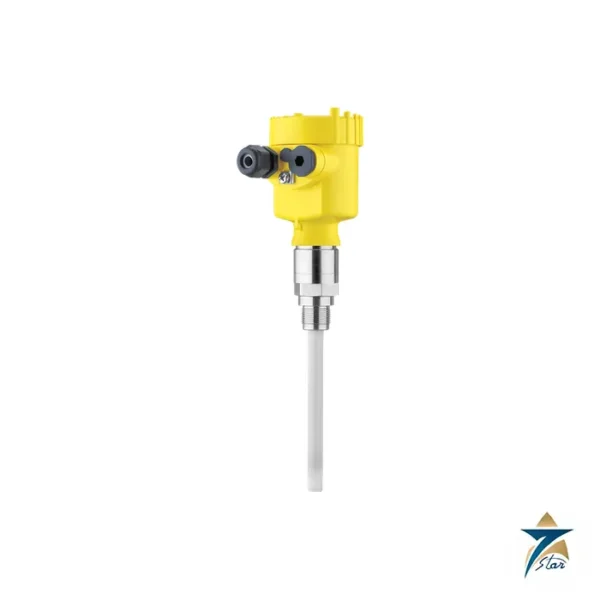
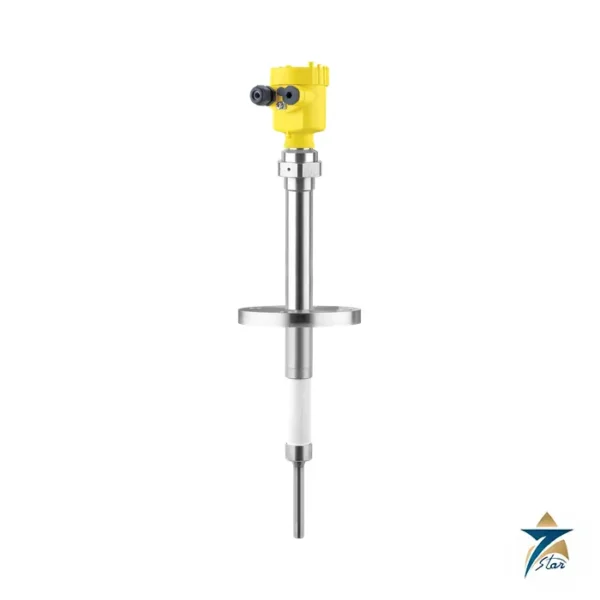
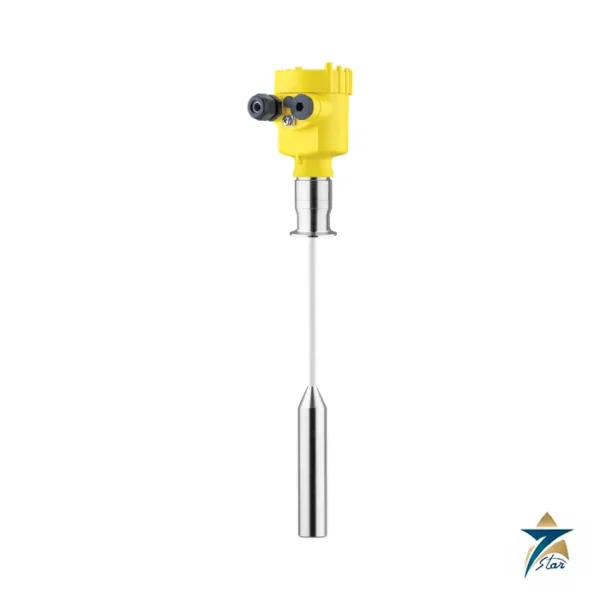
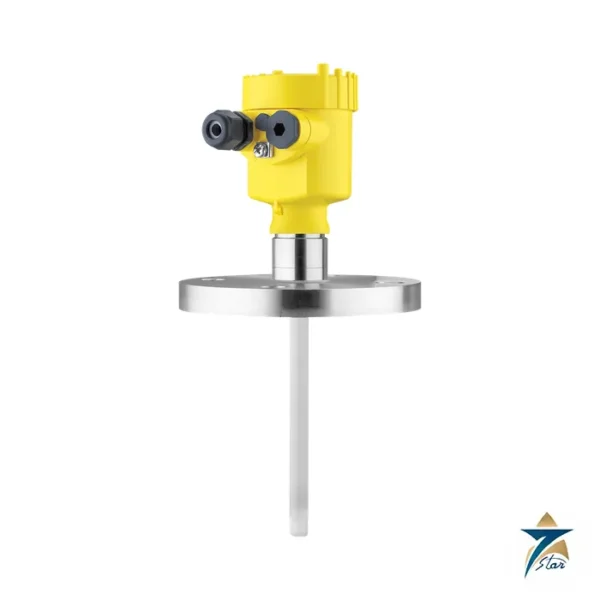
Rod 16 mm, PFA over 316L, up to 4 m (13 ft); rope 4 mm, PFA over 316, up to 45 m (148 ft) |
| Accuracy (digital) |
±2 mm up to 15 m measuring distance; ±10 mm above 15 m; non-repeatability 1 mm or better |
| Interface measurement |
Liquid/liquid; measuring range limited to 10 m |
| Process temperature |
–50 to +200 °C (–58 to +392 °F); to +120 °C when cleaned for oxygen service |
| Process pressure |
–1 to 40 bar (–14.5 to 580 psi); –1 to 15 bar for oxygen-cleaned version |
| Wetted materials |
PFA coating and PTFE (listed as FDA, 3-A, EHEDG and USP Class VI approved); 316/316L under the coating |
| Process connections |
Flanges to ANSI B16.5, EN 1092-1 and JIS B2220 (PTFE-clad); Tri-Clamp 1½, 2, 3 in; DIN 11851 DN 50 |
| Communication |
2-wire 4–20 mA HART; PROFIBUS PA; FOUNDATION Fieldbus; Bluetooth for commissioning |
| Supply (HART) |
11.5 to 35 V DC at the terminals (non-Ex); 11.5 to 30 V in intrinsically safe versions |
| Ambient temperature |
–40 to +80 °C; local display –20 to +70 °C |
| Protection |
IP66/NEMA 4X; IP68/NEMA 6P with housing closed |
| Functional safety |
SIL 2 as per IEC 61508, SIL 3 with homogeneous redundancy; WHG overfill protection listed |
How the FMP52 measures level and interface
A high-frequency pulse travels along the probe. When it reaches a medium with a higher dielectric constant, part of the energy is reflected, and the transit time gives the distance to the surface. The electronics apply multi-echo tracking, a self-learning algorithm that uses the short and long history of the signals to separate real level echoes from interference from the tank internals.
For interface measurement, a second reflection occurs at the boundary between the upper and lower liquid. The technical information sets conditions: the upper medium must have a known, constant relative permittivity not above 10, the difference between the two media must exceed 10, the upper layer should be at least 60 mm thick, and emulsion layers up to 50 mm are tolerated. Where these conditions are met, the FMP52 can report total level and interface level simultaneously.
FMP52 measuring range by medium group
| Medium group |
Relative permittivity |
Typical liquids |
PFA rod |
PFA rope |
| 2 |
1.6 to 1.9 |
Propane, solvents, freon, palm oil |
4 m |
9 to 14 m |
| 3 |
1.9 to 2.5 |
Mineral oils, fuels |
4 m |
14 to 21 m |
| 4 |
2.5 to 4.0 |
Benzene, styrene, toluene |
4 m |
21 to 28 m |
| 5 |
4.0 to 7.0 |
Chlorobenzene, chloroform |
4 m |
28 to 32 m |
| 6 |
above 7.0 |
Aqueous solutions, alcohols, acids, alkalis |
4 m |
32 to 45 m |
Buildup, especially of moist products, can reduce these ranges. For the FMP52 the technical information recommends rope probes when the measuring range exceeds 4 m, or when ceiling clearance prevents a rigid rod.
Where the FMP52 fits among FMP5x and related parts
The Levelflex family covers different media. The FMP51 is the general-purpose liquid version with bare metal probes, the FMP54 is built for high temperature and pressure up to +450 °C and 400 bar, the FMP53 is the hygienic rod version for food and pharmaceutical use, and the FMP56 and FMP57 handle bulk solids. Seven Star LLC lists the FMP53, FMP56 and FMP57 separately. Choose the FMP52 when corrosion, not temperature extremes or hygiene certification, is the main issue, and when a coated probe is preferable to exotic alloys.
The transmitter plugs into HART, PROFIBUS PA or FOUNDATION Fieldbus systems. Bluetooth and the SmartBlue app give a quick wireless setup, the integrated HistoROM stores device settings and measured values, and Heartbeat Technology supports diagnostics, verification and monitoring. Proof testing for SIL and WHG is supported by guided functions.
FMP52 selection and ordering checklist
- Medium name, dielectric constant and temperature, to confirm the PFA coating and seal are compatible.
- Rod or rope probe, and the required probe length within 4 m (rod) or 45 m (rope).
- Level only or interface; for interface, details of both liquids and the upper layer thickness.
- Process connection: ANSI, EN or JIS flange (PTFE-clad) or hygienic Tri-Clamp or DIN 11851; nozzle size and height.
- Rope probe loads: the FMP52 rope probe has a tensile loading capacity of 2 kN; the rod flexural strength is 30 Nm.
- Operating pressure up to 40 bar and temperature to +200 °C, and whether oxygen cleaning is required.
- Communication: HART, PROFIBUS PA or FOUNDATION Fieldbus, plus display and Bluetooth options.
- Hazardous-area, WHG or SIL requirements, and optional linearity protocol (3-point or 5-point).
Installation, commissioning and maintenance of the FMP52
Keep the probe away from nozzle walls and internals, using centering stars on rod probes where the technical information allows. For interface measurement, the technical information prefers a rod probe in a bypass or stilling well with non-metal centering stars. Avoid mechanical damage to the PFA coating during handling, since a nick in the coating exposes the metal beneath it. Support long probes as specified, for example when WHG approval is used with probe lengths of 3 m or more.
Commissioning is menu guided in about six steps: enter the empty distance, full span and medium group, then run the echo check. Local display and Bluetooth both give access to all parameters. Maintenance is limited to inspecting the coating, checking buildup on the probe and reviewing diagnostics, which follow NAMUR NE 107. Keep a spare gasket and coated probe section for critical corrosive services.
Typical FMP52 applications in Oman and the GCC
Corrosive liquids are common in petrochemical and chemical plants in industrial zones such as Sohar and Duqm, and in desalination chemical dosing. The FMP52 suits storage and day tanks for acids and caustic soda, hypochlorite and other treatment chemicals, solvent tanks, and process vessels where a metal probe would corrode. With a process range up to +200 °C and a rated ambient range of –40 to +80 °C, the transmitter also withstands hot, sun-exposed tank roofs, and the closed housing is IP66/IP68 against dust and humidity.
Information to send with an FMP52 RFQ
- Quantity and exact model: Endress+Hauser FMP52, with the full order code if you have one.
- Medium, concentration, temperature and pressure.
- Probe type and length, tank height and nozzle details.
- Process connection standard, size and rating.
- Output and power, hazardous-area classification and functional safety needs.
- Delivery location and schedule.
Documents and quotation
The Endress+Hauser technical information for the FMP52, which also covers the FMP51 and FMP54, is attached on this page as a datasheet with probe data, ranges and approvals.
Send your medium and tank data and we will confirm the probe configuration, lead time and documents for the FMP52 supplied to your project in Oman or the GCC.




























Reviews
There are no reviews yet.