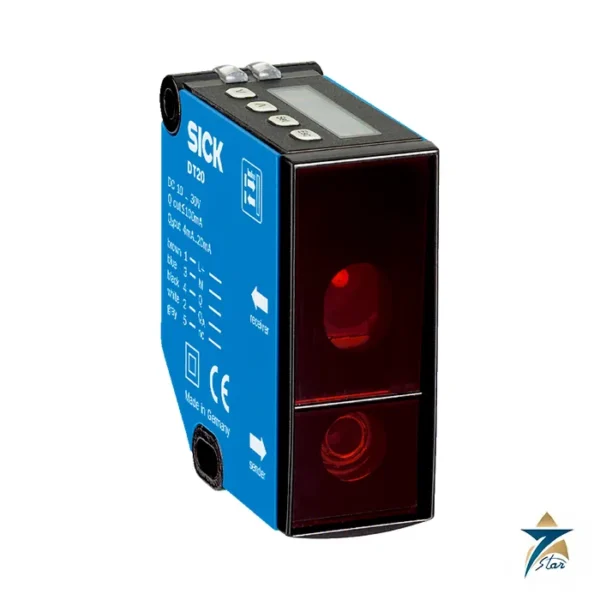
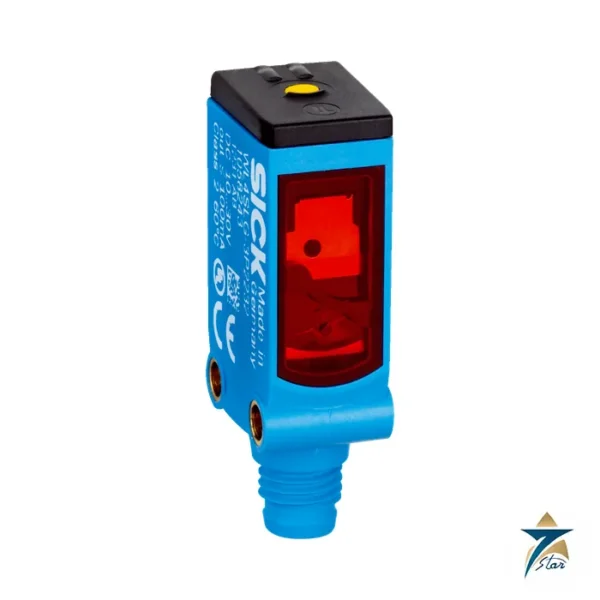
Brand:

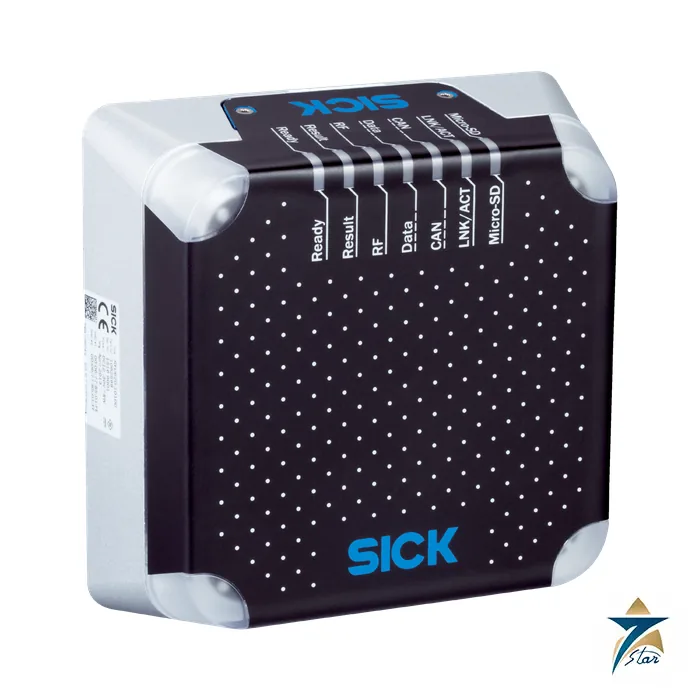
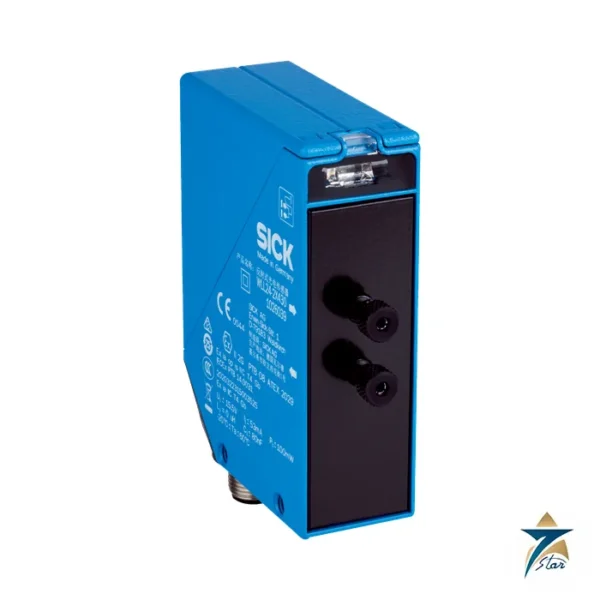
SICK RFU620-10104 RFU62x Identification Sensor

Description

RFU620-10104 is a SICK RFU62x identification device (part no. 1069677) that reads codes or RFID tags so that products and containers can be tracked automatically. The catalogue summary lists: radio approval: Brazilian; frequency band: UHF (860 MHz … 960 MHz); reading range: ≤ 2 m; enclosure rating: IP67.

RFU620-10104: function, principle and typical use

Identification readers feed the control system with the identity of each item: a barcode or 2D code on a label, or an RFID transponder. Reading while the product moves allows routing, sorting, traceability and verification without a human scanning step.

Reading performance depends on code quality, reading distance, speed and orientation, and for RFID on the tag type and frequency band. Most readers send decoded data over Ethernet or serial interfaces and can trigger from a photoelectric sensor or run in continuous mode. Telegram format and filtering are configured in the SICK software. Output telegrams can be filtered so that only valid or new codes are passed to the control.

Technical specifications

Parameter Specification
Type code RFU620-10104
Part number 1069677
Product family RFU62x
Version Mid Range
Product category RFID read/write device with integrated antenna
Radio approval Brazilian (ANATEL Resolution No. 506)
Frequency band UHF (860 MHz … 960 MHz)
Carrier frequency 902 MHz … 907.5 MHz; 915 MHz … 928 MHz
Output power 0.32 W (EIRP, 25 dBm)
RFID standard EPCglobal UHF Class 1 Generation 2, ISO/IEC 18000-6 C, RAIN
Modulation PR-ASK
Connection type Ethernet
Aperture angle 100°
Heating Yes
Reading range ≤ 2 m
Antenna Integrated
Transmitting power Adjustable
Polarization Circular
Axial ratio Typ. 3 dB
Front-to-back ratio > 5 dB
Connection type (2) 1 x M12, 17-pin male connector, A-coded; 1 x M12, 4-pin female connector, D-coded; 1 x USB, 5-pin micro-B socket
Supply voltage 10 V DC … 30 V DC
Power consumption Typ. 8 W, with heating typ. 16 W
Housing material Aluminum die cast; Plastic (PPS)
Enclosure rating IP67
Weight 780 g
Dimensions (L x W x H) 137 mm x 131 mm x 56 mm
MTBF > 100 years
Ethernet ✔ , TCP/IP, OPC UA
Function Data interface (read result output), Service interface
Declarations and certificates in the data sheet China RoHS; Profinet certificate; RAIN RFID

Selection and installation notes for RFU620-10104

Wiring data to note: power draw typ. 8 W, with heating typ. 16 W; connection Ethernet; supply 10 V DC … 30 V DC; interface optional over external fieldbus module CDF600-2.

Housing and environmental limits listed: operating temperature: –40 °C … +50 °C; storage temperature: –40 °C … +70 °C; dimensions: 137 mm x 131 mm x 56 mm; shock: EN 60068-2-27:2009-05; housing: aluminum die cast; Plastic (PPS); enclosure rating: IP67; vibration: EN 60068-2-64:2008-02; weight: 780 g.

Before ordering, confirm the codes or tag types to be read, the reading distance and speed, the interface and trigger input, and the supply voltage.

Check the variant for lens or reading-field options in the type code. Plan Ethernet or serial addressing early so that commissioning is a matter of loading a job file.

Documents and quotation

The official SICK data sheet for RFU620-10104 (part no. 1069677) is attached as a PDF. Quotations are prepared by Seven Star LLC, an independent supplier in Muscat, once you send the part number, quantity and site through the RFQ form. Browse more in Machine Vision. Compare the complete type code with your existing unit and controller before ordering; the data sheet prevails if it differs from this page.

Datasheets & Documents
  • PDF Data Sheet SICK RFU620-10104 official data sheet (part no. 1069677) Download
Reviews (0)

Reviews

There are no reviews yet.

How would you rate this product?

It takes about 10 seconds — just tap a star. Your email is never published.

About brand

SICK is the German maker of industrial sensors: photoelectric and proximity sensors, safety laser scanners and light curtains, encoders, distance sensors, code readers and gas analysers. Erwin Sick, an optics engineer, founded it in Munich in 1946, and in 1952 it introduced its first marketable accident-prevention light curtain, which protected press operators by stopping the machine when a hand broke the light beam. The company moved to Waldkirch in the Black Forest in 1956 and is still headquartered there. It is a privately held company, and has been an Aktiengesellschaft (AG) since 1996.
SICK company profile

Founded 1946, Munich, Germany, by Erwin Sick (1909–1988)
Headquarters Waldkirch, Baden-Württemberg, Germany (since 1956)
Ownership Privately held; after the founder's death in 1988 his widow Gisela Sick became the main shareholder. Legal form SICK AG since 1996
Size More than 12,000 employees and group revenue of about EUR 2.3 billion (company figures for 2023)
First breakthrough Accident-prevention light curtain for presses, shown in Hanover in 1952
International growth First foreign subsidiary in France in 1972, United States in 1976; today sales and service companies worldwide
Product families Photoelectric, inductive, capacitive, magnetic and ultrasonic sensors; safety laser scanners, light curtains, safety controllers and relays; encoders and motor feedback systems; distance sensors and LiDAR; barcode and 2D code readers and machine vision; gas analysers, dust and flow measurement for process and emissions monitoring

Milestones

  • 1946: Erwin Sick receives a licence to run his engineering firm in Munich.
  • 1952: The first marketable accident-prevention light curtain is presented in Hanover and goes into series production.
  • 1956: The company moves to Waldkirch with 25 employees.
  • 1972 and 1976: Subsidiaries are founded in France and the United States.
  • 1996: SICK becomes an Aktiengesellschaft.
  • Today: Sensors for factory and logistics automation, machine safety and process analysis, with a large share of revenue outside Germany.

Choosing a SICK sensor

For object detection, the sensing principle comes first. A retro-reflective sensor (WL series) sends light to a reflector and switches when an object breaks the beam; it is reliable over long distances and easy to align. A sensor with background suppression (WTB series) detects an object at a set distance and ignores what is behind it, which suits conveyors with shiny or dark backgrounds. A through-beam pair (WS/WE) gives the longest range and the highest reliability in dust. For transparent bottles and film, use a model built for transparent objects (for example WL12G-3B or WL150-P420). The digits in the code also matter: "P" usually means a PNP output and "N" NPN, and the last digits set the connector or cable. For machine guarding, a safety laser scanner such as nanoScan3 or microScan3 protects an area, while a safety controller such as Flexi Soft combines several safety devices.

Where SICK products are used

In Oman and the GCC, SICK sensors are used in packaging and bottling lines, food and beverage plants, logistics and airport baggage handling, cement and steel plants, ports and cranes, automated warehouses, and on machines built by European OEMs. SICK safety scanners guard robots and automated guided vehicles, and its encoders give position feedback on motors, hoists and conveyors.
SICK products we list

Family Examples
Photoelectric sensors WL12-3P2431, WTB12-3P2431, GTB6-P4211, VL18-4P3240, WL12G-3B2531, WS/WE100, KT5W contrast, W26 IO-Link
Proximity, cylinder and ultrasonic sensors IME12-08NPSZC0S, IME18-05BPSZC0S, MZT8, UM18 4-20 mA, UM30, UFN3 fork
Machine safety nanoScan3, microScan3, S300 Professional, Flexi Soft FX3-CPU1, FX3-XTIO, ReLy OSSD
Encoders and motor feedback DFS60B, AFM60 PROFINET, AFS60 SSI, ATM60 PROFIBUS, SRS50, EFS50
Distance sensors and code readers DT50, DL50, DT35, Lector632

Ordering SICK products: what we need

Send the type code and the 7-digit SICK part number from the label (for example WTB12-3P2431 together with its part number). For a replacement sensor, add the output (PNP or NPN), connection (M8, M12 or cable) and sensing distance. For encoders, add the interface (incremental, SSI, PROFIBUS, PROFINET), resolution and shaft type. For safety scanners, tell us the model and whether the existing configuration needs to be kept.

Facts checked against SICK's published company history and annual figures, October 2026.

Frequently Asked Questions

What is the SICK RFU620-10104?
It is a SICK identification sensor (RFU62x), part no. 1069677. The catalogue summary reads: Radio approval: Brazilian; Frequency band: UHF (860 MHz ... 960 MHz); Reading range: ≤ 2 m; Enclosure rating: IP67.
What supply does the RFU620-10104 need?
Supply voltage is 10 V DC ... 30 V DC. Check the output and interface rows in the table for the signal levels.
What protection rating and temperature range are given?
Enclosure rating: IP67. Ambient operating temperature: –40 °C ... +50 °C. Confirm both against the site before ordering.
Does the page include the data sheet?
Yes. The official SICK data sheet for part no. 1069677 is attached as a PDF and linked on this page; where it differs from the page text, the data sheet applies.
What should be confirmed before ordering the RFU620-10104?
Compare the full type code and part number 1069677 with the device being replaced, check supply, output or interface and mounting, and send the details through the RFQ form. Seven Star LLC is an independent supplier, not a SICK partner.