W9 focused reflex sensor for small-object detection
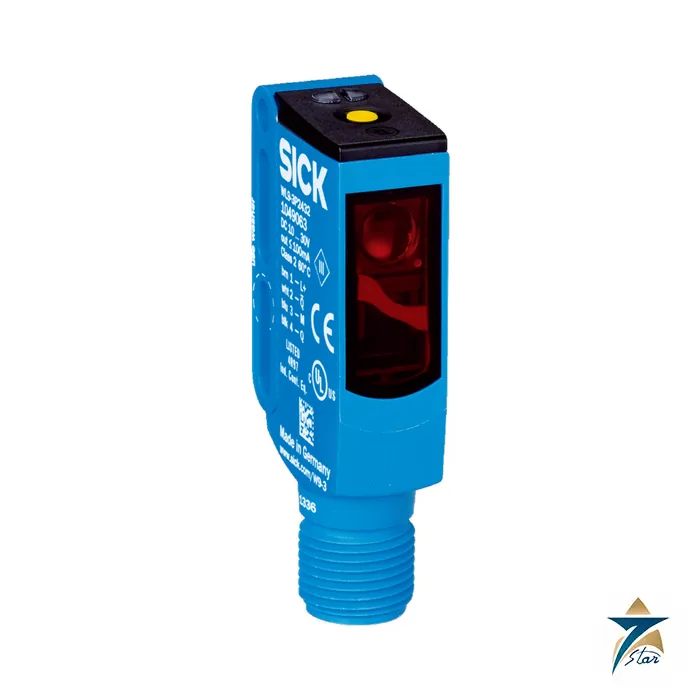
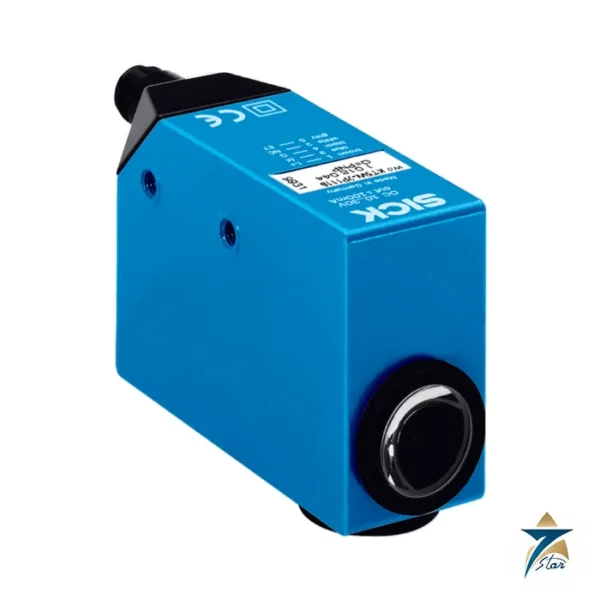
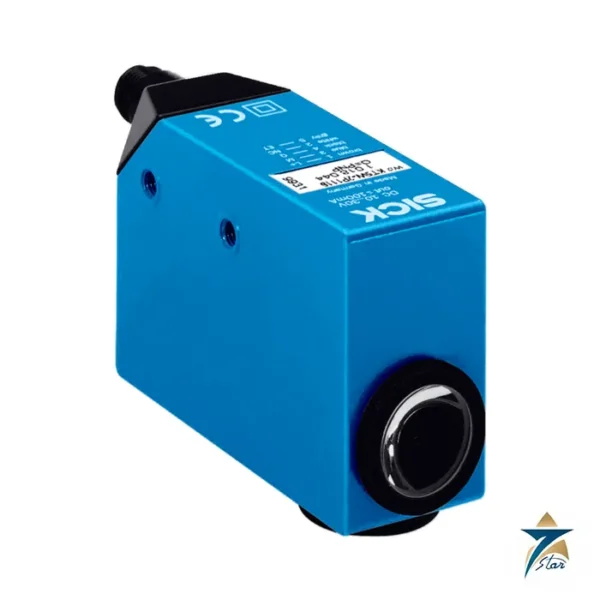
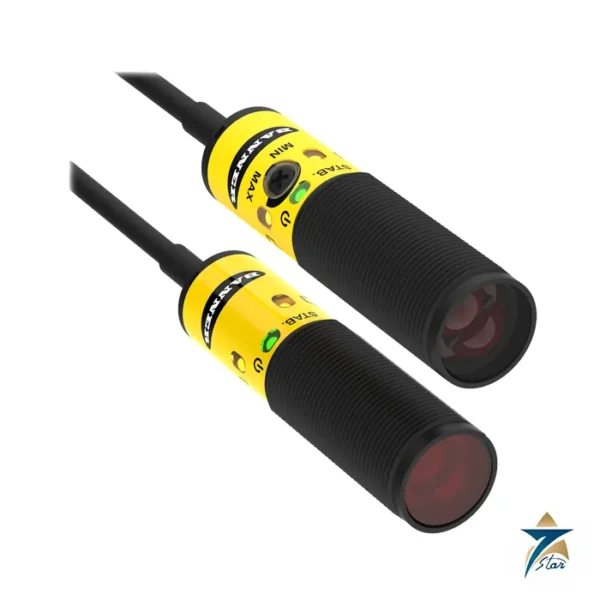
The SICK WL9-3P2462 (part no. 1049061) is a W9 retro-reflective sensor with focused optics and a PinPoint LED that creates a spot of only 2 mm at 35 mm. The coaxial design lets it detect right up to the reflector, over a range of 0 m to 0.3 m (maximum 0.4 m), which suits detection of small objects crossing a short beam path.
A single teach-in button sets the sensor, the housing is rated IP66, IP67 and IP69K, and the weight is just 13 g.
Technical specifications
| Parameter |
Specification |
| Manufacturer |
SICK |
| Type / family |
WL9-3P2462 / W9 |
| Part no. |
1049061 |
| Functional principle |
Photoelectric retro-reflective sensor, autocollimation (coaxial optics) |
| Sensing range max. / typical |
0 m … 0.4 m / 0 m … 0.3 m (reflector PL80A) |
| Light source / type |
PinPoint LED, visible red light, 650 nm |
| Light spot size |
2 mm at 35 mm |
| Special feature / application |
Focused optics; detecting small objects |
| Polarising filter |
Yes |
| Adjustment |
Single teach-in button |
| Supply voltage UB |
10 V DC … 30 V DC |
| Ripple |
below 5 Vpp |
| Current consumption |
30 mA |
| Output |
PNP, complementary, light/dark switching |
| Output current Imax. |
100 mA |
| Response time / switching frequency |
below 0.5 ms / 1,000 Hz |
| Protection class |
III |
| Dimensions (W x H x D) |
12.2 mm x 52.2 mm x 23.6 mm |
| Mounting hole |
M3 |
| Housing / optics |
Plastic VISTAL / plastic PMMA |
| Connection |
Male connector M12, 4-pin |
| Weight |
13 g |
| Enclosure rating |
IP66, IP67, IP69K |
| Ambient temperature |
-40 °C … +60 °C operation; -40 °C … +75 °C storage |
| MTTFD |
1,668 years (DCavg 0 %, TM 20 years) |
| UL file no. |
NRKH.E181493 |
Small beam, small objects
A 2 mm spot at 35 mm lets the sensor see components such as small caps, pins and vials. Because the optics are focused, the sensing window is tight at 35 mm and weaker beyond; position the reflector at about that distance for the best contrast. The teach-in button stores the switching threshold when the beam is free and when it is blocked, so setting up needs no tools.
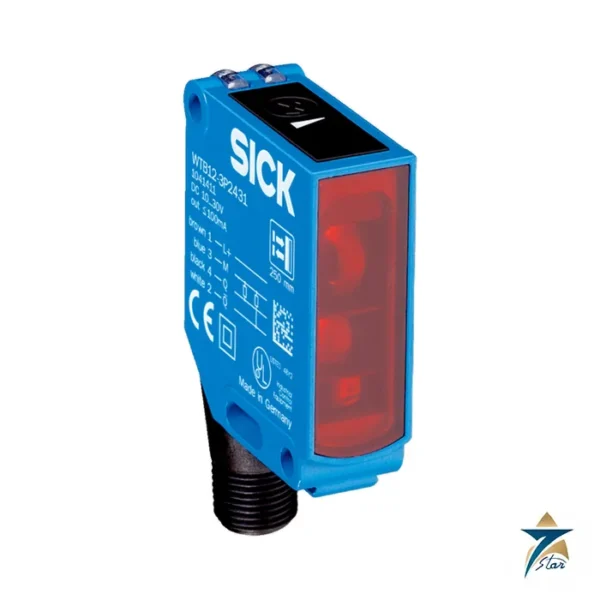
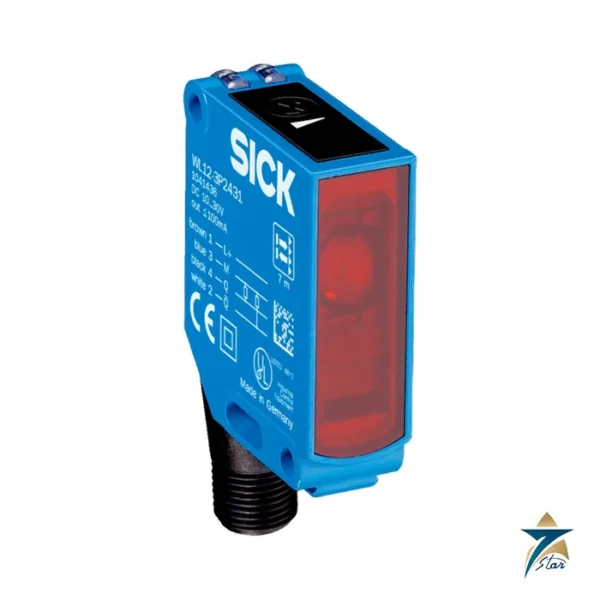
The W9 housing is made of VISTAL plastic and the data sheet lists IP66, IP67 and IP69K. M12 4-pin cordsets are standard. Do not use this type for long beams; for ranges of several metres choose a larger reflex sensor such as the WL12-3P2431 or WL250-2P2431.
Ordering note
Use WL9-3P2462 with part no. 1049061. The sensor web page shows the SICK catalogue entry for the type, and the data sheet does not list a reflector in the delivery, so order a PL80A or a smaller reflector separately. Related W9 versions use other part numbers; confirm the code before ordering.
Key features of the WL9-3P2462
- Autocollimation optics: the emitted and received light share the same axis, so there is no blind zone in front of the sensor and the beam can run very close to the reflector.
- Polarising filter that helps the sensor ignore reflections from shiny objects, which is important when detecting glossy packaging or metal parts.
- Fast response below half a millisecond, enough for counting small parts on high-speed lines.
- Complementary PNP outputs, giving one light-switching and one dark-switching signal from the same device.
- Visible red light spot, which makes alignment easy during installation.
- Compact, light housing with M3 mounting holes for tight machine frames.
- High enclosure ratings that allow use where equipment is cleaned with water jets.
How a retro-reflective sensor detects small parts
The sender and receiver are in the same housing, and a reflector across the conveyor or gap returns the light. When an object enters the beam, the received light falls and the output switches. For a very small object to be detected reliably, it must block a sufficient share of the beam; a broad beam would let most of the light pass around the part. The focused PinPoint spot solves this by concentrating the beam where the part passes. This also explains why the useful range is short: beyond the focal point the beam widens and small parts block less of it.
Application examples
| Industry |
Typical detection task |
| Pharmaceutical and medical packaging |
Presence of vials, ampoules or caps in feed tracks |
| Electronics assembly |
Detection of pins, small components or board edges |
| Food and beverage |
Small bottle caps and closures in washdown areas |
| Plastics and packaging machines |
Counting of small moulded parts on chutes |
Setup and installation tips
- Mount the sensor and reflector rigidly; vibration of a short-range focused beam quickly affects switching reliability.
- Align the red spot on the reflector, with the object path close to the focal distance.
- Teach the sensor with the beam free and, where the procedure requires, with a sample object in the beam.
- Check the output with the smallest and the most transparent parts that must be detected.
- Use a shielded or appropriately rated M12 cable where the sensor is close to drives or welding equipment.
Operating in Oman and GCC conditions
The wide operating temperature range covers most factory environments in the region, but sensors should be shaded from direct sun near open loading bays, as strong sunlight and dust can reduce optical contrast. In dusty plants, clean the sensor window and reflector on a fixed schedule; a build-up of fine dust on the reflector lowers the received signal before it becomes visible. The IP69K rating supports high-pressure cleaning in food and beverage plants, provided the cable connector is also suitably rated.
What to include in an RFQ
- Type WL9-3P2462 and part number 1049061, with quantity.
- Required reflector type and size, cordset length and mounting bracket.
- Object size, speed and distance from the sensor if application advice is needed.
Documents and quotation
This page links the original SICK data sheet for WL9-3P2462 (part no. 1049061). Values in the specification table were copied from that document. Seven Star LLC supplies SICK products as an independent supplier in Muscat; send your request with the exact type and part number, the quantity and the delivery point, and mention any need for a reflector, cordset or protective hood. Please verify the details with us before placing an order, since the manufacturer may change data without notice. See also sensors and transmitters and the SICK WTB4-3 miniature photoelectric sensor.










Reviews
There are no reviews yet.