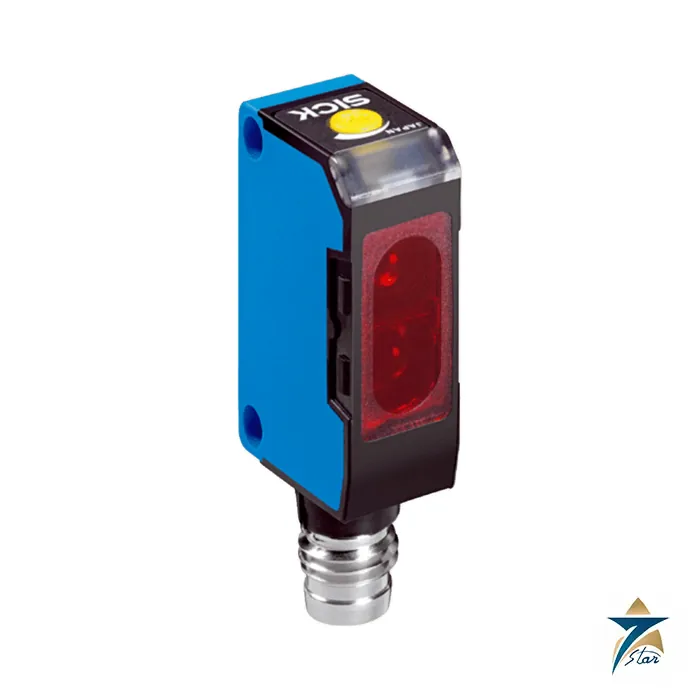
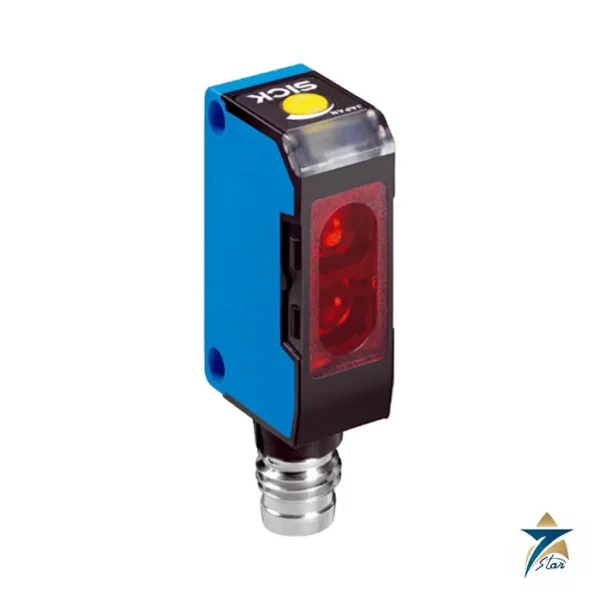
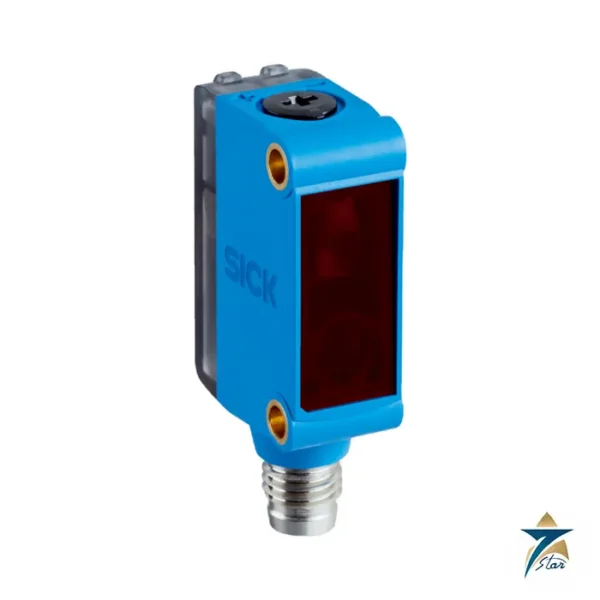
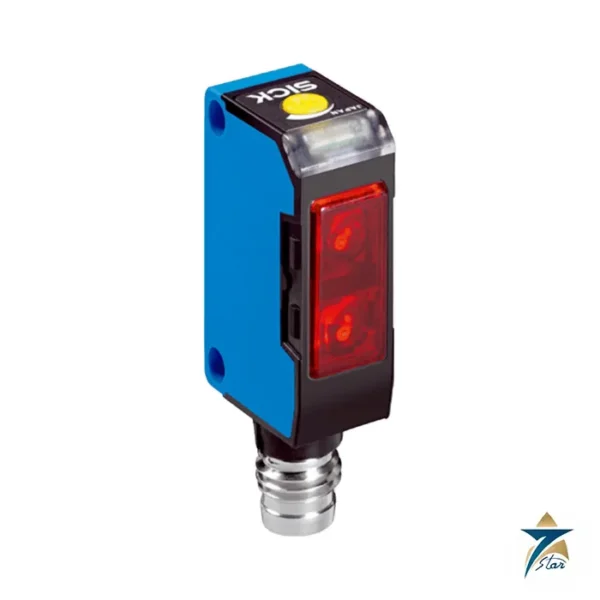
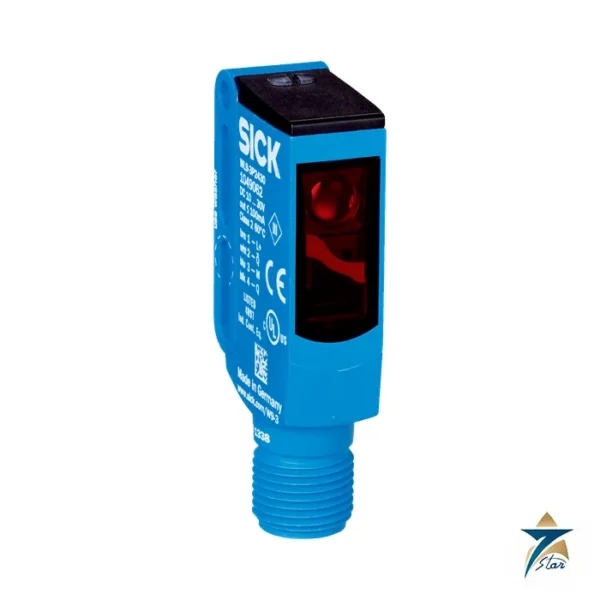
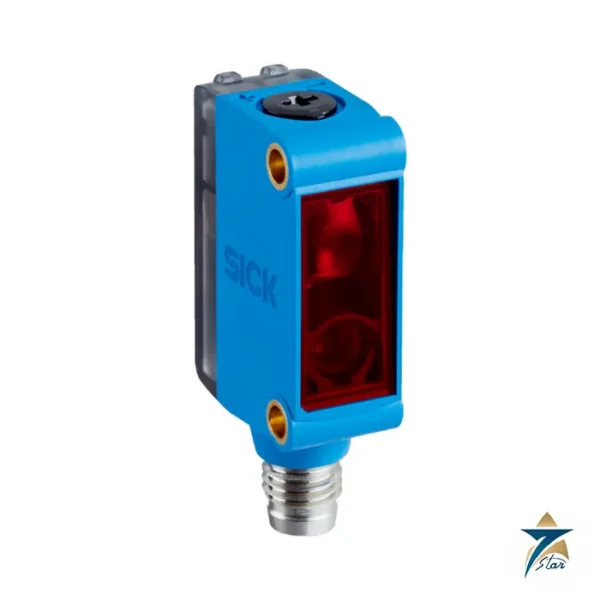
W150 miniature retro-reflective sensor, 2 m with reflector
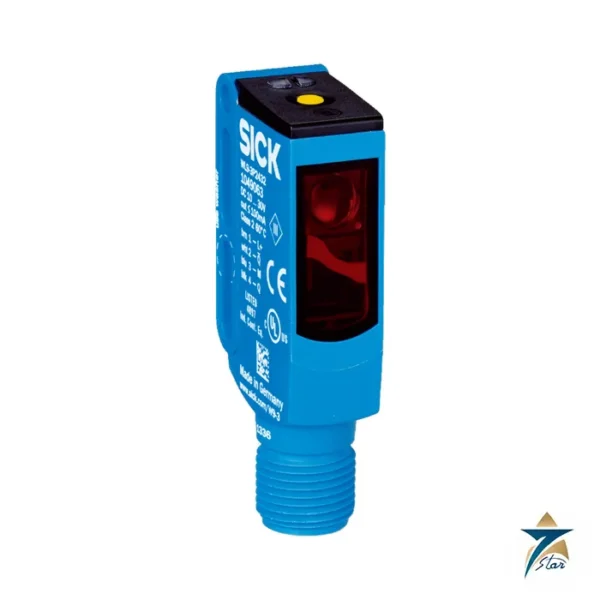
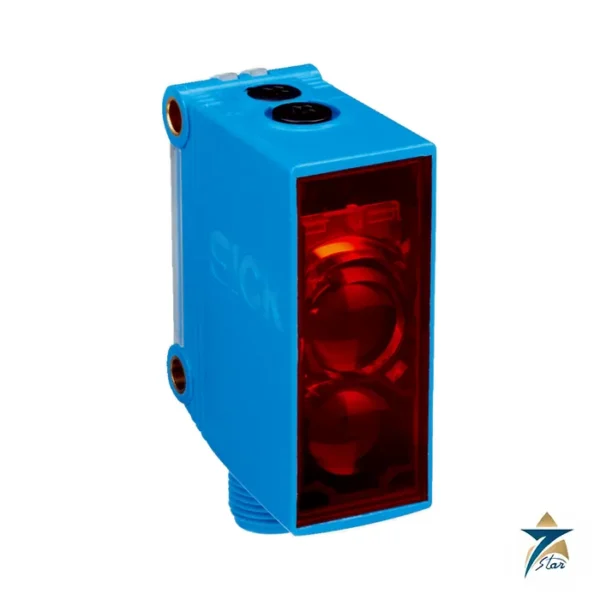
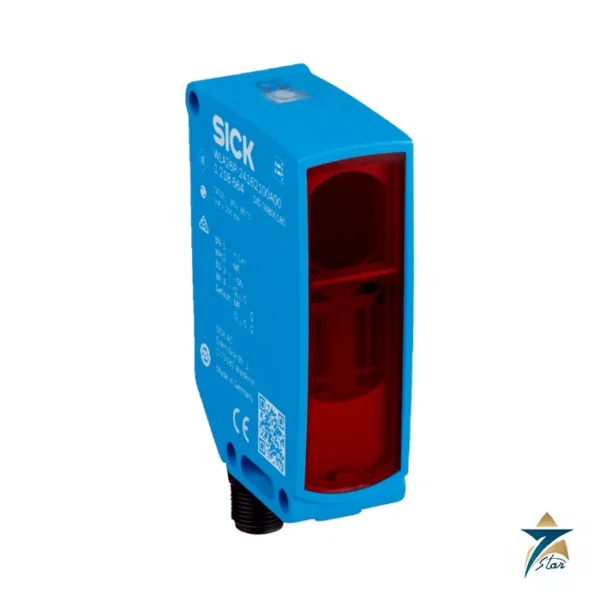
The SICK WL150-P430 (part no. 6011038) is a W150 retro-reflective sensor with a dual-lens system and polarising filter, measuring only 10 mm by 28 mm by 17.5 mm and weighing 7 g. It senses a reflector from 0.01 m to 2 m (maximum 0 m to 2.4 m) using visible red LED light with a focus of about 6 degrees.
The delivery contains a BEF-W150-A bracket and a PL20A reflector. On sick.com the type is listed in the catalogue archive, so verify availability or a replacement with SICK before specifying it.
Technical specifications
| Parameter |
Specification |
| Manufacturer |
SICK |
| Type / family |
WL150-P430 / W150 |
| Part no. |
6011038 |
| Functional principle |
Photoelectric retro-reflective sensor, dual-lens system |
| Sensing range max. / typical |
0 m … 2.4 m / 0.01 m … 2 m (reference reflector PL80A) |
| Polarising filter |
Yes |
| Light source / type |
LED, visible red light; focus and dispersion approx. 6 degrees |
| Adjustment |
Potentiometer, 270 degrees |
| Items supplied |
Bracket BEF-W150-A; reflector PL20A |
| Supply voltage UB |
10 V DC … 30 V DC |
| Ripple |
10 % |
| Current consumption |
20 mA |
| Output |
PNP, light/dark switching via L/D control cable |
| Output current Imax. |
100 mA |
| Response time / switching frequency |
0.5 ms max. / 1,000 Hz |
| Protection class |
II |
| Dimensions (W x H x D) |
10 mm x 28 mm x 17.5 mm |
| Housing / optics |
Plastic ABS / plastic PMMA |
| Connection |
Male connector M8, 4-pin |
| Weight |
7 g |
| Enclosure rating |
IP67 |
| Ambient temperature |
-25 °C … +55 °C operation; -40 °C … +75 °C storage |
| UL file no. |
NRNT2.E128350 and NRNT8.E128350 |
Notes for small-space reflex sensing
The W150 family is built for locations where the sensor cannot be larger than a fingertip: grippers, small slides and compact feeders. A 7 g body means little added mass on moving parts, and the M8 plug keeps the cable run light.
Because the data sheet quotes the range with a PL80A reference reflector, the PL20A supplied in the box will give a shorter range. Use the potentiometer to set sensitivity, keep the reflector surface clean and align the beam to the centre of the prisms.
Lifecycle note and ordering
Order by type WL150-P430 and part no. 6011038. Siblings WT150-P460 (proximity) and WL150-P420 (transparent-object reflex) share the housing and the M8 connection. The type appears in the SICK archive, so confirm current availability before ordering and ask for the successor type if you need a long-term supply.
Mounting and aligning sensor and reflector
A retro-reflective sensor needs only one powered device, but sensor and reflector must face each other squarely. Fix the sensor on the BEF-W150-A bracket, place the PL20A reflector on the far side of the product path at a distance well inside the usable range, and sight along the beam before switching on. With power applied, move the reflector slowly while monitoring the switching output at the PLC input, find the edges of the zone in which the reflector is detected, and fix it in the middle of that zone. Then set the potentiometer so the sensor switches reliably with the beam clear and drops out firmly when a product interrupts it. Recheck alignment once the bracket screws are fully tightened, because a small shift on such a compact housing moves the light spot noticeably at the reflector.
Wiring the PNP output and light/dark selection
The WL150-P430 connects through a 4-pin M8 male connector and has a PNP output, so it suits PLC input cards that expect a sourcing signal. Decide at the design stage whether the output should switch when the beam is received or when it is interrupted, wire the L/D control line to suit, and note the choice on the electrical drawing so maintenance staff know what the input state should be in normal running. Keep the supply within the 10 V DC to 30 V DC range from the data sheet, keep the connected load within the stated output current, and route the M8 cable away from motor leads and welding cables.
Keeping the optics reliable on dusty and humid sites
In Oman, dust settling on the lens and reflector is a frequent reason for a reflex sensor to start chattering or to miss products. The housing is rated IP67, but optical performance still depends on clean surfaces, so add lens and reflector cleaning to the line’s routine checks and use a soft cloth rather than solvents that could attack the PMMA optics. Condensation can form where cool, air-conditioned production halls meet humid coastal air at an open door, so avoid mounting the sensor in that air stream if possible. Glossy packaging or metallic film can sometimes return light to the receiver; the polarising filter is meant to help with this, but always test with the real products before the line is handed over.
Commissioning checklist
Before handover, confirm that the sensor switches correctly for every product size and colour on the line, that the reflector is fixed where it cannot be knocked out of alignment, and that the air around the sensor stays within the operating temperature range listed above, even next to heaters, sealing jaws or sun-exposed walls. Record the potentiometer setting and the light/dark choice so a replacement unit can be set up the same way.
Documents and quotation
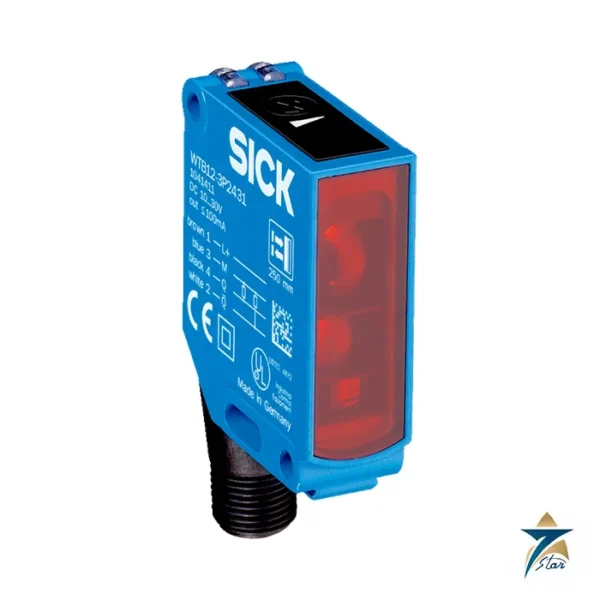
The official SICK data sheet for WL150-P430 (part no. 6011038) is attached to this page, and the figures in the table above are taken from it. SICK lists this type in its catalogue archive, so lifecycle status and any named successor should be checked first. Seven Star LLC is an independent supplier in Muscat and quotes SICK items against a written request. In your enquiry, give the exact type code, part number, quantity and delivery location, and say whether you need accessories such as clamps, reflector or a cable with connector. Data sheets carry a note that content is subject to change without notice, so confirm current details before ordering. More items are listed under sensors and transmitters, and you may also look at the SICK WTB4-3 miniature photoelectric sensor.


Reviews
There are no reviews yet.