- Automation & ControlView all 3,072 products
- Automation Accessories
- AC Drives
- PLC & I/O Cards
- Industrial Communications
- Vibration Monitoring
- Isolator & Barrier
- Controllers & Data Acquisition
- Safety Switches & Guard Locking
- Motor Soft Starters
- Encoders
- CCTV & Security
- Pneumatic Cylinders
- HMI Displays
- Servo Drives
- Industrial Computers
- Machine Vision
- Automation Software
- Robotics
Brand: ION Science
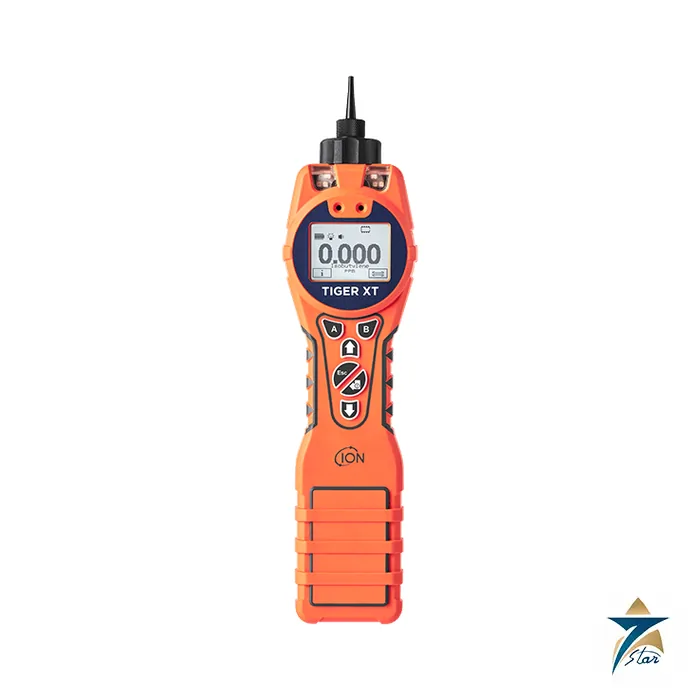
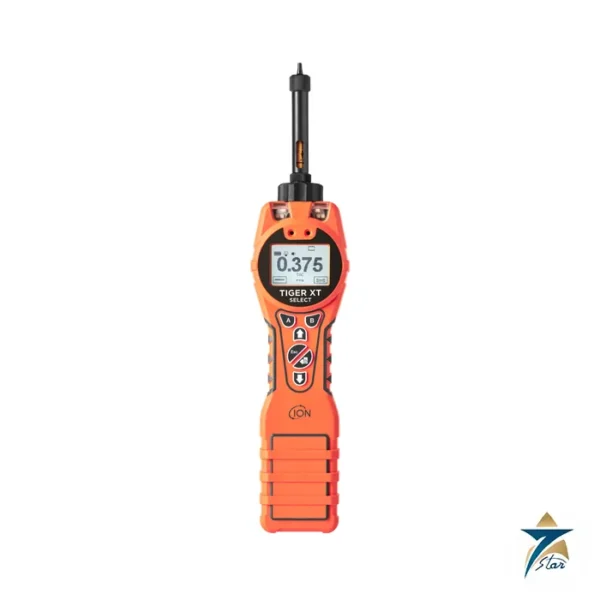
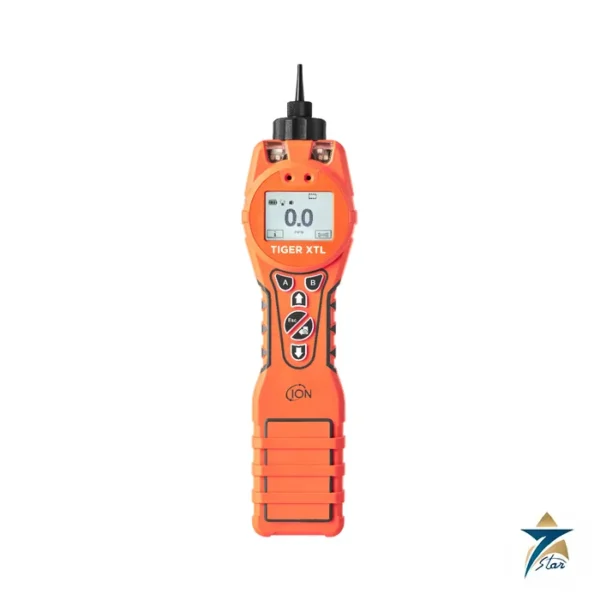
ION Science Tiger XT Handheld VOC Detector
Description
A handheld PID detector for VOCs from 1 ppb to 20,000 ppm
The ION Science Tiger XT is an intrinsically safe handheld photoionisation (PID) detector for volatile organic compounds. The maker quotes detection from 1 part per billion up to 20,000 parts per million, a response time under two seconds, and an internal gas table of more than 750 VOCs and toxic compounds. Its patented Fence Electrode Technology and anti-contamination design are intended to keep readings stable in humid and heavily contaminated atmospheres, and the rugged IP65 body suits confined-space entry, tank work and fugitive-emission surveys.
Technical specifications
| Parameter | Specification |
|---|---|
| Detection principle | Photoionisation detector; 10.6 eV krypton lamp as standard, 10.0 eV and 11.7 eV lamps available |
| Minimum sensitivity | 10.6 eV: 1 ppb (0.001 mg/m3); 11.7 eV: 0.6 ppm (600 ppb) |
| Maximum reading | 10.6 eV: 20,000 ppm; 11.7 eV: 9,000 ppm (indicative above 2,000 ppm; some analytes such as ethanol reach the maximum) |
| Accuracy | 10.6 eV: +/-5% or one digit; 11.7 eV: +/-12% of display reading (isobutylene calibration, 20 C, 1000 mbar) |
| Response time T90 | 10.6 eV: under 2 s; 11.7 eV: under 6 s |
| Lamp life | 10.6 eV: 10,000 hours; 11.7 eV: 500 hours or more (continuous running) |
| Operating temperature | 10.6 eV: -20 to +60 C; 11.7 eV: 0 to +60 C; humidity 0 to 99% RH non-condensing |
| Flow rate | 220 ml/min or more, with blocked-flow alarm |
| Alarms | Amber and red flashing LEDs; sounder 95 dBA at 300 mm; vibration; pre-programmed TWA and STEL (Health and Safety option) |
| Data logging (option) | 120,000 points with date and time stamp; USB 1.1 connection; TigerPC software |
| Calibration | 2- and 3-point via calibration kit accessory; factory set to isobutylene |
| Power | Li-ion pack up to 24 hours (about 8 hours charge) or 3 x AA alkaline about 8.5 hours |
| Size and weight | 91 x 370 x 60 mm with probe; 870 g |
| Protection | IP65; EMC tested to EN 61326-1:2013, EN 50270:2015 and CFR 47:2008 Class A |
| Approvals as printed | II 1G Ex ia IIC T4 Ga; Class 1 Division 1, Groups A, B, C and D, T4; IECEx SGS 25.0002X; SGS25ATEX0003X; SGS25UKEX0004X; SGSNA/25/CA/00001X; Tamb -25 to +45 C (Li-ion) or -25 to +40 C (alkaline) |
Options, gas table and typical use
Upgrades such as Health and Safety mode, ppb sensitivity, single-log, multi-log and full data logging can be added without returning the instrument to the factory. The Health and Safety mode checks readings against short-term exposure limits and time-weighted averages. The instrument leaves the factory set to isobutylene, and response factors in the internal gas table convert the reading to the target VOC, so state the target compound when ordering. Registering the instrument online within one month extends warranty up to five years.
ION Science lists environmental monitoring, soil contamination detection, VOCs in landfill, confined-space entry, emergency response, wing-tank entry, medical gases in hospitals and fugitive emissions as typical applications. A PID does not measure methane or oxygen, so use it alongside a combustible and oxygen monitor such as the Industrial Scientific Ventis MX4 for entry permits.
How the ION Science Tiger XT works
A pump draws the air sample past an ultraviolet lamp. The light has enough energy to ionise volatile organic molecules, and the ions produce a small current between two electrodes. The current is proportional to the concentration, and the detector shows it in parts per million or parts per billion. The Fence Electrode design helps keep the reading stable when the air is humid or dirty. The reading is based on isobutylene, so a correction factor from the gas table is used for other compounds.
Where the Tiger XT is used
- Confined-space entry and tank work
- Fugitive-emission and leak surveys
- Checks before hot work in areas with solvents or fuels
- Industrial hygiene monitoring of workers’ exposure
- Emergency response and spill assessment
Selection checklist for the Tiger XT
- Lamp: 10.6 eV as standard, or the 10.0 eV and 11.7 eV lamps
- Range needed, from 1 ppb up to 20,000 ppm
- Gases to be measured and their response from the gas table of over 750 compounds
- Data logging option with 120,000 points
- Health and Safety option for TWA and STEL values
- Battery: Li-ion pack or 3 AA alkaline cells
- Temperature of the site, from -20 to +60 degrees C
- Hazardous-area rating on the label
Installation, commissioning and maintenance notes
Charge the battery and switch the detector on in clean air. Calibrate it with the calibration kit using a 2-point or 3-point routine, and record the result. Check the flow alarm by blocking the inlet for a moment. Clean the lamp and the electrodes at the interval set by the maintenance plan, and fit a new filter when it is dirty. Do not use the detector in an area that does not match the approval printed on the label.
Requesting a quotation for the Tiger XT
Please send the gases to be measured, the lamp, the options and the quantity. Seven Star LLC serves industrial customers in Oman and the GCC and replies with a quotation based on the information provided.
Tiger XT alarms
The detector has amber and red flashing LEDs, a 95 dBA sounder and a vibration alarm.
Tiger XT lamp life
The 10.6 eV lamp lasts 10,000 hours. The 11.7 eV lamp lasts 500 hours or more.
Tiger XT size and power
The detector measures 91 x 370 x 60 mm with the probe and weighs 870 g. The Li-ion pack runs up to 24 hours.
Tiger XT approvals
The label lists II 1G Ex ia IIC T4 Ga and Class 1 Division 1, with IECEx and ATEX certificates.
Detector records for Tiger XT
Keep the calibration gas, the date and the lamp hours with the instrument file.
Documents and quotation
The attached file is the four-page Tiger XT brochure (V1.1); the 71-page manual (V1.3) carries operation and calibration details. For a fixed benzene-specific monitor see the
and the wider fire and gas detectors. Send lamp type, target compounds, options and approvals required for a quotation.
Datasheets & Documents
- Brochure ION Science Tiger XT brochure V1.1 (EN, 4 pp) Download
Reviews (0)
How would you rate this product? Cancel reply
About brand
ION Science is a British maker of gas detection instruments, based in Fowlmere, Cambridgeshire. It has been active since 1989 and is best known for photoionisation detectors (PIDs) that measure volatile organic compounds at low concentrations. Its portable and fixed instruments are used for worker exposure monitoring, leak detection and environmental surveys.
Seven Star LLC is an independent supplier in Muscat. We list ION Science detectors for oil and gas, petrochemical and environmental users in Oman and the GCC.
ION Science company profile
| Active since | 1989, United Kingdom |
|---|---|
| Head office | Fowlmere, Cambridgeshire |
| Core technology | Photoionisation detection (PID) with patented Fence Electrode design |
| Product families | Tiger XT and Cub portable PIDs, Titan benzene monitor, Falco fixed detectors |
Milestones
- 1989: ION Science begins operating.
- 1998: Patents its PID sensor.
- 2002: Patents the Fence Electrode for humidity-resistant PIDs.
- 2017: Opens its head office in Fowlmere.
ION Science product series
The Tiger XT is a handheld VOC detector for hazardous areas, and the Titan 2 is a fixed benzene monitor.
A PID uses ultraviolet light to ionise volatile organic compounds and measures the resulting current, which allows detection down to ppb levels. Response factors convert the reading for each specific compound. General VOC detectors measure the total, while benzene-specific monitors separate benzene from other hydrocarbons, which matters because benzene has very low exposure limits.
Where ION Science detectors are used
Leak detection, confined space entry checks, worker exposure monitoring, refinery and terminal benzene monitoring, and environmental and soil surveys.
Ordering ION Science detectors: what we need
Send the model, the compounds and ranges, lamp type, hazardous-area requirement and accessories such as probes, filters and calibration kits.
Facts checked against ION Science's published company history, October 2026.
Browse ION Science products by category: Gas Analyzer Systems, Fire & Gas Detectors.
FAQ
Questions about the ION Science Tiger XT Handheld VOC Detector
Answers from our engineering team on installation, compatibility and integration.
01What is the response time of the Tiger XT?
Under two seconds with the 10.6 eV lamp and under six seconds with the 11.7 eV lamp, per the brochure.
02What range does it measure?
From 1 ppb up to 20,000 ppm with the 10.6 eV lamp, depending on the compound and calibration.
03Is it intrinsically safe?
The brochure lists II 1G Ex ia IIC T4 Ga and Class 1 Division 1 Groups A to D T4 with IECEx and ATEX certificates.
04How many VOCs are in its gas table?
More than 750 VOCs and toxic compounds.
05What power options are there?
A rechargeable Li-ion pack, up to 24 hours, or three AA alkaline cells, about 8.5 hours.


Reviews
There are no reviews yet.