- Automation & ControlView all 2,897 products
- Automation Accessories
- AC Drives
- PLC & I/O Cards
- Industrial Communications
- Vibration Monitoring
- Controllers & Data Acquisition
- Isolator & Barrier
- Safety Switches & Guard Locking
- Motor Soft Starters
- CCTV & Security
- Encoders
- Pneumatic Cylinders
- HMI Displays
- Servo Drives
- Industrial Computers
- Machine Vision
- Automation Software
- Robotics
Brand: Siemens
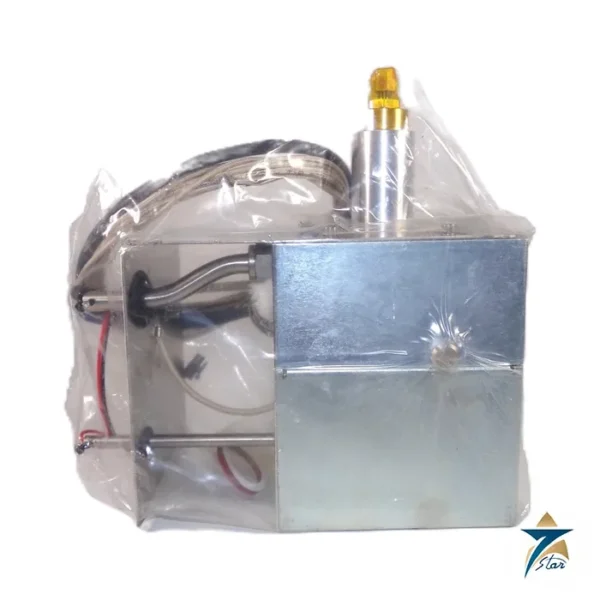
Siemens Maxum II Model 50 Ten-Port Valve 2017660-003
Description
Overview: The Core Switching Valve for Sample Introduction
The Siemens Maxum II Model 50 Ten-Port Valve, part number 2017660-003, is an air-actuated diaphragm valve purpose-built for the Siemens line of process gas chromatographs, performing the sample introduction and column-switching functions that define each analytical cycle. As a ten-port configuration, the Model 50 valve can route sample and carrier gas streams through multiple simultaneous flow paths, enabling functions such as sample injection, column backflush, and column isolation within a single compact valve body.
As an independent specialized supplier of Siemens Maxum Edition II analyzer spare parts, Seven Star LLC sources and supplies the Model 50 valve 2017660-003 to refineries, gas plants, and petrochemical complexes across Oman and the wider GCC.Seven Star LLC supplies this item on request with the manufacturer documentation, and availability and lead time are confirmed at quotation.
Working Principle: Multi-Port Diaphragm Switching
The Model 50 valve uses a diaphragm-based switching mechanism in which pneumatic actuation air deflects a diaphragm across the valve’s internal port pattern, simultaneously connecting or isolating multiple flow paths in a single actuation stroke. This ten-port design allows the valve to redirect sample and carrier gas between the separation column, sample loop, and detector paths in a single coordinated switching event, which is what allows a process GC to execute repeatable, precisely timed injection and backflush sequences cycle after cycle.
Because the diaphragm isolates the pneumatic actuator from the process gas path, the valve avoids the wear and leak points associated with rotary or piston-type multiport valves, an important characteristic for a component that may be actuated many thousands of times over its service life. Actuation air is supplied from the analyzer’s Solenoid Valve Control Module (SVCM) on precisely timed commands from the system controller, synchronizing valve switching with the overall chromatographic method.
Engineering Design of the Model 50 Valve
The 2017660-003 valve is built to the Model 50 ten-port configuration standard used across the Siemens Maxum and Maxum Edition II process GC platforms, with a compact body designed for direct mounting within the analyzer’s valve manifold. Port connections are arranged to match the analyzer’s existing plumbing configuration for straightforward like-for-like replacement.
Given the valve’s role in defining the analytical method’s timing and flow paths, Siemens documentation recommends that maintenance personnel without specific training in Model 50 valve repair return the valve for factory service rather than attempting field disassembly, reflecting the precision required in the valve’s internal diaphragm and seat geometry to maintain consistent switching performance.
Key Features
The Model 50 Ten-Port Valve 2017660-003 delivers the precise, repeatable switching that process gas chromatography depends on. Key characteristics include:
- Ten-port diaphragm valve configuration enabling simultaneous multi-path switching in a single actuation.
- Air-actuated design compatible with the analyzer’s SVCM pilot-air control architecture.
- Supports sample injection, column backflush, and column isolation functions within the analytical cycle.
- Diaphragm-based construction avoids wear and leak points common to rotary or piston-type valves.
- Genuine Siemens part number for correct fit across the Maxum and Maxum Edition II platforms.
Industrial Applications
The Model 50 valve is a core component in virtually every Siemens Maxum Edition II analytical method, used across refinery unit monitoring, natural gas quality and custody transfer analysis, and petrochemical process streams wherever precise, repeatable sample injection and column switching are required. Because it directly defines the chromatographic method’s flow path timing, valve condition has a direct bearing on chromatographic peak shape, retention time repeatability, and overall data quality.
Seven Star LLC supports refinery instrumentation teams, gas processing operators, and petrochemical maintenance departments across Oman, Muscat, Sohar, and the broader GCC region with sourcing of Model 50 valves and related Maxum Edition II sampling system hardware, helping analyzer houses maintain consistent, high-quality chromatographic data.
Technical Specifications
The table below summarizes the core specifications of the Siemens Maxum II Model 50 Ten-Port Valve as supplied by Seven Star LLC.
| Parameter | Specification |
|---|---|
| Model / Part Number | Model 50 Ten-Port Valve, P/N 2017660-003 |
| Valve Type | Air-actuated diaphragm valve |
| Port Configuration | 10 port |
| Function | Sample injection, column switching, column backflush/isolation |
| Target Platform | Siemens Maxum and Maxum Edition II Process Gas Chromatographs |
| Control Interface | Pilot air from Solenoid Valve Control Module (SVCM) |
| Hardware Condition | New, genuine Siemens part number |
Why Choose Seven Star LLC for Maxum II Model 50 Valve Sourcing
Because the Model 50 ten-port valve directly defines a chromatographic method’s flow-path timing, a wrong or subtly mismatched replacement can silently shift peak shape and retention time repeatability even when the analyzer keeps producing results – the kind of drift that erodes confidence in custody-transfer or product-quality data without an obvious alarm. Seven Star LLC verifies the exact port configuration and platform compatibility against the customer’s specific Maxum or Maxum Edition II method before the valve ships, and flags Siemens’ own guidance that field disassembly by untrained personnel risks degrading the internal diaphragm and seat geometry the valve depends on. We also help refinery and gas plant instrumentation teams across Oman plan spare valve stock for this core switching component, since it sits at the center of every analytical cycle the GC performs and downtime here stops the whole analyzer.
Request a Quote for Siemens Maxum II Model 50 Ten-Port Valve 2017660-003
Seven Star LLC is a dedicated supplier of Siemens Maxum Edition II process gas chromatograph spare parts and switching valves throughout Oman and the GCC. To request a formal B2B quotation, verify current availability and lead time, or confirm compatibility of the Model 50 Ten-Port Valve 2017660-003 with your specific Maxum II configuration, contact our instrumentation sourcing team today.
Related Products
- Teledyne AP00465 Model PX2 LED UV Fluorescence Transmitter with PMT Detector
- CS Instruments FA 510/515 – Dew Point Sensor for Compressed Air & Gases
- MICHELL CD2-SX-WDC-002 Water Dew-Point Sensor Exchange for Condumax II
- AMETEK 7000-330-SE LCD Host Interface PCB Assembly
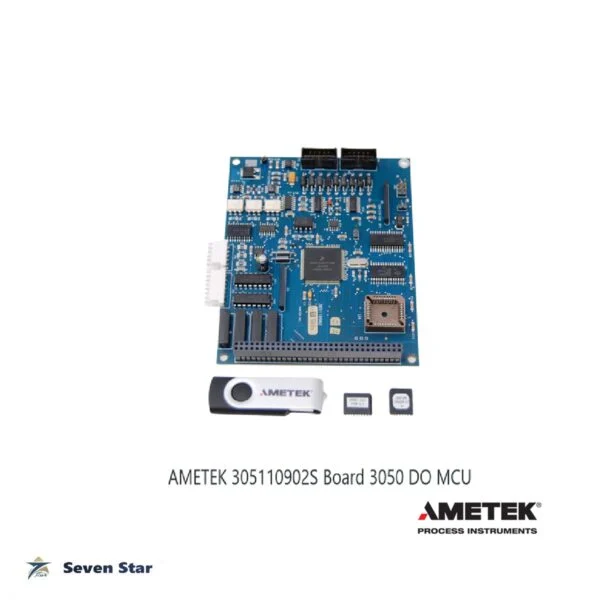
- AMETEK 305110902S Board 3050 DO MCU – Moisture Analyzer Spare Part
- LAR 501-40-000159 UV Emitter Low Pressure 15W Ozone Free Tubular
Datasheets & Documents
- Instruction Manual Siemens Maxum II Model 50 Ten-Port Valve 2017660-003 Manual Download
Reviews (0)
How would you rate this product? Cancel reply
About brand
Siemens is the German technology group whose industrial products include SIMATIC controllers and HMIs, SINAMICS drives, SIRIUS and SENTRON switching and protection devices, SIPROTEC protection relays, SITRANS process instruments, SCALANCE networks and process analysers. It was founded in Berlin on 12 October 1847 by Werner von Siemens and the precision mechanic Johann Georg Halske as Telegraphen-Bauanstalt von Siemens & Halske, to build Siemens's newly designed pointer telegraph. Siemens AG is headquartered in Munich and listed on the Frankfurt Stock Exchange; its energy business was spun off as Siemens Energy in 2020.
Siemens company profile
| Founded | 12 October 1847, Berlin, Germany, as Telegraphen-Bauanstalt von Siemens & Halske, with 10 employees |
|---|---|
| Founders | Werner von Siemens (1816–1892) and Johann Georg Halske (1814–1890) |
| First product | The pointer telegraph designed by Werner von Siemens |
| Headquarters | Munich, Germany (Siemens AG) |
| Ownership | Public company listed in Frankfurt; Siemens Energy (2020) and Siemens Healthineers are separately listed companies |
| Businesses acquired that appear in our range | Moore Products (bought in 2000; APACS and QUADLOG control systems), Applied Automation (Maxum process gas chromatographs); small industrial gas turbines such as the SGT-300 came with Alstom's industrial turbine business in 2003 |
| Product families | SIMATIC S7 PLCs, ET 200 distributed I/O and HMI panels, TIA Portal software, SINAMICS drives, SIMOTICS motors, SIRIUS and SENTRON low voltage devices, SIVACON switchboards, SIPROTEC relays, SITRANS instruments, SCALANCE network components, building technology valves and sensors |
Milestones
- 1847: Siemens & Halske starts work in Berlin with 10 employees.
- 1848: The company wins the contract for Europe's first long-distance telegraph line, Berlin to Frankfurt am Main.
- 1856: 330 employees, two-thirds of them working on telegraph networks in Russia.
- 1866: Werner von Siemens describes the dynamo-electric principle, the basis of the electric generator.
- 1958 onwards: The SIMATIC name is used for Siemens industrial automation; S7 PLCs follow in the 1990s and S7-1500 in 2012.
- 2020: Siemens Energy is spun off and listed separately.
Choosing Siemens automation products
A Siemens order number (MLFB) identifies the exact product: 6ES7 is SIMATIC automation, 6AV is HMI, 6GK is industrial communication, 6SL is SINAMICS drives, 3R is SIRIUS control and 5SY is SENTRON miniature circuit breakers. For PLCs, S7-1200 is the compact controller for small machines, S7-1500 is the current mid-to-high range controller, and S7-300 and S7-400 are older platforms still running in many plants; S7-300 is being phased out, so spares and migration to S7-1500 are common requests. When replacing a CPU or module, the full order number including the version digits matters, because firmware and hardware versions affect compatibility with the existing project.
Where Siemens products are used
In Oman and the GCC, Siemens automation runs in oil and gas, power and desalination plants, water networks, cement and process industries. Maxum gas chromatographs analyse gas composition in gas plants and refineries, SIPROTEC relays protect substations, SGT-300 turbines drive generators and compressors, and Siemens building valves are used in HVAC systems.
Siemens products we list
| Family | Examples |
|---|---|
| SIMATIC controllers and I/O | S7-1500, CPU 1515-2 PN, S7-1200, CPU 1214C, S7-300, S7-400H CPU 412-5H, ET 200SP, IM 153-2 |
| HMI and networking | KTP700 Basic, TP700 Comfort, TP1200 Comfort, SCALANCE XC208, SCALANCE WAM766, PROFIBUS OLM |
| Drives, motors and power distribution | SINAMICS G120C, SINAMICS G120X, 1LA7 motor, SIVACON S8, SIPROTEC 7SJ85, 5SY4510-7 MCB |
| Process instruments | SITRANS P320, MAG 5100W, SITRANS TH320, SITRANS TS500, SITRANS TR200 |
| Maxum II analyser spares | FID 302A detector, FPD II assembly, filament detector, Model 50 valve, SYSCON kit, air bath heater |
| APACS and QUADLOG spares | QLCCM24AAN, QLSAMBAN, QLSDM024DCCBN, 39SAMCAN, 16137-151 M-BUS cable |
| Building technology | VPI46 PICV, VPF44, QFM1660 sensor |
Ordering Siemens products: what we need
Send the full order number from the label (for example 6ES7214-1AG40-0XB0) and, for PLC and HMI parts, the hardware and firmware version (FS and V numbers). For Maxum II and APACS spares, send the Siemens part number such as 2021651-002. For drives, add the motor power and supply voltage.
Frequently requested Siemens models: Siemens IM 155-6 PN ST ET 200SP Interface Module 6ES7155-6AU02-0BN0, Siemens SGT-300 Industrial Gas Turbine.
Facts checked against Siemens's published history timeline, October 2026.
FAQ
Questions about the Siemens Maxum II Model 50 Ten-Port Valve 2017660-003
Answers from our engineering team on installation, compatibility and integration.
01What functions does the Model 50 valve perform?
The ten-port Model 50 valve performs sample introduction, column switching, and column backflush or isolation functions within the process gas chromatograph analytical cycle.
02Why does the valve use a diaphragm design?
The diaphragm isolates the pneumatic actuator from the process gas path, avoiding the wear and leak points associated with rotary or piston-type multiport valves over repeated actuation cycles.
03How is the valve controlled?
The valve is air-actuated, receiving pilot air from the analyzer's Solenoid Valve Control Module (SVCM) on precisely timed commands from the system controller to synchronize with the chromatographic method.
04Can the Model 50 valve be repaired in the field?
Siemens documentation recommends that personnel without specific training in Model 50 valve repair return the valve for factory service rather than attempting field disassembly, given the precision required in the internal diaphragm and seat geometry.
05Does Seven Star LLC supply this part across the GCC?
Yes, Seven Star LLC sources and supplies the Siemens Maxum II Model 50 Ten-Port Valve 2017660-003 to refinery, gas processing, and petrochemical customers across Oman and the wider GCC region.


Reviews
There are no reviews yet.