Moore Industries IPH/4-20MA/3-15PSIG/20PSI/-FR1 [WDNS] overview
The Moore Industries IPH/4-20MA/3-15PSIG/20PSI/-FR1 [WDNS] is a rugged field-mount current-to-pressure transmitter from the Moore Industries IPH family. It takes a two-wire 4-20 mA input from a DCS, PLC or PC-based control system and converts it to a 3-15 psig pneumatic signal on a 20 psi supply.
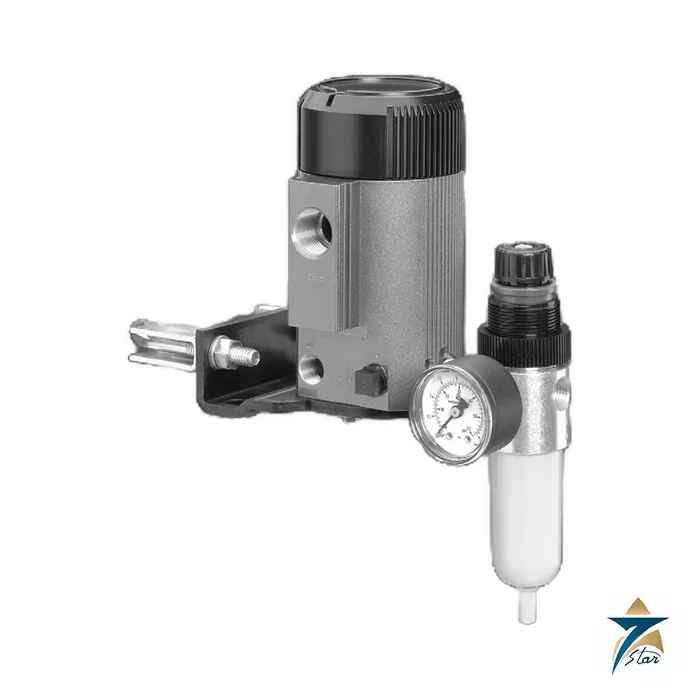
In the model string, -FR1 adds the coalescing filter, miniature supply regulator and pressure gauge reading both psi (0-60) and bar (0-4), and WDNS is the housing: an aluminum body with a PBT polyester cover, NPT pneumatic ports and an NPT electrical entry.
The IPH meets NEMA 4X and IP65 requirements and is designed for extended duty in harsh field environments. The IPH/4-20MA/3-15PSIG/20PSI/-FR1 [WDNS] fits installations where wiring a signal cable to the valve is cheaper and more reliable than running fragile pneumatic tubing from a remote location.
The part number written as IPH/4-20MA/3-15PSIG/20PSI/-FR1 [WDNS] is the model string given in the manufacturer datasheet as a worked ordering example for the IPH family, so it describes one complete, orderable configuration rather than a loose product family. Every field of the string (unit, input, output, supply or power, option and housing) can be changed when a different configuration is needed, and the datasheet table lists the allowed choices. If your plant standard differs from this example, send the configuration you need with your RFQ and we will check it against the table.
Key features of the Moore Industries IPH/4-20MA/3-15PSIG/20PSI/-FR1 [WDNS]
- Watertight, dust-tight and corrosion-resistant housing (NEMA 4X, IP65); for these ratings the unit must be mounted vertically or within 45 degrees of vertical.
- Mounts in any position for performance purposes and calibrates in its final orientation.
- High-technology sensor that keeps working next to valves and other high-vibration equipment.
- RFI/EMI protection built into the circuit and housing design.
- Optional filter, regulator and gauge (-FR1).
- Universal mounting bracket for surface or 2-inch pipe mounting; P suffix on the housing code adds pipe hardware.
Technical specifications for IPH/4-20MA/3-15PSIG/20PSI/-FR1 [WDNS]
| Parameter |
Value |
| Model string |
IPH/4-20MA/3-15PSIG/20PSI/-FR1 [WDNS] |
| Input |
4-20 mA into 260 ohms nominal input impedance |
| Output |
3-15 psig, matched to a 20 psi supply |
| Accuracy |
Less than 0.5% of span including linearity, hysteresis and repeatability (3-27 psig: not to exceed 1% of span) |
| Step response |
0.3 seconds into 100 ml (6 cubic inches) at 90% of output span |
| Supply pressure effect |
Maximum 0.3% per 1.4 psig (0.3% per 0.1 bar) |
| Air consumption |
0.1 SCFM, dead-ended |
| Air capacity |
1.4 SCFM maximum |
| Maximum input |
150% of input span without damage |
| RFI/EMI effect |
Less than plus or minus 0.1% of span at 10 V/m, 20-1000 MHz |
| Ambient range |
-40 to +60 degrees C (-40 to +140 degrees F) |
| Pneumatic connections |
1/4-inch NPT female for supply and output; additional normally plugged supply port for the filter/regulator |
| Electrical entry |
WDNS: 1/2-inch NPT female |
| Weight |
2 lb 3 oz (993 grams) |
| Certifications |
FM non-incendive Class I, Division 2, Groups A, B, C, D; CSA intrinsically safe options; ATEX/CENELEC Type N and PTB intrinsically safe options; NEPSI intrinsically safe options; CE conformant |
The values above come from the manufacturer datasheet for the IPH family. Specifications can depend on the option and housing chosen, so always read the matching page of the datasheet before you finalise a purchase specification, and keep the full model string on your purchase documents.
Typical applications in Oman and the GCC
Current-to-pressure converters sit between an electronic control system and a pneumatic device. Common uses in the region include:
- Oil and gas wellhead, pipeline and processing sites, where pneumatic control valves and actuators are driven from a DCS or PLC.
- Power and desalination plants, for dampers, steam and water control valves and other pneumatic final elements.
- Water and wastewater facilities, for pneumatic valves on dosing, aeration and distribution lines.
- Manufacturing plants that retrofit electronic control onto older pneumatic actuators and positioners.
Running a two-wire signal cable instead of long runs of instrument tubing reduces installation effort, and the converter can be placed next to the valve or actuator for a short, fast pneumatic connection.
Selection and compatibility notes
The housing letters define the cover material and the entry thread. WDNS and WDNA have NPT electrical entries, WDMS and WDMA have a metric entry, S denotes the PBT polyester cover and A the aluminum cover. If you prefer metric conduit, ask for a WDM housing.
Intrinsic-safety options (-ISC, -ISE, -NE, -ISCN) are listed in the datasheet for the individual certification bodies. They are not part of this model string, so mention them in the RFQ if required.
Check the pneumatic side first. The output range (for example 3-15 psig, 0.2-1 bar or 20-100 kPa) must suit the actuator or positioner, and the supply pressure given in the model string must match the output range, because the datasheet states that the output must match the supply pressure to its right in the ordering table. Reverse-acting ranges such as 15-3 psig are available when the valve logic requires them.
Then check the electrical side: the loop must be able to drive the stated input impedance, and any hazardous-area certification you need must be present in the option field. Mounting style, conduit entry thread (NPT or metric) and whether pipe-mounting hardware is required are set by the housing designator at the end of the model string.
Questions to settle before ordering IPH/4-20MA/3-15PSIG/20PSI/-FR1 [WDNS]:
- What pneumatic output range and supply pressure does the actuator need?
- Is a direct or reverse output required?
- Is a filter/regulator or pressure gauge option required?
- Which conduit thread and mounting arrangement suit the site?
- Which hazardous-area approval is required, if any?
Installation and commissioning
Install the unit vertically or within 45 degrees of vertical where the NEMA 4X and IP65 ratings are relied upon, and fit the supplied filter and regulator in the supply line.
Mount the transmitter close to the pneumatic device it serves, supply it with clean, dry, regulated instrument air only, and connect the pneumatic output port to the actuator. The datasheet notes that the unit can be mounted in any position but should be calibrated in its final orientation, so do the zero and span adjustments after the unit is fixed in place.
Wire the two-wire 4-20 mA loop with the correct polarity, seal the conduit entry as required by the area classification, then apply a 4 mA signal and adjust zero, followed by 20 mA and adjust span. Repeat until both points are within tolerance, then check mid-range.
Maintenance and service life
Most field problems with I/P converters are caused by contaminated or wet supply air. Keep the supply filter and regulator serviced, drain moisture regularly and confirm the supply pressure still matches the model string. The datasheet describes an optional coalescing filter and regulator for this purpose.
At scheduled shutdowns, run a five-point calibration check against a reference pressure gauge and mA source. Replace the unit or send it for repair if it cannot be brought within the published accuracy.
Related products and ordering notes
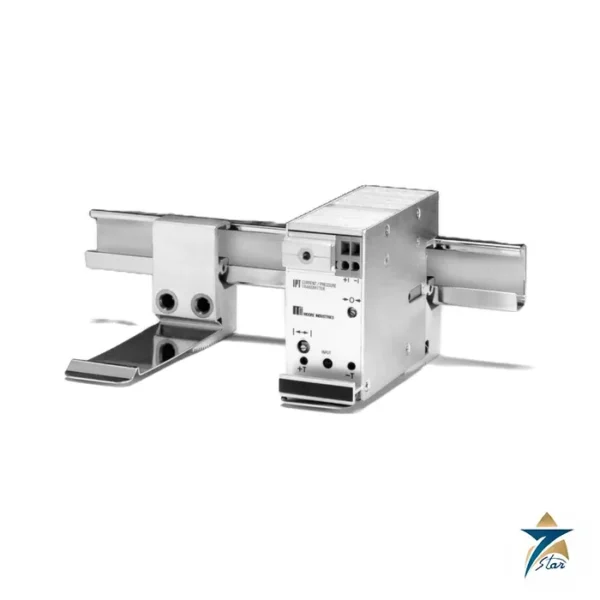
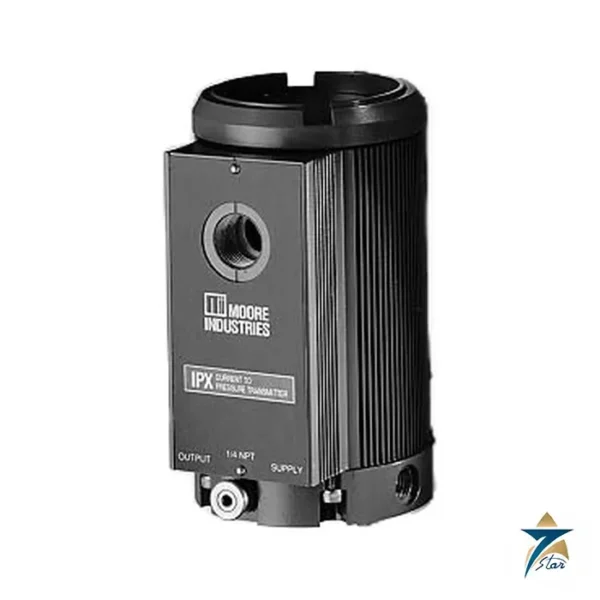
Related Moore Industries current-to-pressure products on this site include the IPT2 transmitter. Other housings in the same family (DIN-rail, polymer field-mount, aluminum field-mount and explosion-proof) cover different environments, so tell us where the unit will be installed if you are unsure which one to quote.
State the complete model string, including options and housing, when you ask for a price, and mention whether a datasheet or certificate is required with the delivery.
Seven Star LLC is an independent supplier serving Oman and the GCC and is not affiliated with the manufacturer. Product names and model designations belong to their owners and are used here only to identify the equipment you are asking about.
Frequently asked questions in brief
- What does the IPH/4-20MA/3-15PSIG/20PSI/-FR1 [WDNS] do? It converts a 4-20 mA loop signal to a 3-15 psig pneumatic output in an aluminum field housing with a filter/regulator.
- What does WDNS mean in the IPH/4-20MA/3-15PSIG/20PSI/-FR1 [WDNS]? It is the housing code: aluminum body, PBT polyester cover, NPT pneumatic and NPT electrical entry ports.
- What are the ambient limits of the IPH/4-20MA/3-15PSIG/20PSI/-FR1 [WDNS]? The datasheet gives -40 to +60 degrees C for the family.
- Does the IPH/4-20MA/3-15PSIG/20PSI/-FR1 [WDNS] include a pressure gauge? The -FR1 option combines a coalescing filter, miniature regulator and gauge reading psi and bar.
- How can I get a price for the IPH/4-20MA/3-15PSIG/20PSI/-FR1 [WDNS]? Send an RFQ with the part number, quantity and delivery location in Oman or the GCC.
Documents and quotation
The manufacturer datasheet for the IPH family is available for download from this page, and it contains the full ordering table, dimensional drawings and wiring diagrams referred to above. To request a quotation, send an RFQ that includes the part number IPH/4-20MA/3-15PSIG/20PSI/-FR1 [WDNS], the quantity you need, the delivery location in Oman or the GCC and any special requirements such as certification or documentation. We will confirm availability and lead time and reply with a written offer. Please check the datasheet and your own hazardous-area and safety requirements before you place an order.





















Reviews
There are no reviews yet.