- Automation & ControlView all 3,044 products
- Automation Accessories
- AC Drives
- PLC & I/O Cards
- Industrial Communications
- Vibration Monitoring
- Isolator & Barrier
- Controllers & Data Acquisition
- Safety Switches & Guard Locking
- Motor Soft Starters
- Encoders
- CCTV & Security
- Pneumatic Cylinders
- HMI Displays
- Servo Drives
- Industrial Computers
- Machine Vision
- Automation Software
- Robotics
Brand: Endress+Hauser (E & H)
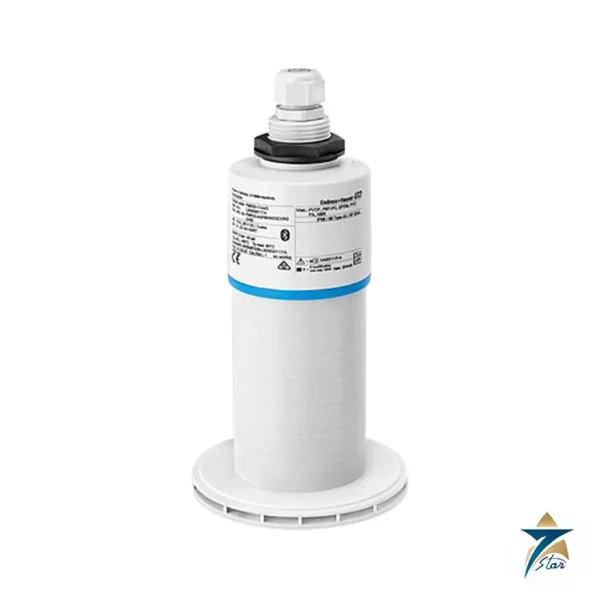
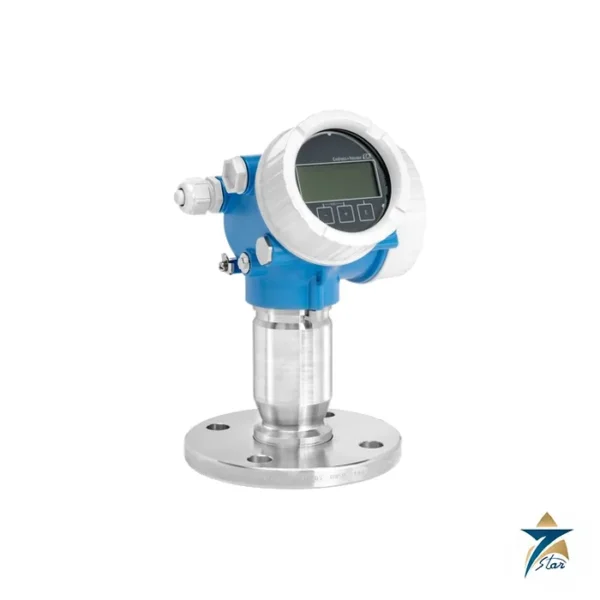
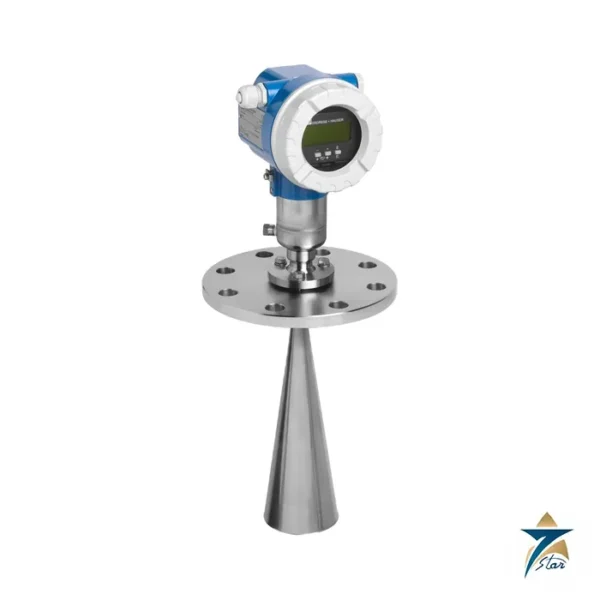
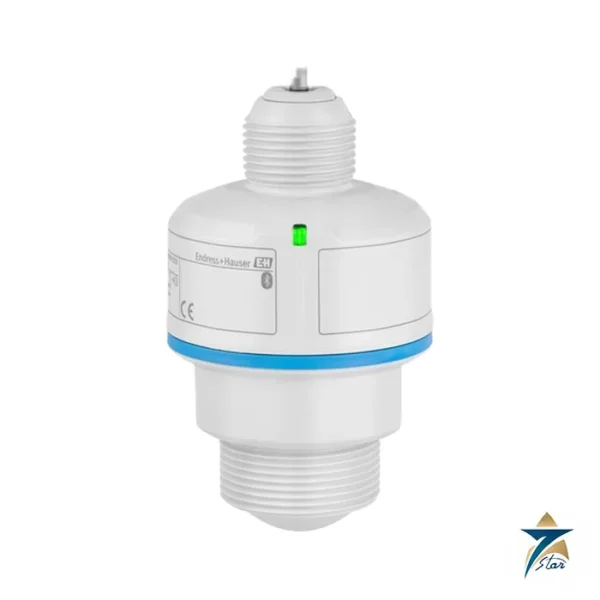
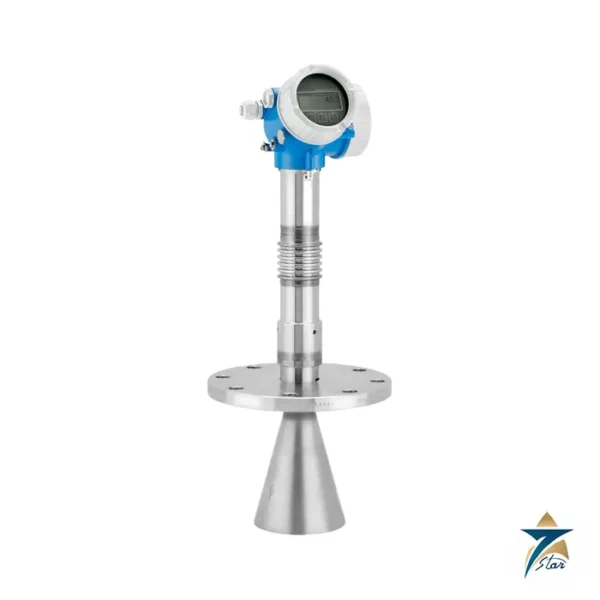
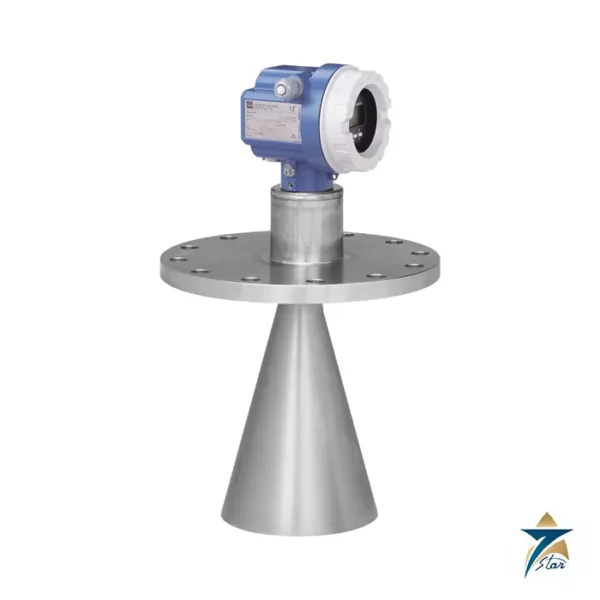
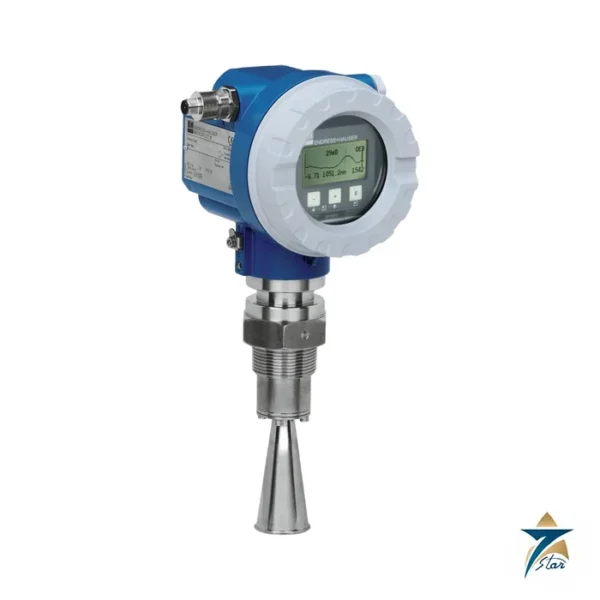
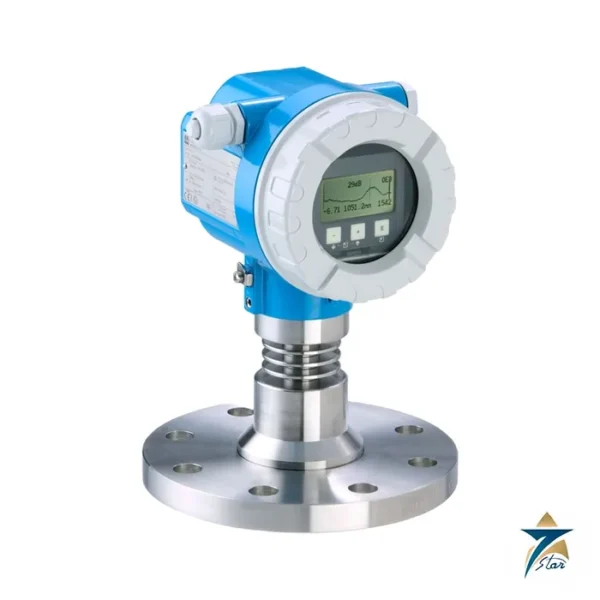
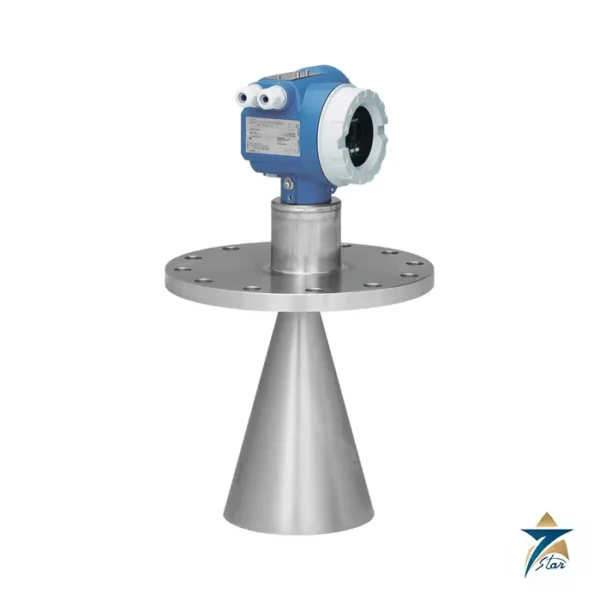
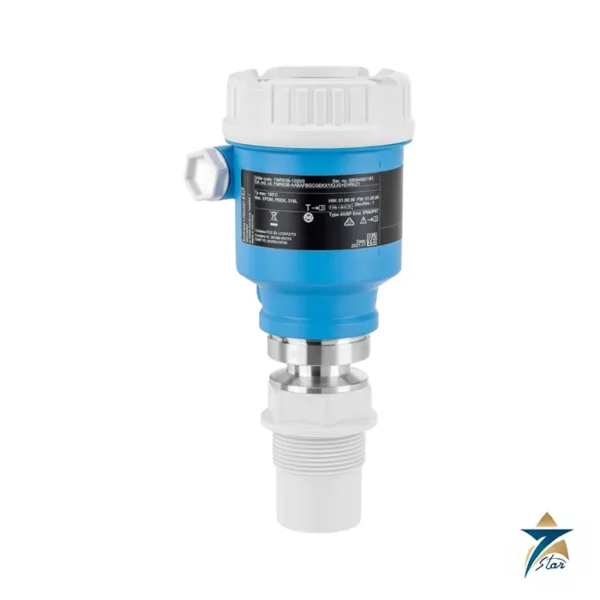
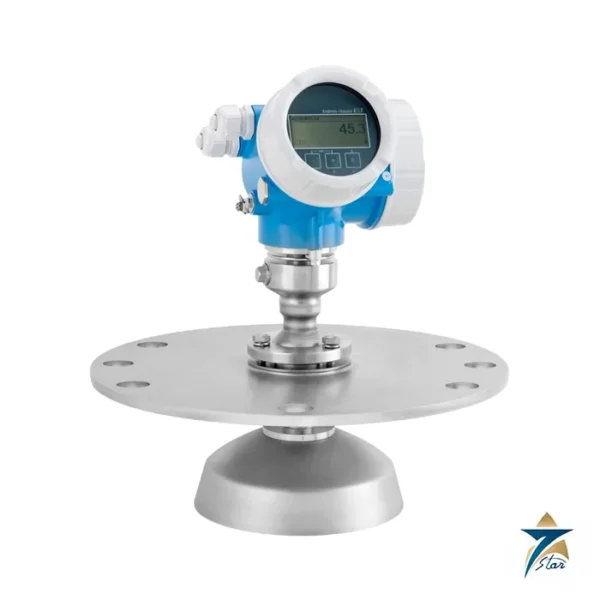
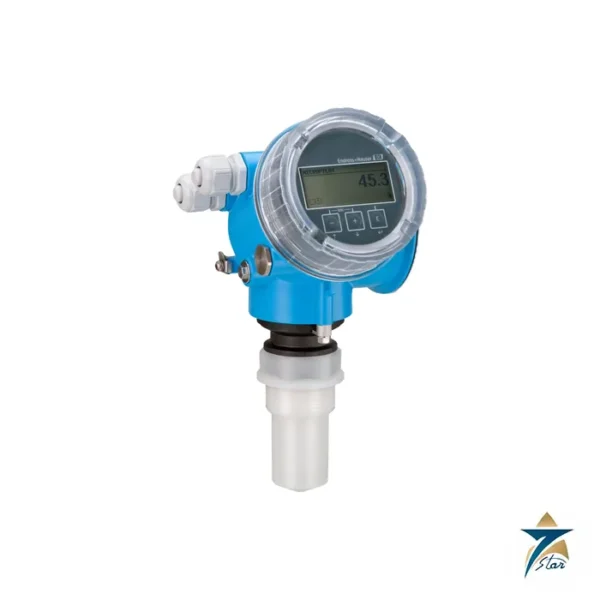
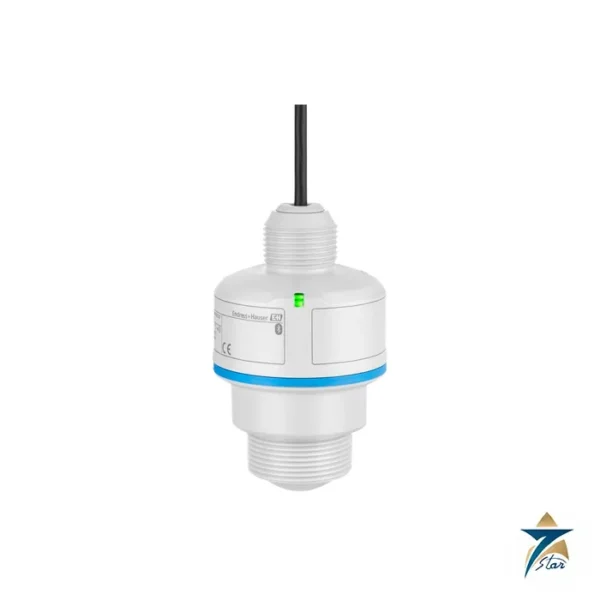
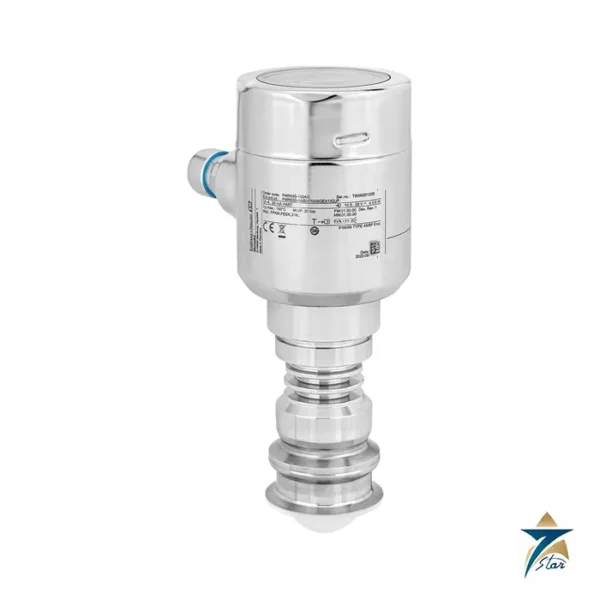
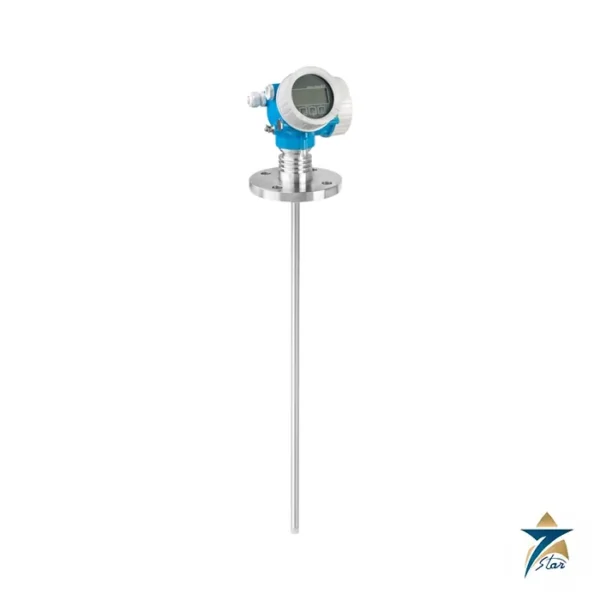
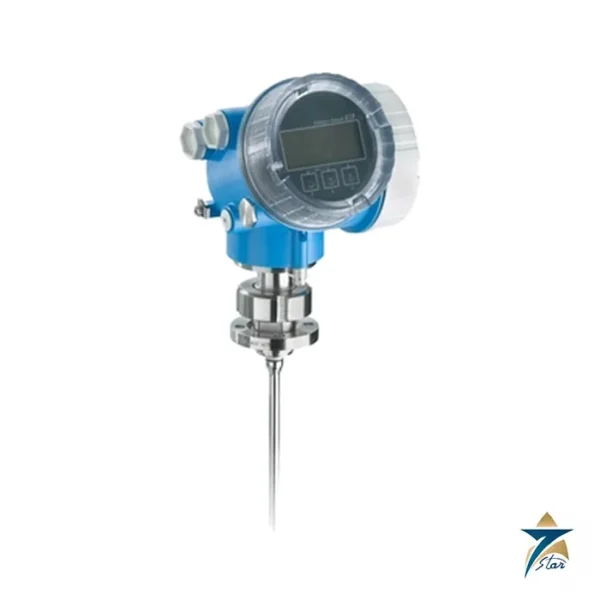
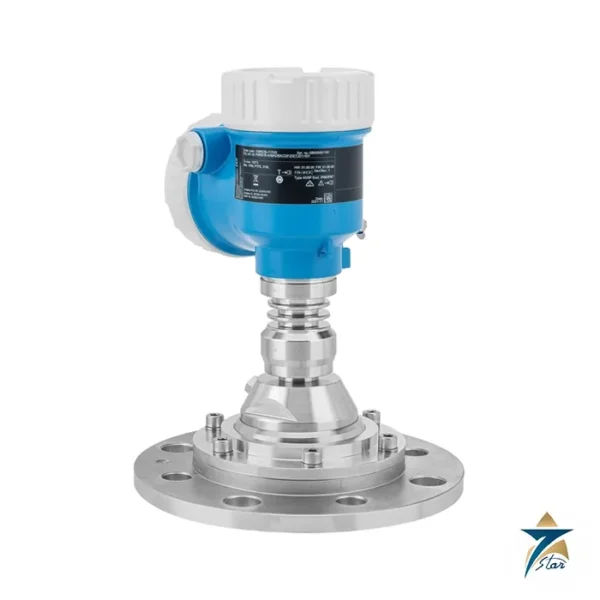
Endress+Hauser FMR53 Micropilot Rod Antenna Radar
Description
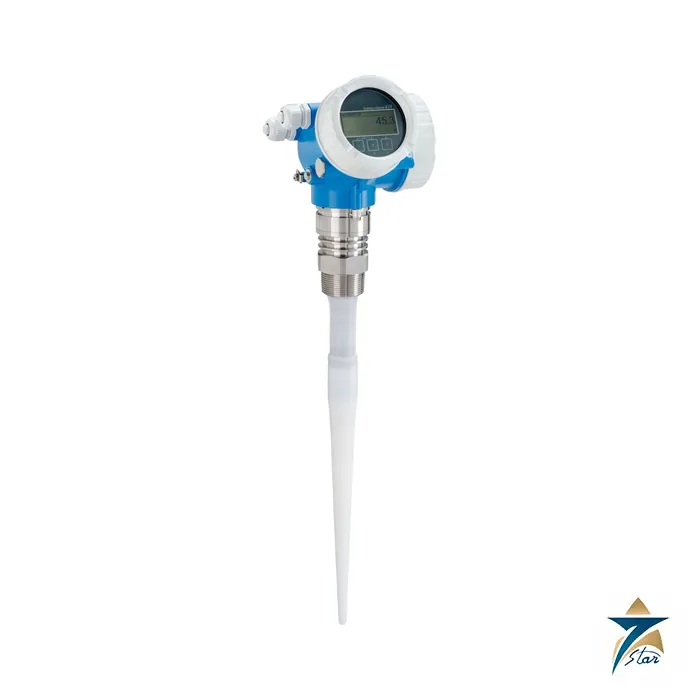
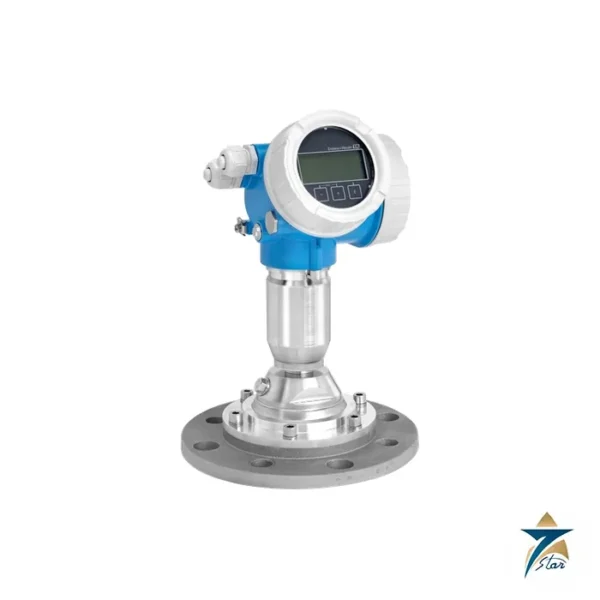
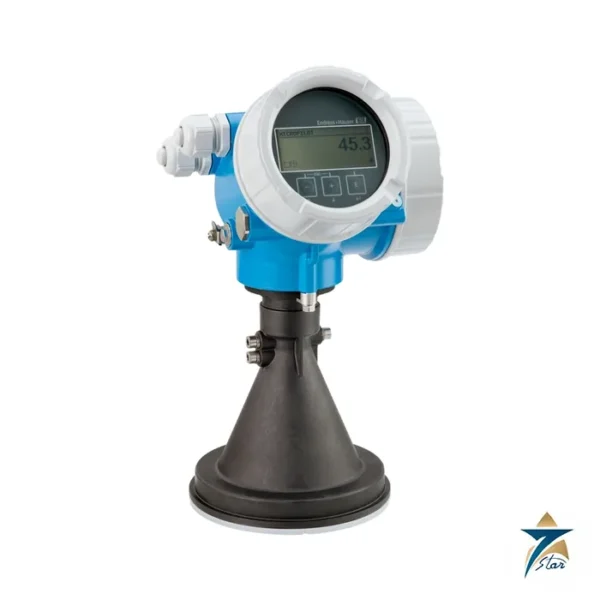
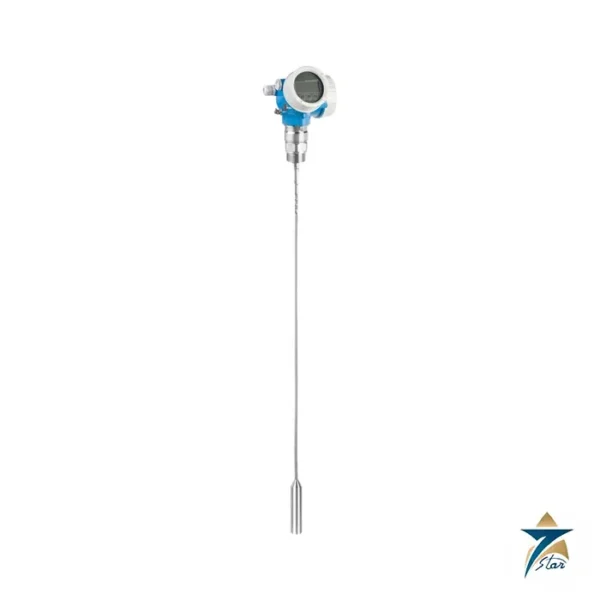
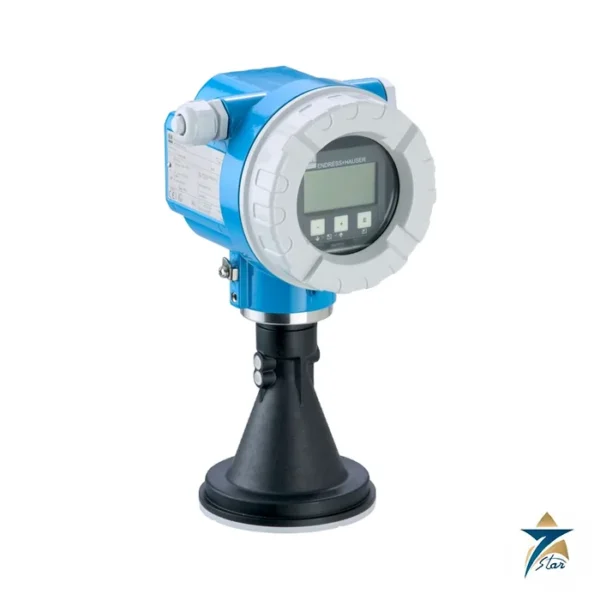
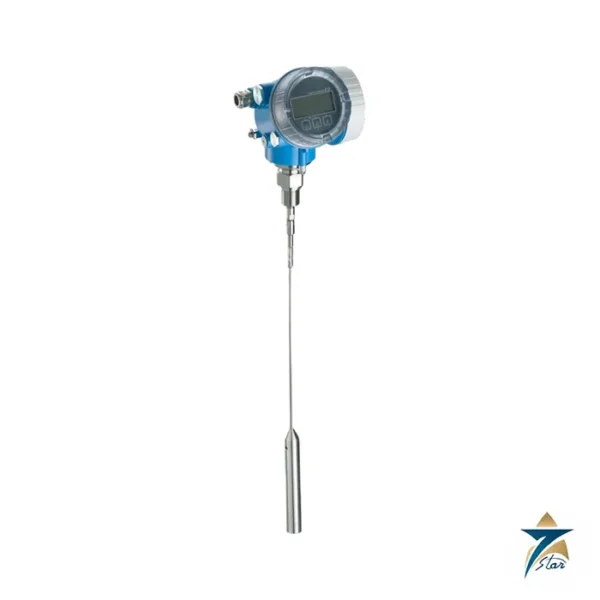
A rod-antenna radar: Endress+Hauser FMR53
Endress+Hauser FMR53 is the rod-antenna Micropilot of the FMR53/FMR54 pair. Its slender antenna passes through small nozzles, which makes it the natural pick where the opening on the vessel is narrow and a bulky horn would never fit. The pair shares a datasheet that describes continuous, non-contact level measurement of liquids, pastes and sludges with a headline range of 20 m for every version of FMR53.
The sensor uses 26 GHz pulses, a HART output and a choice of housings, and it inherits the safety and diagnostic features of the whole FMR5x generation: SIL2 per IEC 61508, SIL3 with redundancy, Heartbeat Technology, HistoROM and Bluetooth set-up through SmartBlue.
Key data of FMR53
- Maximum measuring range 20 m for all versions of FMR53.
- Sum of non-linearity, non-repeatability and hysteresis: plus or minus 6 mm over the whole range; offset or zero point plus or minus 4 mm.
- Analog stage adds 0.02 percent non-linearity and 0.03 percent offset.
- Rod antenna beam angle of 23 degrees; antenna and process connection weigh up to 3.0 kg plus flange weight.
- Sheet limits for the FMR53/FMR54 family: minus 196 to plus 400 degrees Celsius and minus 1 to 160 bar, depending on seal and connection.
- Response time below 0.8 s for tank height under 10 m and below 1 s for tanks under 20 m.
- Resolution of 1 mm digital and 1 microamp analog.
Housings and electrical data for FMR53
| Parameter | Value |
|---|---|
| Housing options | GT18 stainless steel about 4.5 kg; GT19 plastic about 1.2 kg; GT20 aluminum about 1.9 kg |
| Housing protection | IP68 / NEMA 6P (24 h at 1.83 m), IP66 / NEMA 4X; plastic housing with display window IP68 at 1.00 m |
| Output | HART, FSK plus or minus 0.5 mA over the current signal, 1,200 bit/s, galvanic isolation |
| Frequency | K-band, about 26 GHz |
| Approvals | International explosion-protection certificates, WHG, marine approvals |
| Calibration protocol | 3-point or 5-point linearity protocol available |
| Operating concept | Menu with commissioning, operation, diagnostics and expert levels; several local languages |
| Flange note | PTFE-cladded 316L flanges available; flange weights are in TI00426F |
Where FMR53 belongs on a plant
Use it on process tanks that have a small nozzle but still demand a good echo, such as reactors, day tanks, scrubber sumps and receiver vessels. The rod antenna is less sensitive to deposits inside a nozzle than a horn, and its 23 degree beam is wide, so internal obstacles must be kept out of the cone. In Omani petrochemical and water-treatment plants these are typical boiler-feed, condensate, chemical-injection and slop tanks.
Because the sheet quotes 6 mm accuracy rather than the 2 mm of the horn versions, FMR53 is the right choice for operational level and not for custody transfer or inventory reconciliation of high-value product.
The sheet sorts liquids into four permittivity groups: A from 1.4 to 1.9 (liquid gas, and ammonia is treated like it), B from 1.9 to 4 (gasoline, oil, toluene), C from 4 to 10 (concentrated acids, solvents, alcohol, acetone) and D above 10 (conductive and water-based liquids). With a wide 23 degree beam, FMR53 gives its longest range in groups C and D, and a user with a group A medium should check the range tables in the datasheet before accepting 20 m as realistic.
A typical example is an amine or glycol make-up tank in a gas-processing plant: a pressurised vessel with a 3 inch nozzle on the roof, vapors that rule out float gauges, and a need for a signal that the DCS can trust to a few millimetres.
How FMR53 differs from FMR54 and FMR52
| Point | FMR53 | FMR54 | FMR52 |
|---|---|---|---|
| Antenna | Rod | Horn 150/200/250 mm or planar | Flush PTFE horn |
| Beam angle | 23 degrees | 23, 19, 15 degrees (horns) | Narrower, size dependent |
| Max range | 20 m | 20 m horn; 38 m planar in stilling well | 40 m, 60 m with package |
| Accuracy | 6 mm | 6 mm | 2 mm |
Mounting FMR53 in the nozzle
Keep the rod clear of the nozzle wall and any ring weld, align it to hang plumb and avoid placing it over the inlet stream. The sheet requires the cladded flange to be seated correctly because PTFE cladding doubles as a seal. After wiring and powering, enter empty and full distance and map out the false echoes while the vessel is at a typical level. A short tank can be commissioned in under an hour.
Housing choice influences the installation too. The stainless GT18 housing is the sturdiest and heaviest at about 4.5 kg, the aluminum GT20 weighs about 1.9 kg and suits roofs with limited load, and the plastic GT19 at about 1.2 kg is the lightest, although its see-through display window is only rated IP68 down to 1.00 m. Weather protection and a short cable run to the junction box prolong life outdoors in Gulf summers.
Service routine for FMR53
Check periodically for crystalline or viscous deposits on the rod, since heavy coating changes the echo shape. Compare the live echo curve against the saved baseline, confirm the HART loop current and review the NAMUR NE 107 diagnostics. Parameters are held in HistoROM so a replacement electronics module takes over the saved set. If the plant uses the radar in a SIL loop, schedule the proof test described in the safety manual at the interval your risk assessment sets, and log the result with the tag number.
Spare-part planning is straightforward: stock one electronics module, one cover seal set and a gasket for the flange face, and keep the exact order code printed on the nameplate so replacements can be matched without guessing.
Ordering information for FMR53
Specify antenna extension, seal material, flange standard and class, housing, display and approval in a single enquiry. For a hazardous area add the Ex certificate; for an unusual process temperature indicate the connection and seal choice, since the sheet ties temperature and pressure limits to those components.
Documents and quotation
The datasheet of FMR53 is Technical Information TI01041F. Please send the part number, quantity and the options above through the RFQ form. Seven Star LLC is an independent supplier serving Oman and the GCC and is not affiliated with the manufacturer.
Other Models in the Micropilot Fmr5x Range
Seven Star LLC supplies models from the Micropilot Fmr5x range in Oman and the GCC. Compare the related models below and request a quote for the one that matches your application.
| Model | Category | |
|---|---|---|
| Endress+Hauser FMR53 Micropilot Rod Antenna Radar | Radar & Guided Wave Radar Level | You are viewing this model |
| Endress+Hauser FMR54 Micropilot Horn and Planar Radar | Radar & Guided Wave Radar Level | View details |
| Endress+Hauser FMR56 Micropilot Radar for Bulk Solids | Radar & Guided Wave Radar Level | View details |
| Endress+Hauser FMR57 Micropilot Parabolic Radar for Silos | Radar & Guided Wave Radar Level | View details |
Datasheets & Documents
- Datasheet Endress+Hauser FMR53 Micropilot Rod Antenna Radar Datasheet Download
Reviews (0)
How would you rate this product? Cancel reply
About brand
Endress+Hauser makes process measurement instruments for flow, level, pressure, temperature and liquid analysis. Georg H. Endress and Ludwig Hauser started the business in Lörrach, Germany, on 1 February 1953, first selling level meters, and the Endress+Hauser name has been used since 1957. The group is headquartered in Reinach, Switzerland, and has been wholly owned by the Endress family since 1975.
Seven Star LLC is an independent supplier listing Endress+Hauser flowmeters, level and pressure transmitters, temperature assemblies and liquid analysis products for buyers in Oman and the GCC. Instruments are matched from the full order code on the nameplate.
Endress+Hauser company profile
| Origin | Founded in Lörrach, Germany, on 1 February 1953 by the Swiss engineer Georg H. Endress and Ludwig Hauser |
|---|---|
| Headquarters | Endress+Hauser AG, Reinach (Basel-Landschaft), Switzerland |
| Ownership | Family owned; the Endress family has been the sole shareholder since 1975, and a family charter commits the company to stay family owned |
| Size | About 16,500 employees and sales of about EUR 3.7 billion (2023, as reported by the company) |
| Product families | Proline flowmeters, Micropilot and Levelflex radar, Liquiphant switches, Cerabar and Deltabar pressure, iTEMP and iTHERM temperature, Liquiline and Memosens liquid analysis |
Milestones
- 1953: Georg H. Endress and Ludwig Hauser start the business in Lörrach on 1 February, first selling level meters.
- 1957: The Endress+Hauser name comes into use.
- 1975: The Endress family becomes sole shareholder.
- 2023: About 16,500 employees and sales of about EUR 3.7 billion, as reported by the company.
Endress+Hauser product lines
| Line | Measuring principle | Typical use |
|---|---|---|
| Promass F 300, Promass 80F, 83F/84F | Coriolis mass flow | Direct mass flow and density of liquids and gases, hydrocarbon transfer and chemical dosing |
| Promag P 300, P 500, H 300, W 400, W 10, 50P | Electromagnetic flow | Water, wastewater, slurries and other conductive liquids |
| Prowirl F 200, 72F | Vortex flow | Steam, gas and low-viscosity liquids |
| Prosonic Flow 92F, t-mass 65F | Ultrasonic and thermal mass flow | Water lines; compressed air and industrial gases |
| Micropilot FMR62, FMR67, FMR60, FMR10B, FMR20, FMR50, FMR52 | Free-space radar level, 80 GHz and 26 GHz | Tanks, process vessels, silos and open water channels |
| Levelflex FMP51, FMP50, FMP54, FMP55 | Guided wave radar level | Level and interface in vessels, separators and bypass chambers |
| Liquiphant FTL51, Prosonic S FMU90 | Vibronic point level; ultrasonic level | High and low level alarms, pump protection, open channel flow |
| Cerabar PMC71B, PMP51B, PMP71, Deltabar PMD78B, PMD75 | Pressure and differential pressure | Process pressure, hydrostatic level and DP flow |
| iTEMP TMT82, TMT162, iTHERM TM101, TR66, TR10 | Temperature transmitters and thermometers | RTD and thermocouple points with thermowells |
| Liquiline CM444, CM442, Memosens CPS11E, Stamolys reagents | Liquid analysis | pH, ORP, conductivity, dissolved oxygen and nutrient analysis in water treatment and process |
Where Endress+Hauser instruments are used
In Oman and the GCC, Endress+Hauser instruments are common in oil and gas production and processing, refineries and petrochemicals, desalination and water networks, wastewater treatment, power plants and food and beverage plants. Coriolis meters measure hydrocarbon and chemical flows, electromagnetic meters cover water and wastewater, radar transmitters handle tank and silo level, and Liquiline analysers monitor water quality. Proline 300 and 500 flowmeters include Heartbeat Technology for in-situ verification, which reduces the need to remove a meter for checks.
Ordering Endress+Hauser instruments: what we need
The order code on the nameplate (for example PMP71-1QA1S11RDADU) defines every option: measuring range, process connection, materials, output, approvals and display. Send it with the serial number; Endress+Hauser can retrieve the original configuration from the serial number. For a new instrument add the medium, operating and design pressure and temperature, range, line size or tank geometry, process connection, wetted materials, output or protocol (4-20 mA HART, PROFIBUS, FOUNDATION Fieldbus, Modbus) and the hazardous-area approval required. Older models such as Promass 80/83 or Micropilot M are replaced by current Proline or 80 GHz Micropilot devices.
Facts checked against Endress+Hauser company history and product information, October 2026.
Browse Endress+Hauser products by category: Flowmeters, Level Transmitter, Pressure Instrumentation, Temperature, Liquid Analysis Sensors, Liquid Analytical Systems.
FAQ
Questions about the Endress+Hauser FMR53 Micropilot Rod Antenna Radar
Answers from our engineering team on installation, compatibility and integration.
01What antenna does Endress+Hauser FMR53 have?
FMR53 uses a rod antenna with a 23 degree beam angle, designed for narrow nozzles, with a maximum measuring range of 20 m.
02What accuracy does FMR53 reach?
Plus or minus 6 mm for non-linearity, non-repeatability and hysteresis, with a 4 mm offset, as stated in the Micropilot FMR53/FMR54 datasheet.
03Which housings are offered with FMR53?
GT18 stainless steel (about 4.5 kg), GT19 plastic (about 1.2 kg) and GT20 aluminum (about 1.9 kg).
04Is FMR53 suitable for safety-related use?
The sheet claims SIL2 per IEC 61508, and SIL3 for homogeneous or heterogeneous redundancy, plus an easy proof test.
05What is the output of FMR53?
4 to 20 mA with HART at 1,200 bit/s, galvanically isolated, with Bluetooth available for set-up through the SmartBlue app.


Reviews
There are no reviews yet.