- Automation & ControlView all 3,044 products
- Automation Accessories
- AC Drives
- PLC & I/O Cards
- Industrial Communications
- Vibration Monitoring
- Isolator & Barrier
- Controllers & Data Acquisition
- Safety Switches & Guard Locking
- Motor Soft Starters
- Encoders
- CCTV & Security
- Pneumatic Cylinders
- HMI Displays
- Servo Drives
- Industrial Computers
- Machine Vision
- Automation Software
- Robotics
Brand: Endress+Hauser (E & H)
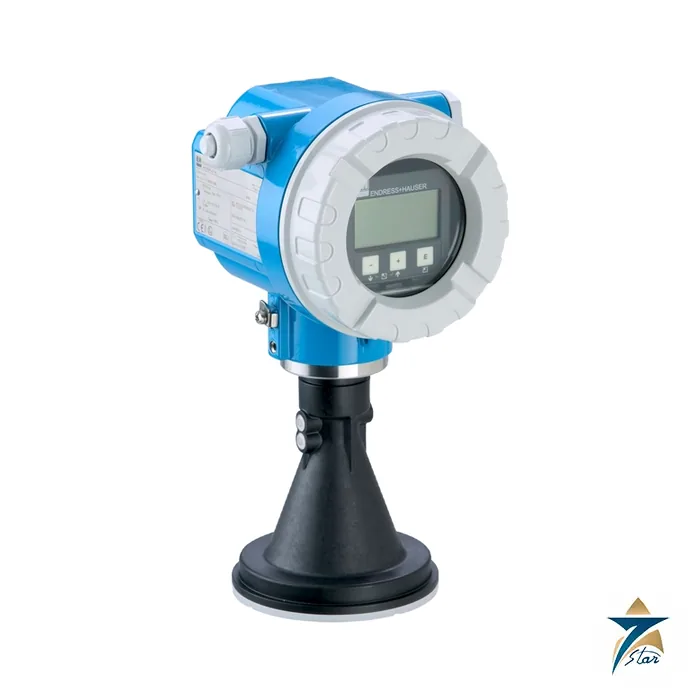
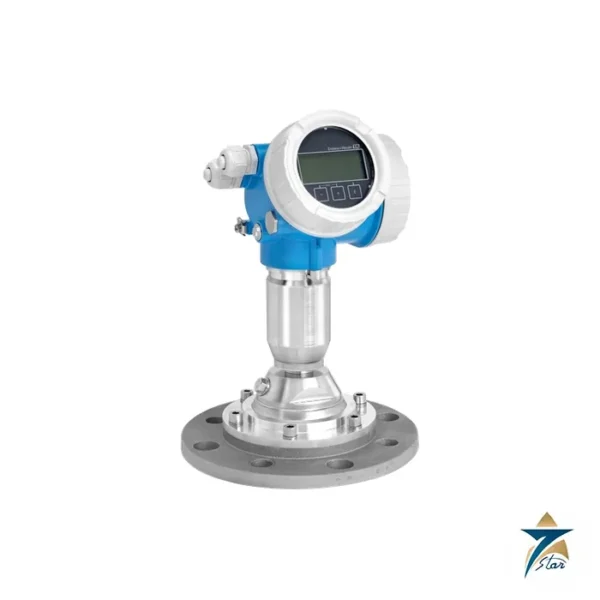
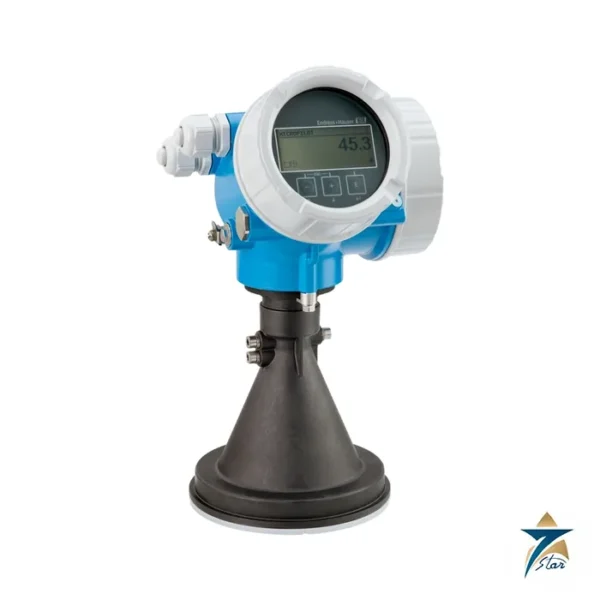
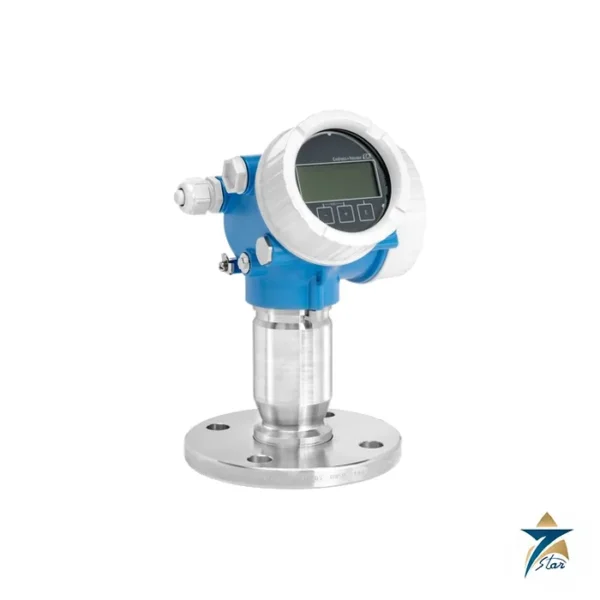
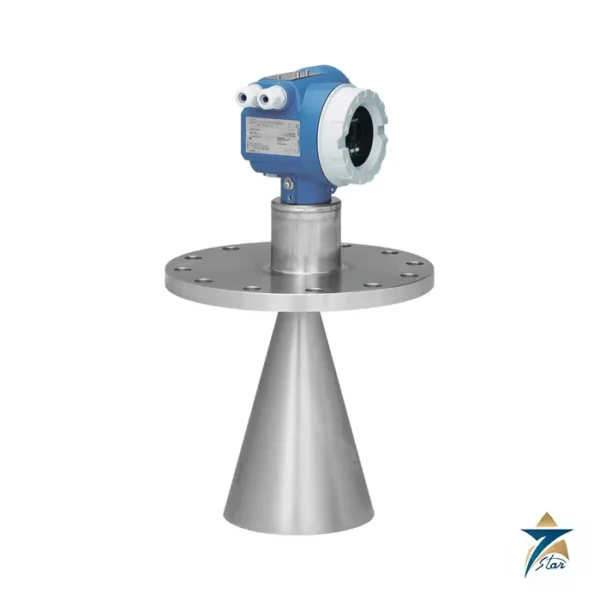
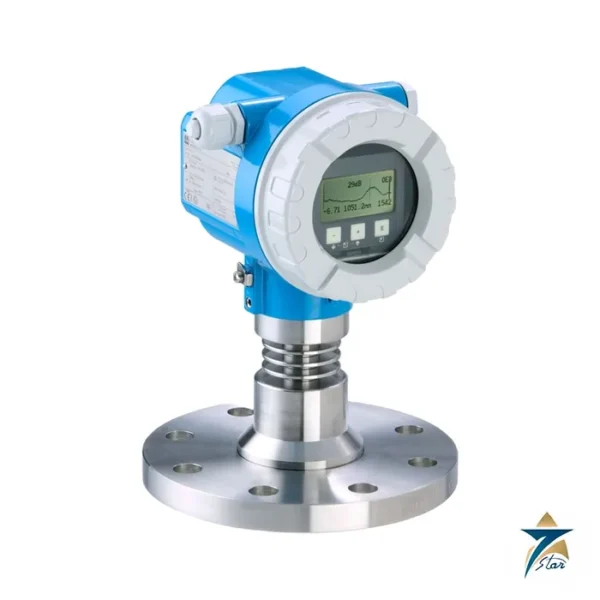
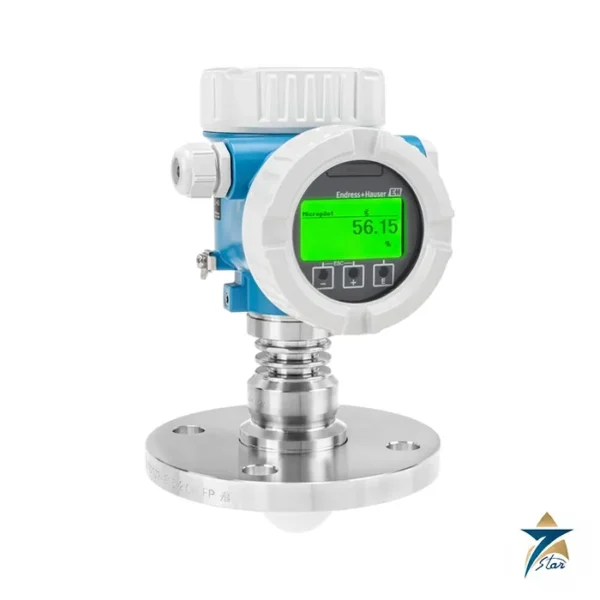
Endress+Hauser FMR244 Micropilot M PTFE Horn Radar
Description
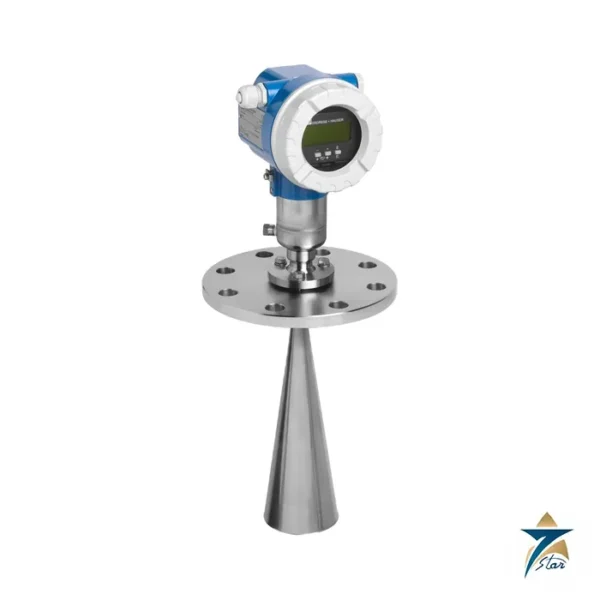
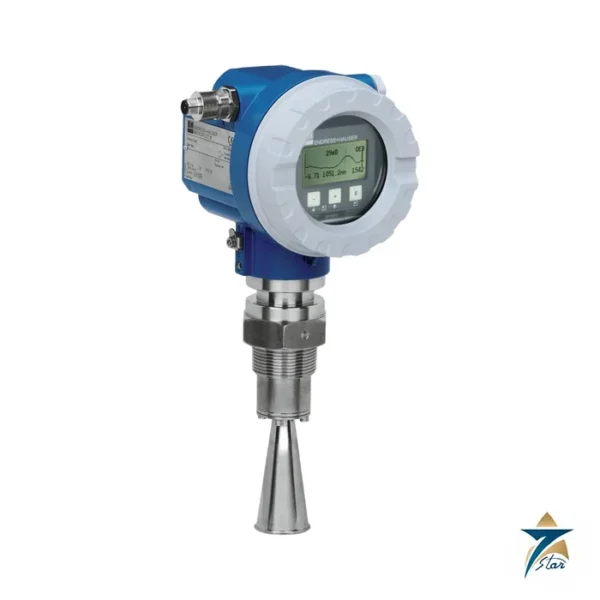
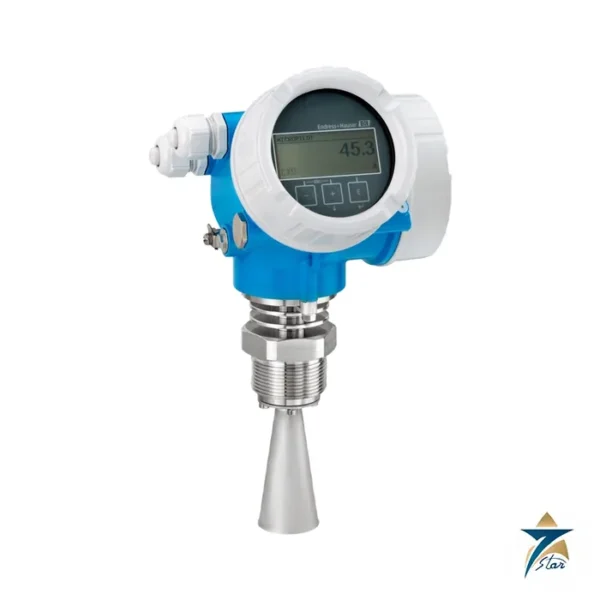
Endress+Hauser FMR244: PTFE-encapsulated horn for corrosive liquids
Endress+Hauser FMR244 merges the narrow beam of a K-band horn with a chemically inert shell. The datasheet describes it as combining the advantages of the horn antenna with high chemical resistance, and the 80 mm (3 inch) horn is also used in solids. With only about 2.5 kg plus flange, it is the lightest member of the Micropilot M group, an advantage on thin tank roofs and long cantilever mounts.
Technical profile of FMR244
| Parameter | Value |
|---|---|
| Frequency band | K-band |
| Antenna | Completely PTFE-encapsulated horn, 40 mm (1.5 in) or 80 mm (3 in); PP-clad variant |
| Version V (FKM Viton GLT, PTFE) | Minus 40 to plus 130 degrees Celsius, minus 1 to 3 bar; PTFE conform to FDA 21 CFR 177.1550 and USP Class VI, Viton, PVDF wetted |
| Version S (PP clad, silicone) | Minus 40 to plus 80 degrees Celsius; PP, silicone, PBT wetted |
| Accuracy | Plus or minus 3 mm (40 m maximum range); 0.03 percent beyond 10 m |
| Weight | About 2.5 kg plus flange weight (F12 or T12 housing) |
| Recommended range | Up to 20 m with the 80 mm antenna; shorter in solids per the sheet table |
| Output | HART, PROFIBUS PA or FOUNDATION Fieldbus |
| Ambient temperature | Minus 40 to plus 80 degrees Celsius |
The case for an encapsulated horn on FMR244
On metal horns, aggressive vapours attack the wetted surface and the crevices around it. On FMR244, the whole horn is moulded in PTFE and the process connection uses PVDF, so the only parts in contact with the product are plastics. That suits hot acids, chlorinated solvents and wash chemicals up to 130 degrees Celsius. The trade-off is pressure: only minus 1 to 3 bar, so FMR244 is a tank instrument, not a pressure-vessel instrument. If the vessel can see more than 3 bar during upsets or steam-out, choose a metal-horn sibling instead.
Where FMR244 is installed in Oman and the GCC
Acid tanks in industrial parks, battery and metal-finishing plants, hypochlorite storage at desalination and water-treatment stations, and pharmaceutical or food utilities. It works well on lightweight vessels, plastic tanks with a flange and IBC-sized containers, though the nozzle must be wide enough for the 40 or 80 mm horn.
The datasheet advises that for FMR244 the end of the measuring range should not be chosen closer to the antenna tip than 150 mm (5.91 in). That is a larger dead zone than the metal-horn FMR240 and should be remembered when setting the full calibration of a nearly full tank: leave at least that distance between the highest level and the horn tip.
Two protective features set FMR244 apart from metal-horn versions. First, the PTFE shell has no seams where liquid can creep; second, the connection to the process is PVDF, so there are no metals in the wetted path. For mixed acids and chlorinated cleaning agents this removes the main corrosion risk, although plastics have their own limits, so the operating temperature and pressure must stay inside the 130 degree and 3 bar envelope.
How FMR244 differs from FMR240 and FMR245
| Item | FMR244 | FMR240 | FMR245 |
|---|---|---|---|
| Horn | Encapsulated in PTFE | Metal horn | PTFE-plated flush |
| Max temperature | 130 degrees Celsius | 150 degrees Celsius | 200 degrees Celsius |
| Max pressure | 3 bar | 40 bar | 16 bar |
| Weight | About 2.5 kg | About 4 kg | About 4 kg |
Installation of FMR244
Keep the antenna free of the nozzle wall and the filling stream, mount it vertically with the horn axis parallel to the tank axis, and select the 80 mm horn when the range is longer or the surface is less reflective. The measuring distance should not end closer to the horn tip than the clearance in the datasheet. Because the horn is plastic, do not strike it with tools and avoid sharp edges in the nozzle. Handle the horn with care during transport and keep the protective cap on until the instrument is at the nozzle. Hand-tighten the threaded or flange connection first, then complete it with the torque in the plant standard, because over-tightening plastic is a common cause of leaks.
For commissioning, use the alphanumeric display to choose the application, enter empty and full distance, select the medium group and check the signal-to-noise figure. If the tank has an agitator, record the echo curve with the agitator running and again while it is stopped, because blade reflections can look like a level echo.
The weight advantage deserves emphasis on plastic or thin-walled tanks. At about 2.5 kg plus flange, FMR244 stresses a lid less than the 4 kg metal versions, and the lighter flange options reduce the load further.
Maintenance of FMR244
Plan a visual check of the horn at every tank cleaning, since the PTFE shell is the only barrier between product and the electronics. Rinse crystalline deposits from the horn, inspect the PTFE for stress cracks after chemical cleaning and verify the loop current at both ends. Use HART or fieldbus tools to read diagnostic messages, and trend the echo amplitude: a slowly falling value points to film on the horn, a sudden change to a mechanical problem.
Documented legacy status means that like-for-like replacement needs the exact antenna code and seal; keep photographs of the nameplate, and file the original purchase specification, because the nameplate shows the code but not always the reason a given antenna or seal was chosen.
Ordering FMR244 in the right configuration
State antenna size, version V or S, flange or thread, housing, protocol and approvals. If the product is corrosive, mention it, together with the working temperature and cleaning agents, so the supplier can cross-check material compatibility against the sheet before quoting.
Documents and quotation
Datasheet: Technical Information TI00345F. Send the part number, order code and quantity via the RFQ form. Seven Star LLC is an independent supplier serving Oman and the GCC and is not affiliated with the manufacturer.
Other Models in the Micropilot M Range
Seven Star LLC supplies models from the Micropilot M range in Oman and the GCC. Compare the related models below and request a quote for the one that matches your application.
| Model | Category | |
|---|---|---|
| Endress+Hauser FMR230 Micropilot M C-band Radar | Radar & Guided Wave Radar Level | View details |
| Endress+Hauser FMR240 Micropilot M K-band Horn Radar | Radar & Guided Wave Radar Level | View details |
| Endress+Hauser FMR244 Micropilot M PTFE Horn Radar | Radar & Guided Wave Radar Level | You are viewing this model |
| Endress+Hauser FMR245 Micropilot M Flush PTFE Radar | Radar & Guided Wave Radar Level | View details |
| Endress+Hauser FMR250 Micropilot M Radar for Bulk Solids | Radar & Guided Wave Radar Level | View details |
Datasheets & Documents
- Datasheet Endress+Hauser FMR244 Micropilot M PTFE Horn Radar Datasheet Download
Reviews (0)
How would you rate this product? Cancel reply
About brand
Endress+Hauser makes process measurement instruments for flow, level, pressure, temperature and liquid analysis. Georg H. Endress and Ludwig Hauser started the business in Lörrach, Germany, on 1 February 1953, first selling level meters, and the Endress+Hauser name has been used since 1957. The group is headquartered in Reinach, Switzerland, and has been wholly owned by the Endress family since 1975.
Seven Star LLC is an independent supplier listing Endress+Hauser flowmeters, level and pressure transmitters, temperature assemblies and liquid analysis products for buyers in Oman and the GCC. Instruments are matched from the full order code on the nameplate.
Endress+Hauser company profile
| Origin | Founded in Lörrach, Germany, on 1 February 1953 by the Swiss engineer Georg H. Endress and Ludwig Hauser |
|---|---|
| Headquarters | Endress+Hauser AG, Reinach (Basel-Landschaft), Switzerland |
| Ownership | Family owned; the Endress family has been the sole shareholder since 1975, and a family charter commits the company to stay family owned |
| Size | About 16,500 employees and sales of about EUR 3.7 billion (2023, as reported by the company) |
| Product families | Proline flowmeters, Micropilot and Levelflex radar, Liquiphant switches, Cerabar and Deltabar pressure, iTEMP and iTHERM temperature, Liquiline and Memosens liquid analysis |
Milestones
- 1953: Georg H. Endress and Ludwig Hauser start the business in Lörrach on 1 February, first selling level meters.
- 1957: The Endress+Hauser name comes into use.
- 1975: The Endress family becomes sole shareholder.
- 2023: About 16,500 employees and sales of about EUR 3.7 billion, as reported by the company.
Endress+Hauser product lines
| Line | Measuring principle | Typical use |
|---|---|---|
| Promass F 300, Promass 80F, 83F/84F | Coriolis mass flow | Direct mass flow and density of liquids and gases, hydrocarbon transfer and chemical dosing |
| Promag P 300, P 500, H 300, W 400, W 10, 50P | Electromagnetic flow | Water, wastewater, slurries and other conductive liquids |
| Prowirl F 200, 72F | Vortex flow | Steam, gas and low-viscosity liquids |
| Prosonic Flow 92F, t-mass 65F | Ultrasonic and thermal mass flow | Water lines; compressed air and industrial gases |
| Micropilot FMR62, FMR67, FMR60, FMR10B, FMR20, FMR50, FMR52 | Free-space radar level, 80 GHz and 26 GHz | Tanks, process vessels, silos and open water channels |
| Levelflex FMP51, FMP50, FMP54, FMP55 | Guided wave radar level | Level and interface in vessels, separators and bypass chambers |
| Liquiphant FTL51, Prosonic S FMU90 | Vibronic point level; ultrasonic level | High and low level alarms, pump protection, open channel flow |
| Cerabar PMC71B, PMP51B, PMP71, Deltabar PMD78B, PMD75 | Pressure and differential pressure | Process pressure, hydrostatic level and DP flow |
| iTEMP TMT82, TMT162, iTHERM TM101, TR66, TR10 | Temperature transmitters and thermometers | RTD and thermocouple points with thermowells |
| Liquiline CM444, CM442, Memosens CPS11E, Stamolys reagents | Liquid analysis | pH, ORP, conductivity, dissolved oxygen and nutrient analysis in water treatment and process |
Where Endress+Hauser instruments are used
In Oman and the GCC, Endress+Hauser instruments are common in oil and gas production and processing, refineries and petrochemicals, desalination and water networks, wastewater treatment, power plants and food and beverage plants. Coriolis meters measure hydrocarbon and chemical flows, electromagnetic meters cover water and wastewater, radar transmitters handle tank and silo level, and Liquiline analysers monitor water quality. Proline 300 and 500 flowmeters include Heartbeat Technology for in-situ verification, which reduces the need to remove a meter for checks.
Ordering Endress+Hauser instruments: what we need
The order code on the nameplate (for example PMP71-1QA1S11RDADU) defines every option: measuring range, process connection, materials, output, approvals and display. Send it with the serial number; Endress+Hauser can retrieve the original configuration from the serial number. For a new instrument add the medium, operating and design pressure and temperature, range, line size or tank geometry, process connection, wetted materials, output or protocol (4-20 mA HART, PROFIBUS, FOUNDATION Fieldbus, Modbus) and the hazardous-area approval required. Older models such as Promass 80/83 or Micropilot M are replaced by current Proline or 80 GHz Micropilot devices.
Facts checked against Endress+Hauser company history and product information, October 2026.
Browse Endress+Hauser products by category: Flowmeters, Level Transmitter, Pressure Instrumentation, Temperature, Liquid Analysis Sensors, Liquid Analytical Systems.
FAQ
Questions about the Endress+Hauser FMR244 Micropilot M PTFE Horn Radar
Answers from our engineering team on installation, compatibility and integration.
01What is special about the Endress+Hauser FMR244 antenna?
The horn is completely encapsulated in PTFE, combining horn performance with high chemical resistance.
02What limits does FMR244 have?
Version V: minus 40 to plus 130 degrees Celsius at minus 1 to 3 bar; PP-clad version S: minus 40 to plus 80 degrees Celsius.
03How much does FMR244 weigh?
About 2.5 kg plus flange weight with the F12 or T12 housing, the lightest of the Micropilot M versions.
04Does FMR244 conform to FDA rules?
The PTFE is stated to conform to FDA 21 CFR 177.1550 and USP Class VI in the datasheet.
05Can FMR244 measure solids?
The 80 mm horn is also used in solids, with a shorter recommended range than in liquids.


Reviews
There are no reviews yet.