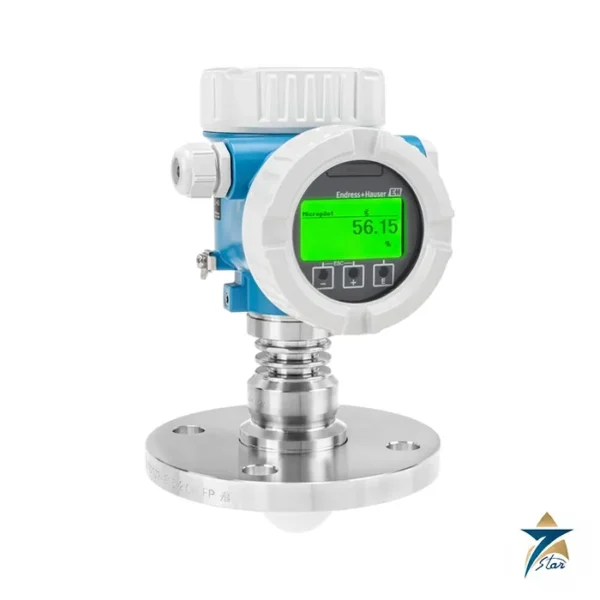
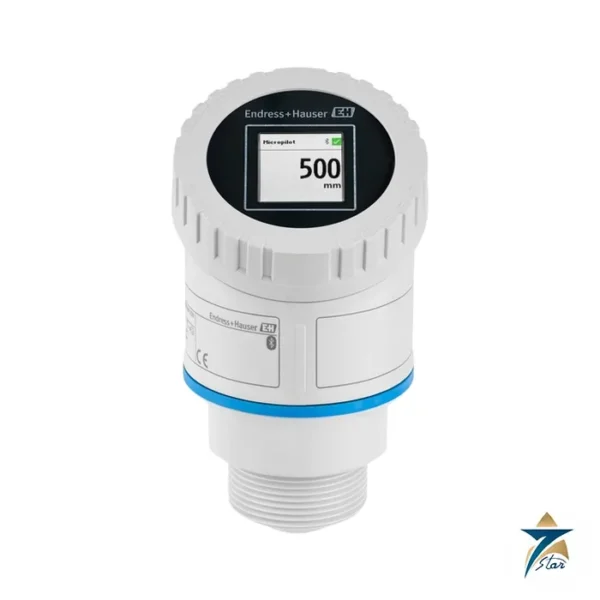
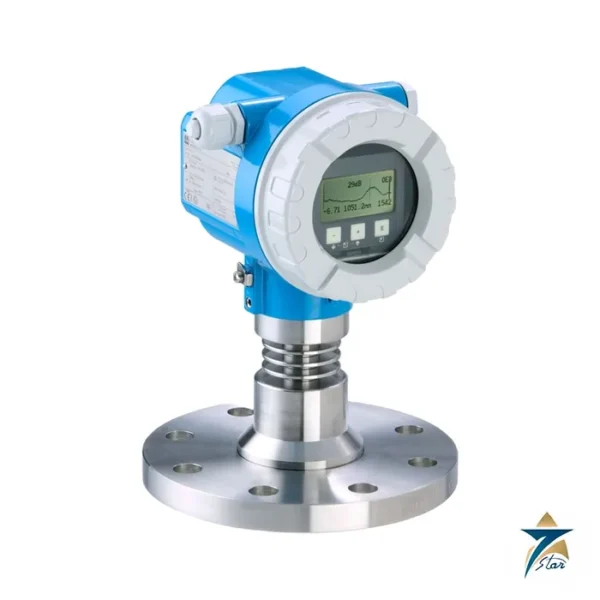
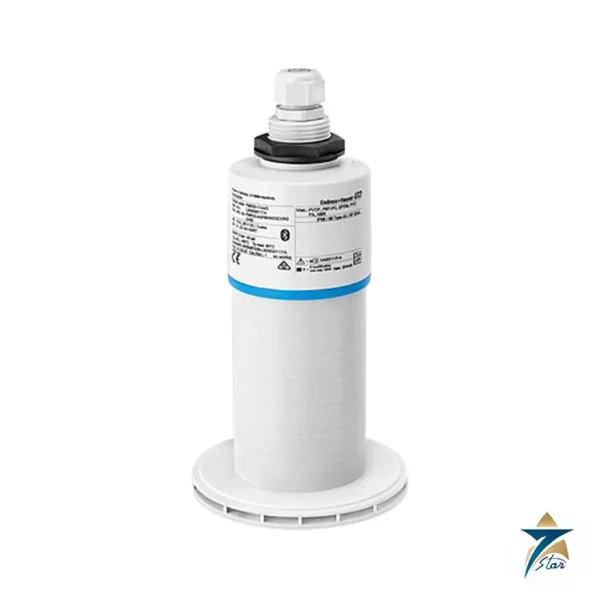
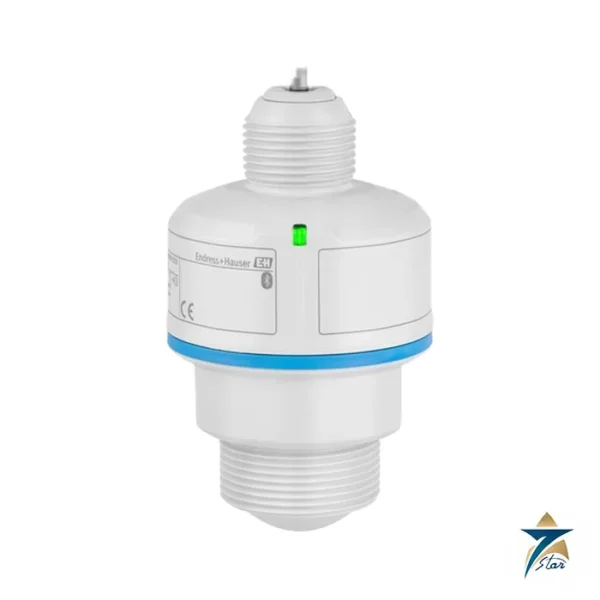
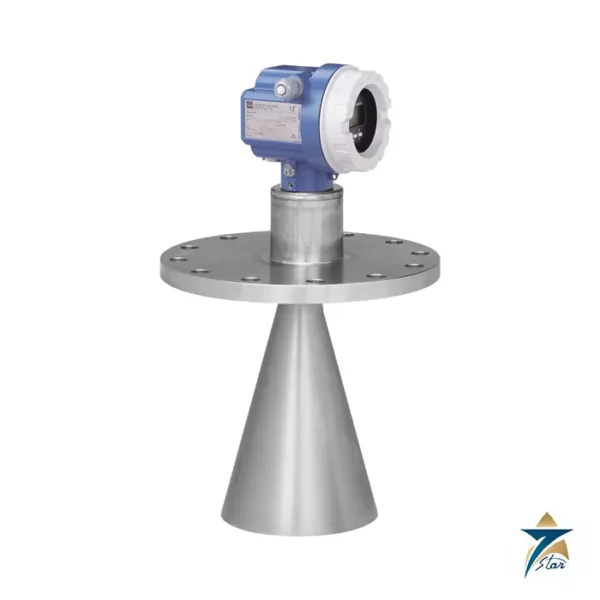
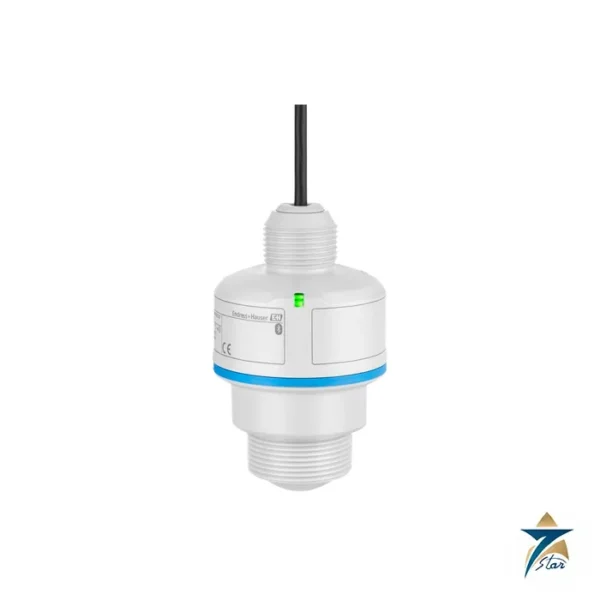
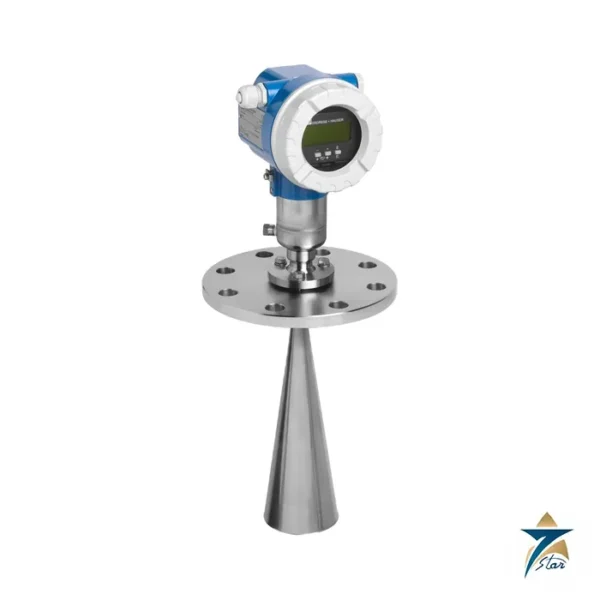
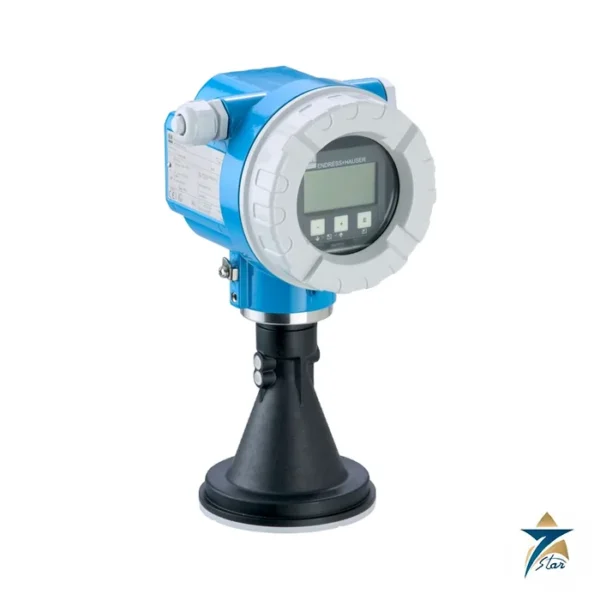
Endress+Hauser FMR240 Micropilot M K-band Horn Radar

Description

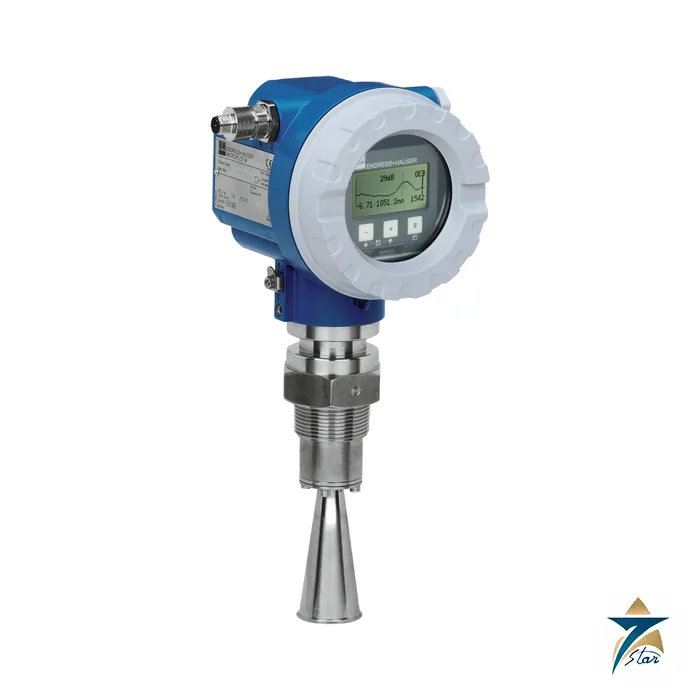
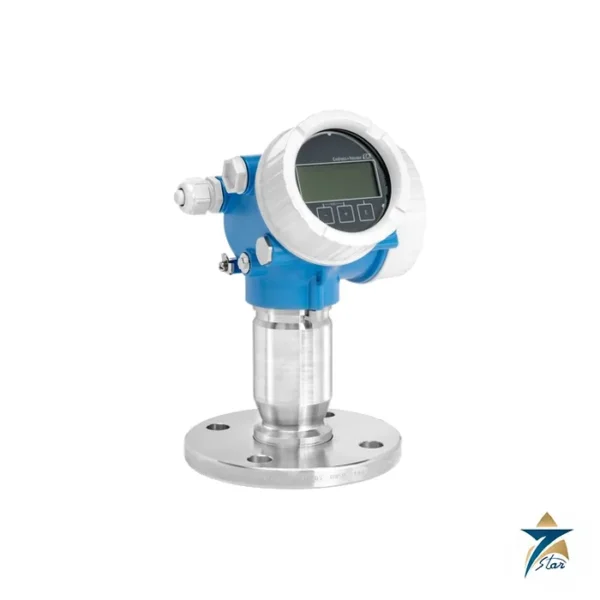
Endress+Hauser FMR240: the K-band horn radar for compact vessels

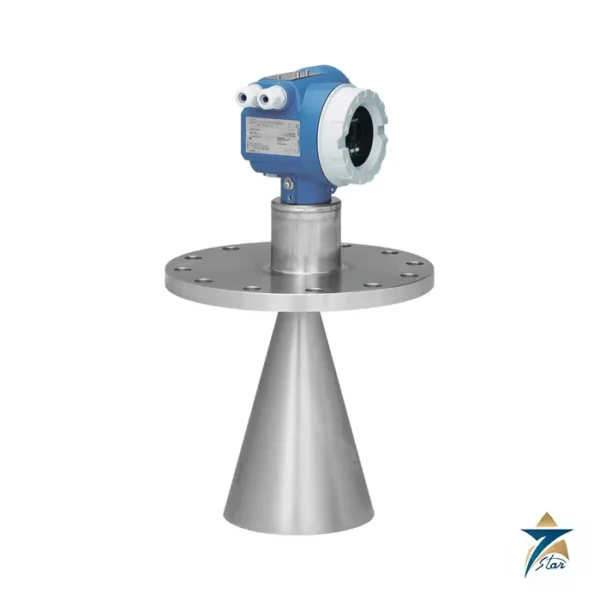
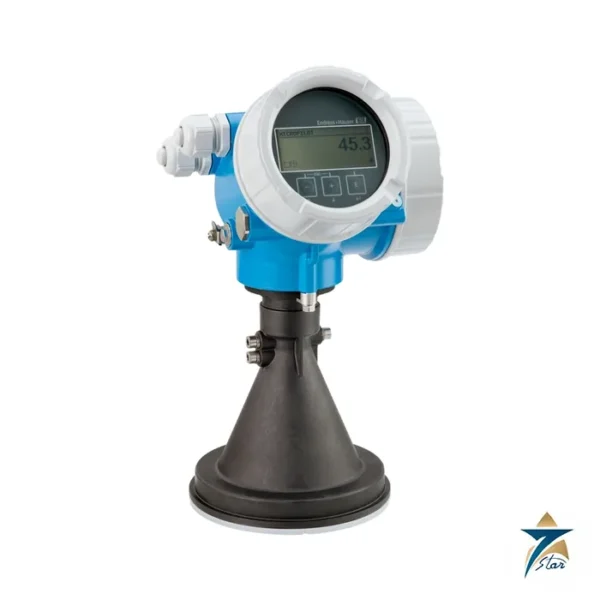
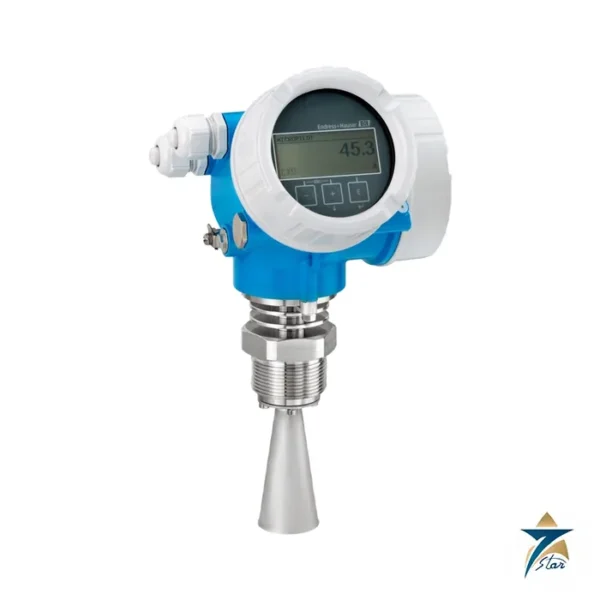
Endress+Hauser FMR240 is the K-band horn member of the Micropilot M family in datasheet TI00345F. The sheet singles out its small 40 mm (1.5 inch) horn antenna as ideal for small vessels, and it adds that this version reaches an accuracy of plus or minus 3 mm. The antenna family also includes 50 mm, 80 mm and 100 mm horns, so the same housing can serve a small reactor or a tall storage tank.

Higher frequency means a narrower beam from a smaller antenna. That is the reason a user chooses FMR240 when the nozzle is small and the tank is cluttered, and the C-band FMR230 would simply not fit.

Data table for FMR240

Parameter Value
Frequency band K-band
Antenna sizes Horn 40 mm (1.5 in), 50 mm (2 in), 80 mm (3 in), 100 mm (4 in)
Accuracy Plus or minus 3 mm up to 10 m and 0.03 percent of range beyond, for a 40 m maximum range
With 70 m maximum range Plus or minus 30 mm up to 1 m; beyond, plus or minus 15 mm or 0.04 percent, whichever is larger
Seal V (FKM Viton) Minus 20 to plus 150 degrees Celsius, minus 1 to 40 bar
Seal E (FKM Viton GLT) Minus 40 to plus 150 degrees Celsius
Seal K (Kalrez Spectrum 6375) Minus 20 to plus 150 degrees Celsius
Wetted parts PTFE, seal, 316L or Alloy C22
Weight About 4 kg with F12 or T12 housing plus flange; about 7.4 kg with F23 plus flange
Solids Recommended range with 100 mm horn: 30 m
Dielectric constant At least 1.4 in a stilling well; at least 1.9 in free space

Heavy steam and foam: limits of FMR240

The datasheet warns that with heavy steam development or condensate the maximum range of FMR240 may decrease depending on density, temperature and composition of the vapor, and that for boiling, bubbling or foaming surfaces the C-band FMR230 or FMR231 should be used instead. Where FMR240 must be used, the optional “F” or “G” version is recommended for such duties.

Applications of FMR240 in Oman and the GCC

Small chemical reactors, additive tanks, process-water vessels, lube-oil reservoirs and solvent tanks are natural homes. With the 100 mm horn it also measures solids, with a recommended range of 30 m, and the 80 mm horn of the FMR244 sibling serves a similar niche with PTFE protection. Hot-oil circuits, packaged skids and mobile tankers have small nozzles and variable levels, exactly where a narrow-beam radar beats a float or differential-pressure device.

The device supports three communication types. A two-wire 4 to 20 mA loop with HART suits most existing DCS inputs. PROFIBUS PA and FOUNDATION Fieldbus versions put the level on a digital segment, and for those the sheet explains how many transmitters can share the bus in standard and intrinsically safe applications. Choose the protocol when ordering, because it cannot be changed in the field. Before ordering, also decide on the housing: aluminum F12 or T12 for general use, or 316L F23 for corrosive or marine air, noting the weight difference of more than 3 kg.

How FMR240 differs from FMR230, FMR244 and FMR245

Model Wetted face Max process temperature Typical reason to pick
FMR240 Metal horn with PTFE and seal 150 degrees Celsius Small vessels, 3 mm accuracy
FMR230 Larger C-band horn Up to 400 degrees with graphite Foam and boiling liquids
FMR244 PTFE-encapsulated horn 130 degrees Celsius Corrosive media, 3 bar
FMR245 PTFE-plated flush 200 degrees Celsius Hygienic, flush mounting

Mounting FMR240 correctly

Install the horn so that it protrudes beyond the nozzle and keep the beam away from internal fittings and the filling stream. The datasheet states that in principle FMR240 can measure up to the tip of the antenna, but the last centimetres carry reduced accuracy, and for a dished or conical tank bottom the reading near empty is also less accurate because the beam hits a sloping surface.

The measuring range begins where the beam hits the vessel bottom. For a conical outlet the sheet recommends setting the empty distance to a point where the beam still returns a clear echo, and where highest accuracy is demanded at low level, using a flat target plate or a different empty calibration. Write the choice on the commissioning sheet so the next engineer understands why the empty distance is not the geometric bottom.

Commissioning and care of FMR240

Use the alphanumeric display to enter the empty and full distances and the application type, and FieldCare for documentation. Gas-tight feedthrough is available as an option to improve process safety. Clean the horn periodically, compare the envelope curve with the commissioning curve and replace the seal at turnarounds. Weather protection is recommended in direct sun. After any change in the tank internals, such as a new coil or baffle, run the interference-echo mapping again.

Because the family is documented as an older design, spare modules and exact order codes are essential: keep the nameplate details with the maintenance file and request the same antenna, seal, flange and housing for a like-for-like swap.

Ordering information for FMR240

Provide the antenna size, seal, process connection, housing, protocol (HART, PROFIBUS PA or FOUNDATION Fieldbus) and approval. For a replacement, copy the order code from the nameplate of the unit being removed rather than relying on the family name alone, and mention the tank product and working temperature.

Documents and quotation

Datasheet: Technical Information TI00345F. Send the part number, nameplate order code and quantity through the RFQ form. Seven Star LLC is an independent supplier serving Oman and the GCC and is not affiliated with the manufacturer.

Selection Notes for the Endress+Hauser FMR240

When comparing the Endress+Hauser FMR240 with alternatives, start from the duty it must perform: the measured or controlled variable, the range and accuracy you need, the environment at the mounting point and the interface to your control system. Check the electrical and mechanical connections against the installed equipment, and confirm any hazardous-area or ingress-protection requirements for the location. If any point is unclear, send a photo of the nameplate and a short description of the application, and we will compare it with the Endress+Hauser (E & H) radar & guided wave radar level range and confirm the correct order code before you commit.

Other Models in the Micropilot M Range

Seven Star LLC supplies models from the Micropilot M range in Oman and the GCC. Compare the related models below and request a quote for the one that matches your application.

ModelCategory
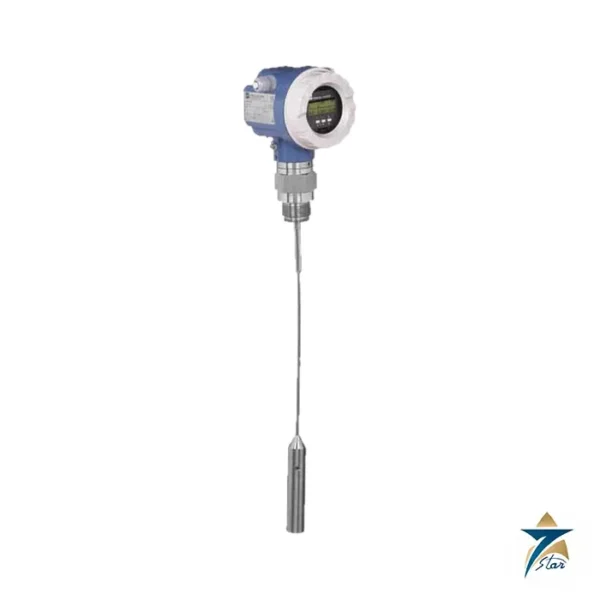
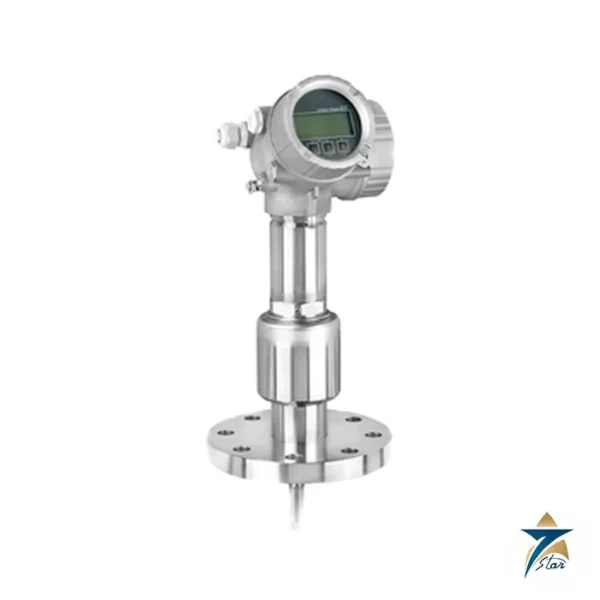
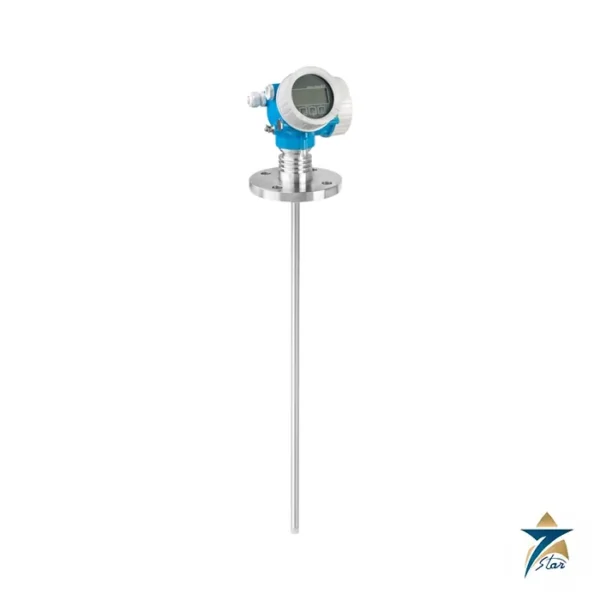
Endress+Hauser FMR230 Micropilot M C-band RadarRadar & Guided Wave Radar LevelView details
Endress+Hauser FMR240 Micropilot M K-band Horn RadarRadar & Guided Wave Radar LevelYou are viewing this model
Endress+Hauser FMR244 Micropilot M PTFE Horn RadarRadar & Guided Wave Radar LevelView details
Endress+Hauser FMR245 Micropilot M Flush PTFE RadarRadar & Guided Wave Radar LevelView details
Endress+Hauser FMR250 Micropilot M Radar for Bulk SolidsRadar & Guided Wave Radar LevelView details
Datasheets & Documents
  • PDF Datasheet Endress+Hauser FMR240 Micropilot M K-band Horn Radar Datasheet Download
Reviews (0)

Reviews

There are no reviews yet.

How would you rate this product?

It takes about 10 seconds — just tap a star. Your email is never published.

About brand

Endress+Hauser makes process measurement instruments for flow, level, pressure, temperature and liquid analysis. Georg H. Endress and Ludwig Hauser started the business in Lörrach, Germany, on 1 February 1953, first selling level meters, and the Endress+Hauser name has been used since 1957. The group is headquartered in Reinach, Switzerland, and has been wholly owned by the Endress family since 1975.

Seven Star LLC is an independent supplier listing Endress+Hauser flowmeters, level and pressure transmitters, temperature assemblies and liquid analysis products for buyers in Oman and the GCC. Instruments are matched from the full order code on the nameplate.

Endress+Hauser company profile

Origin Founded in Lörrach, Germany, on 1 February 1953 by the Swiss engineer Georg H. Endress and Ludwig Hauser
Headquarters Endress+Hauser AG, Reinach (Basel-Landschaft), Switzerland
Ownership Family owned; the Endress family has been the sole shareholder since 1975, and a family charter commits the company to stay family owned
Size About 16,500 employees and sales of about EUR 3.7 billion (2023, as reported by the company)
Product families Proline flowmeters, Micropilot and Levelflex radar, Liquiphant switches, Cerabar and Deltabar pressure, iTEMP and iTHERM temperature, Liquiline and Memosens liquid analysis

Milestones

  • 1953: Georg H. Endress and Ludwig Hauser start the business in Lörrach on 1 February, first selling level meters.
  • 1957: The Endress+Hauser name comes into use.
  • 1975: The Endress family becomes sole shareholder.
  • 2023: About 16,500 employees and sales of about EUR 3.7 billion, as reported by the company.

Endress+Hauser product lines

Line Measuring principle Typical use
Promass F 300, Promass 80F, 83F/84F Coriolis mass flow Direct mass flow and density of liquids and gases, hydrocarbon transfer and chemical dosing
Promag P 300, P 500, H 300, W 400, W 10, 50P Electromagnetic flow Water, wastewater, slurries and other conductive liquids
Prowirl F 200, 72F Vortex flow Steam, gas and low-viscosity liquids
Prosonic Flow 92F, t-mass 65F Ultrasonic and thermal mass flow Water lines; compressed air and industrial gases
Micropilot FMR62, FMR67, FMR60, FMR10B, FMR20, FMR50, FMR52 Free-space radar level, 80 GHz and 26 GHz Tanks, process vessels, silos and open water channels
Levelflex FMP51, FMP50, FMP54, FMP55 Guided wave radar level Level and interface in vessels, separators and bypass chambers
Liquiphant FTL51, Prosonic S FMU90 Vibronic point level; ultrasonic level High and low level alarms, pump protection, open channel flow
Cerabar PMC71B, PMP51B, PMP71, Deltabar PMD78B, PMD75 Pressure and differential pressure Process pressure, hydrostatic level and DP flow
iTEMP TMT82, TMT162, iTHERM TM101, TR66, TR10 Temperature transmitters and thermometers RTD and thermocouple points with thermowells
Liquiline CM444, CM442, Memosens CPS11E, Stamolys reagents Liquid analysis pH, ORP, conductivity, dissolved oxygen and nutrient analysis in water treatment and process

Where Endress+Hauser instruments are used

In Oman and the GCC, Endress+Hauser instruments are common in oil and gas production and processing, refineries and petrochemicals, desalination and water networks, wastewater treatment, power plants and food and beverage plants. Coriolis meters measure hydrocarbon and chemical flows, electromagnetic meters cover water and wastewater, radar transmitters handle tank and silo level, and Liquiline analysers monitor water quality. Proline 300 and 500 flowmeters include Heartbeat Technology for in-situ verification, which reduces the need to remove a meter for checks.

Ordering Endress+Hauser instruments: what we need

The order code on the nameplate (for example PMP71-1QA1S11RDADU) defines every option: measuring range, process connection, materials, output, approvals and display. Send it with the serial number; Endress+Hauser can retrieve the original configuration from the serial number. For a new instrument add the medium, operating and design pressure and temperature, range, line size or tank geometry, process connection, wetted materials, output or protocol (4-20 mA HART, PROFIBUS, FOUNDATION Fieldbus, Modbus) and the hazardous-area approval required. Older models such as Promass 80/83 or Micropilot M are replaced by current Proline or 80 GHz Micropilot devices.

Facts checked against Endress+Hauser company history and product information, October 2026.

FAQ

Questions about the Endress+Hauser FMR240 Micropilot M K-band Horn Radar

Answers from our engineering team on installation, compatibility and integration.

01What antennas can Endress+Hauser FMR240 have?
Horn antennas of 40 mm (1.5 in), 50 mm (2 in), 80 mm (3 in) and 100 mm (4 in); the 40 mm horn suits small vessels.
02How accurate is FMR240?
Plus or minus 3 mm up to 10 m and 0.03 percent of range beyond for a 40 m maximum range.
03What seal and temperature limits apply to FMR240?
FKM Viton, Viton GLT or Kalrez seals, with ranges from minus 40 or minus 20 up to plus 150 degrees Celsius, at minus 1 to 40 bar.
04Can FMR240 measure solids?
Yes, with the 100 mm horn antenna (and the option listed in the sheet) the recommended range in solids is 30 m.
05When should FMR240 not be used?
With heavy steam, condensate, boiling, bubbling or foaming surfaces, where the datasheet advises FMR230 or FMR231.