AMETEK Western Research 9933 natural gas sulfur analyzer
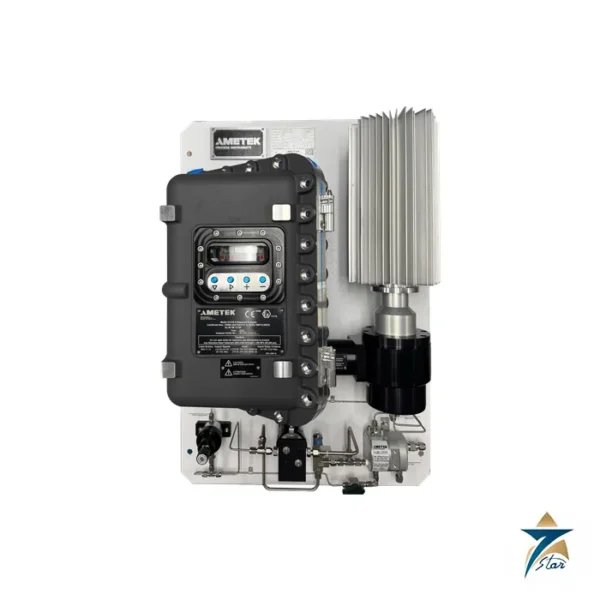
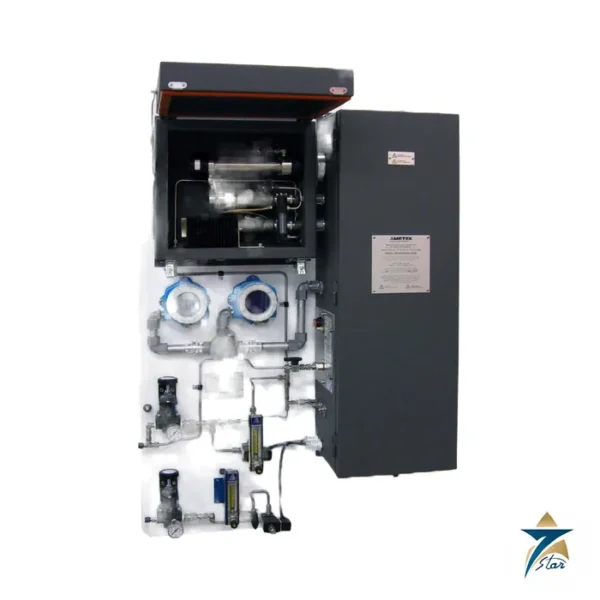
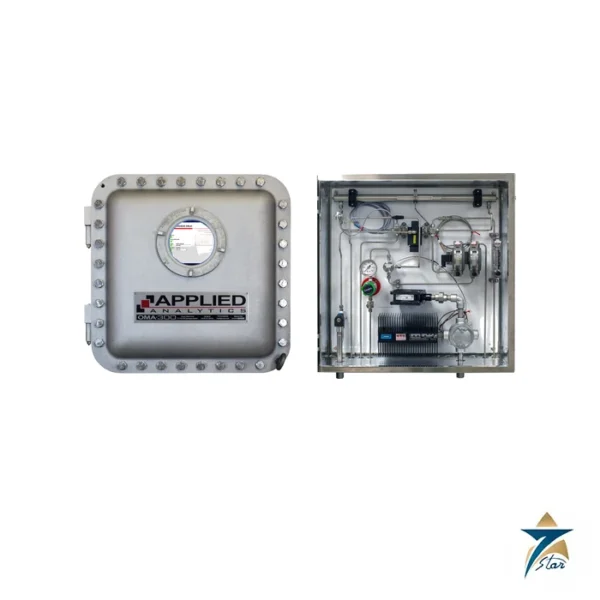
The AMETEK Western Research 9933 is a field-mounted gas analyzer for measuring hydrogen sulfide (H2S), carbonyl sulfide (COS) and methyl mercaptan (CH3SH) in natural gas, with optional carbon dioxide and hydrogen measurement. It combines a chromatographic separation step with ultraviolet photometric detection, and it is built into an IP66 enclosure with an integrated heater and sample conditioning so it can be mounted outdoors. Seven Star LLC supplies the 9933 in Oman and the GCC as an independent supplier in Muscat.
The 9933 builds on the earlier 933 analyzer line and is available in several configurations for hazardous locations. The model name is the designation used on the manufacturer’s product page; the datasheet describes options rather than a coded ordering string, so the details to define are the sulfur species, the ranges and the hazardous-area version.
9933 technical specifications
| Parameter |
Specification |
| Manufacturer / part number |
AMETEK Western Research / {pn} |
| Method |
Frontal elution chromatography; non-dispersive UV analysis for H2S, COS and CH3SH; optional H2 by thermal conductivity and CO2 by infrared |
| Standard range |
H2S 0–25 to 0–100 ppm; COS option 0–100 to 0–500 ppm; CH3SH option 0–50 to 0–250 ppm; H2 option 0–10 %; CO2 option 0–5 % |
| Extra-low range |
H2S 0–3 to 0–15 ppm; COS option 0–15 to 0–50 ppm; CH3SH option 0–9 to 0–30 ppm |
| Accuracy |
Standard range ±2 % of full scale; extra-low range ±5 % of full scale, best ±0.25 ppm H2S, ±1 ppm COS, ±0.75 ppm CH3SH; CO2 option ±5 % of full scale |
| Repeatability |
Standard range ±2 % of full scale |
| Zero drift |
Standard range under ±2 % FS in 24 h; low range under ±5 % FS in 24 h |
| Response time to 90 % |
H2S under 30 s; COS option under 60 s; CH3SH option under 180 s (excluding sampling system) |
| Zero gas |
Ultra-high-purity nitrogen, carbon dioxide or methane |
| Sample pressure |
690 kPag (100 psig) minimum to 10,342 kPag (1,500 psig) maximum |
| Typical sample flow |
2.5 L/min (5 SCFH) |
| Outputs |
Up to four isolated self-powered 4–20 mA; five Form A (SPST) normally open contacts for status and process alarms |
| Data communication |
One RJ-45 Ethernet Modbus-TCP port; one RS485 Modbus-RTU port |
| Power |
120 V AC or 240 V AC, ±10 %, 50/60 Hz; under 440 VA standard oven, under 550 VA high-temperature oven |
| Enclosure / ingress |
316 stainless steel for most configurations (aluminium alloy Exd electronics enclosure); IP66 and NEMA 4X |
| Ambient temperature |
-20 to 50 °C; 60 °C configuration available for some applications |
| Dimensions (W × H × D) |
Standard 839 × 1169 × 318 mm; explosion-proof Zone 1: 1270 × 1195 × 334 mm |
| Weight |
Standard about 100 kg; purged Zone 1 about 105 kg; explosion-proof Zone 1 about 182 kg |
| Certifications listed |
ATEX / IECEx / UKEx Zone 2; ATEX / IECEx Zone 1 purged and Exd versions; cETLus Class 1 Division 2, Groups A, B, C, D |
How the 9933 measures sulfur compounds
Natural gas contains hydrocarbons and other components that can interfere with a direct optical measurement of sulfur compounds. The 9933 handles this with frontal elution chromatography. The manufacturer describes a proprietary frontal elution method that separates the sulfur compounds from interfering components, using two long-life columns that alternate: while one conditions the incoming sample, the standby column is automatically regenerated. According to the datasheet there is no carrier gas or stripping media, so the measurement is of the sample gas directly.
The separated sulfur species are then detected by a dual-beam, hollow cathode UV photometer. The manufacturer states an accuracy better than ±0.25 ppm, which is the best figure in the extra-low H2S range. Optional CO2 and H2 channels use infrared and thermal conductivity detection, adding the gas-quality checks that are often wanted at biomethane, hydrogen-blend or CO2 purity points.
Where the 9933 fits and related parts
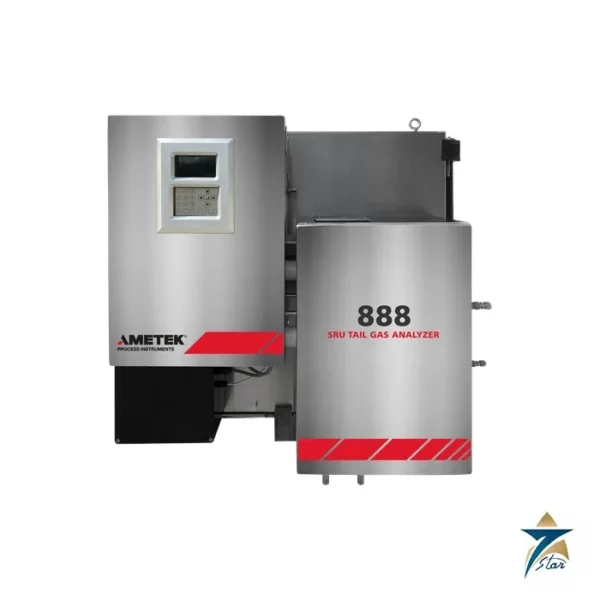
The 9933 is one member of the 993X family. The product page also lists a 9933RM variant and an Ex d flameproof analyzer manual, and Western Research’s wider line includes the 931, 932 and 934 H2S analyzers and the 888 tail gas analyzer. We list the 9933 here for natural gas sulfur monitoring; if your application is sulfur recovery tail gas or hot wet emission monitoring, other models are the right match and we will say so.
Because it is an integrated sample-conditioning analyzer, the 9933 needs fewer separate components than a bare detector, but it still depends on a good sample tap, pressure within 690 to 10,342 kPag, a zero gas supply and a vent line. The glycol separating filter is an available option.
Selection and ordering checklist for the 9933
- Target components: H2S only, or H2S with COS and CH3SH; and whether CO2 or H2 is required.
- Range: standard (from 0–25 ppm H2S) or extra-low (from 0–3 ppm H2S).
- Hazardous area version: Zone 2 / Division 2, purged Zone 1 or Exd Zone 1, which also drives size and weight.
- Sample line pressure, to confirm the 690 to 10,342 kPag window.
- Zero gas: UHP nitrogen, CO2 or methane must be available on site.
- Power: 120 V AC or 240 V AC supply, with the oven option affecting the load.
- Outputs and communication: 4–20 mA, relay alarms, Modbus TCP or RTU.
- Ambient: standard -20 to 50 °C, or the 60 °C configuration where offered.
Installation, commissioning and maintenance
The analyzer is wall mounted and weighs about 100 kg or more depending on the version, so the support structure and lifting plan need attention. Provide the sample tap, a heated or insulated line if condensation is possible, a reliable vent, the zero gas and the correct electrical entries for the hazardous area class. After installation, leak-check the sample path, run zero and span checks, and confirm the alarm outputs with the control system before release.
The product page states that the 9933 uses no consumables or reagents. Normal maintenance is therefore concentrated on the sample system filters, the zero gas supply and periodic checks against a certified span gas. The touch screen provides detailed status information, so many diagnostics do not need a laptop.
Typical applications for the 9933 in Oman and the GCC
The manufacturer lists natural gas processing, transmission and storage, hydrogen addition, biogas and biomethane, and carbon dioxide purity, in the natural gas and refining and petrochemical markets. Sour gas handling is common in the Gulf, so the 9933 is relevant for sweetening unit outlets, export gas quality points and pipeline entry stations where a tight H2S limit applies. The IP66 rating and the -20 to 50 °C range allow outdoor mounting without a shelter, which is helpful on hot and dusty sites; in practice, a shade structure is still good practice for the screen and for keeping the sample lines stable.
Information to send with a 9933 RFQ
- Gas composition, sample pressure and temperature at the tap.
- Required components and ranges, such as 0 to 15 ppm H2S with COS.
- Hazardous area classification and the certificate requirement.
- Power supply, zero gas type and available utilities.
- Outputs and communication needed by the DCS or SCADA.
- Site ambient extremes and installation location.
- Project tag, delivery location and timeline.
Documents and quotation
A datasheet for the 9933 is attached on this page. Please send the component list, ranges and area classification so that we can prepare a quotation and confirm delivery.
Seven Star LLC is an independent supplier in Muscat and is not an official representative of AMETEK.


























Reviews
There are no reviews yet.